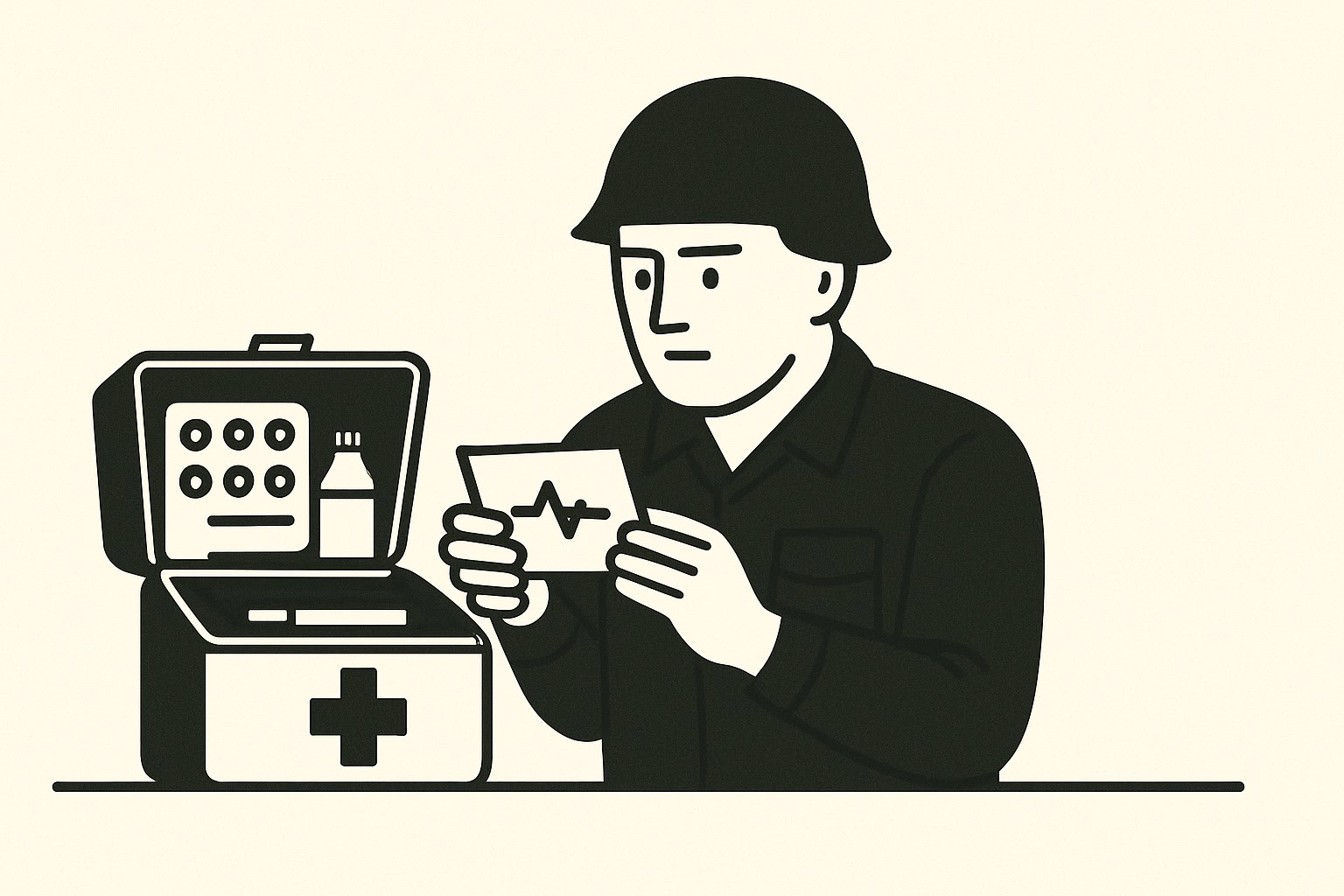
A first-aid kit isn’t eternal: why and when its components must be replaced
A tourniquet can tear or fail to lock, and a hemostatic bandage can turn out to be expired and ineffective. Components of a military first-aid kit have a limited lifespan and require regular replacement. Sun, dirt and time can turn life-saving equipment into useless ballast at a critical moment. More on the need for and timing of first-aid kit updates — in Frontliner’s report.
A tourniquet, especially one mounted externally, is constantly exposed to direct sunlight, dust and rain. Ultraviolet radiation and grime gradually degrade the material: field studies show that after six months of open carry on gear, the risk of failure during use rises to 8–12%. The CAT (Combat Application Tourniquet) manufacturer does not specify an official expiration date under ideal storage conditions, but in the field its reliability is not guaranteed after prolonged exposure to the elements. Before applying a tourniquet, it should be carefully inspected — the plastic housing, windlass, buckles and hook-and-loop straps must be intact. Fading or discoloration of the strap from sun exposure is a clear sign it should be replaced.
Other items also suffer in harsh field conditions. Elastic materials and plastics degrade: nasopharyngeal airway tubes (NPAs) lose flexibility and crack, and dressing packages may tear. Humidity and temperature fluctuations weaken equipment. Occlusive seals (chest seals) are especially vulnerable: long-term storage reduces their effectiveness. The adhesive layer is extremely sensitive to temperature swings — excessive heat or cold can damage it even before the expiration date. Seals should therefore be stored at stable temperatures and periodically checked for tackiness (without compromising sterile packaging).
Expiration dates are not a formality
Many components of a first-aid kit have clearly defined expiration dates, and ignoring them is risky. Medications in the individual pill pack, such as painkillers and antibiotics (typically with a 1-3 year shelf life), lose pharmacological effectiveness over time or may cause adverse reactions. Expired medications must be removed immediately.
Hemostatic agents (Celox, QuikClot) also have limited longevity. Their chemical coagulants gradually absorb moisture and lose effectiveness, compromising sterility. Although manufacturers sometimes extend expiration dates (up to five years), there is no full guarantee of reliability or sterility afterward. In a critical moment, an expired hemostatic agent may fail to stop bleeding quickly enough.
Occlusive and gel dressings also have expiration dates due to material degradation. Adhesives dry out, and manufacturers guarantee proper stickiness only for 3-5 years. Expired seals are highly undesirable because they may fail to create the airtight closure essential for treating chest wounds.
Dressing materials (bandages, sterile gauze) do not always have expiration dates, but they must be replaced if the packaging is compromised or the material has absorbed moisture or become contaminated. Textiles weaken over years of storage, and rubber elements can tear. Therefore, both the condition and manufacturing date should be checked even for components considered “nonexpiring.”
Regular inspection and scheduled replacement
The best way to stay safe is to consistently monitor the condition of your first-aid kit. Soldiers should review the contents after each mission and again before new assignments. This habit ensures that only reliable supplies remain in the kit. Regular inspection is an essential part of readiness.
Every expired, damaged or questionable item should be replaced. Components that raise suspicion, contaminated or deformed, should be removed. Replacement should be planned. Soldiers should notify volunteer groups and medics in advance when supplies need updating. Commanders should track the status of first-aid kits centrally. Offers of “written-off” or dubious medical supplies “just in case” should be politely declined.
Tips for maintaining a first-aid kit
- Consistent inspection. After each mission, check all items for intact packaging and spent supplies.
- Expiration control. Track dates on all medications, hemostatic dressings and occlusive seals. Remove expired items immediately.
- Environmental protection. Keep the tourniquet in a pouch or under a flap to shield it from direct sunlight. Protect the kit from water and dirt.
- Maintaining sterility. Do not break sterile packaging before use. If opening a package under stress seems challenging, practice beforehand during training.
- Attention to detail. Transfer pills from the pill pack into a secure container. Periodically check the elasticity of rubber items (gloves, elastic straps) and ensure spare batteries are available for electronic devices.
Regular replacement of first-aid kit components is a matter of protecting lives, not only your own. Even the best equipment wears out over time, and survival can depend on the reliability of every single item.
***
Frontliner wishes to acknowledge the financial assistance of the European Union though its Frontline and Investigative Reporting project (FAIR Media Ukraine), implemented by Internews International in partnership with the Media Development Foundation (MDF). Frontliner retains full editorial independence and the information provided here does not necessarily reflect the views of the European Union, Internews International or MDF.