
Uzhhorod: a war lived 1,000 Kilometers from the front
Uzhhorod, once quiet, peaceful, and unhurried, now feels different. The war has touched it in unexpected ways – bringing new, interesting people, introducing both good and bad ideas, and creating a skyline bristling with tall construction cranes. Yet the city has also been filled with the resolve of volunteers, the sacrifice of real warriors, and a fierce will to survive together with the rest of Ukraine. Journalist Anna Semeniuk of Frontliner shows what everyday life looks like in Uzhhorod, a thousand kilometers away from the front line.
A city where life does not rush, where problems are solved over a cup of coffee. A city of gentle strolls along the riverside and warm “hellos” every couple of hundred meters. A city of history with sometimes strange architectural experiments. A city without a war-time curfew. A city from which you can reach the EU border on foot.
Uzhhorod, so often boxed into a “provincial” label, has become a place many now want to be. The influential and the ordinary, the rich and the very rich, the poor and the very poor – all those seeking a sense of calm during the war. For Kyiv celebrities, buying an apartment in Uzhhorod has become an item on their shopping list. Businesses are relocating here; people want to buy land, build homes, open shops, beauty salons, or even funeral services.
The weight of guilt in a city far from the front
Being a city in the rear during a brutal war is not a simple role. If cities could speak, they would surely reproach Uzhhorod with: “Nothing even flies your way.” The media has so firmly painted the picture of a “safe Zakarpattia” that most Ukrainians barely mention that Russian missiles reach here too. Instead, people joke about wealthy newcomers, fumbling draft-dodgers at the border, or locals lingering in restaurants late into the night, though the same happens in Lviv, Dnipro, and even Kharkiv. Yet a city a thousand kilometers from the front is still expected to answer for the fact that people here drink coffee in the morning.
Uzhhorod bears the burden of a rear-line city’s guilt with patience and understanding. And also – with the courage to assert that the horrors of war are not only about explosions, destroyed buildings, and shattered existence. Here, war looks completely different. But to say it doesn’t exist is to ignore the other faces of war beyond the battlefield horrors – or to try to shield oneself from it, whether out of indifference or, like in childhood, by imagining that fear doesn’t exist.
War in the eyes of those leaving home
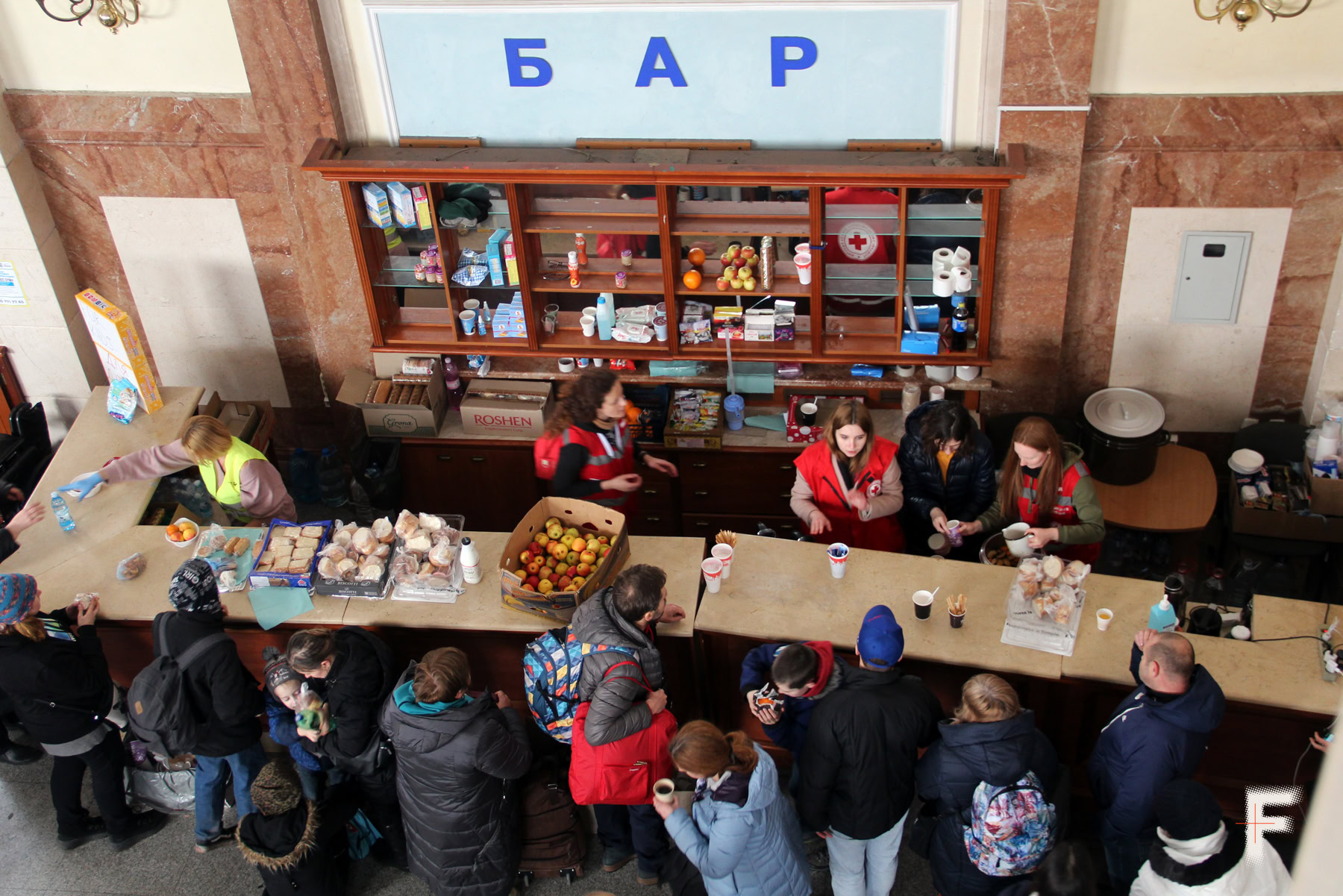
When Ukrainian cities woke on February 24 to Russian shelling, Uzhhorod was swept with despair: people from all corners of Ukraine arrived in the city – from which the European Union border is within walking distance – carrying their lives in two checkered bags, and bearing the horrors of war in their eyes and hearts.
[Translator’ note: “Checkered bags” refers to large, inexpensive fabric bags, often with a blue-and-white or red-and-white checkered pattern, common in Ukraine and other post-Soviet countries, and are often associated with migrants or people relocating with all their possessions.]
That morning, Uzhhorod froze. Uncertainty hung in the air. Instead of greetings, residents locked eyes, tears welling up. Some nervously sipped coffee, others frantically spoke with relatives on the phone while withdrawing cash. Some decided to leave the country; others joined the endless queue at the military enlistment office. By evening, Uzhhorod and its train station had become the center of everything: welcomes and farewells, hope and crushing disappointment, horror and kindness. A concentration of emotion, a concentration of despair, a concentration of life, or the essence of what was left in all of us.
Every train brought the war closer to the city. It was the first time the residents of Uzhhorod truly saw the war in the faces of those who had to flee their homes. In those days, everyone around me helped: hosting refugees in their homes late at night, driving people to the border, preparing tons of hot borsch and bohrach, finding whatever blankets, coats, and hats they could, bringing homemade sandwiches to kilometer-long queues on the border with Slovakia, quickly turning vacant spaces into shelters, tracking down lost pets around the city, holding the hands of those who was… And I simply poured tea at the station with the young women from the Red Cross. At the time, it felt more important than picking up a camera.
[Translator’s note: Bohrach (or bograch) is a traditional goulash-style dish popular in Western Ukraine, especially in the Carpathian region. It is a rich, hearty stew made with meat, paprika, vegetables, and sometimes potatoes.
War erases both the future and the past
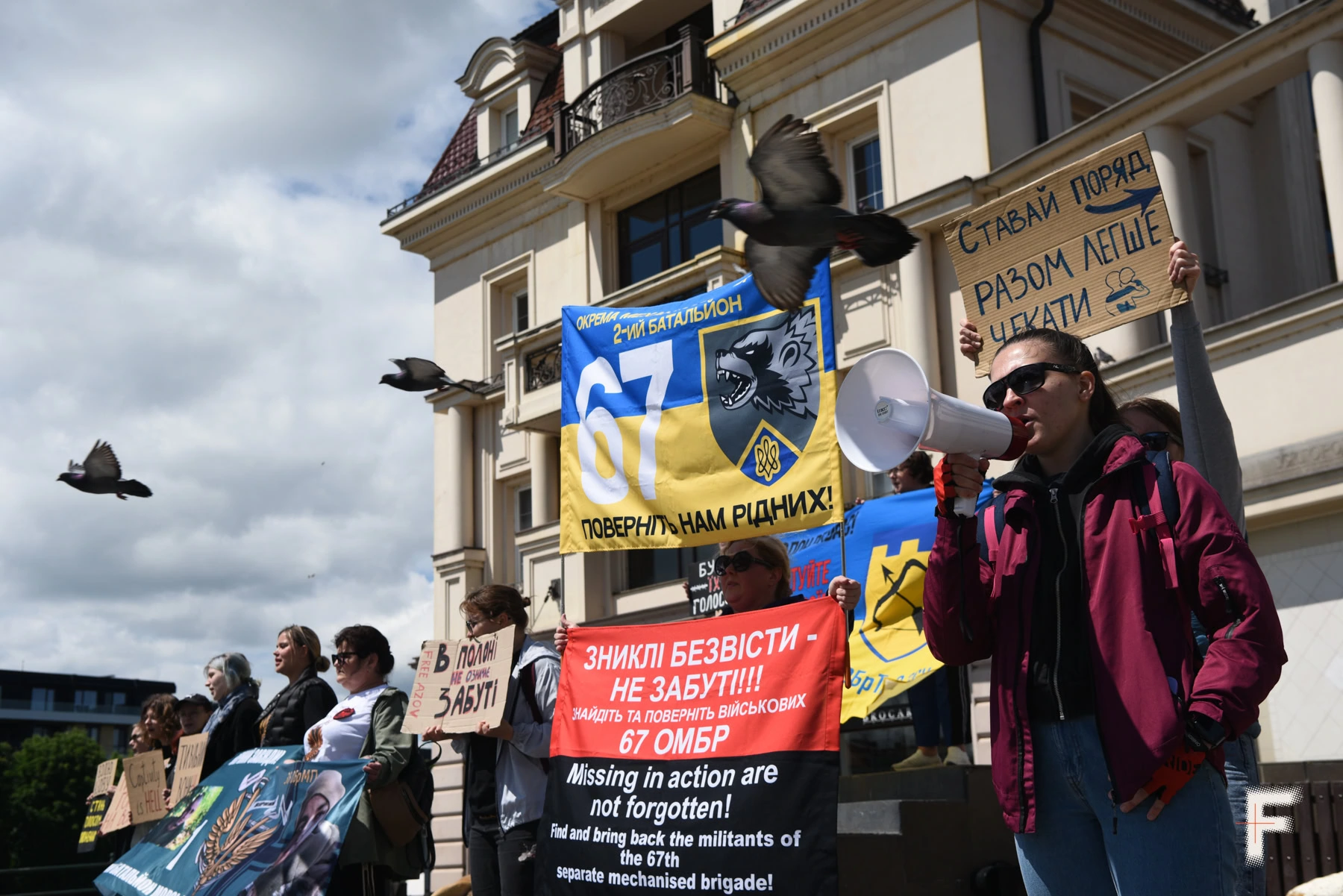
Uzhhorod has become a city of contrasts. In cafés, those who are completely immersed in DeepState maps sit side by side with those who are utterly “tired of the war.” Some have their thoughts on the front lines – with family, friends, or loved ones. Others simply want to “live their best life.” Through Uzhhorod’s picturesque streets pass people who give everything they have, to the last dime, to the Ukrainian Armed Forces, and those who mutter, “let the sons of politicians fight.” In the same city square, those prepared to pour millions into illegal construction intersect with people desperately defending historic buildings and parks from destruction. In the same cafeteria line, you’ll find those mourning a terrible loss and those who claim that nothing is black and white. Some spend every weekend at rallies supporting prisoners of war and fundraising for drones at the supermarkets, while others profit from shady transactions. Some spend their evenings at the gym or pass time smoking hookah in a restaurant overlooking the river; others head to their closest friends – not to a bar, but to the Hill of Glory – to light a candle.
[Translator’s note: The Hill of Glory in Uzhhorod is a memorial complex and military cemetery.
War has become a feeling of lost prospects. You cannot see what the future might look like, yet witness the past being erased. Former friendships are shattered against the war and the notion of “choice,” and dear memories are tainted by the choices people made after February 24, 2022. Your faith in seeing positive changes at home, your home country, fades away while the cityscape is irreversibly destroyed. And the cause is war. Yet it’s not only the Russians; we also bear responsibility, having allowed it to happen.
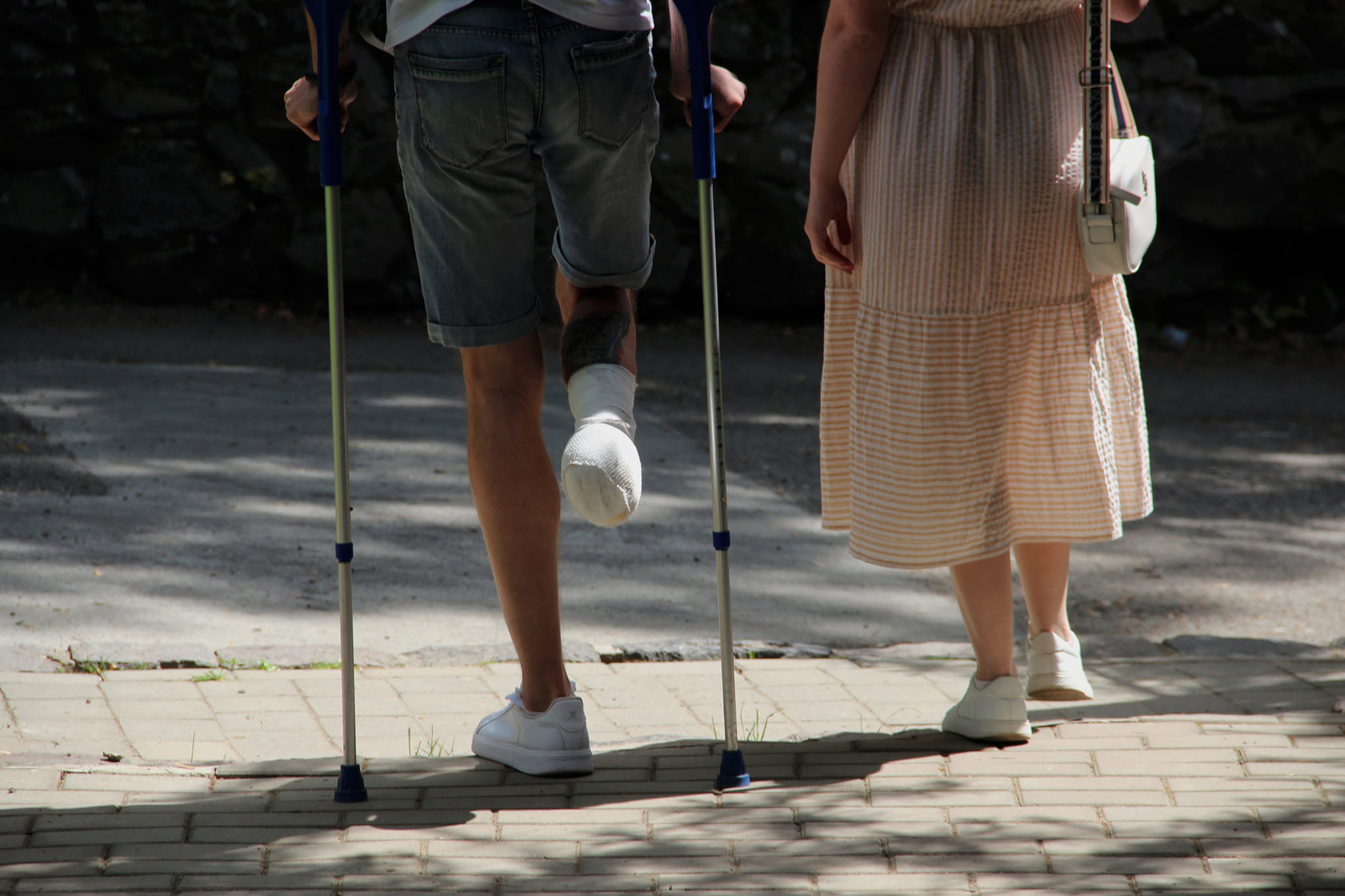
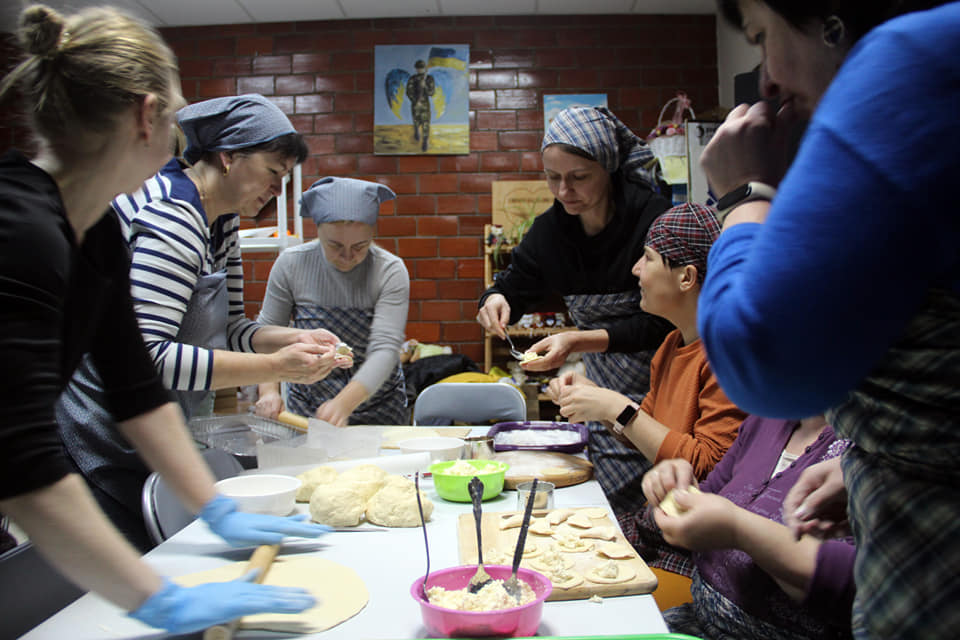
More and more, questions arise about the existence of justice. And each time, they grow louder. How is it possible that volunteers raise funds for vehicles for the Armed Forces of Ukraine, while some influential people – locals and newcomers alike – erect new villas near the beautiful forest or buy luxury cars for their dearest mothers-in-law? While some offer their apartments free of charge to displaced families, others leave Zakarpattia for Austria, Switzerland, or Germany as refugees, only to rent out their homes back home at exorbitant rates. Some spend their evenings volunteering, after clocking off work, making dumplings for wounded soldiers, while others frequent posh nightclubs in the city’s newest hotels – places off-limits for ordinary folk. Some protect the mountains from development, while others fire honest police officers and send them off for military recruitment because they are “inconvenient.” Some search for housing for elderly displaced people in the city and surrounding villages, at a time when not a single shelter or care facility for the lonely, sick, or mobility-impaired had been built in Uzhhorod since the full-scale invasion. Meanwhile, dozens of high-rise apartment buildings go up – places that the vast majority of Uzhhorod’s residents could never afford.
-
Journalists make dumplings for soldiers at the hospital. Support Movement for Zakarpattia Soldiers, Uzhhorod, February 26, 2024. Anna Semeniuk/Frontliner

-
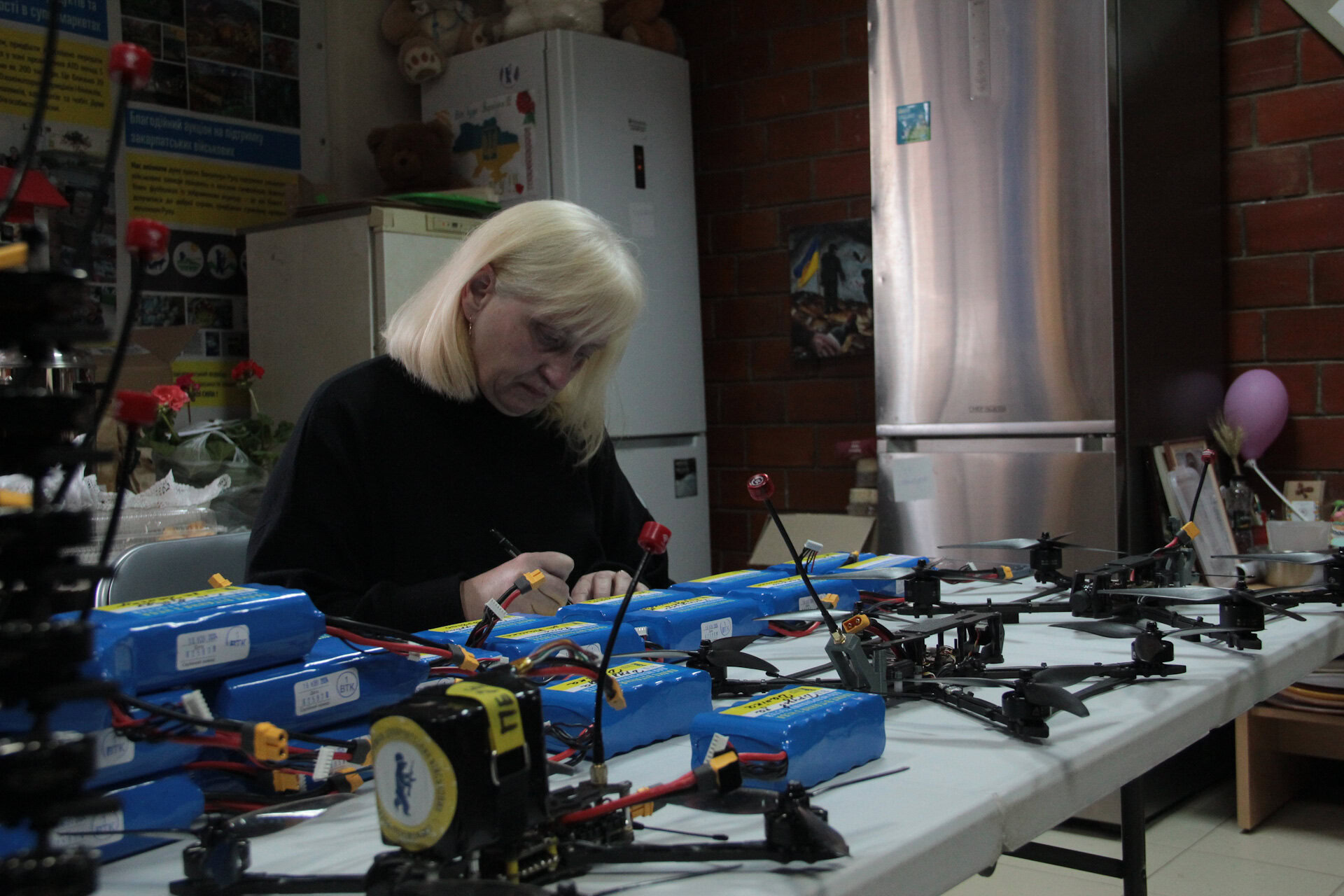
The mother of fallen soldier Danylo Bohuslavskyi signs “revenge drones” in honor of her son. Support Movement for Zakarpattia Soldiers, Uzhhorod, April 24, 2024. Anna Semeniuk/Frontliner

Life under Skoryk’s Melody
[Translator’s note: Myroslav Skoryk (1938–2020) was a renowned Ukrainian composer. Melody in A minor has become iconic in Ukraine, often performed at memorials, funerals, and moments of reflection.]
They say you can’t hear the war here. But I hear it in Uzhhorod every day, just outside my office window. Almost every day, filled with news, texts, deadlines, calls, and meetings, is shattered by Skoryk’s Melody and that haunting “…mother, do not scold me.”
[Translator’s note: The words “…mother, do not scold me” are taken from Ukrainian song A duckling swims along the Tysyna, in Ukrainian “Пливе кача по Тисині”, often performed at funerals, especially for those killed by Russian aggression since 2014.]
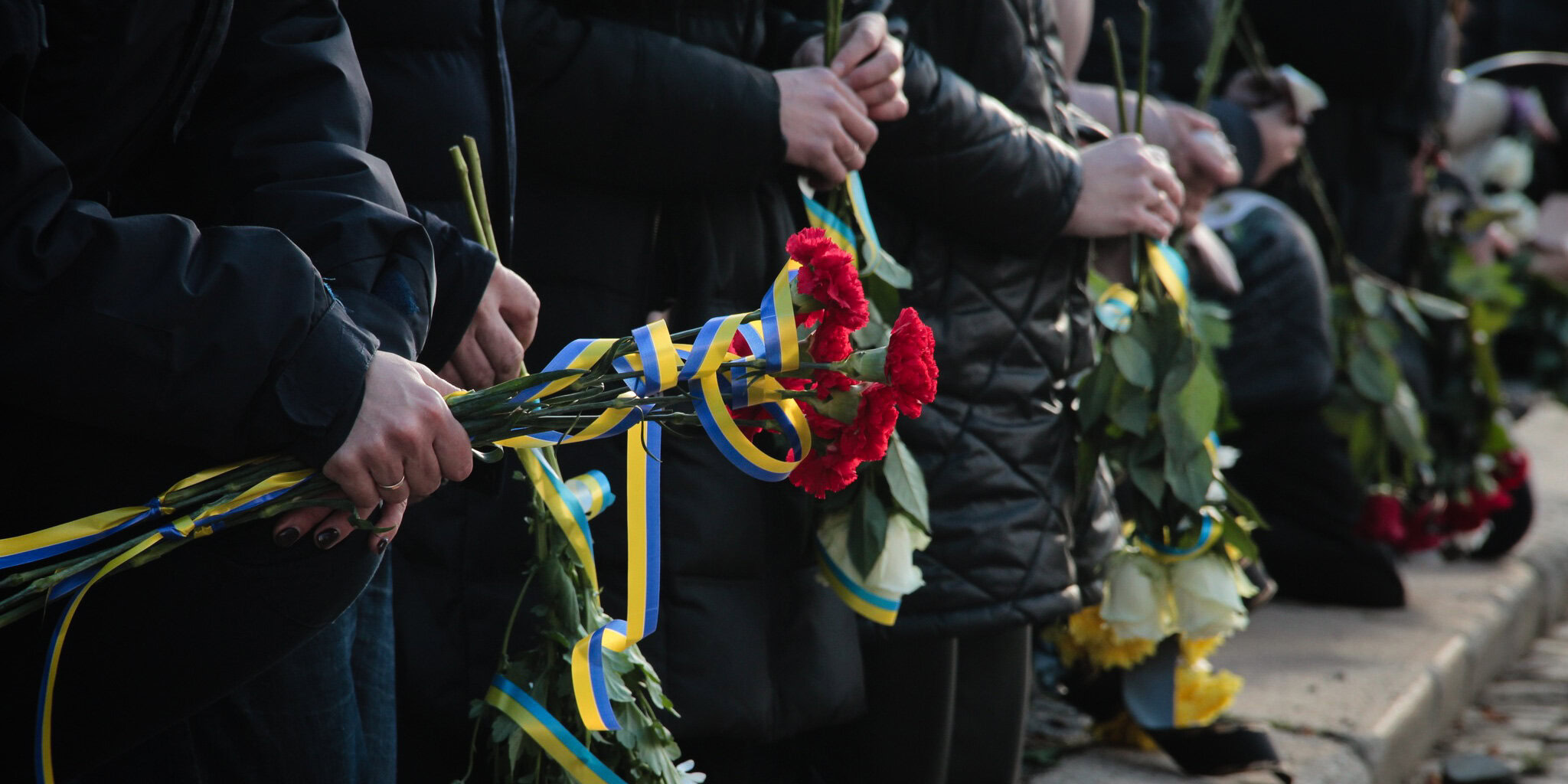
Uzhhorod buries its people. Those killed in the war. Those killed by the war. Those killed by indifference and dereliction.
How can these two worlds exist side by side? How can reality hold so much pain? How can life move forward while people keep losing theirs daily?

The city is filled with anxiety and grief. Almost every family has someone they are waiting for from the front – or someone who has gone missing. The experience of waiting during a war can truly be understood only by those who are waiting, or have waited. Loss in wartime can be fully understood only by those who have lost. And the most painful part of all is meeting the eyes of mothers and fathers who have lost their sons to the war. And of brothers and sisters whose loved ones now remain only in hearts, in photographs, and in graves.
Three small children walk behind the coffin. Three little boys, in a row, holding hands with their mother and grandmother. The funeral procession approaches the Hill of Glory, and the song echoes across the city: “…write on an empty envelope what you never said in life.” A colleague taking photos seems almost faceless. Facing the procession, a young woman sinks to her knees. An elderly woman freezes her gaze on the procession, tracing a cross in the air with her hand. The security guard at the art museum, a stout older man, pulls a white handkerchief from his pocket and wipes away his tears. From the window, I see medics rushing in an ambulance. A woman leans on her elbow, frozen, staring into emptiness. Three little boys walk with tiny steps behind their father’s coffin. Viacheslav Bek, 35 years old, an ATO veteran. Three children, ages 4, 6, and 8. Insulin-dependent diabetes. The medical commission had declared him fit. He died just a few days later at the training center.
[Translator’s note: ATO, or “Anti-Terrorist Operation,” was the official term from 2014 to 2018 for Ukrainian military operations in the Donbas region against Russian-backed forces. The term continued to be used colloquially even after 2018, until the full-scale invasion in 2022.]

The procession will pass. For some, today was the end of everything. And the city will continue to hum with its everyday life, diligently pretending that it really lives.
Author: Anna Semeniuk
Adapted: Irena Zaburanna
Read more — Kharkiv — a city in the east, a city on the edge
