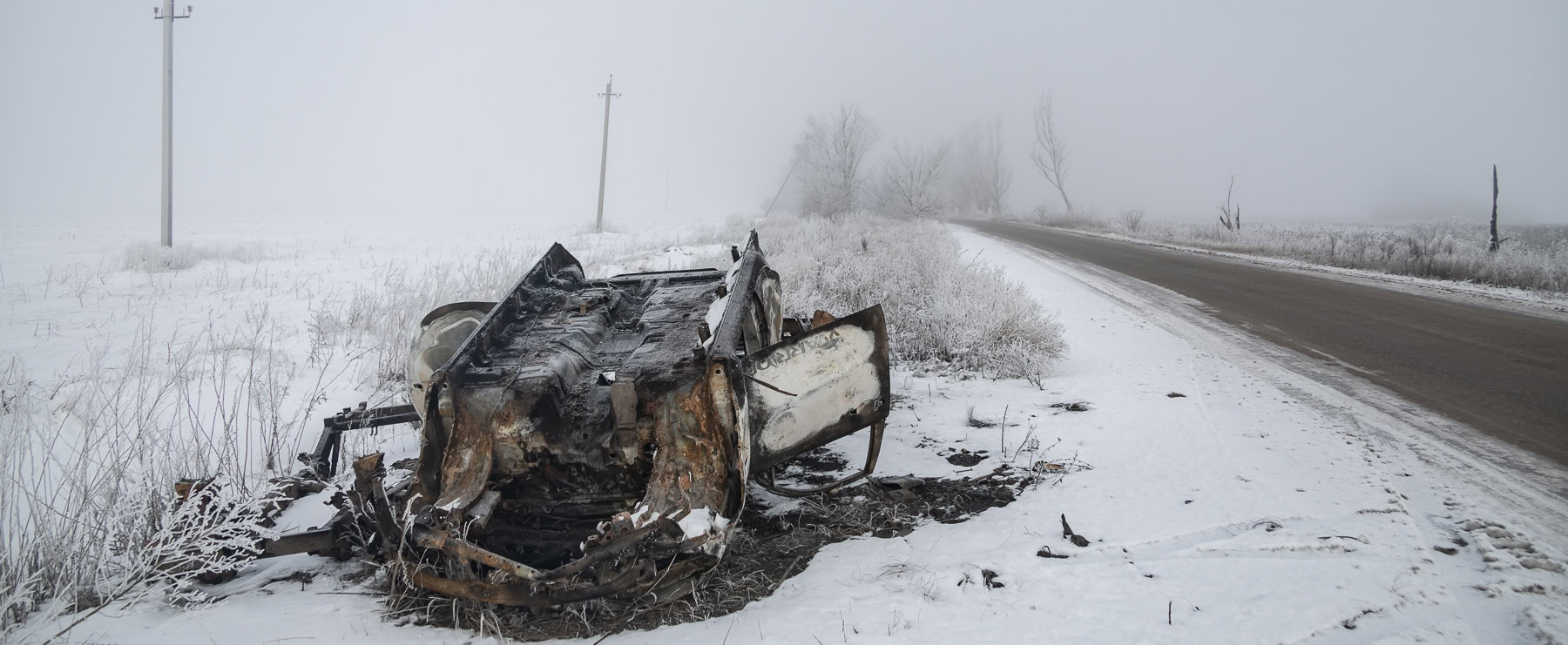
“The enemy is pushing everywhere”: Ukraine has lost control of 4,000 square kilometers over the past year
Russia’s territorial gains over the past year totaled nearly 1,000 square kilometers more than in 2024. At the beginning of 2026, fighting has been most intense on the Pokrovsk front, with over 80 combat engagements each day. Ukrainian soldiers note that repelling assaults and tracking the enemy has become difficult due to challenging weather conditions. Frontliner summed up developments on the front line.
2025 marked another year of intense combat and slow shifts along the front lines in Russia’s war against Ukraine. Unlike the first two years of the full-scale invasion, when the line of contact shifted rapidly, 2025 proved to be a year of positional warfare, gradual tactical changes and high-intensity combat without strategic breakthroughs.
DeepState reports that during 2025 Russia occupied about 4,336 square kilometers of Ukrainian territory – roughly 0.72% of the country’s area. For comparison, Russian forces captured more than 3,600 square kilometers in 2024 and around 540 square kilometers in 2023.
Some of the key combat zones in 2025 were Donbas, Kharkiv, Sumy, and the southern parts of Zaporizhzhia and Dnipropetrovsk regions. Major battles took place over Pokrovsk, Myrnohrad, Siversk, Kupiansk, Huliaipole, and nearby settlements. On the Lyman and Oleksandrivka fronts, the enemy carried out positional attacks.
Russian advances picked up at the end of 2025. DeepState reports that Moscow’s forces captured 500 square kilometers in November, with roughly 40% of the gains on the Zaporizhzhia front.
January 2026: frontline fighting intensifies
January 2026 confirmed that the war in Ukraine shows no signs of abating, with combat intensity remaining high. According to the Ukrainian General Staff, the number of daily clashes often exceeded 100. The enemy actively used artillery, aircraft, and drones in an effort to weaken Ukrainian positions and advance.
Fighting continued along the entire front line, but the most intense battles remained on the Pokrovsk, Kostiantynivka, and Huliaipole fronts. Enemy activity was also recorded in other sectors, including the Northern Slobozhanshchyna, Kursk, Lyman, and Oleksandrivka fronts, where Ukrainian forces continued to hold defensive positions and repel attacks.
Pokrovsk direction
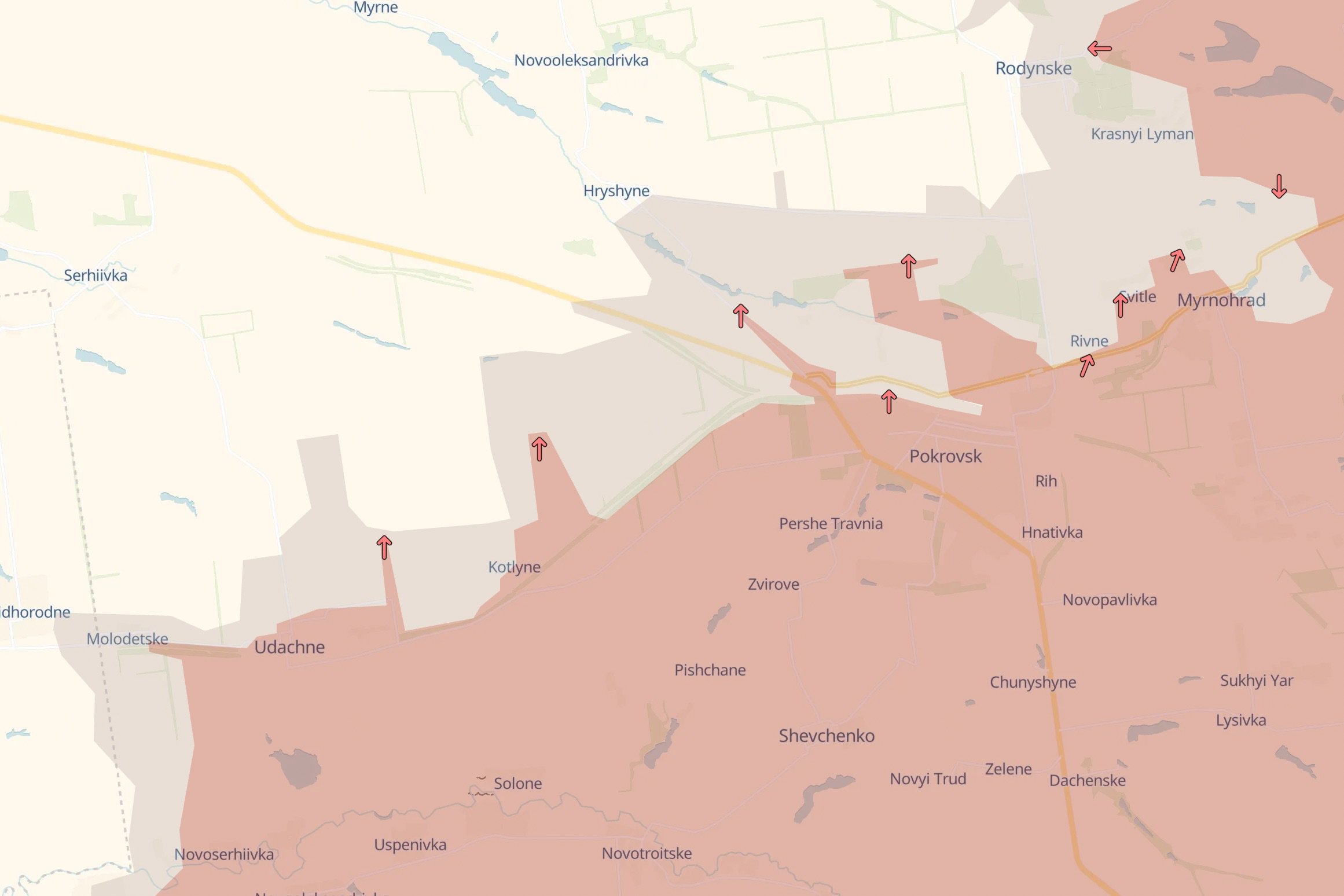
Pokrovsk and the surrounding areas remained the hottest section of the front in January. According to the Ukrainian General Staff, this sector had the highest level of fighting, with Russian forces attempting numerous assaults. On some days, more than 80 engagements were reported.
They mainly operate in small groups of three to five people
and attempt to infiltrate our positions,
“Lately, the enemy has increasingly begun using motorized vehicles such as quad bikes with small trailers. They are trying to establish logistics, replenish ammunition, and deliver food and medical supplies. They are also using electric scooters – they move quietly and are harder to detect. They mainly operate in small groups of three to five people and attempt to infiltrate our positions,” said Hryhorii Shapoval, spokesperson for the Operational Command East, describing the enemy’s tactics.
Ukrainian forces held back the enemy on the advances to Pokrovsk, Myrnohrad, Rodynske, and surrounding villages, repelling numerous attacks, including in the areas of Udachne, Kotlyne, Molodetske, and Filiia.
The Pokrovsk direction remained the most active, even on days with 260 to 270 clashes across the front, highlighting a concentrated enemy effort and repeated attempts to penetrate Ukrainian lines.
Huliaipole – the enemy aimed to stretch Ukrainian defenses
On the Huliaipole front, in the southern sector of the front line, combat activity remained high throughout January. The Ukrainian General Staff regularly reported dozens of clashes per day in the area. There, Russian units attempted to draw Ukrainian forces away or establish localized footholds for further operations.

They are in a constant state of assault,
they sometimes succeed,
Activity was particularly high near Huliaipole, Solodke, Zelene, Varvarivka, and other nearby settlements, where Ukrainian forces repelled attacks and held defensive positions.
Although this front did not always draw as much attention as the Pokrovsk direction, the enemy focused here on stretching Ukrainian defenses and weakening the southern flanks.
The commander of a company in the 93rd Brigade’s unmanned systems battalion, known by the callsign “Shtyk,” said that weather conditions are complicating the work of Ukrainian forces near Huliaipole.
“The enemy uses the weather to gain an edge, while we cannot. Reconnaissance and attacks on the battlefield are now mostly carried out by drones, and the weather prevents us from fully coordinating observation and fire.” Their task is to seize as much territory as possible – a tree line, a position, any patch of ground. In reality, they are in a constant state of assault. And now, when it is harder for us to detect the enemy, they sometimes succeed,” said the soldier.
Kostiantynivka direction – Russian forces push to intensify pressure
Another key sector in January was the Kostiantynivka direction, where the Ukrainian General Staff reported regular attacks and artillery strikes on Ukrainian positions.
The number of clashes here was lower than on the Pokrovsk or Huliaipole fronts, but the enemy systematically tried to increase pressure, conducting pre-assault artillery strikes with follow-on infantry groups.
The enemy is pushing everywhere it can. At the first opportunity,
they use vehicles – as soon as the weather worsens,
they immediately try to advance.
“The vehicles are destroyed, and infantry attempting to land also suffers losses. But they do not abandon their attempts. Foot patrols are constantly trying to infiltrate, even by crossing frozen bodies of water. Their losses are exorbitant, and they achieve no success,” said the chief of staff of the assault battalion of the 25th Assault Regiment, callsign “Hor.”
Kostiantynivka remains an important logistical and tactical hub that would allow the enemy, in the event of a breakthrough, to cut off adjacent sectors in Donbas.
Other directions: local and positional fighting, artillery strikes
Combat in northeastern Ukraine during January was largely confined to specific areas. According to reports from the General Staff, the enemy attacked and shelled areas near Vovchansk, Starytsia, Ternova, and Petro-Ivanivka, as well as on the Kupiansk direction – in the areas of Petropavlivka and Kurylivka. Ukrainian forces repelled all these attempts, preventing any significant changes to the front line.
In the Donetsk region, especially along the Lyman and Sloviansk directions, positional fighting continued around Yampil, Zarichne, Drobysheve, and Siversk. Russian forces regularly used artillery and assault groups, but no major breakthroughs or noticeable shifts in the front line were reported.
In southern Zaporizhzhia and neighboring regions, the enemy continued to carry out artillery strikes and drone attacks on Defense Forces positions and frontline infrastructure. Despite the increased intensity of the shelling, the overall front line in these areas remained relatively stable, with no significant strategic changes.
Author: Tetiana Zabashtanska
Adapted: Irena Zaburanna