Three attempts to quit journalism: a profession that won’t let go
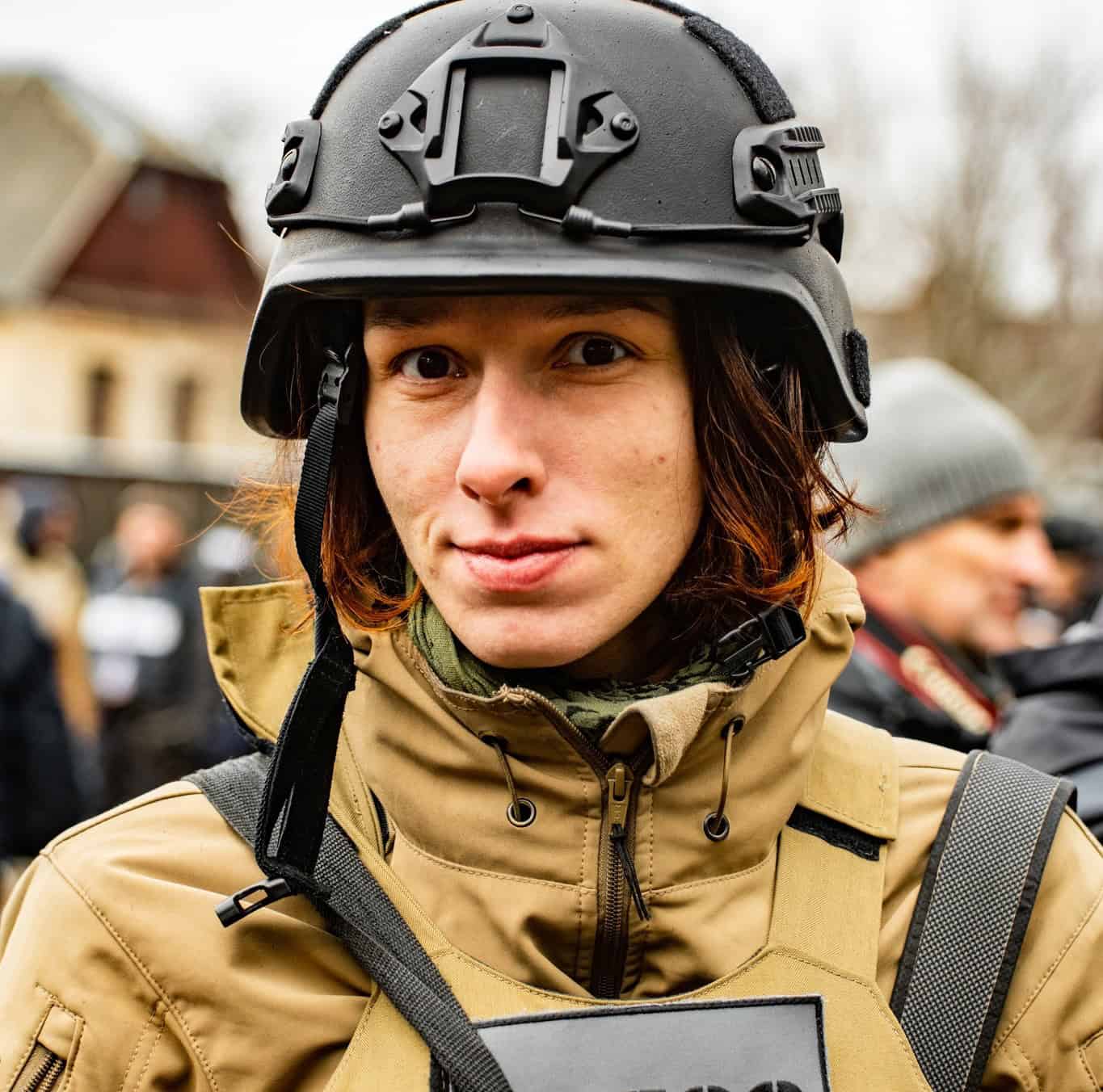
Attempts to leave journalism led to unexpected consequences, as unexpected events ultimately upended plans to change careers. Frontliner reporter Olena Maksymenko describes how revolution and war made journalism a defining part of her life.
“Ko-sty-lia! Ko-sty-lia!” the class chants. Thirty voices feel like a stadium crowd. “Kostylia”, a nickname mocking my thin frame, is me. I am 13, bullied at my new school. At that moment, I stand in the middle of the classroom, wishing I could disappear — undo my entire existence with a single Ctrl+Z. The nickname, given for my skinny body, is far from the worst of it. My classmates’ cruelty seems boundless. Every day they come up with something new. They can persuade a teacher to lower my grade. They can trash the classroom after I have cleaned it during my duty shift, then tell me the next day: “Don’t lie. Just admit you didn’t clean.” They steal and destroy my notebooks. Life feels like a constant hell, a daily struggle to get through. When we are asked in class to write an essay on “What I love most about school,” and told to be honest, I write a single sentence: “What I love most about school is the final bell, when I can get up and run home.” Journalism begins with saying what you think and feel.
When fate steps in
I am 15 when I join Yun-Pres, a youth media group for aspiring journalists. The new field hooked me immediately. It is something I truly enjoy and something I am good at. Just as important, it is a place where I finally feel accepted. I start winning competitions, and my writing makes it into the school paper. I make real friends in class. Journalism becomes the force that pulls me out of a dark place. I begin working with the Shkolyada and Starshoklasnyk radio stations, helping produce programs and even going on air. My voice goes out nationwide. It’s an incredible feeling knowing my mother and the whole country can hear me. We tackle issues that actually matter to teenagers. By the time my Yun-Pres graduation rolls around, our group is set to present our own newspaper. This is back in the early days of home computing, and I am the only one in the group with a computer and a printer. I take on the task of typing, laying out and printing our handwritten drafts. But then, disaster strikes: the printer runs out of ink. I only manage to print half the pages. With the presentation just an hour away, there is no time to fix the problem, and nowhere else to go. I have no choice but to show up with a mix of printed pages and the original handwritten drafts. I am embarrassed and scared, but in the end, these technical flaws hardly matter.
I am 18, studying at the Institute of Journalism and drawn to arthouse cinema. I want to become a film critic. I organize movie nights with friends, take part in discussion groups and read every film publication I can find. Eventually, I work up the nerve to approach one of those outlets and offer to contribute. The editor, a well-known film critic, hands me a VHS tape. The film will be released next season, he says. Write a review. The next challenge is finding someone with a VCR. I don’t have one. I end up watching the film dubbed in a flat, monotone “pirate” voice.
The result is a published review, a fee of 600 hryvnias — a staggering sum compared with my 40-hryvnia student stipend — another tape to review and a warning about word limits. I fail to stay within them. Instead, I decide it will be fine and assume the text will simply be given more space on the page. The editor shouts into the receiver for what feels like an eternity, never lowering his voice. My “career” as a film critic is over.
A few years later, I land a job as culture editor at Ukrainian Week magazine. It is my first day on the job, my first editorial assignment. “One of our contributors is a film critic,” the editor-in-chief says, handing me a printed text. “He’s gone over the limit. Cut it by 2,000 characters.”
The film critic turns out to be my former editor.
First attempt. Second attempt. Maidan and War
In 2013, I am covering contemporary art and culture. Politics does not interest me. I am regular in Kyiv’s galleries. Artists joke that I spend so much time with them that it may be time to start my own art project, an idea I am seriously considering. I start to feel like I have done everything journalism has to offer, so begin taking private photography lessons and planning a photo project of my own. Plans to leave the profession collapse with the events on Maidan. With them, the world I knew and the rhythm of everyday life falls apart. There is no way to stay detached. I am there every day — reporting, taking photos and volunteering.
In 2014, when armed men in unmarked uniforms — later dubbed the “little green men” — appear in Crimea, my colleagues and I travel to the peninsula. In 2014, the first “little green men” appear in Crimea, and my colleagues and I head to the peninsula. Our car is among the first turned back at a checkpoint flying the Russian tricolor (before the sham referendum, when, even by Russia’s own logic, Crimea was not part of the Russian Federation). Three days of captivity, marked by robbery, beatings and a mock execution, force me to rethink the value of the profession. Words and images no longer feel like effective tools. I try to join the military but am turned away. Official structures refuse to take a woman without experience. Instead, I complete a training course and join the Hospitallers, a volunteer medical battalion. Even though I train as a combat medic, it is my communications background that proves most in demand. The battalion relies on donations, and donations depend on compelling storytelling. Reporting on the work of medics at the front becomes my responsibility. No matter how much I resist, I cannot escape what I am best at. I do the work I know how to do. And it helps save lives.
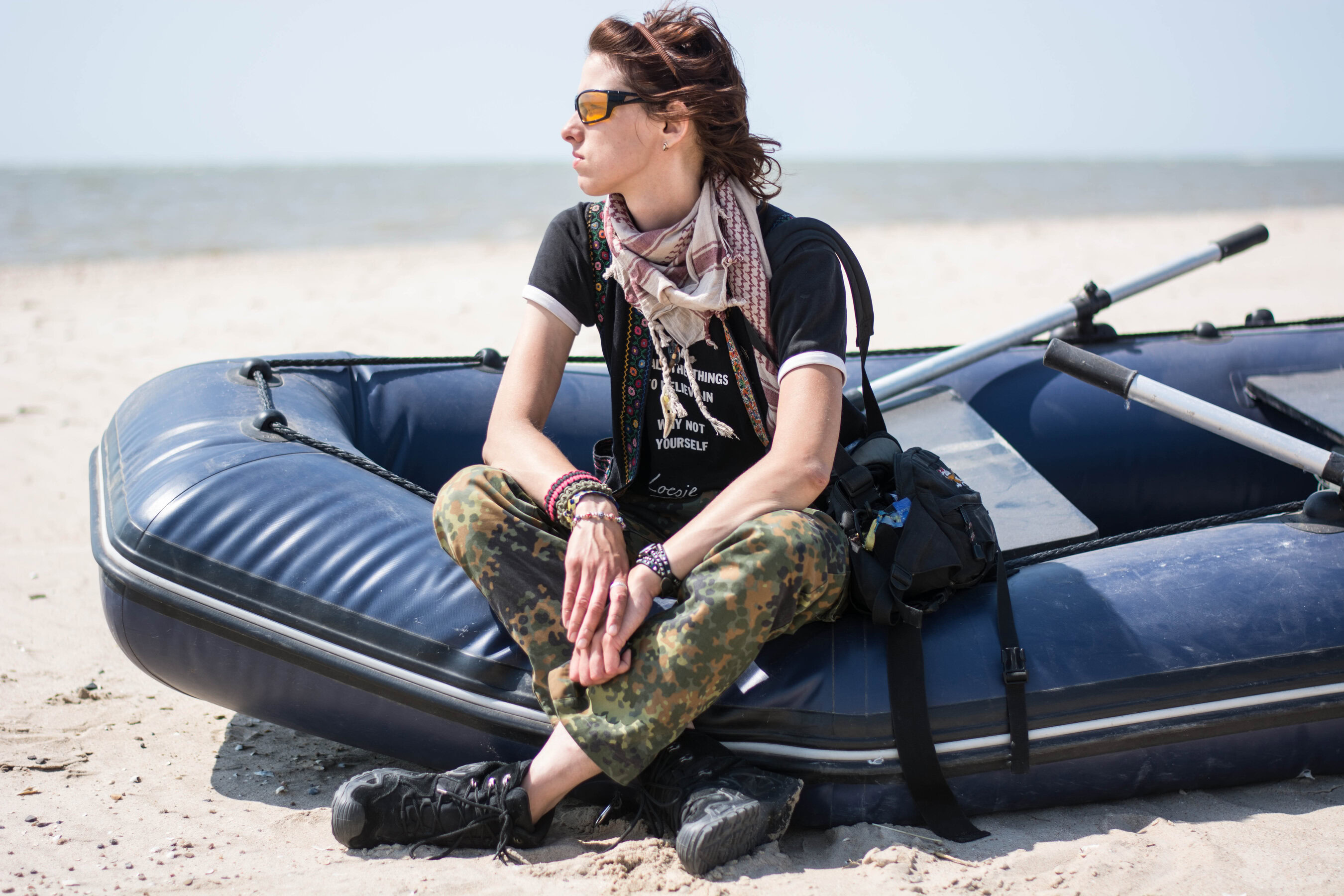
During a frontline rotation near Shyrokyne, outside Mariupol, we settle into an abandoned house. As breakfast is being prepared, I leaf through a stack of old newspapers nearby. One Russian-language paper, Mariupol News, catches my attention with a story about bullying among teenagers. I skim the article. An unnamed author is telling my own story, and citing me. The circle closes. I smile to myself, thinking of my 13-year-old self, holding on and surviving through writing. As it happens, the corner of the page with the author’s name and the year of publication has been torn away. The origin of the piece remains a mystery.
I return to journalism and begin traveling to the front as a reporter, writing and filming for various outlets. The work is motivating and gives me a sense of purpose. In 2021, I become one of the first contributors to the newly launched outlet Frontliner.
Third attempt. The full-scale invasion
By 2022, the work feels increasingly hollow. The meager pay makes it hard to get by, and war stories draw less interest from readers as the fighting has stalled. Burnout has fully set in. Once again, I find myself thinking about a career change. At the same time, a new outlet is taking shape. It’s an experimental project built around a format not previously used in nonfiction, no longer quite journalism and not yet quite literature. I interview for the role and complete a test assignment. A meeting with an HR manager is scheduled for February 24, 2022. But once again, history takes an unexpected turn. “I’ve joined the Territorial Defense Forces of Ukraine. We’ll pick this up after victory,” the HR manager writes.
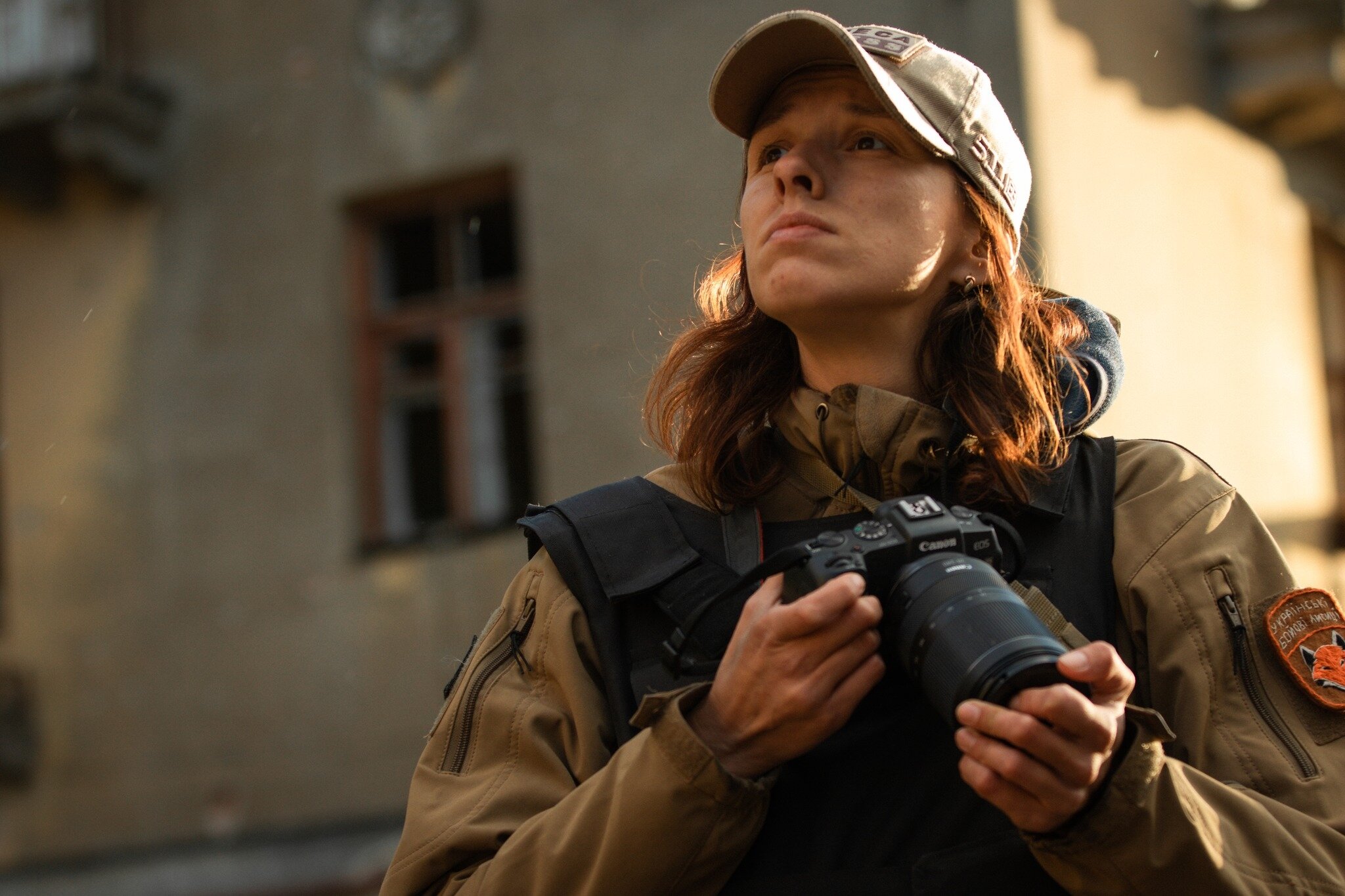
It is now 2026. I am still a journalist and I’m still covering the war. More than ever, I realize that experience does not mean you stop growing. Journalism is a mindset, a way of seeing the world. It is when you arrive in a new city and a story immediately starts taking shape in your head, headline and all, even if you had no plan on reporting. It’s even going on a date with a stranger and bringing a recorder and a camera, just in case he turns out to be a story worth telling.
I tried to walk away from this profession three times. Each time, those thoughts were followed by world-altering events: a revolution, a war, and a full-scale invasion. That was enough for me to realize that journalism doesn’t let go. It’s more than just a job — it’s in my blood.
***
Hi, I am Olena, the author of this article. Thank you for reading to the end. Every day, we work in life-threatening environments and report from the front lines and the surrounding areas to document the reality of the Russo-Ukrainian War. To protect the lives of our teammates, Frontliner, in partnership with UA First Aid, is raising funds for 30 first-aid kits for our team. Join the Frontliner community so we can keep telling important stories from the ground.
***