‘There is nothing else I know how to do’: a journey from Bakhmut to journalism
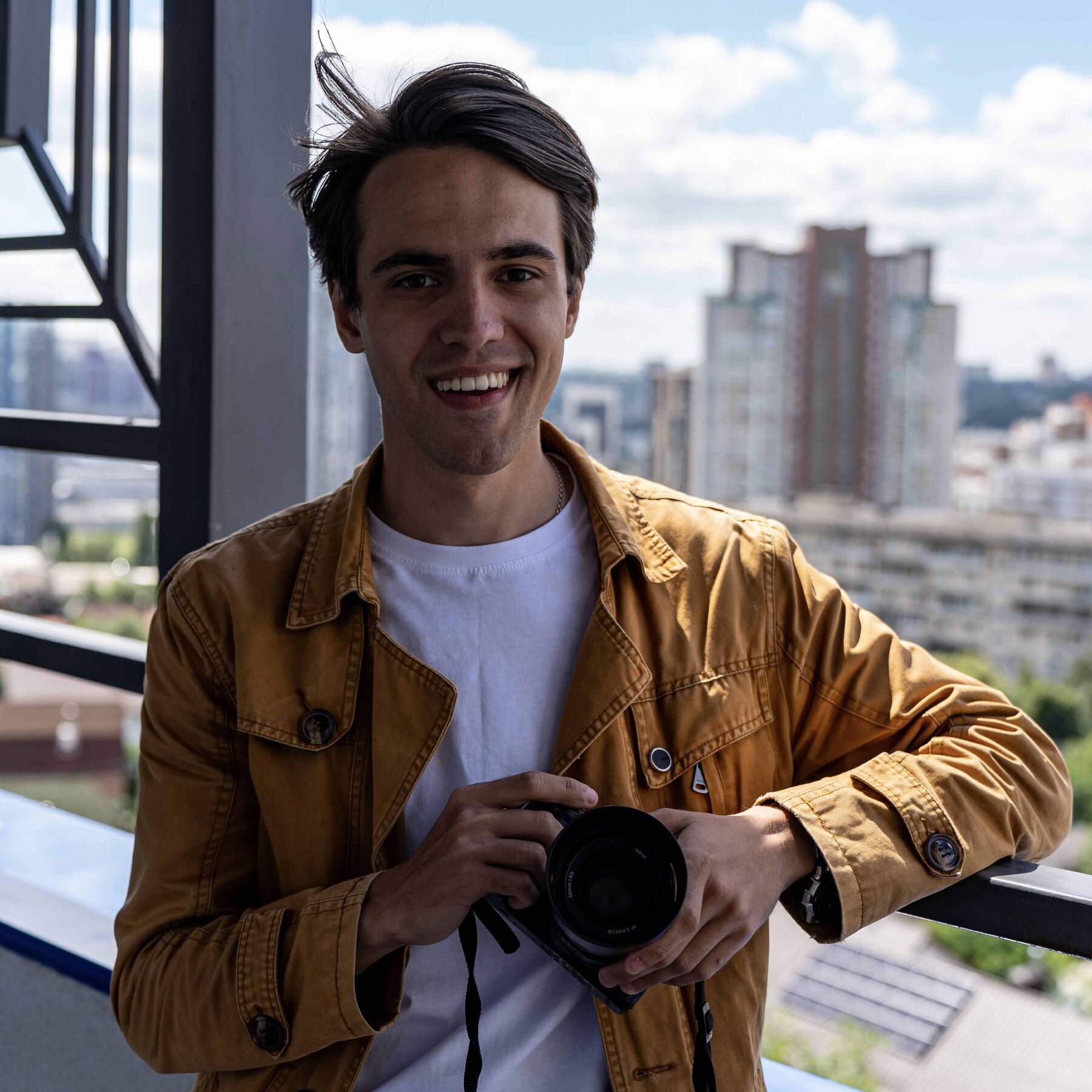
Choosing a career in media means discovering that nothing else drives you with the same passion. It is a journey through doubts, professional burnout, and constant retraining. Frontliner reporter Artem Derkachov shares how his childhood dreams of working in media transformed into his lifetime career.
“Who would like to join the journalism club?” the representatives of the Youth Activity Center asked as they walked into our classroom during a math lesson. Among all my classmates, I was the only one who raised my hand. I was thirteen at the time. It was at this age that I first really started thinking about what I wanted to do in the future. Honestly, I had very different plans before then. Whenever someone asked which career I wanted to choose, I would confidently say that I wanted to become a banker. Back then, it seemed to me that working at a bank meant instant access to money. But that dream quickly crashed against reality. It turned out that to master such a profession, you at least need a solid grasp of math, which I neither understood nor, to be honest, liked. Besides, working at a bank would not guarantee a lifetime of financial security. So, my childhood plan collapsed before it even got started.
The first article
That is why the appearance of staff from the Youth Activity Center in our classroom felt like a sign to me, not a coincidence. My decision to accept their offer became my first step into the profession. The journalism club was led by Erika Herasymenko, who also worked at the local newspaper Sobytiia, which at the time was published in Russian. It was under Erika’s mentorship that I undertook my first research project, studying technology for designing the front page of newspapers. The result exceeded expectations: I took first place in the second stage of the National Competition of the Junior Academy of Sciences. The news traveled fast through the school. That quickly opened the door for me to the world of student government. So, after a while, I was one of the first to receive an offer from the assistant principal to join the “East and West Together” program. As part of the program, I was to travel to the town of Zolochiv in the Lviv region and live with a host family to experience traditions new to me. However, there was something else that proved to be even more important. This trip was an opportunity for me to write my first full-length article for Sobytiia. Therefore, as soon as I returned, I began working on the first article of my life.
In a week, an article under my name was published. My happiness knew no bounds, since I was well aware of how many people in the city read that newspaper. However, the best surprise was yet to come. My article caught the attention of Tetiana Shamanska, the director of the local TV station. She offered me the chance to try my hand at being a TV correspondent. This is how I officially started working at the local TV station TRK Bakhmut at the age of 15.
The first challenges
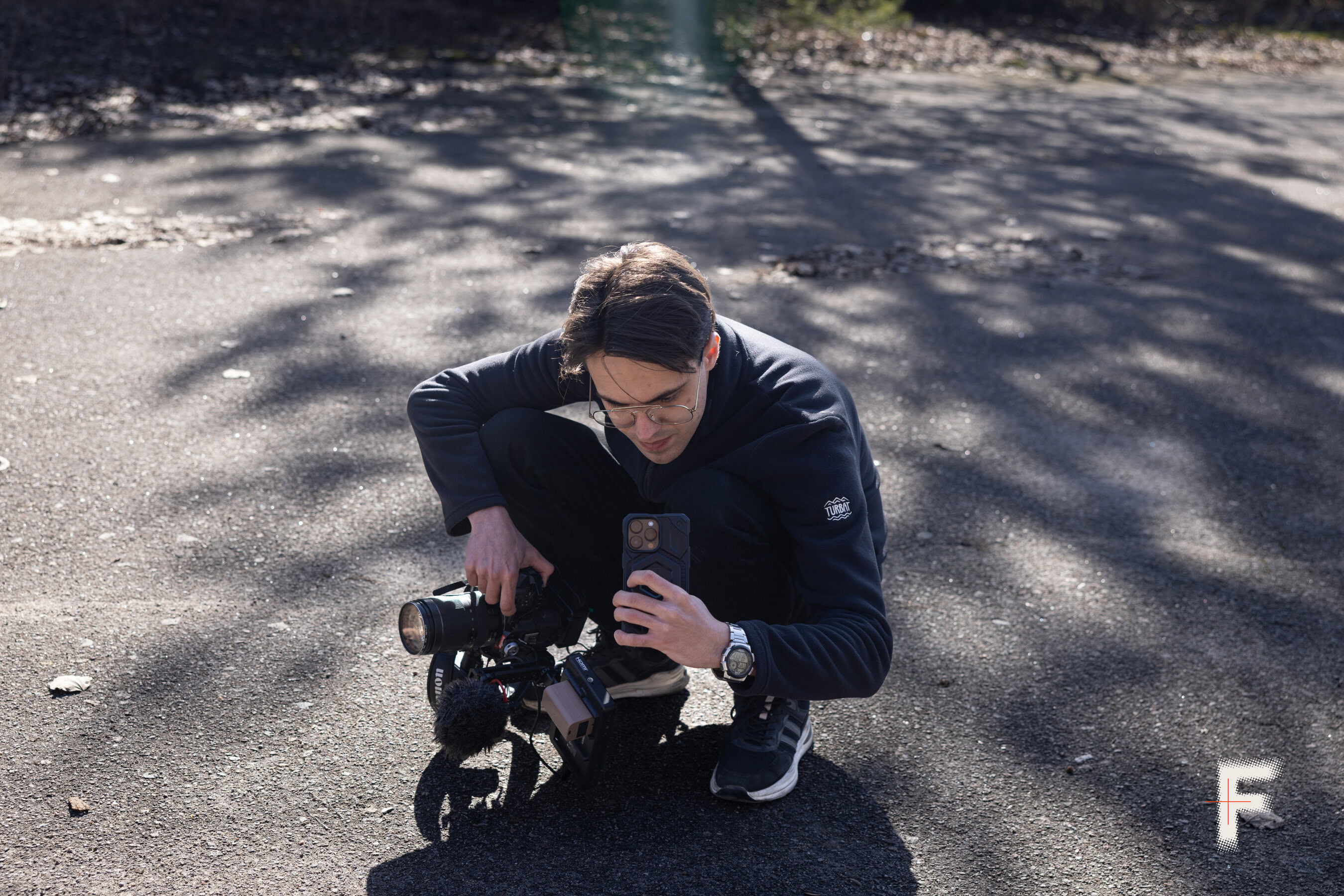
At the TV station’s office, I met the person who equipped me with the skills I still use. It was cameraman Dmytro Okhmat. Despite the age difference, we quickly got along. Dmytro taught me everything, including how to work with a camera, how to edit, and how to stay in the frame. Shortly afterwards, I was already filming stories about city life on my own, for which I received my first payment – 500 hryvnias per story, which was pretty good for a teenager.
The pieces I created for the TV channel were often submitted to journalism competitions. In fact, one of them even won first place in a national competition held at Borys Grinchenko Kyiv Metropolitan University. This victory was not just a certificate: it granted me the right to enroll in the university without taking a special entrance exam. This is how I first ended up in the capital. The biggest shock for me back then was seeing ordinary passenger planes flying overhead. After all, at that time, the airspace over my hometown of Bakhmut had long been closed, and there were checkpoints and military vehicles all around.
However, right before I was set to enroll in university, the system played a cruel trick on me. The rules had changed, that special entrance exam had been canceled, and my bonus simply ceased to exist. It was the first major obstacle along my path. Meanwhile, the aforementioned exam still existed at the University of Culture, to which I also had applied. But problems awaited me there as well. The professors, upon learning that I was from the Donetsk region, began asking me questions about the war and life in a frontline city. The problem was that their so-called official information differed drastically from the reality I had seen with my own eyes. For example, when they asked me about the occupation, I denied it and said that nothing like that had happened. My truth did not suit them, so they flagrantly flunked me and I was forced to enroll in a tuition-based program.
I never really had a chance to experience student life fully. With the onset of the COVID-19 pandemic in 2020, I was forced to return to Bakhmut and continue my studies online. However, at the beginning of 2021, I returned to Kyiv and got an internship at Live TV. Every day, I helped journalists produce content, hoping that I would be able to become a trainee after the internship. Finally, that day did come: on Feb. 23, 2022, the editor asked me to prepare a report on the condition of shelters in Kyiv as a possibility of war approached. I was supposed to head out for my first shoot on the morning of Feb. 24, but that did not happen.
On that day, Russia launched a full-scale invasion. And instead of filming a story about shelters, I ended up in a shelter myself.
Unavoidable circumstances
Due to active combat near Bakhmut, my parents were eventually forced to leave everything behind and find a new place to live. Under these circumstances, I had to earn a living on my own, so I got a job at KFC. After a while, I even started to lose hope, thinking that because of the major events in the country and the world, I would never be able to work where I dreamed of. Still, my coworkers eventually started calling me “the reporter,” since they knew about my plans to break out of the fast-food kitchen and build a professional career in media. Luckily, the very first changes happened in just one year. A friend I studied with at university called me and suggested I try my hand at the Rada television channel. I passed the interview, created my first piece, and became part of their team. I remember the words of my first editor-in-chief: “You seem young, yet you write as if it is the Komsomolska Pravda newspaper.” It was the first time I realized that it is not enough to be literate and know how to construct sentences to write even a short script for a TV segment. It is an art, and even a lifetime would not be enough to learn to write simply, engagingly, and in a way that appeals to everyone.
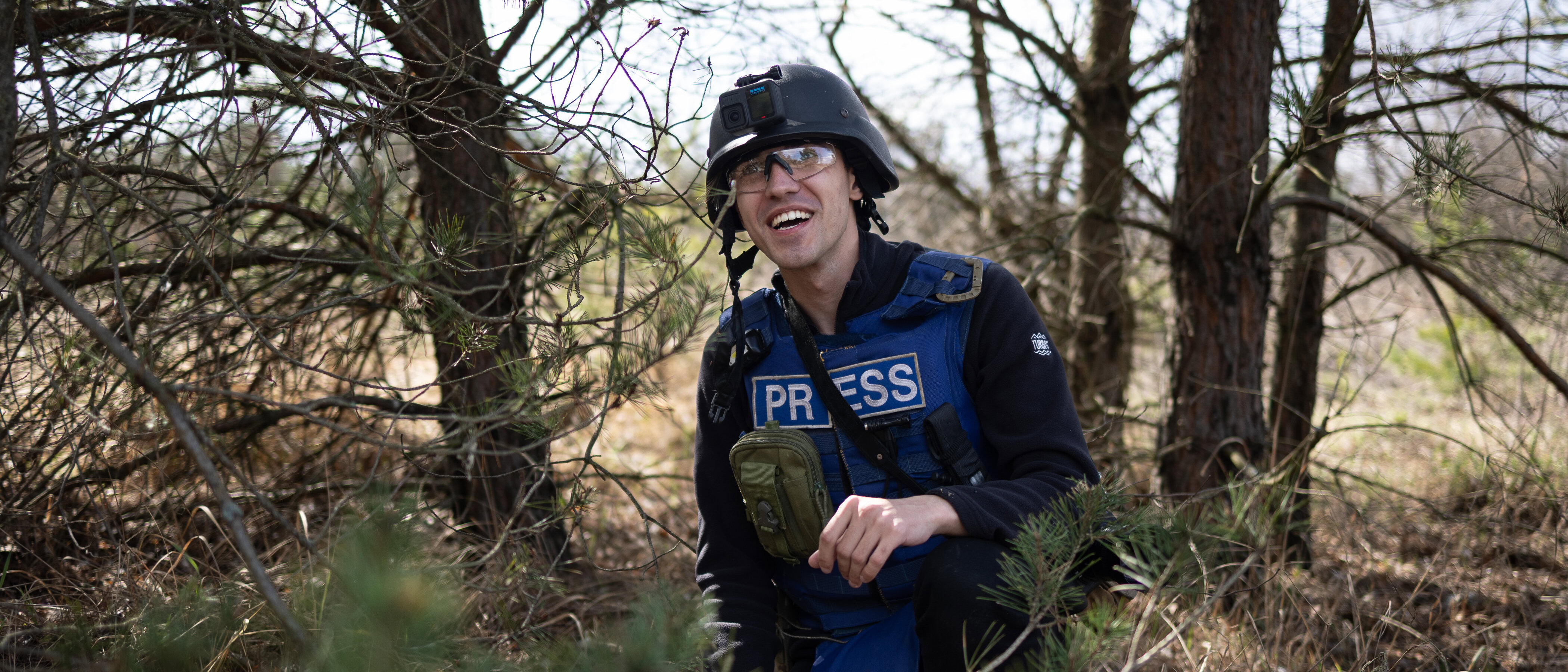
Throughout my time working for the TV channel, I travelled all over Ukraine, worked with famous people, and filmed news reports in the war zone with the soldiers. It was exactly the life I would always dreamed of, meeting new people, hearing unique stories.
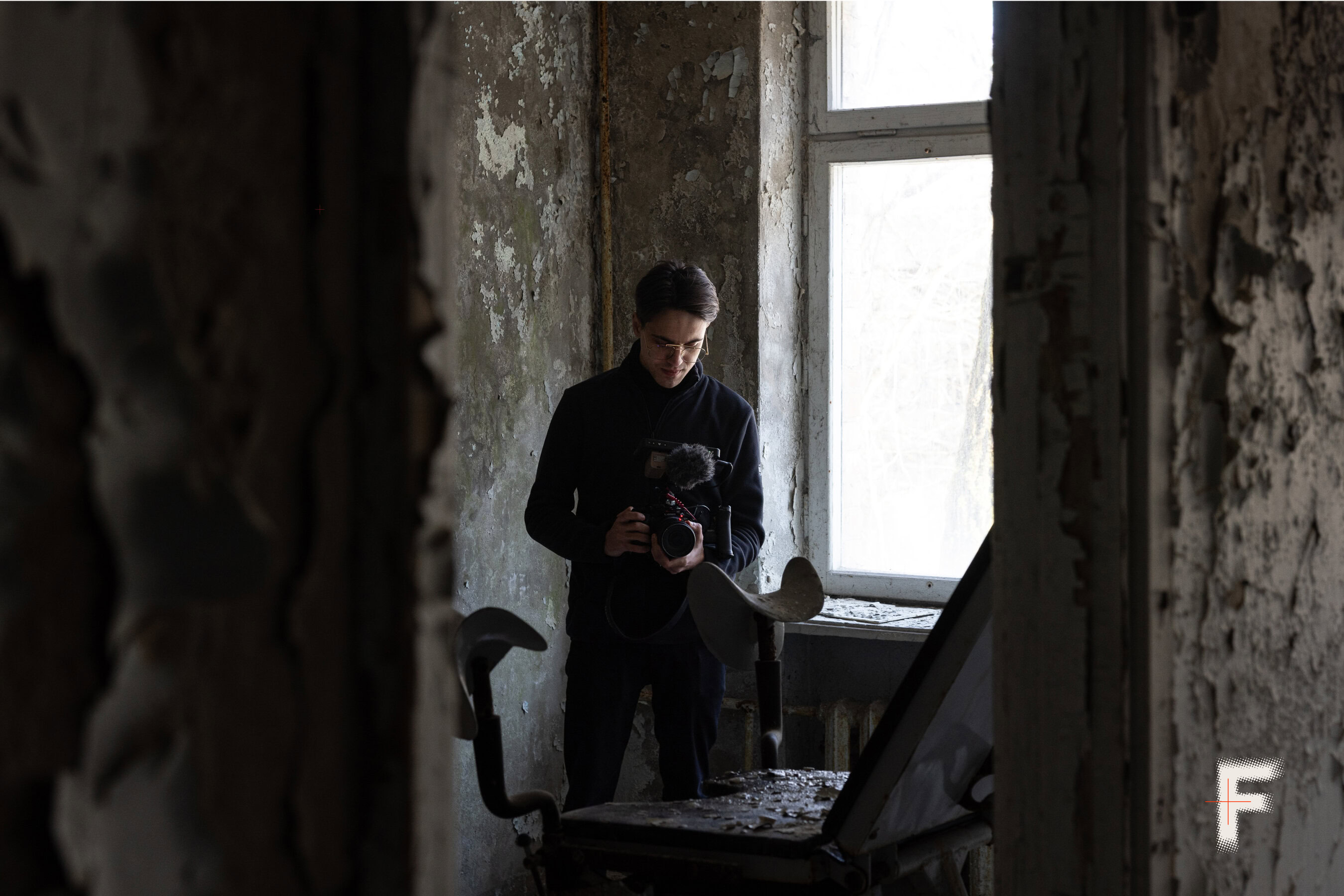
But over time, what had once been so exhilarating became exhausting. Shoots, deadlines, and the constant chase for new stories have all become routine. It was as if I had reached a certain point in my development and remained stuck there. Everything looked like forward movement from the outside, but inside it felt like a vicious cycle from which I did not know how to escape.
The path to Frontliner
One day, I met someone who changed my perception of the profession. It was a young woman who suggested I try my hand at photography. She also introduced me to the media outlet Frontliner. The articles I saw on the site made a strong impression on me, but they also made me realize that my knowledge and skills were not yet sufficient to work at that level. Learning photography became another goal I set for myself, as well as working on my writing more deeply, more precisely, and adopting a new approach to my work.
Eventually, I decided to write to Frontliner, hoping to join the team, but I did not receive a response. However, my desire to be part of a media outlet where I saw real prospects and growth was stronger than their silence. I decided to take the proven approach, and do what I can do best. I simply filmed and edited a video report without waiting for approval of the topic. Two years have passed since then. Today, I write reports and analytical articles for Frontliner, which is now more than just my main place of work. It is a space of opportunities and people who not only teach professional skills but also offer advice that shapes me as a person.
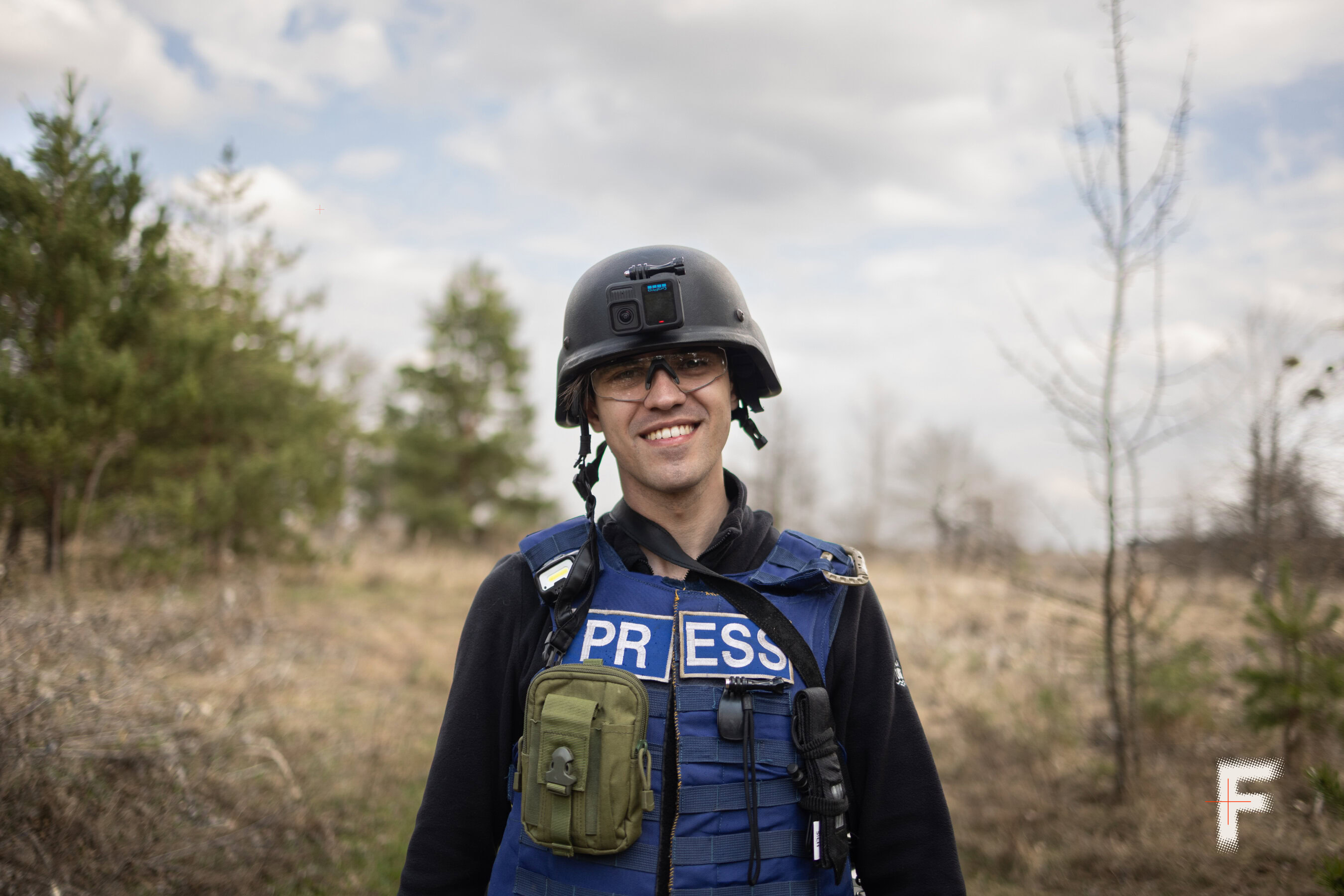
It is hard to believe that more than 10 years have passed since I created my first piece. During that time, I have wanted to give it all up more than once. There were moments when everything fell apart, when I kept making the same mistakes over and over again and dreamed of restarting my life from scratch. Nevertheless, I am still doing a job that does not bring in a fortune. It also does not offer the fame I dreamed of as a child.
Instead, there is something more valuable: the opportunity to reveal the truth to the world, to tell other people’s stories, and to constantly learn. And, to be honest, there is nothing else I know how to do. It seems like this is exactly where I am meant to be.
***
Hi, I am Artem, the author of this article. Thank you for reading to the end.
Every day, we work in life-threatening environments and report from the front lines and the surrounding areas to document the reality of the Russo-Ukrainian War. Join the Frontliner community so we can keep telling important stories from the ground.
***