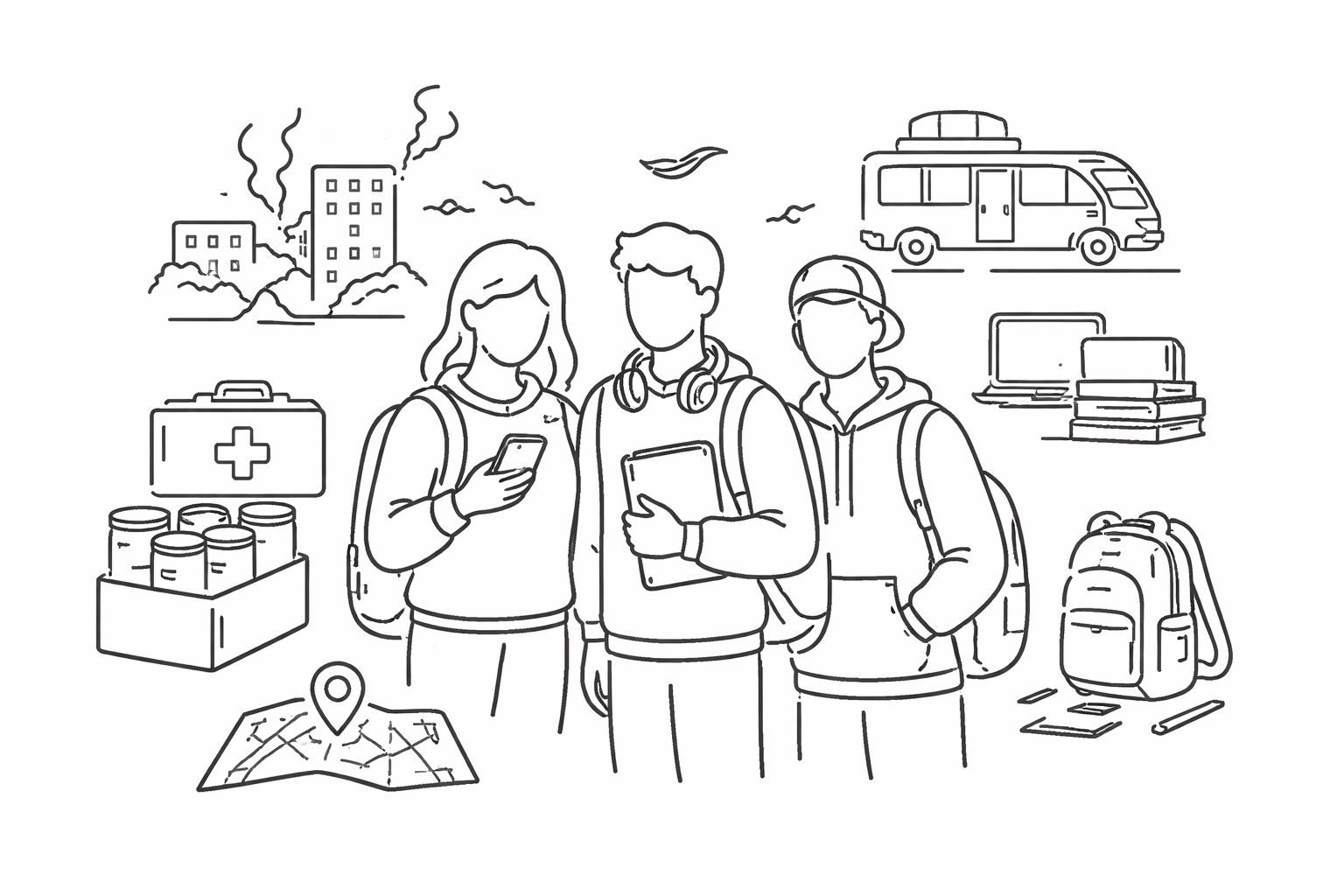
Teenagers and youth of war: how a generation’s identity is changing
Russia’s full-scale war against Ukraine has long moved beyond the front line. It has entered schools, families and cities, disrupted education plans and the first steps into adulthood. The generation born in the 2000s and 2010s is growing up in a reality shaped by shelling, displacement, loss, distance learning and volunteering, and by constant choices: stay or leave, study or work, speak or act. Frontliner examines how the war is reshaping the identity of teenagers and young people.
For young people, the war has taken away a sense of predictability but given them a different anchor — the habit of living in short cycles and relying on close circles of people. A UNDP study recorded growing attention among young people to mental health: 25% named it as an issue that concerns them.
The share of those who recognize the need for psychological support has also increased, along with the willingness to seek free assistance. At the same time, academic research on adolescents living through war points to significant psycho-emotional strain and the need for accessible, non-stigmatizing support.
School as a phenomenon, not a place
For many teenagers, school has become not a building but a switch: offline today, shelter tomorrow, online the next day, followed by relocation. Analysts at Cedos describe the consequences of the full-scale invasion for school education, including destruction, forced displacement of students and teachers, and losses within educational communities.
UNICEF, in its situational analysis, stresses that the war systematically undermines children’s well-being, particularly through education disruptions and psychosocial risks.
Self-identification and choice
For the generations of the 2000s and 2010s, being Ukrainian increasingly means not a declaration but a choice of language, social circle and the rules they accept. Sociological data point to shifts in identity: the Razumkov Centre reports a rise in the share of people who define themselves through a single national identity compared to previous years.
Another layer is civic engagement. An IRI survey among young people showed increased participation in public life and found that wartime coming-of-age in Ukraine is shaped by migration intentions, education, visions of the future and media consumption.
Advice for parents and adults nearby:
- Speak briefly and honestly: teenagers quickly sense falsehood, but accept simple explanations without dramatization.
- Restore control in small things: sleep, water, food, a charged phone, an agreed meeting point during air raids.
- Don’t reduce everything to the war: daily interests, sports and clubs remain essential.
- Provide a safe space for emotions: fear and anger are normal; the problem begins when a child is left alone with them.
- If negative symptoms persist for weeks (sleep disruption, panic, sharp decline in school performance, self-harm), seek professional help rather than trying to “re-educate.”
Identity in practice
The identity of teenagers growing up during the war is formed not through slogans but through practice: how children respond to air raid alerts, how they stay connected, how they help others and how they learn to plan in conditions of instability. Today’s younger generation is growing up faster, and at the same time needs honesty and attention from families, schools, the state and the media.
If adults want to have an impact, the best approach is not moralizing but clear rules, support and respect for the experiences teenagers have already lived through. War must not become the norm. Humanity must remain the norm.
Adapted: Kateryna Saienko
***
Frontliner wishes to acknowledge the financial assistance of the European Union though its Frontline and Investigative Reporting project (FAIR Media Ukraine), implemented by Internews International in partnership with the Media Development Foundation (MDF). Frontliner retains full editorial independence and the information provided here does not necessarily reflect the views of the European Union, Internews International or MDF.

Read more — Through the Carpathians – on the final journey. Volunteers bring fallen soldiers home