
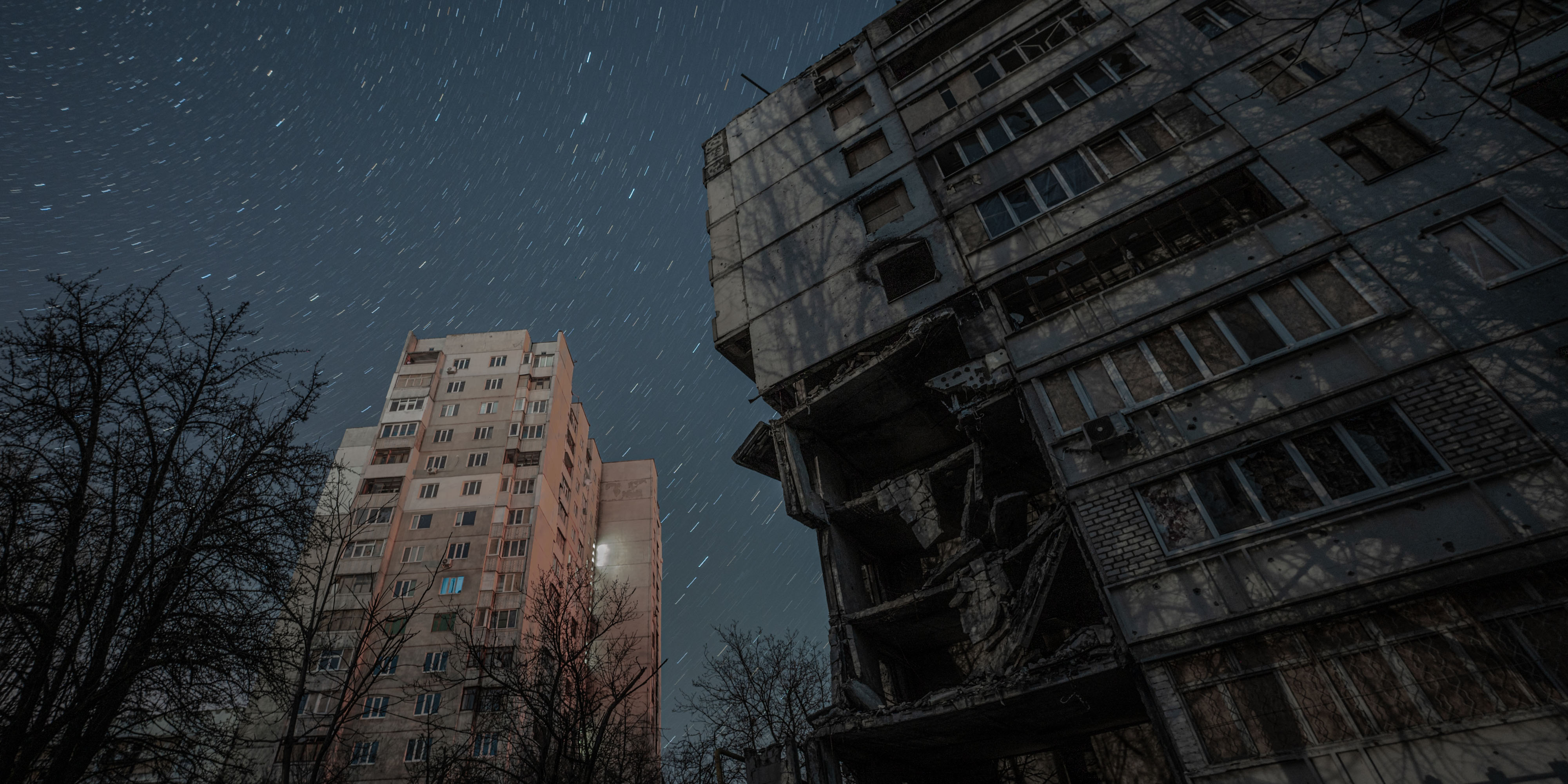
Kharkiv — a city in the east, a city on the edge
Kharkiv is changing its face under the pressure of war: once a city of students and industrial plants, it has become a frontline fortress learning to live under constant shelling.
Kharkiv is changing its face under the pressure of war: once a city of students and industrial plants, it has become a frontline fortress learning to live under constant shelling.
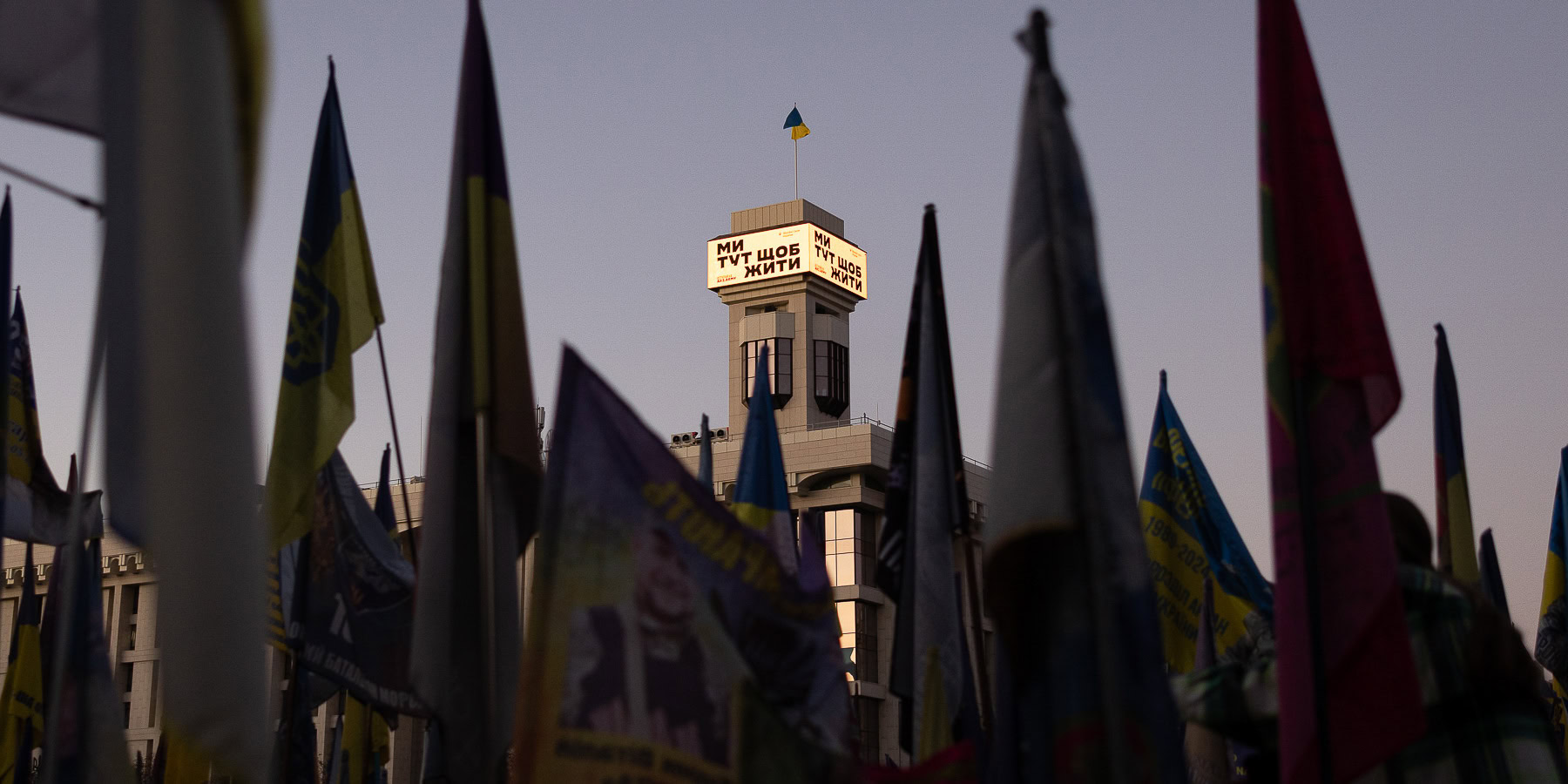
Kyiv remains in a state of internal stillness, even as life gradually returns to the streets. The city coexists with the war: landscapes, habits, and rhythms are changing, and if you listen closely to the silence you can sense the tension in its streets.

The full-scale war in Ukraine has dramatically reshaped the country’s demographic landscape. Over two and a half years, the population has declined by at least 10 million.

Seventy-three-year-old Lidiia Burlatska has lived through two wars in one city. In 2014, she did not leave Sloviansk during the occupation, and now she refuses to evacuate, even though the front line is approaching and is only 25 kilometers from her home. During three years of full-scale war, the retiree lost her son-in-law, learned to fall asleep to the sound of shelling, and stopped watching the news “because it hurts.” More than 50 years of living in Sloviansk have convinced her that there is no point in running away from what she has built her whole life. A Frontliner reporter spoke with a woman who lives where war has become part of everyday life, but where people still continue to hope.

Artist Valentyna Huk decorates the streets of Kharkiv with mosaics she has created herself. Today, six patterns made from the debris of windows that did not withstand Russian shelling hang on the city's buildings. Valentyna spends several weeks of painstaking work on each one, starting with searching for pieces of glass in the ruins and ending with assembling them into unusual “puzzles.” The artist showed Frontliner how sharp shards become “loud” street art under her delicate fingers.

Drones hunting enemy UAVs have become the latest twist in the battle of technologies. The war behind the controls and screens in a cozy dugout is somewhat reminiscent of a computer game, but the stakes are life itself. Frontliner visited the anti-drone drones of the 93rd Mechanized Brigade “Kholodny Yar” in the Donetsk direction and learned about the specifics of such hunting.

He survived the hell of Mariupol and several Russian prisons—and never broke. Oleksandr Savov, 33, was one of the last Ukrainian soldiers to surrender at the Azovstal steel plant — the vast industrial fortress in the besieged southern city of Mariupol— in May 2022. Three years later, on March 19, 2025, he stepped off a prisoner-exchange flight with broken ribs, missing teeth and a single thought: to hug his 12-year-old daughter.

Over 50,000 Ukrainians have lost limbs as a result of the war. Most of them experience phantom pain – physical sensations in parts of the body that are no longer there. In Ukraine, such pain is treated with augmented reality (AR) technologies, physiotherapy, and even psychedelic therapy. Frontliner explains how it works in this report.

The first Ukrainian gun designed for NATO-standard 155-millimeter shells, the Bohdana self-propelled howitzer, is operating on the Toretsk sector. Its distinctive feature is the ability to strike the enemy at distances of up to 40 kilometers (25 miles).

Air raid. Explosion. And in seconds, your home becomes a pile of concrete, metal, and dust. What was your kitchen or bedroom a minute ago is now a trap. In Ukraine, where Russian drones and missiles are a daily threat, this can happen anywhere, anytime.