
Suspended youth: the story of a young man who witnessed hell in Krynky and survived
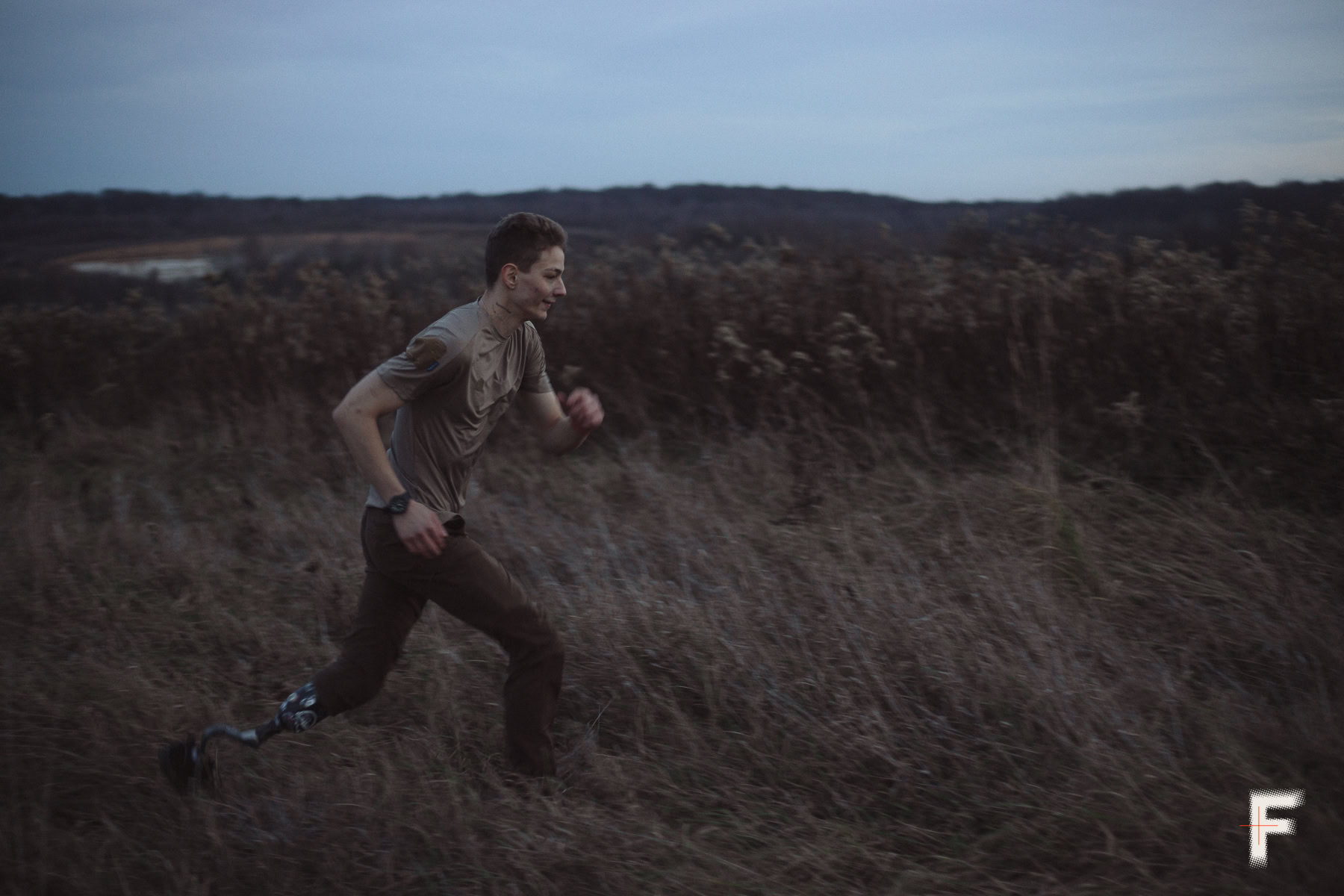
Yevhen grew up too fast. He never finished school because his battalion was sent on a combat operation in Krynky – there was no time for online lessons. He spent 67 days there and came out nearly unscathed. A few months later, however, he lost a leg on the Pokrovsk front – not because he truly wanted to, he told Frontliner, but because the steppe wind needs freedom.
Something kept him on the shores of the Sea of Azov. Yevhen turned down his parents’ idea to move to Turkey. He had no choice but to grow up. From the age of fourteen, he started working and living on his own. Yevhen toiled on a local beach at Henichesk, shouting his wares at the top of his lungs: “Corn!”
In the fall, the teen dutifully went to school. But sitting at a desk was hard, and his new habit – smoking – was burning a hole in his pocket. He had to resume his job search, but most of the places that had been open in the summer were closed for the season. The only spot still open was a nightclub, where he eventually landed a job.
Constant interaction with customers was exhausting, and Yevhen made it clear to anyone who disturbed his peace that he wouldn’t be messed with. He lived by a simple philosophy: “Don’t bother me, and I won’t bother you.” But what really kept troublemakers away was something else – he practiced hand-to-hand combat and collected knives.
His admiration for weapons was instilled by his grandfather, a hunter with a military past. It was his grandfather who taught him that a weapon is, above all, a responsibility. Yevhen fired his first shot while on a hunting trip with his grandfather in the Bessarabian steppes near the town of Kiliia.
As soon as the old man spotted a hare, he handed the rifle to the boy. “See it? Shoot,” he whispered a command. The recoil was so powerful that it threw Yevhen’s shoulder out of joint. Yevhen was brought up firmly by his grandfather. “You’re an idiot, you little brat. Your head wasn’t given to you for decoration. Use it to think.” Those words would help Yevhen years later, when he found himself in a hell called Krynky.

Daily lunch break
A year and a half had passed since the full-scale invasion began. News buzzed with reports of the Ukrainian counteroffensive. Yevhen was serving on the Donetsk front with the 503rd Marine Battalion. His unit manned several forward observation posts, trading shells with the Russians every morning and evening. As soon as the clock’s hand hit noon, the explosions would pause for an hour. The eighteen-year-old recruit was suspicious – he expected the enemy to strike at any moment – but the silence repeated itself every day, as if on a schedule.
“Is this really a war? Where are the heroic assaults, the counterattacks?” the young man wondered, and went to the observation post to ask a comrade what was happening.
“We’re on lunch,” his comrade said, chewing. “So are they.”

The sense that he had not yet done his part gnawed at him; he felt ready for more. The war soon gave him what he was looking for. The battalion was redeployed to Horishni Plavni during the formation of the 38th Marine Brigade. Yevhen was assigned to a newly created assault-and-landing company. With no real choice, he accepted. He became an assault trooper, entering a different kind of war – one of frontal attacks, blood, and death. His baptism of fire came in Krynky, near the places of his childhood.
On the other bank of the Dnipro
In the village of Kozachi Laheri, ten kilometers from Krynky, there was a summer house owned by family friends – a place the youth used to visit from time to time. Somewhere there, on the left bank of the Dnipro, he ate unripe apples and later paid for his youthful foolishness in a wooden outhouse. Those memories of childhood now fueled his resolve, something he needed more than ever.
The most difficult stage of the Krynky campaign was crossing the Dnipro.
“Russians were everywhere around the bridgehead, and behind us there was only the river – no way to retreat,” Yevhen says. “FAB bombs, meant for striking strategic targets, were being dropped on infantry.”
And the danger kept coming. Nine enemy mortars tried to hit the boat carrying Yevhen, but they still managed to reach the left bank. His first deployment to Krynky lasted less than fourteen days. Of the twenty men who went in, only three survived. At just nineteen, he was already responsible for whether others lived or died.
“Think,” he told himself, rifling through his memory to recall how to insert a decompression needle. The medic had been killed, and now the responsibility was on him. He managed to save his comrades – skills learned during training in Britain came in handy, and his grandfather’s words from Henichesk echoed through the years. Still, it didn’t protect him from injury. He was evacuated after shrapnel tore through the muscles in his leg. He would soon return to Krynky, this time staying for 53 days.
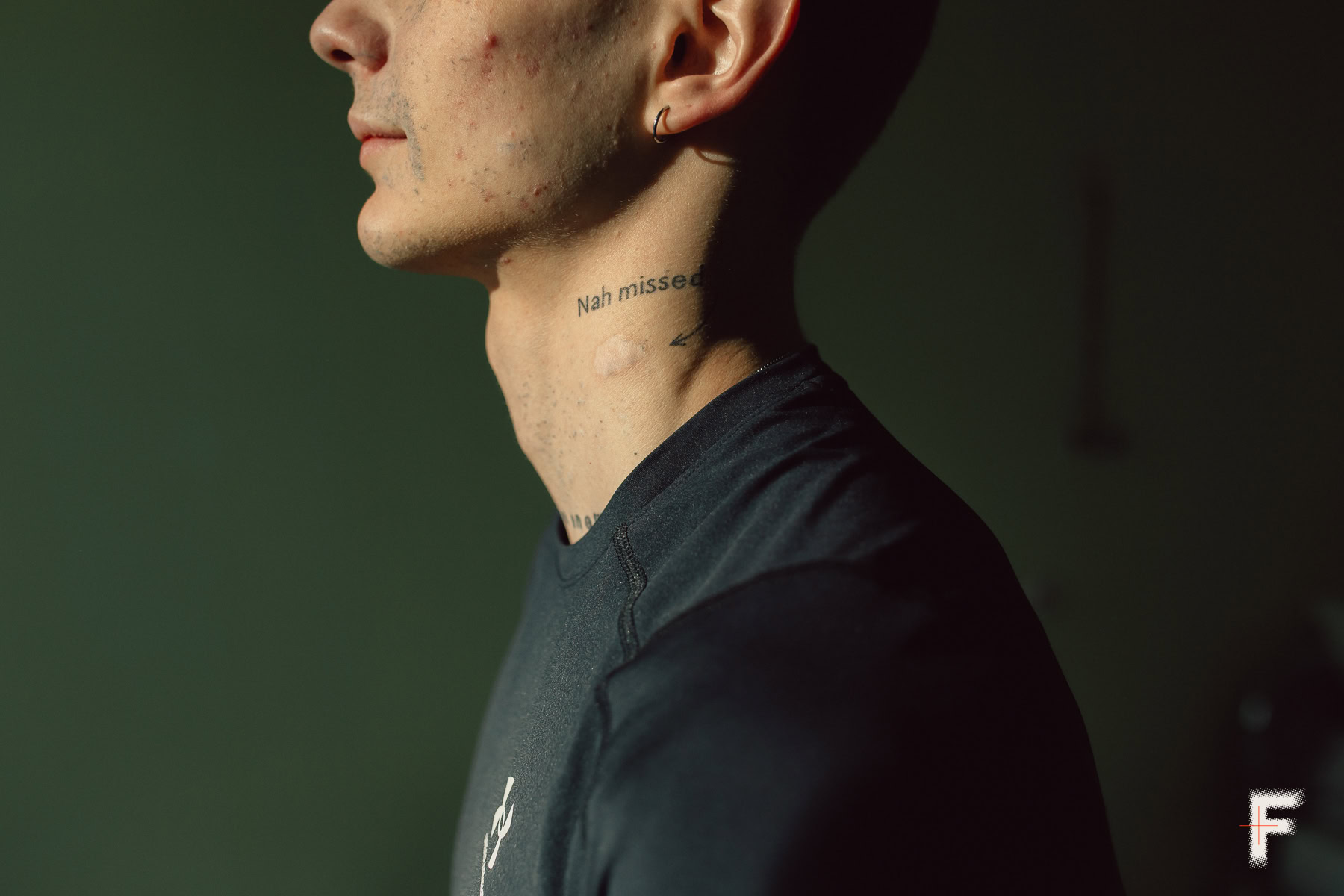
Between past and future
Yevhen didn’t mobilize out of patriotism. He spoke Russian, and the only time he encountered Ukrainian was in the community choir where his grandmother sang. He had other plans for his life: at the start of the full-scale invasion, Yevhen was traveling across Turkey, earning money there, since the corn trade had hit a dead end and there were no prospects at the local club. The young man dreamed of the future – he weighed his options, planned carefully, and moved forward.
But he ended up in a cold basement on the left bank of the Dnipro. He had been shaken by violence and the absence of justice. Responsibility weighed on him, along with the sense that he was betraying himself. That’s why he bought a ticket and returned to Ukraine. Motivation seemed enough, yet his thoughts kept drifting back to the dreams he had lost.
“The hardest part was not making plans for the future,” Yevhen says.
He counted the days in Krynky every morning: 1, 2, 3… 8… 19… 28. Each day felt longer than the one before. Charred trees reminded him that death surrounded them. For the young man, there was neither future nor past – only the here and now: the basement, the trenches, and the explosions. To keep his thoughts from completely consuming him, Yevhen clung to someone older. They offered advice – sometimes helpful, sometimes not – and it eased his burden. Yet at times, it made no difference: the graying men couldn’t always handle what nineteen-year-old Yevhen had to endure.
The fiftieth day in Krynky had begun. The guys were planning to change positions. As soon as they crawled out of the basement, fire rained down on them. When a nasty fragment struck his leg, Yevhen dashed back inside. His comrades looked away.
“Maybe you’d help, you bastard?” Yevhen shouted.
The grown men froze in shock. Yevhen saw the fear in their eyes and realized he could count only on himself. He shoved a piece of cloth into his mouth to grit his teeth against the savage pain and started twisting the tourniquet. Only after that was he evacuated.
“Let’s not go into this,” the young man said. He had seen too much. Some of it was hard to recount, and some of it remained classified.
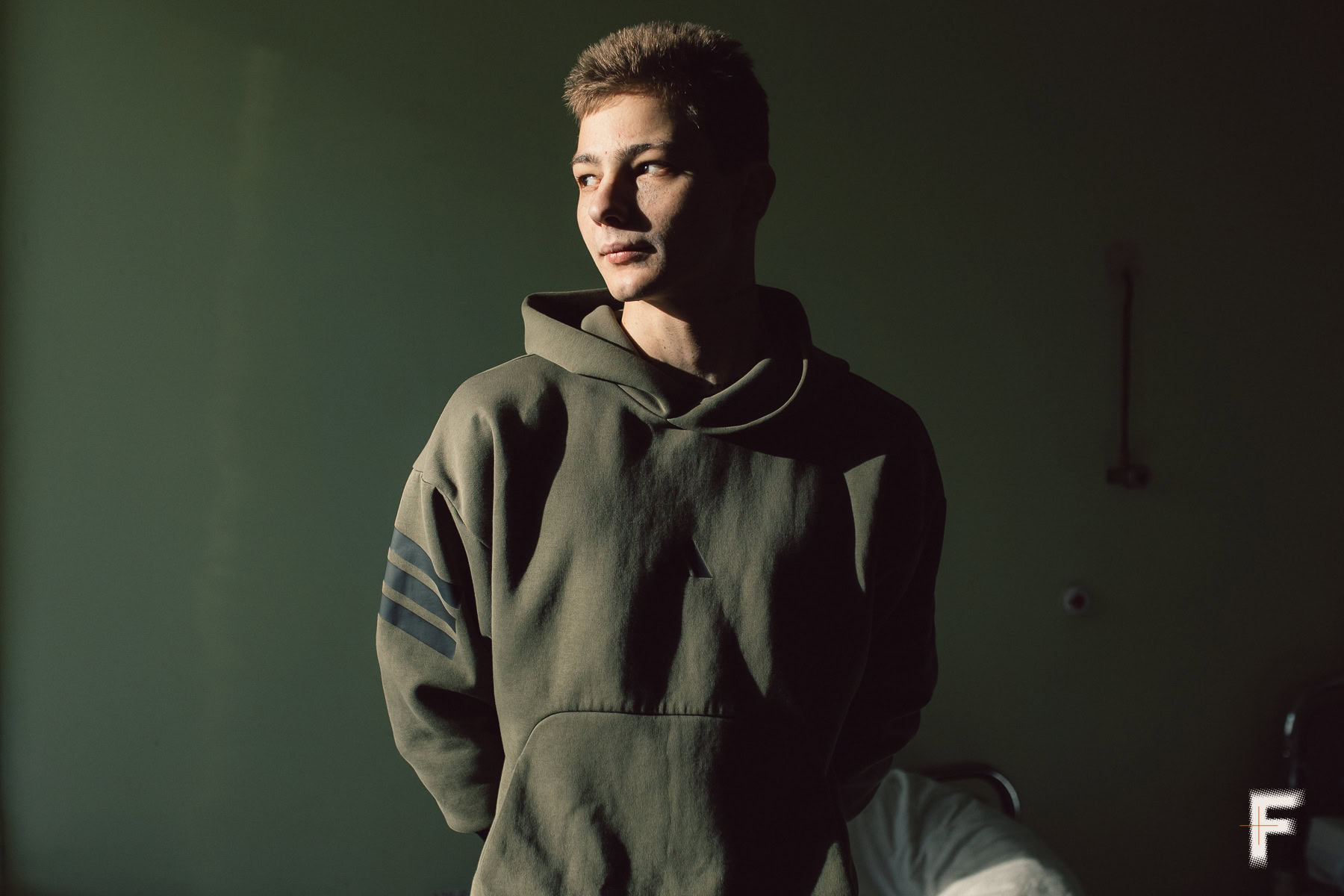
How “Ondatri” lost a paw
After his injury, the young man decided to start fresh and transferred to reconnaissance. At first, he served as an infantry sniper, then grew interested in drones and learned to operate them. In November 2024, his battalion was sent on combat missions to the Pokrovsk direction, and by April 10, “Ondatri” had lost a paw.
They successfully completed a reconnaissance – identifying enemy positions and fortifications – and began delivering the targeting data. The first team had finished its scouting mission and was waiting to rotate with Yevhen’s group, whose vehicle carried the ready-to-go drone bombers. But they did not make it – a few meters away from positions explosions erupted around them – they had been struck by an enemy drone.
Yevhen shoved his comrades, told them where to run, and instinctively reached for the “meaning of life” – his crotch. Thankfully, everything was there. He breathed a sigh of relief and tried to get up, but suddenly fell. It took him about a moment to realize that something had hit his leg.
After that, everything happened pretty quickly: he put on a tourniquet, ran to hide, blacked out and came back. He applied hemostatic, followed the procedure, checked his blood pressure – 50 beats per minute – “shit.” He checked for the bleeding and found it soaking into the other boot. He put on a second tourniquet, drenched in cold sweat. Yevhen then called his commander: they decided to pause the evacuation so the enemy drones would lose their trail, run out of power, and fly off. The vehicle arrived an hour and a half later. Yevhen crawled in and stayed awake for another six hours. He only fell asleep at Mechnikov Hospital in Dnipro.
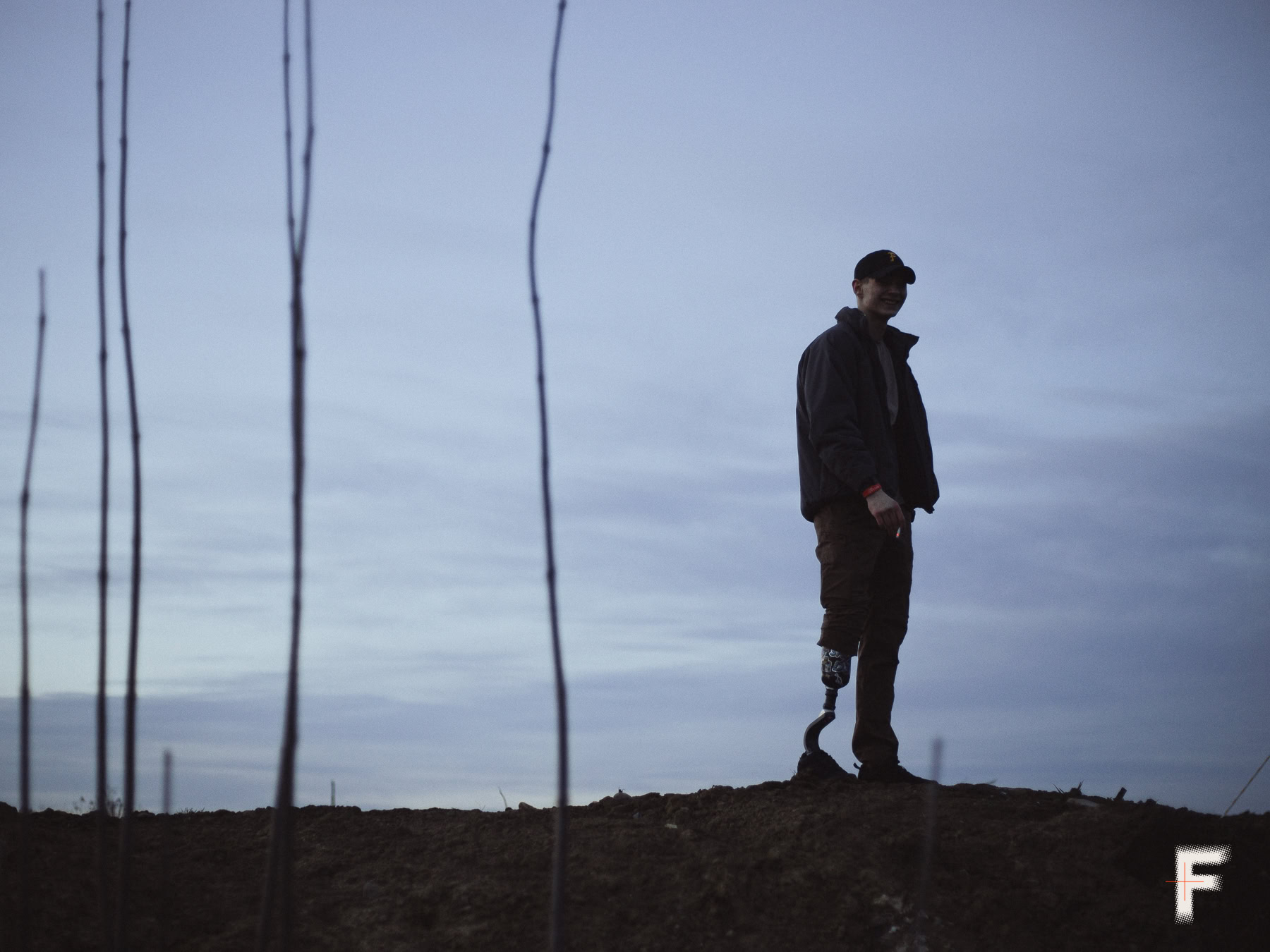
A luxury he can’t afford
His heel itched so badly that it actually brought him out of the coma. He reached for his leg but didn’t find it in its usual place – it was phantom pain. “I didn’t give a damn whether I had a leg or not,” he says. “On the contrary, I got a free pass to make jokes about disabled people.”
Phantom pains didn’t bother him anymore. Doctors predicted that the coma would last a week and a half, but he had no intention of lying around for that long. Bags of blood hung nearby – he was receiving transfusions. Yevhen yanked out the needles, thinking about stepping outside for a smoke, but the nurse quickly stopped him.

In the ward where he lay, the air was filled with the floral scent of perfume. Women came to visit their husbands. Yevhen smiled – with their presence, the men seemed to transform from being on the brink of death into brave knights.The young man was navigating the path of a warrior on his own and would not allow himself any pity.
“When I feel weakness, I see myself as worthless,” Yevhen says. “Weakness is a luxury I cannot afford.”
After the reamputation, countless surgeries, corrections, and complications, the young man was fitted with a prosthetic made by Unbroken. Then the rehabilitation began.
“I have to,” he gritted his teeth, trying to reach the next hold. Only 15 meters remained to complete the climbing route. Weakness tempted him to give in and let go, but he proved stronger. During rehabilitation, he became determined to conquer climbing walls. This is how he forged the character and endurance that would be needed in the near future.
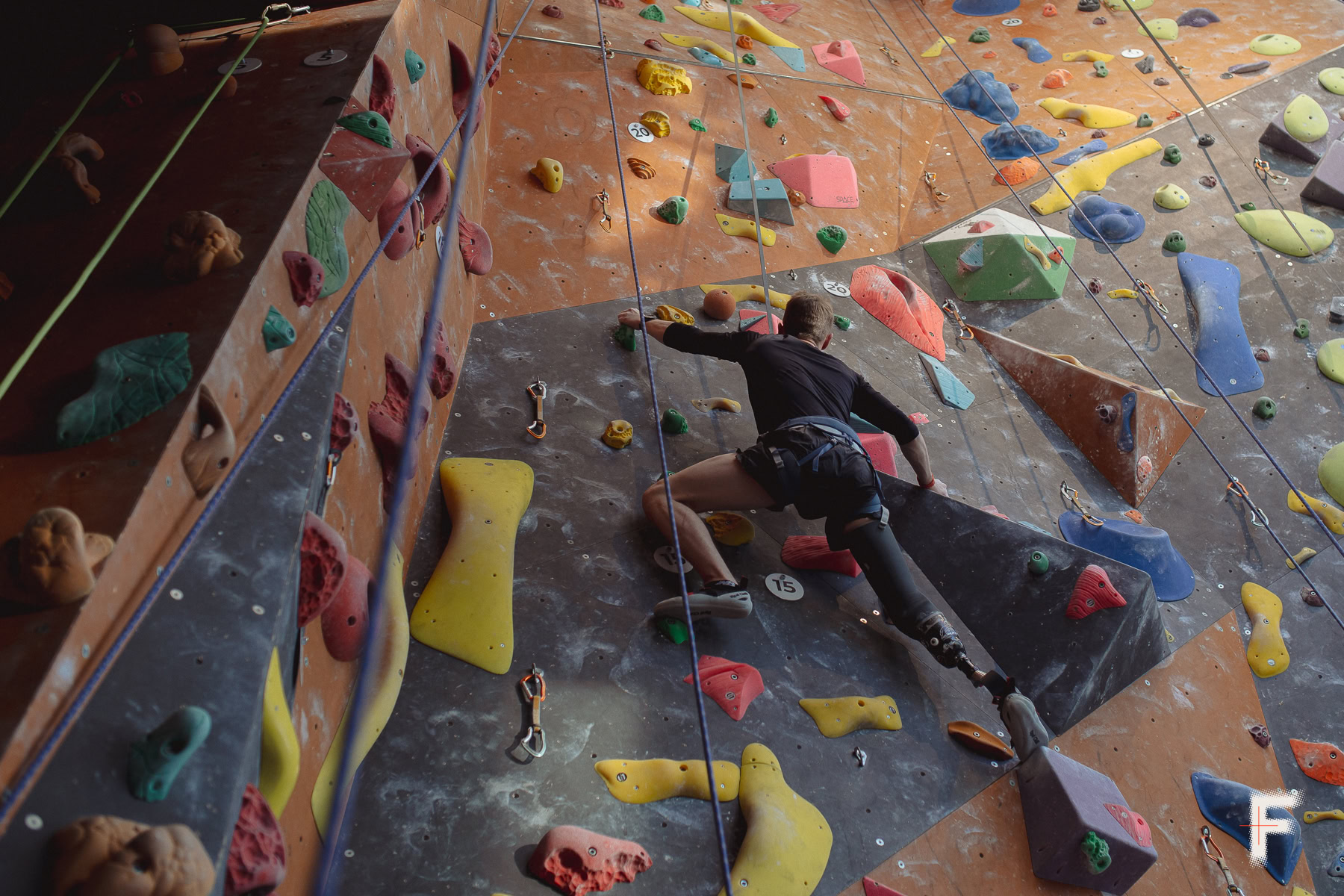
Yevhen hopes to return to the front. He harbors an irresistible – and somewhat romantic – desire to strike a Russian with his prosthetic.
After the war, if he survives, he dreams of putting on Scandinavian tunes in his headphones and touring the fjords: travel through Norway and Iceland and continuing his windblown, adventurous way of life.
Adapted: Irena Zaburanna