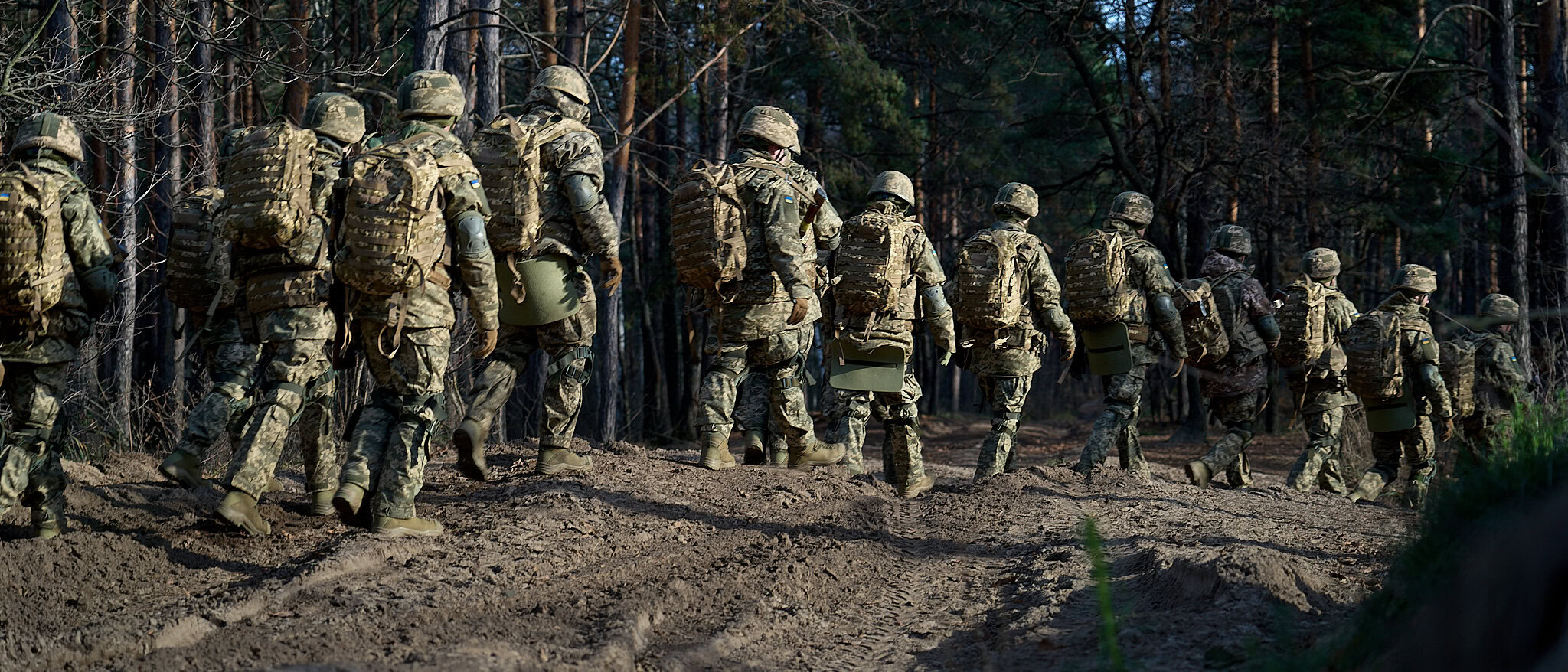
To survive and fight back: 51 days of training for war
Amid simulated explosions and the buzzing of drones, cadets drill until their reactions become automatic – ready to fight and to help a comrade. They are not superheroes, but ordinary people who were recently mobilized. Just yesterday they were civilians who never planned to carry weapons or imagined themselves in camouflage. Now they have 51 days to prepare for war. Frontliner spent a day alongside cadets during basic military training and observed how ordinary people become fighters.
Coaches say, the average age of newcomers at the training ground is about 40. There are no young recruits here. Most of the men were mobilized only recently. Military service is a new and, at the same time, a forced stage of their lives. Among them is 36-year-old Ivan Zakrevskyi, who is on his 17th day at the training ground. Before mobilization, he worked as a construction worker building bomb shelters.
I was on my way to work in the morning when draft officers stopped me.
And now, as you can see, I’m here,
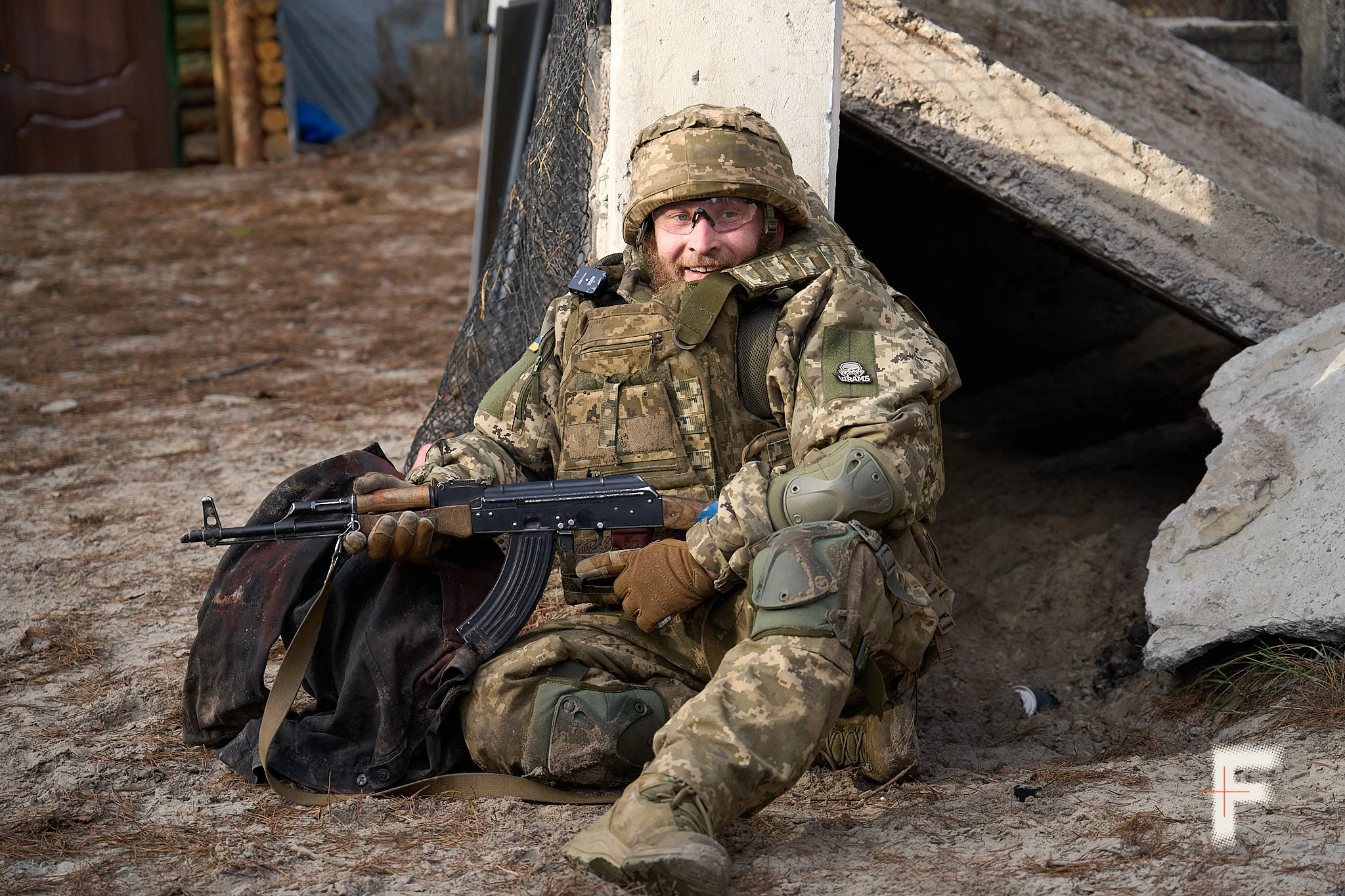
“I was on my way to work in the morning when draft officers stopped me. I ended up in handcuffs but did not resist. And now, as you can see, I’m here,” Ivan says, “At first glance, the training turned out to be quite good, probably no one expected such thorough preparation in the army now. Personally, I would like more focus on medical training. I am very far from that, and I think everyone here is. I hope there will still be time to study it more thoroughly, because no one wants to die.”
Due to regular air raid alerts and heightened security measures, the names of the people featured in this report have been changed to protect them from potential threats under martial law.
51 days to war: how new Ukrainian soldiers are trained
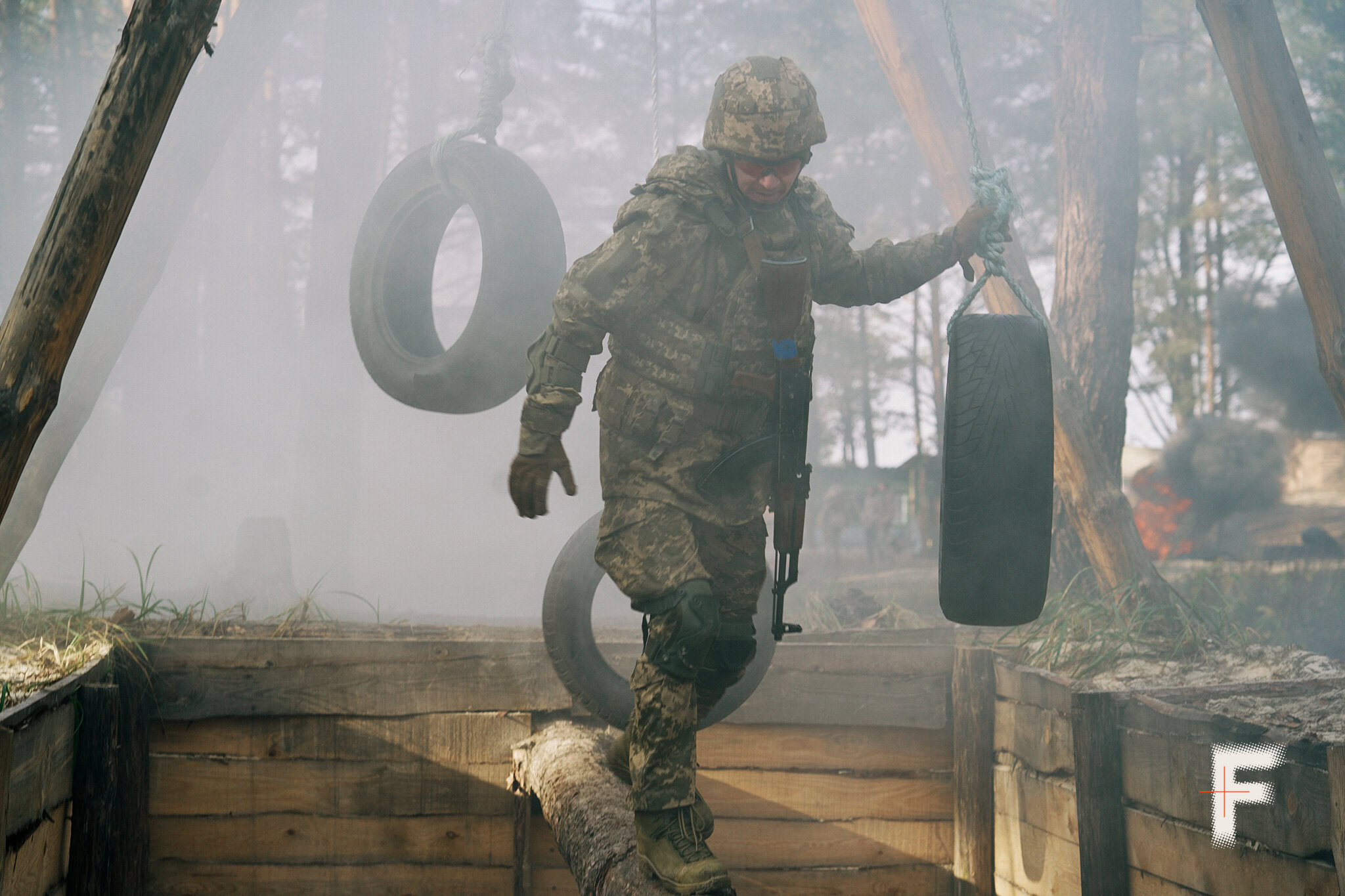
A new day for recruits begins with a psychological obstacle course that must be completed in coordination within a small group. This is not just a test of physical endurance. Loudspeakers broadcast simulated explosions, machine-gun fire and the sounds of heavy equipment across the training ground. Along the route are smoke grenades filling the air with a thick haze, charred car tires giving off a sharp stench, and 19 obstacles that require jumping, crawling, carrying weight and maintaining the group’s pace. According to instructors, the course is designed not to exhaust trainees but to push the nervous system out of its comfort zone and force it to adapt to new conditions.
-
Recruits during an obstacle course as part of basic military training, Ukraine, Nov. 14, 2025. Artem Derkachov / Frontliner

-
-
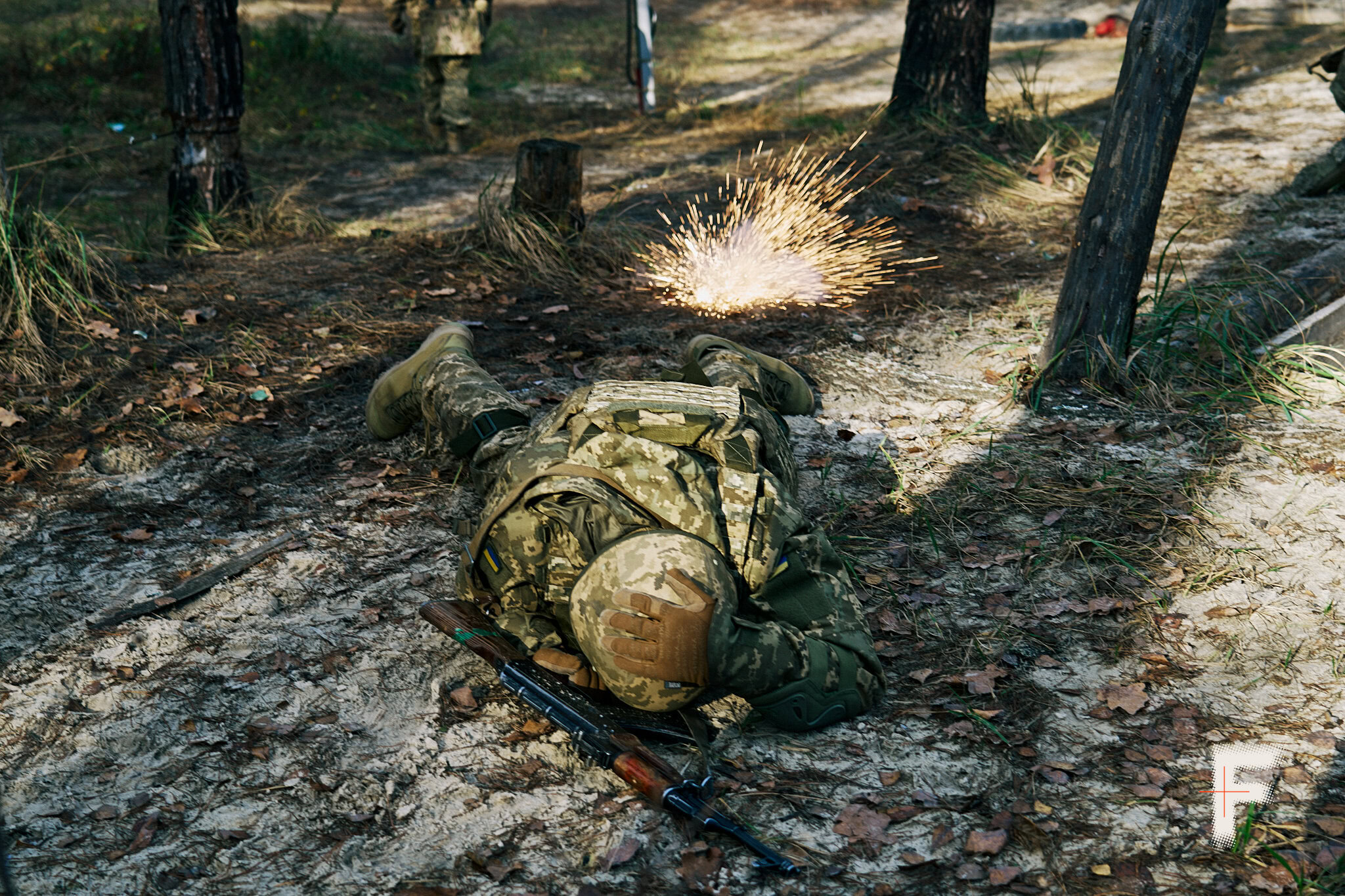
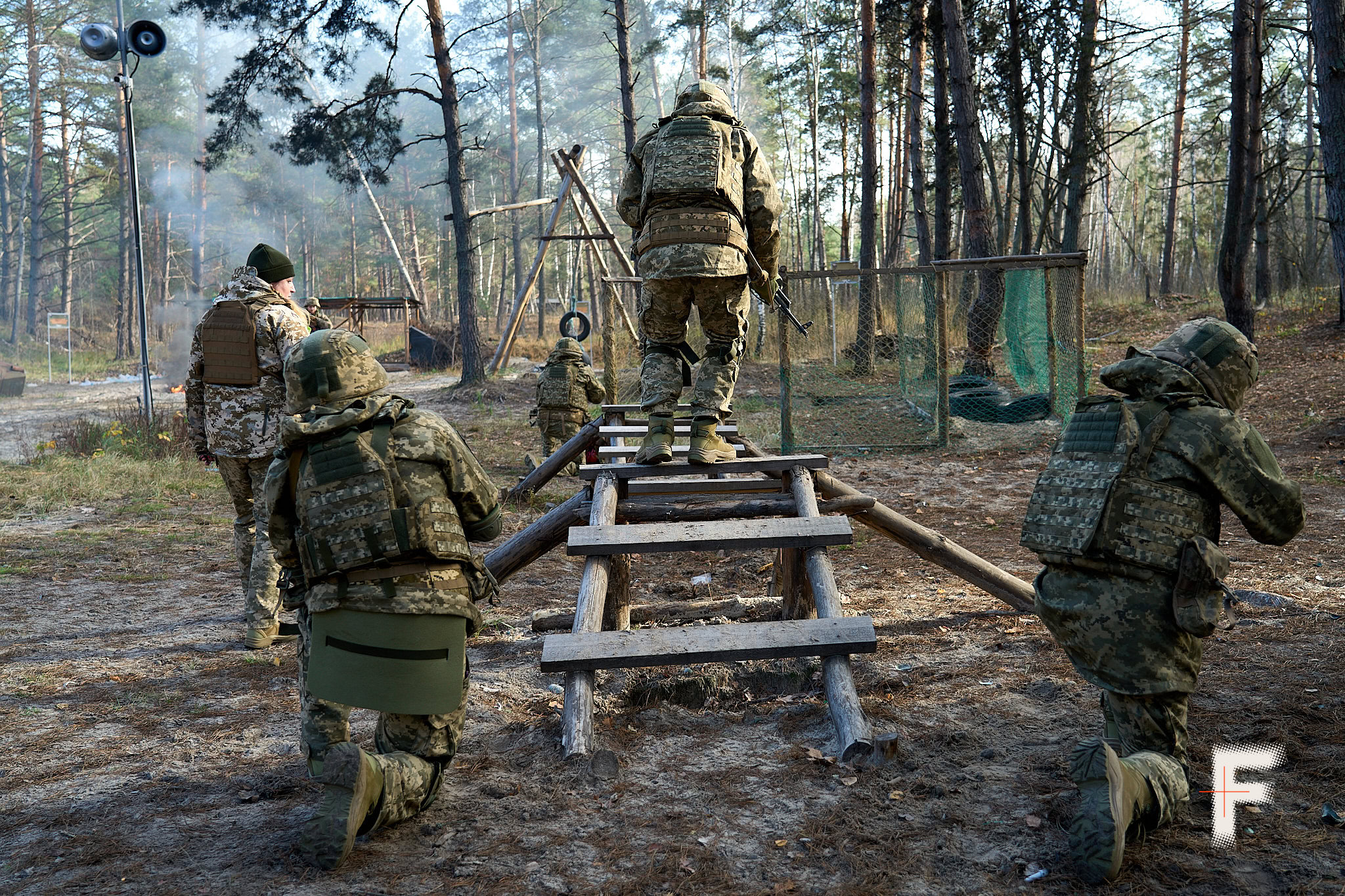
At the very first stage, one recruit suddenly feels unwell. He slows down, squats and struggles to catch his breath. Instructors immediately remove him from the exercise and provide assistance. For the rest of the group, this does not mean a break or a slower pace. Training continues as planned.
You look at the guys and, unfortunately, the truth is that maybe half of us won’t make it. But everyone gives it their all. We understand what awaits us, and it’s better to prepare thoroughly,

When the last participant finishes the exercise, the recruits line up. Coach Anastasiia Vlasova evaluates their performance. Every fighter listens closely. She not only has combat experience but has devoted more than 20 years of her life to military service.
The cadets undergoing basic training now are more motivated than last year’s groups,

“Every month – to be fair, every day – the situation on the battlefield changes, and we try to update our training accordingly. For example, we now focus more on teaching them to recognize and react to different explosions and gunfire,” Anastasiia says,” Overall, we try to create conditions as close to combat as possible. The cadets undergoing basic training now are more motivated than last year’s groups. I think that’s because more time is devoted to training, and people feel more confident when it ends.”
Training has become more thorough
In 2025, basic military training was revised and now lasts 51 days instead of 30, as it did last year. Recruits are also divided by age, with younger and older groups training separately so that the pace and physical demands match their capabilities. At the training ground, cadets practice tactics, physical conditioning, weapons handling and first aid every day.

“We get up at 6 a.m., and then it’s training, training and more training – psychological, physical and engineering. The workload is solid. I feel fine. I never thought I would actually want to learn something. For now, it’s calm here, and then we’ll see,” said recruit Vasyl Hryhorchuk.
In civilian life, Vasyl was a wholesale plumbing sales manager. He says he ended up in basic training “almost by accident.” One day he was driving to a national practical shooting championship when police stopped him at a checkpoint and noticed he had not completed a mandatory military medical examination.
“I’ve been here for 19 days. My motivation is to learn to do everything right. Sometimes I even run ahead of everyone else. I’ll say something simple: ‘If not us, then who?’ We’ll learn. If they tell us to dig, we’ll dig. As long as the war continues, we’ll fight,” Vasyl said.
We’ll learn. If they tell us to dig, we’ll dig.
As long as the war continues, we’ll fight,

Anti-drone focus
The second task of the day is an anti-drone obstacle course. Here, an FPV drone literally “hunts” the fighters, flying low, changing speed and direction, forcing them to react quickly. Recruits have to take cover on command, remain concealed and manage to aim at the drone.
-
A training FPV drone flies over cadets during an anti-drone obstacle course, Ukraine, Nov. 14, 2025. Artem Derkachov / Frontliner
-
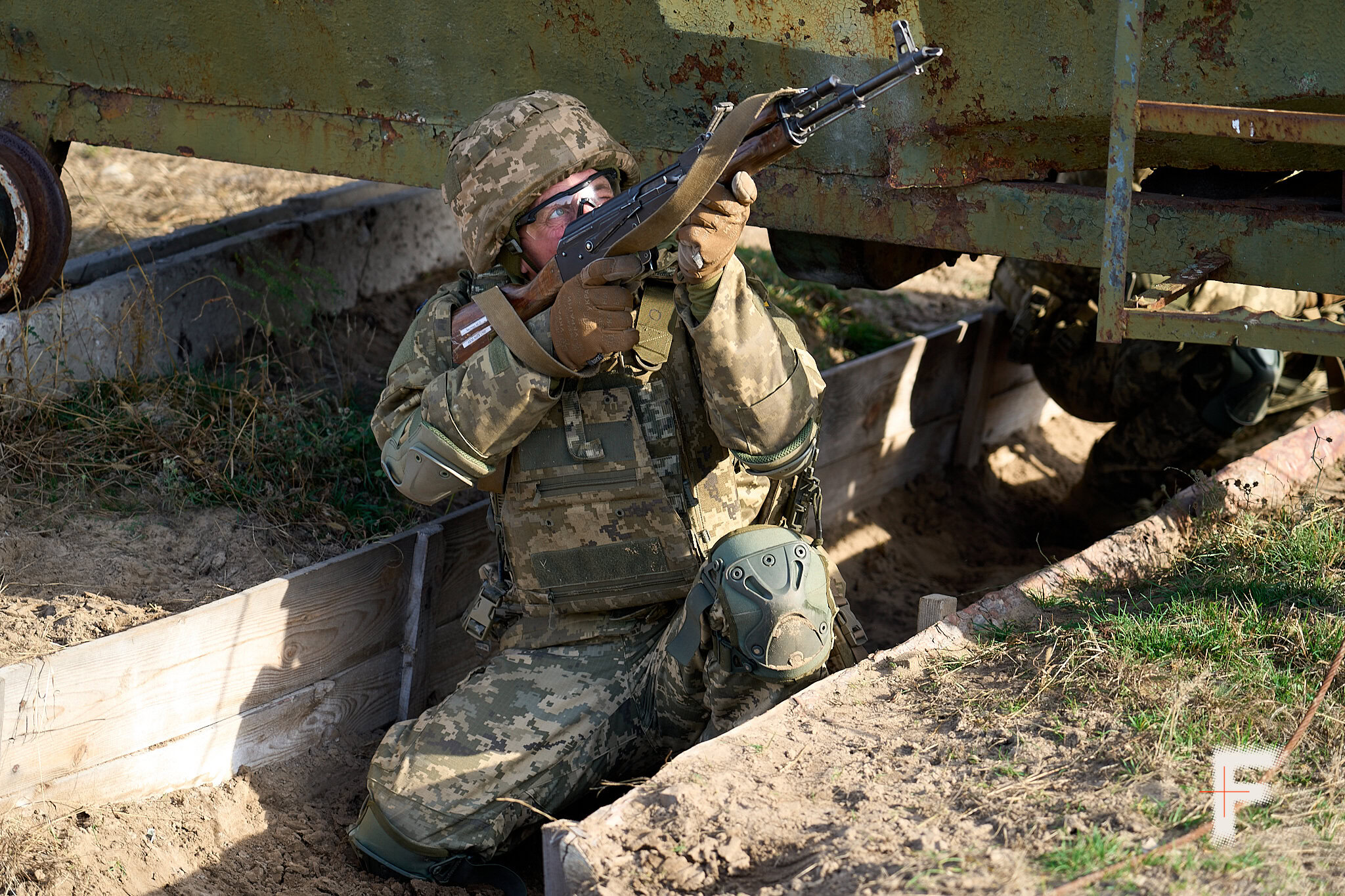
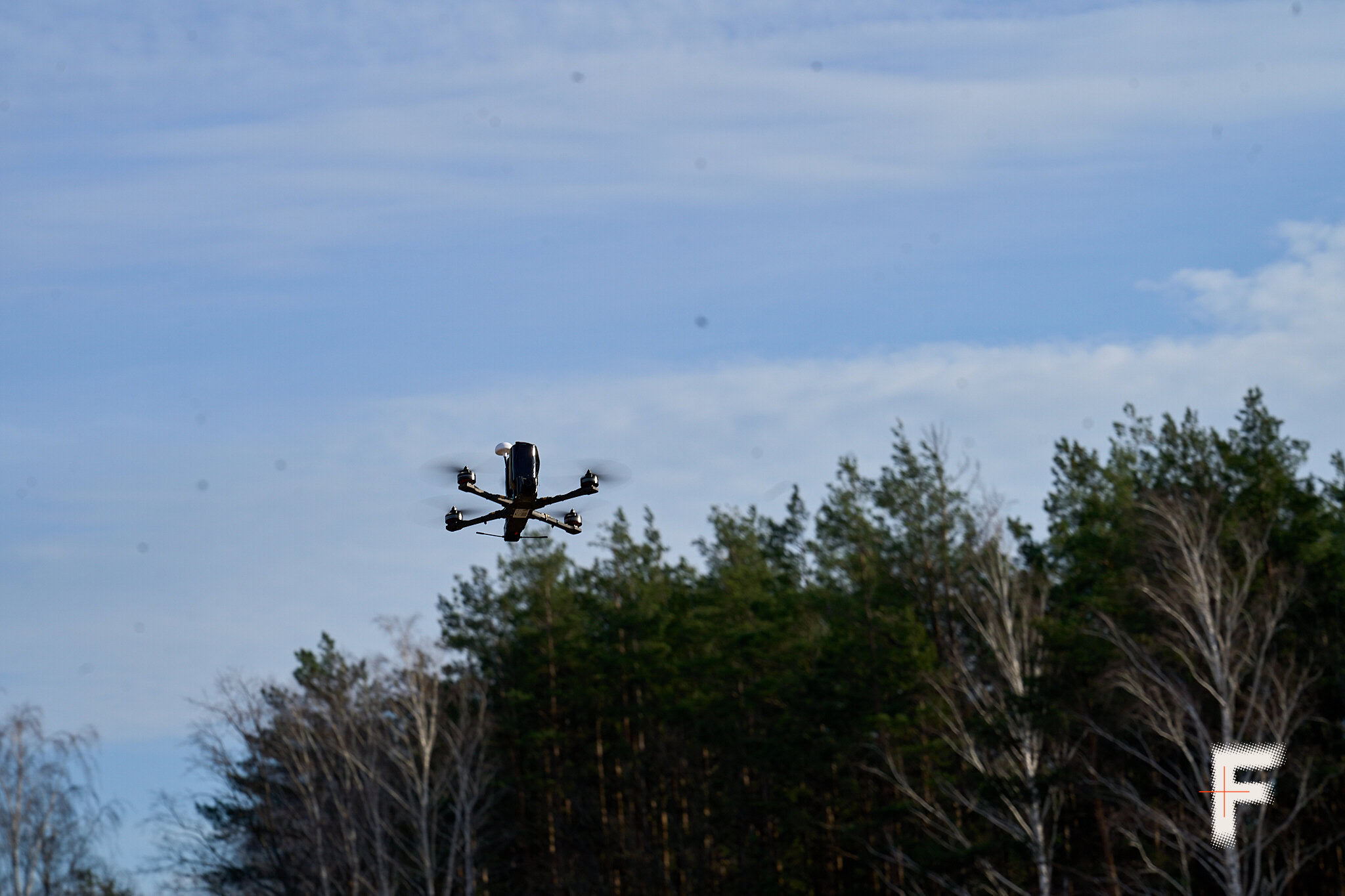
“The main focus of training now is working with modern weapons and countering drones. On this course, we teach how to take cover where possible and how to act in open areas. The course was developed based on our own experience,” says a coach with the call sign Vampire, “All our instructors are combat veterans, so nothing here is theoretical – it all comes from real experience.”
Training and meals underground
After completing the exercises, the fighters head to lunch. Due to air raid alerts and the threat of missile strikes, dining facilities were moved underground. Recruits descend narrow stairs into an underground canteen, where meals are organized according to Ukrainian Armed Forces standards and served in portions. During basic training, cadets live in field conditions, so eating under such circumstances is routine. Classrooms have also been set up underground, which instructors say is the only viable option amid regular air raid alerts.
-
Recruits and instructors eat in an underground canteen, Ukraine, Nov. 14, 2025. Artem Derkachov / Frontliner
-
-
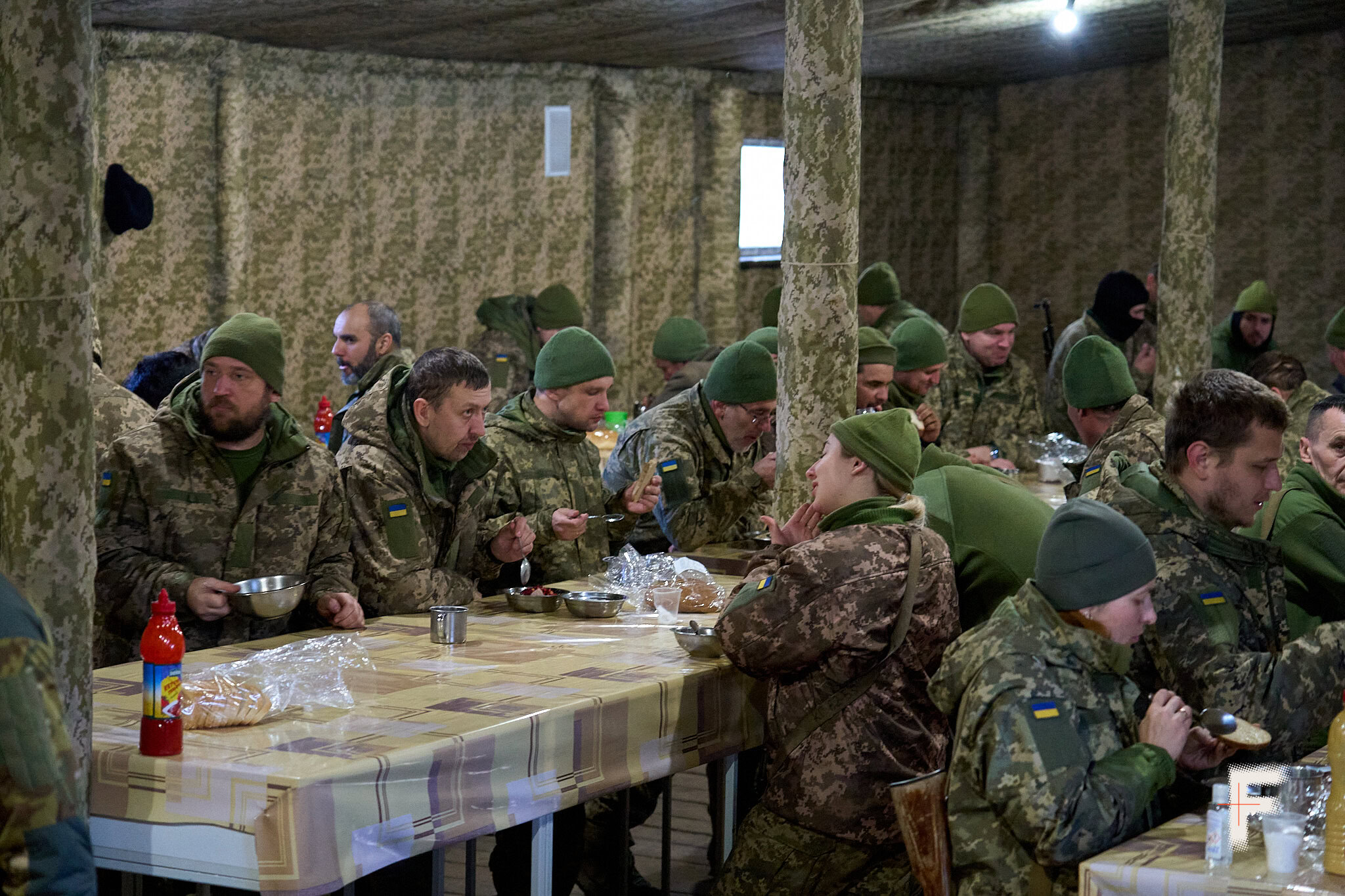
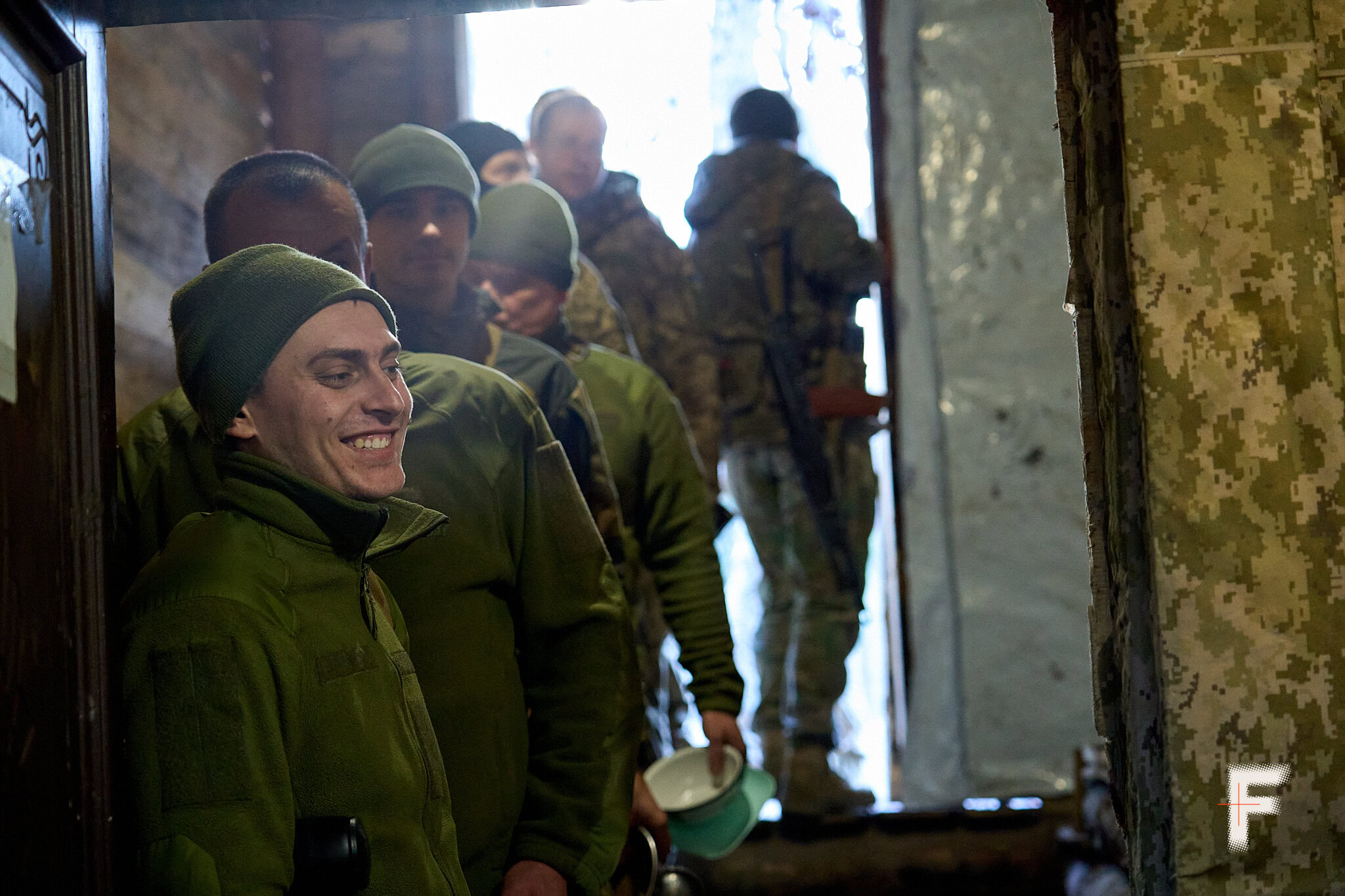
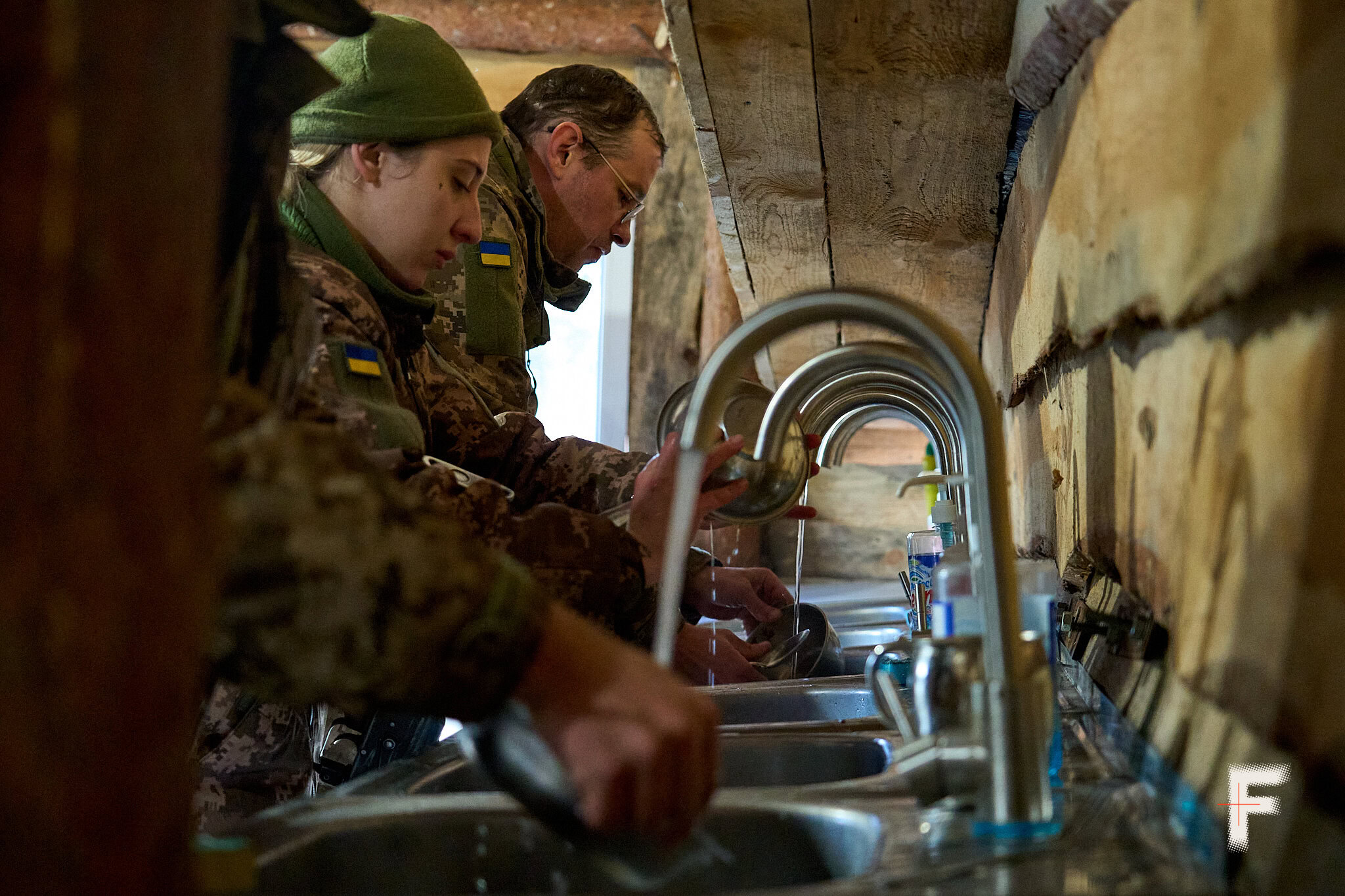
“When there is a missile threat, everyone goes to shelter without exception, and sometimes training continues underground. The spaces are smaller and less convenient than training above ground, but we prioritize the lives and health of our future fighters,” Vampire said.
Skills distinguish mobilized recruits
In addition to instructors and cadets, representatives of various military units regularly visit the basic training ground. Their goal is to assess recruits and screen out those not yet ready for service in specific units. During such visits, the atmosphere becomes tense: every movement matters under the watchful eye of experienced officers. Some demonstrate strong shooting or tactical skills, others show endurance and resilience under stress, while some need more time and practice. The key requirement is readiness for specific tasks and service conditions.

“That’s why it’s called basic military training – to teach the fundamentals of soldiering. Clearing trenches or conducting assault operations is extremely complex and requires far more than a few days for units to master these skills,” the coach said.
Basic training is only the beginning. Each unit then adapts newcomers to its specific tasks, sometimes for weeks, sometimes for months. Only after that do mobilized soldiers become part of a combat system in which everyone knows their role and the cost of mistakes. It is at this stage that service members fully realize that beyond the training ground lies a completely different reality – one they must be prepared to face.

Adapted: Kateryna Saienko