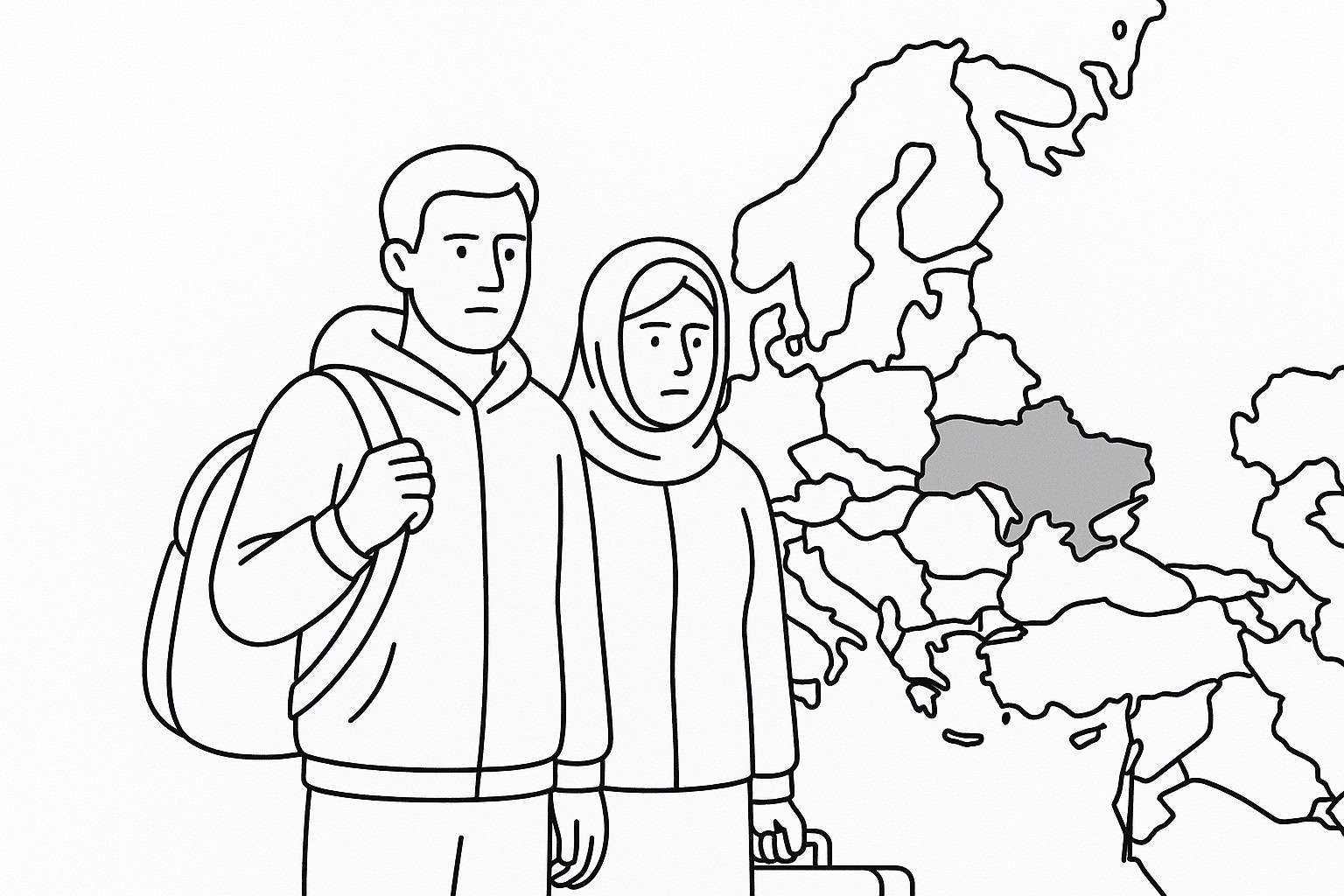
Ukrainian refugees in Europe: what to expect in 2026
By the end of 2025, about 4.3 million people who fled Ukraine were still under temporary protection in the European Union. The EU has already extended this regime until March 4, 2027, but assistance packages across member states are increasingly being adjusted to budget constraints and labor market needs. Some governments are cutting cash payments or scaling back state-provided housing for new arrivals, placing greater emphasis on employment. Frontliner explains how these changes are playing out in practice.
Eurostat reports 4.3 million temporary protection beneficiaries in the EU as of Oct. 31, 2025. The largest Ukrainian communities are in Germany (more than 1.23 million), Poland (more than 960,000) and the Czech Republic (more than 390,000). In a broader European context, more than 6 million Ukrainian refugees live across Europe when countries outside the EU are included.
What temporary protection guarantees?
The core principle of temporary protection is fast legal status without a full asylum procedure. Beneficiaries gain the right to reside and work, enroll children in school, access basic health care and receive social assistance. The scope and conditions of that support are set by the host country.
At the same time, the EU is preparing a coordinated approach for the period after 2027. Some refugees may be offered a transition to other legal grounds for stay, such as employment, education or family reunification, while others may receive support for voluntary return.
Germany, which has taken in the largest number of Ukrainians in the EU, provides social assistance to those who cannot yet support themselves and offers job placement services through employment centers. However, in 2025 the government approved legislative changes affecting Ukrainians who entered after April 1, 2025. They are expected to move from higher “citizen’s benefits” to lower payments under the asylum-seeker support system.
In Ireland, support for Ukrainians living in state-provided accommodation has also been reduced. Since 2024, weekly payments for those housed by the state have been cut, with the government arguing that housing itself covers part of basic needs. Ireland has also designated short-term accommodation centers for new arrivals, limiting stays to 30 days, after which refugees must find housing on their own
Trends for 2025–26: savings, jobs and housing
The first trend is faster entry into the labor market. More policies across Europe now tie assistance to active job searches, language courses and integration programs.
The second trend is a housing shortage, pushing governments to reduce temporary accommodation or make it conditional.
The third trend is tighter access to protection outside the EU. In 2024, Norway changed its rules to limit the number of Ukrainians eligible for collective protection.
Public attitudes toward Ukrainian refugees remain broadly supportive, but signs of fatigue are growing. Surveys across the EU show strong backing for hosting Ukrainians, while the share of skeptics is slowly increasing amid rising concerns about the cost of living.
Practical advice: how to secure temporary protection and keep benefits
- Register immediately upon arrival. Access to benefits and health care is usually calculated from the registration date.
- Use only official channels, such as government portals, migration authorities and municipalities, and keep proof of submitted documents.
- Report changes in address, family status and employment, as these often affect benefit levels.
- If you find a job, clarify rules on insurance, taxes and benefits to avoid accumulating debt.
- If planning to move within the EU, check whether and how temporary protection can be transferred. It is not automatic everywhere.
What this means for Ukrainians in 2026
Europe is not abandoning Ukrainians. The legal framework remains in place at least until March 2027. However, support is becoming more selective: governments are willing to help as long as people integrate into education, work and the rental housing market.For Ukrainian families in Europe, the takeaway is clear. Legal status in most countries remains stable, but the financial safety net is shrinking. These trends are expected to deepen in 2026. There is also a possibility that reduced support will prompt some Ukrainians to return home, potentially slowing Ukraine’s population decline and aging process.
Adapted: Kateryna Saienko
***
Frontliner wishes to acknowledge the financial assistance of the European Union though its Frontline and Investigative Reporting project (FAIR Media Ukraine), implemented by Internews International in partnership with the Media Development Foundation (MDF). Frontliner retains full editorial independence and the information provided here does not necessarily reflect the views of the European Union, Internews International or MDF.