
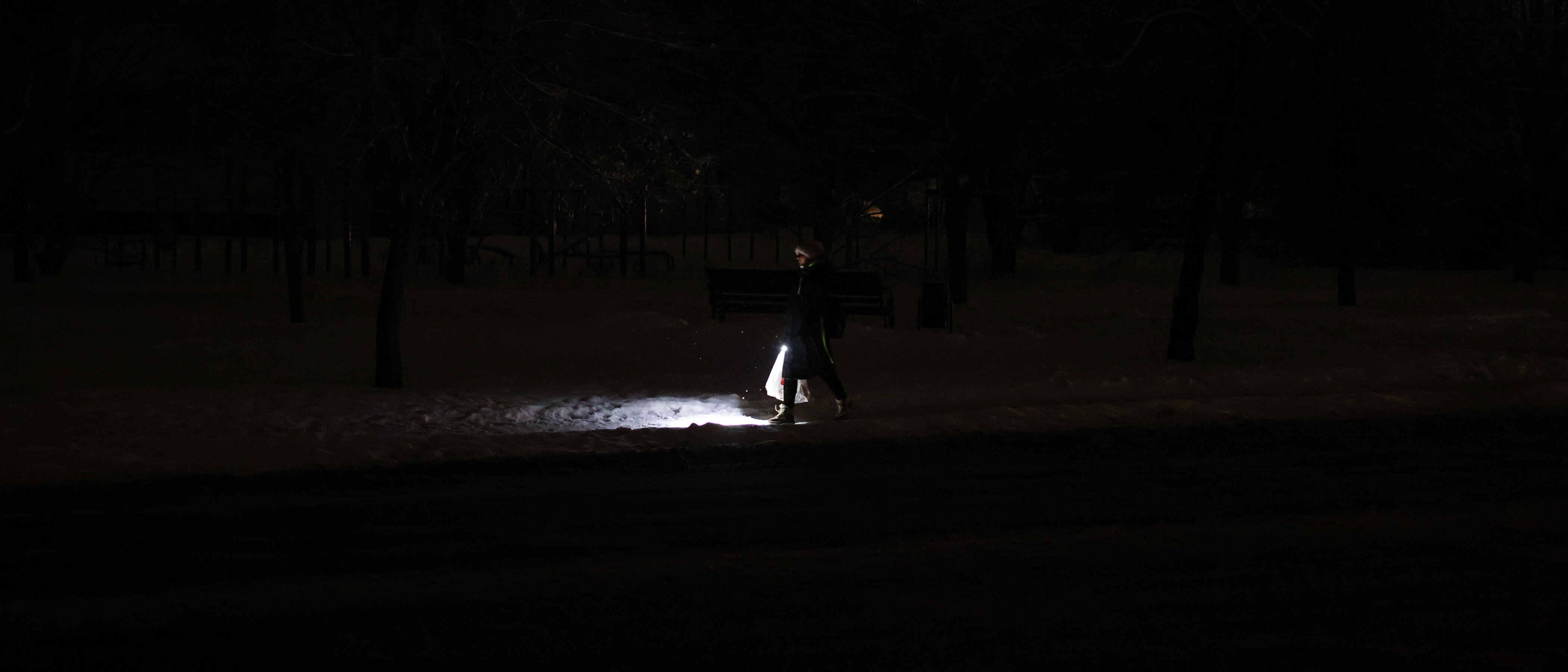
“Bone-chilling cold – absolutely unbearable”: stories from Kyiv’s blackout epicenter
After Russia’s extensive attacks on energy infrastructure, thousands of buildings in Kyiv were left without heating. The city has opened warming centers, while mobile boiler units and high-capacity generators are keeping critical facilities and heating stations in large residential districts running. Energy shortages, combined with severe weather, have pushed the situation to a critical point, especially in Kyiv’s left-bank districts. Frontliner reporters went out to report on the conditions people are living in and the places they can turn for help.
Some residential districts on Kyiv’s left bank remain without stable electricity and heating. In apartment buildings hit by earlier attacks, the situation is compounded by broken windows and damaged utilities. For Nataliia Zaichenko, the ordeal began on October 22, when a Russian ‘Shahed’ drone struck her building at the level of the sixth floor, blowing out nearly all the windows. She is now waiting for compensation through the eReconstruction program. In the meantime, the windows of her apartment are covered with plywood and plastic. Although the heating works, daily life remains difficult amid the constant lack of electricity.
[Translator’s note: eReconstruction is the official name of a Ukrainian government program that provides funding and support for the repair and rebuilding of housing damaged by Russian attacks.]
We have four cats, and we place them around us
that’s how we keep warm,
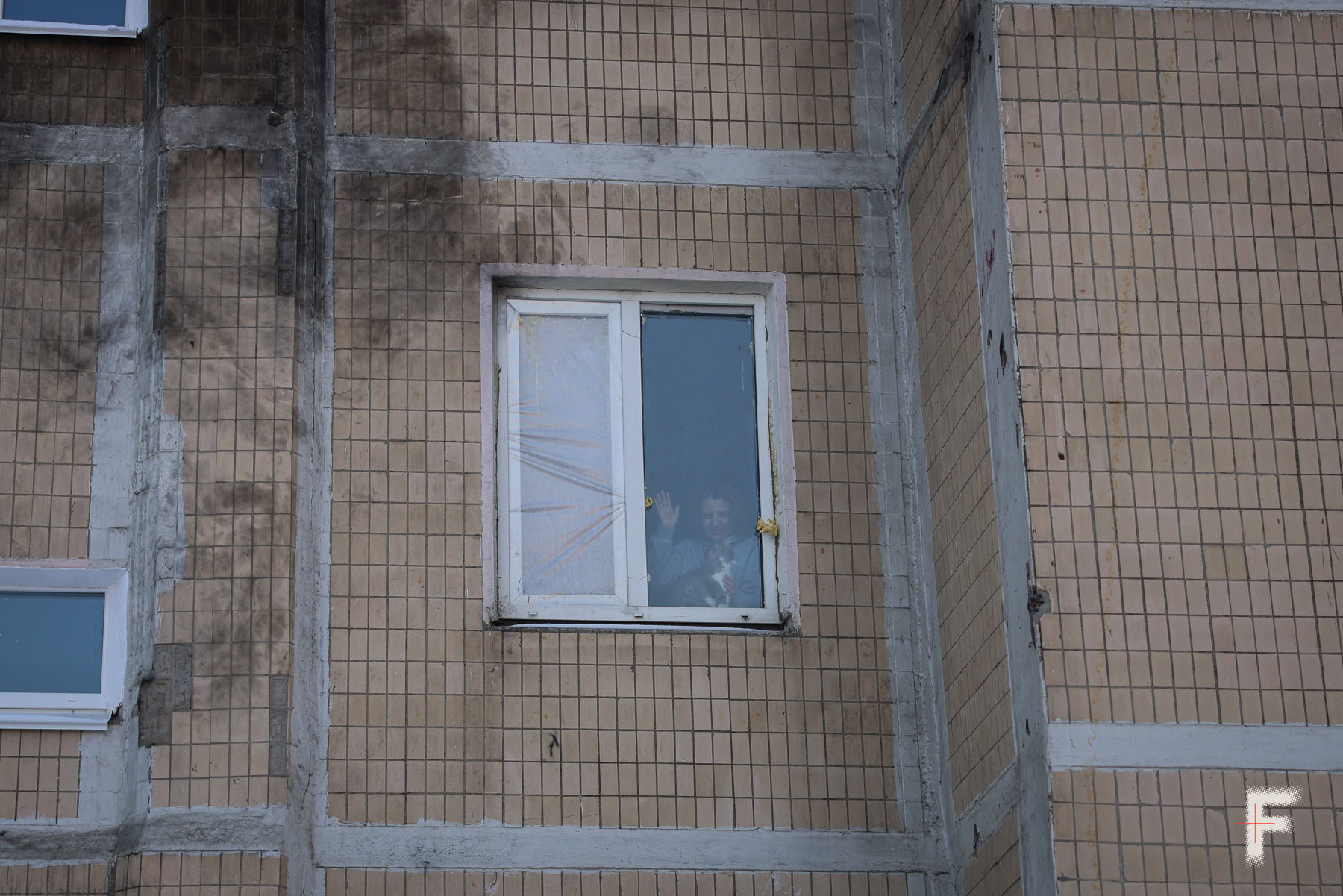
“We have four cats, and we place them around us – that’s how we keep warm, it’s cozy. To replace the windows, we have to wait until the compensation program starts. But there’s a war in the country, so we take everything in stride. The last Russian attack caused emergency power outages – one day we have heat and electricity, the next day we don’t. Before that, we were living under the blackout schedule, like everyone else,” Nataliia Zaichenko says.
Neighborly support
Nataliia lives in the apartment with her daughter Kateryna, a psychologist who actively helps their neighbors. She coordinates residents through the building’s chat group and provides psychological support to those struggling with the challenging living conditions they face today.
“I work with the NGO Divchata (Girls), where we provide active psychological support online. Since the war began, we’ve supported over 13,000 people, so I couldn’t turn my back on my neighbors. All the more so when a ‘Point of Invincibility’ appeared on our street. Many people, including us, thought it wasn’t a very good sign, but it seems our situation isn’t the worst in Kyiv,” says Kateryna Zaichenko.

Oases of civilization: how the “Points of Invincibility” work
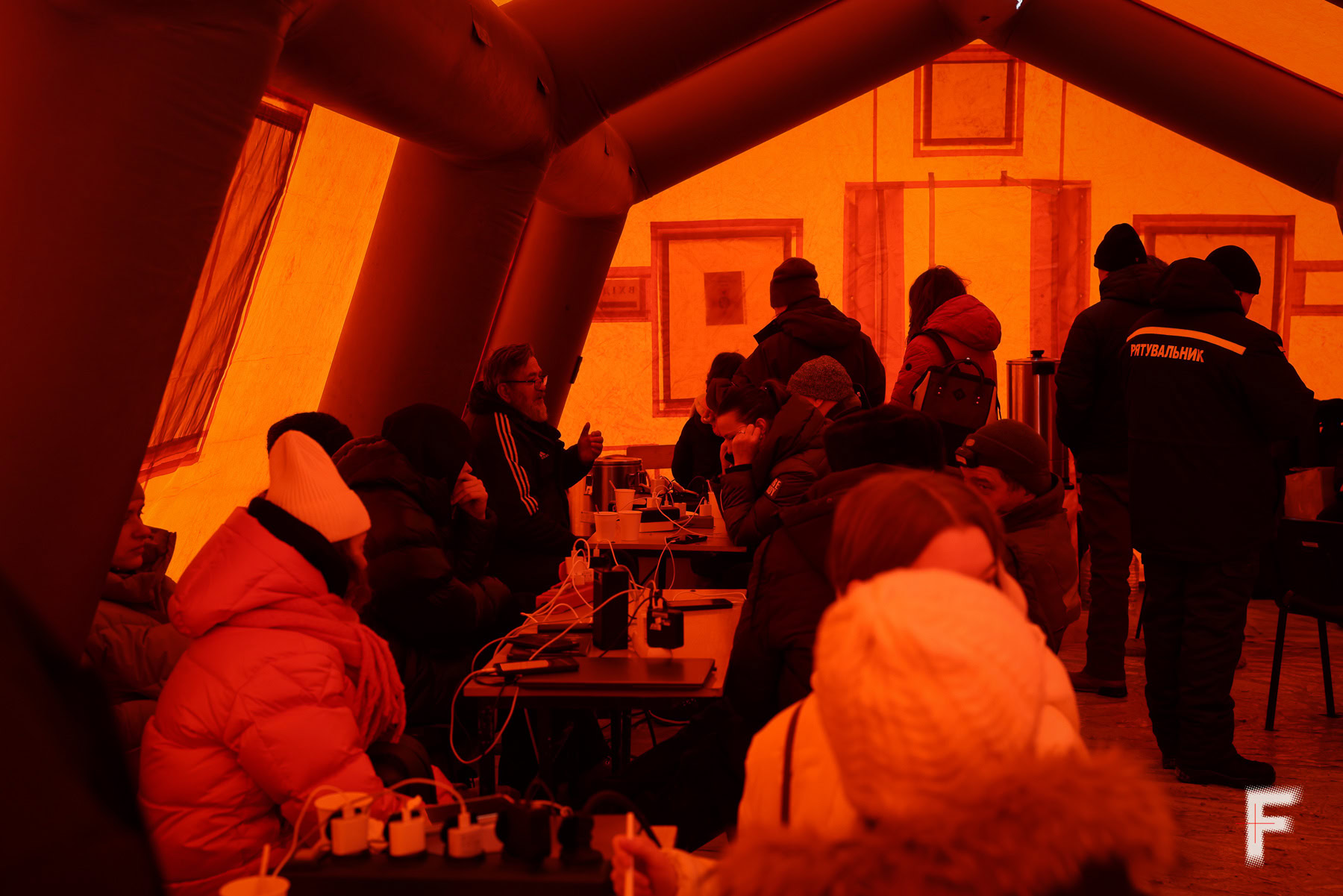
When homes become unbearable due to power outages, no connectivity, and the inability to prepare meals, people turn to the ‘Points of Invincibility’ – bright orange tents set up by the State Emergency Service. Generators run inside, gadgets can be charged, and visitors can eat for free or enjoy a cup of hot tea or coffee. Psychological support is also offered on site. For many, these points provide not just warmth, but a brief respite amid difficult times.
We have an electric stove, we can’t make hot tea or cook anything,
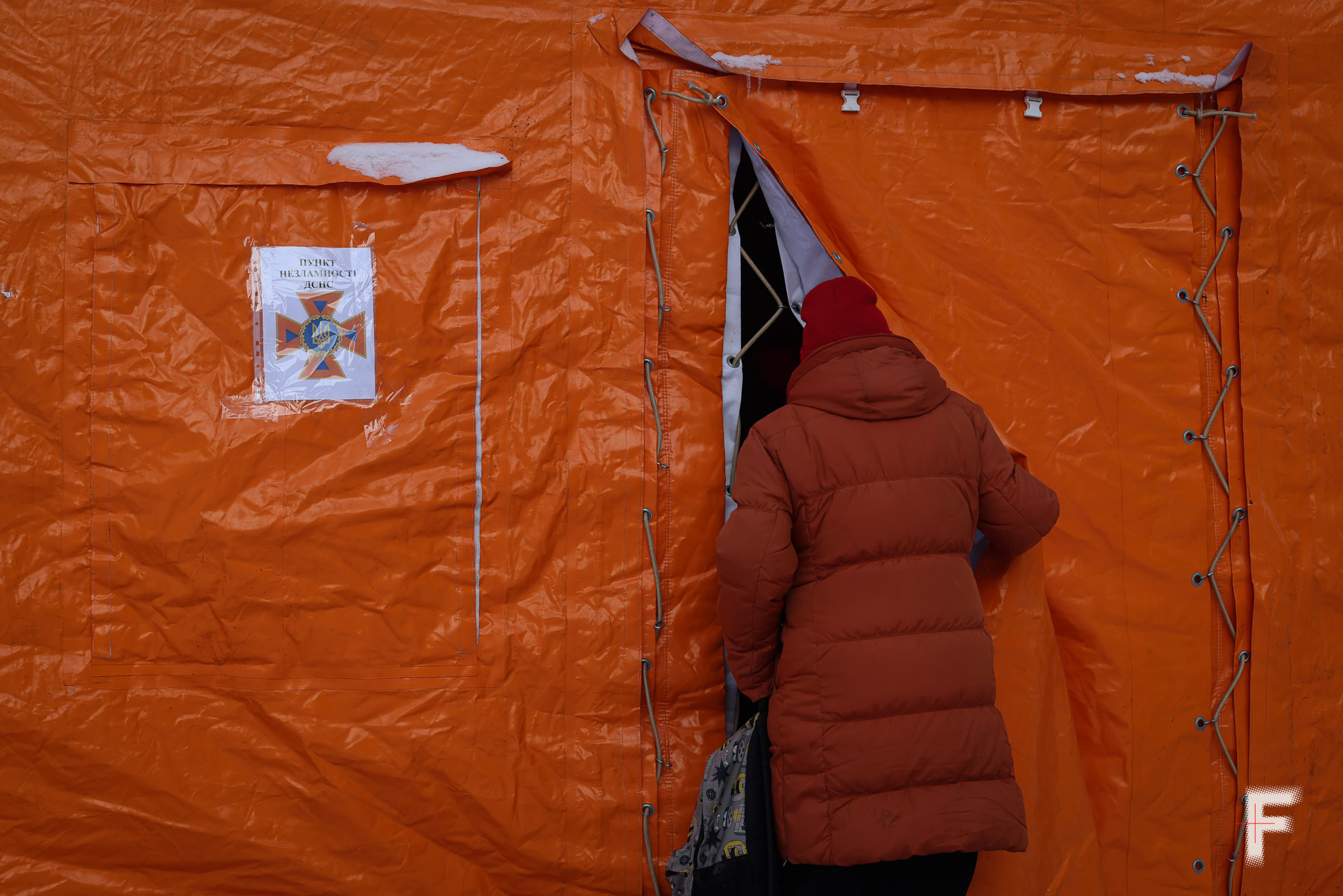
“At home, it’s bone-chilling cold – absolutely unbearable. I brought my little dog with me; even though she has fur, she’s freezing too. When we go to sleep, we keep warm with our pajamas and several comforters. As for electricity, we had none for an entire day, then it was on for a couple of hours, and then off again. And since we have an electric stove, we can’t make hot tea or cook anything,” says Alina Shakleina.

For Alina, this is her first visit to a Point of Invincibility, prompted by the advice of friends and family. It’s also an opportunity to get to know her neighbors better. She does not hide her surprise at how well everything is organized inside the tent.
“I’m utterly amazed by how much care there is for people, and yet there’s no chaos. Everything is calm. Here, I feel among my own, because we all share the same struggle,” says Alina Shakleina.
-
People sit and wait as power banks, flashlights, and other devices charge at a Point of Invincibility in the Troieshchyna district of Kyiv, Ukraine, January 14, 2026. Danylo Dubchak / Frontliner

-
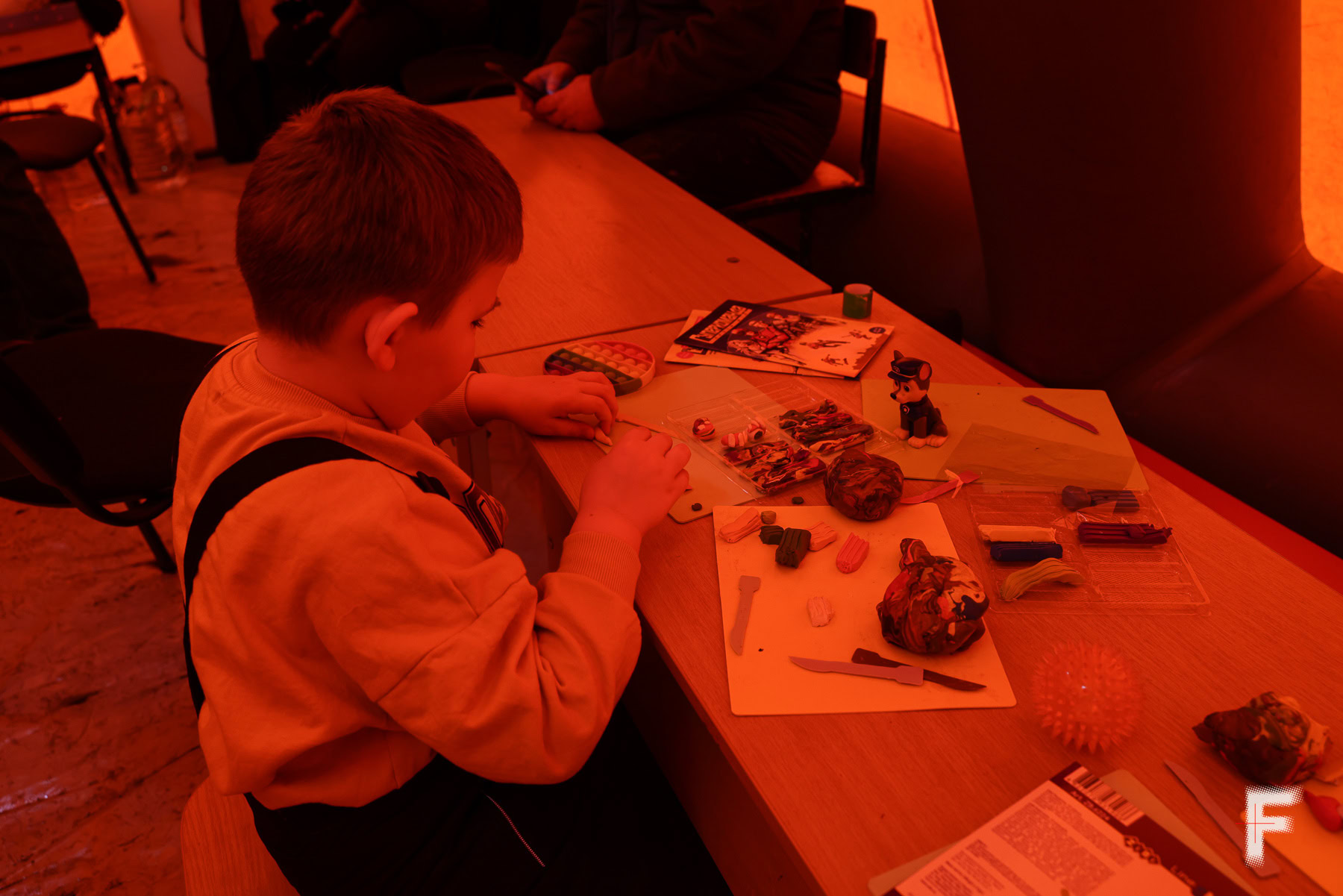
Children play with modeling clay at a Point of Invincibility in the Troieshchyna district of Kyiv, Ukraine, January 14, 2026. Danylo Dubchak / Frontliner
-
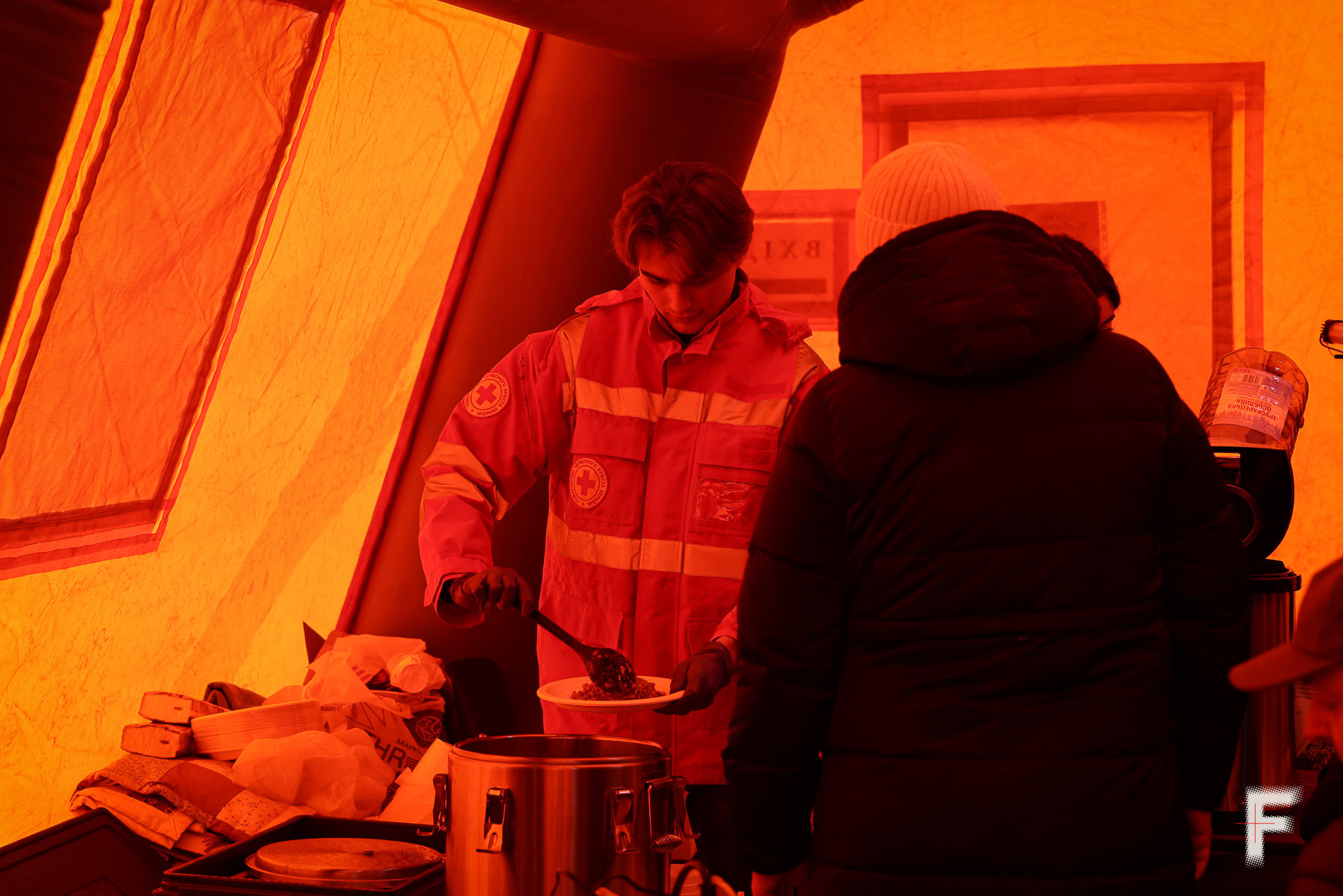
At a Point of Invincibility in the Troieshchyna district of Kyiv, Ukraine, people are served chicken with buckwheat, January 14, 2026. Danylo Dubchak / Frontliner
Trapped in their own homes
For residents of the upper floors of Kyiv’s high-rises, power outages mean more than mere inconvenience – they can mean complete isolation. When the elevators stop, elderly residents can become trapped in their apartments, unable to even reach the nearest Point of Invincibility. Neighbors’ reports are often the only way to learn who has been cut off from help.Tetiana Vielinhson, who lives on the 12th floor, cannot leave her apartment due to health issues, all while caring for her bedridden husband.
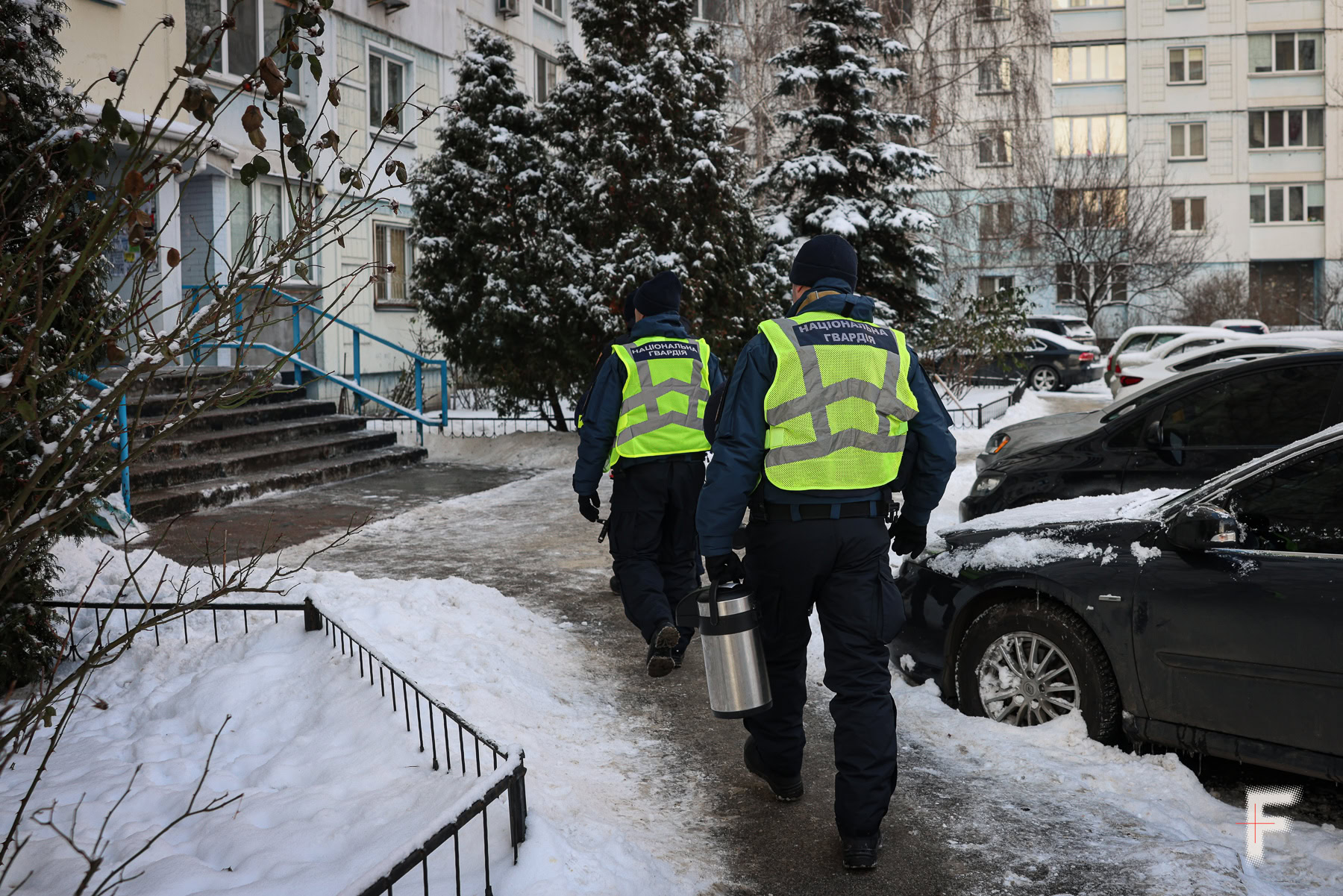
Tetiana Vielinhson’s difficult situation was brought to the attention of State Emergency Service workers by her neighbor, Maria Moroz. She is nearly 73, and despite her own age, she makes an effort to stay in touch with those facing even greater hardships. Maria meets the rescuers in the hallway, wrapped in several layers of clothing, and guides them to her neighbor’s apartment. The State Emergency Service and National Guard personnel have brought thermoses of hot water and food for Tetiana and her husband.

“Thank you, guys, thank you for coming to help. These people are almost 90 years old, and my neighbor can’t physically leave her apartment because of her health. The elevators aren’t working, and on top of that, her husband is bedridden,” says Maria Moroz.
Tetiana Vielinhson insists that without this kind of neighborly support, surviving in a high-rise apartment would be impossible.
It’s terrifying to think that we could simply die of hunger
and cold in our own apartment.

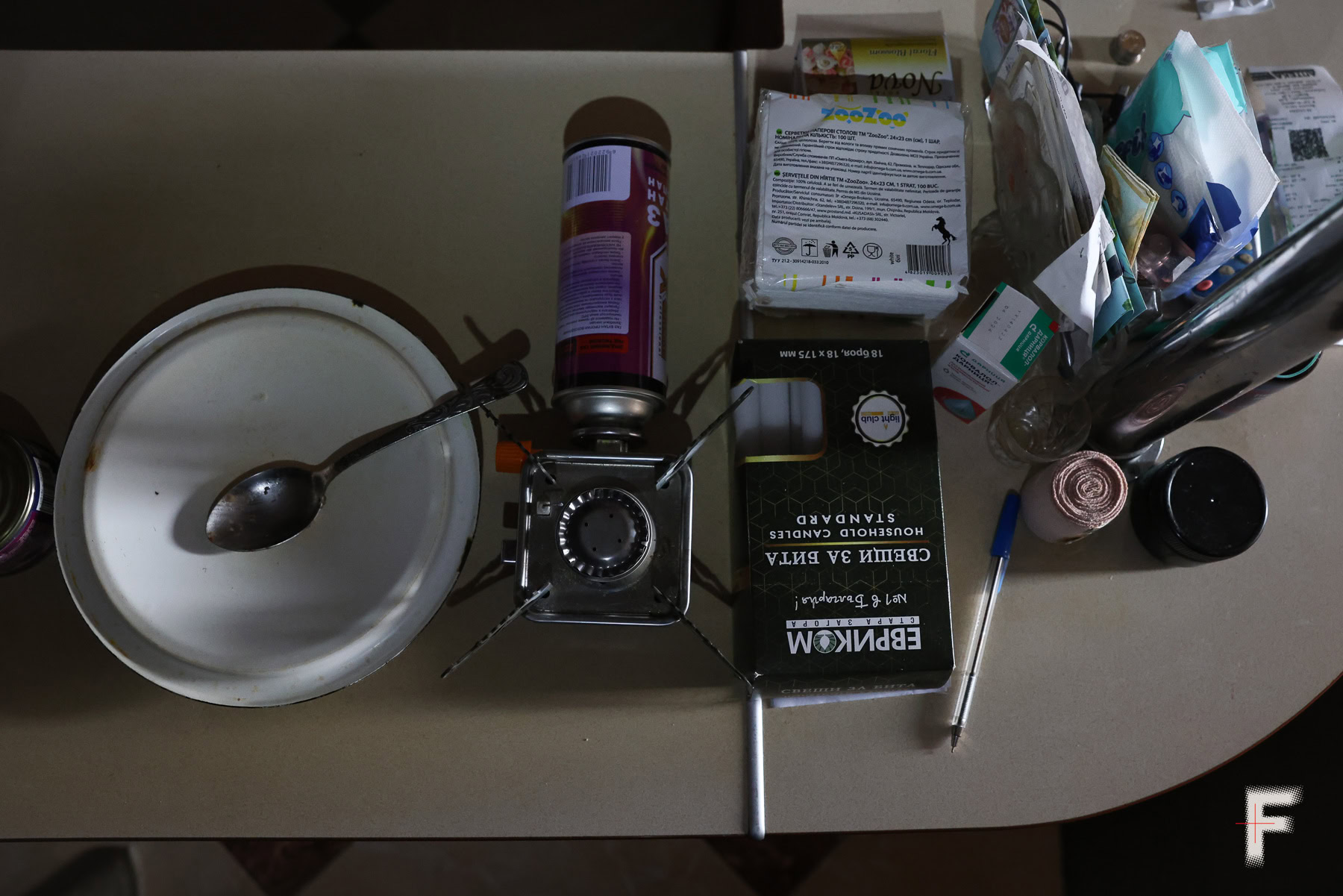
“I’ve lost track of how many days we’ve been without electricity. My husband is bedridden, and I’m by his side. If it weren’t for the neighbors bringing us things, I don’t know what we would do. This is the only way we manage. We go to bed dressed and cover ourselves with comforters. It’s terrifying to think that we could simply die of hunger and cold in our own apartment. All we have is cold water,” says Tetiana.
Systematic struggle for warmth
The stories of residents in Kyiv’s left-bank districts are just a small part of the larger picture of survival in a city of millions. According to the Kyiv City State Administration, around 300 high-rise buildings in the capital still remain without heating. These are the last of the 6,000 buildings left without heat after the massive attack on the city on January 9, 2026.
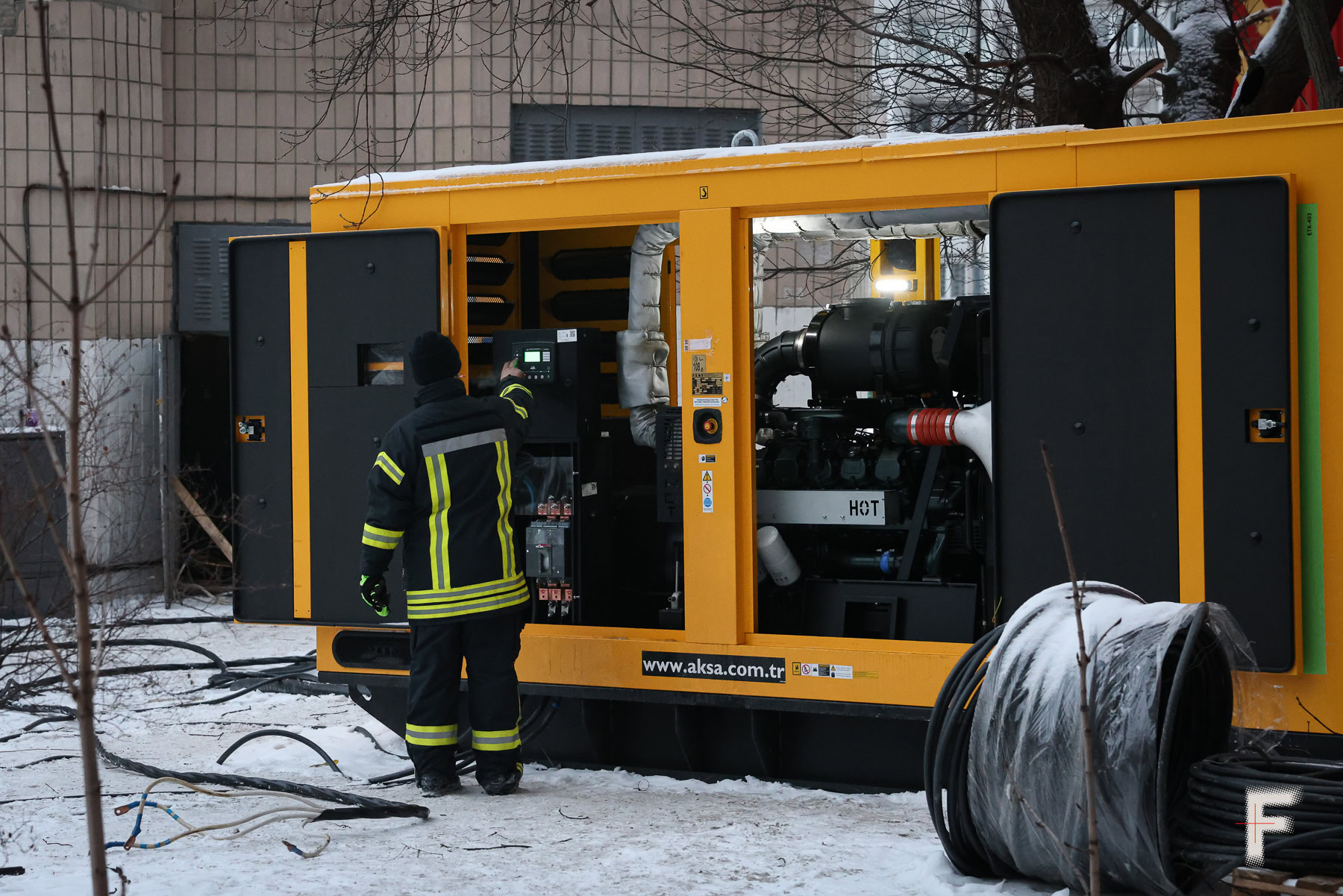
Municipal services continue to operate around the clock, repairing critical infrastructure damaged by the enemy. However, the situation with energy supply – which directly affects the stability of all public services – remains extremely challenging. For now, Kyiv is operating under emergency power outage schedules as the regular hourly rotation system is not yet in effect. To keep the city functioning, critical infrastructure has been powered by high-capacity generators and mobile boiler units. Some large apartment buildings that have been without heat and electricity for six consecutive days are also being connected to generators.
In total, more than 1,200 warming centers have been set up and are operating across the capital.


Text: Artem Derkachov
Photos: Danylo Dubchak
Adapted: Irena Zaburanna
