
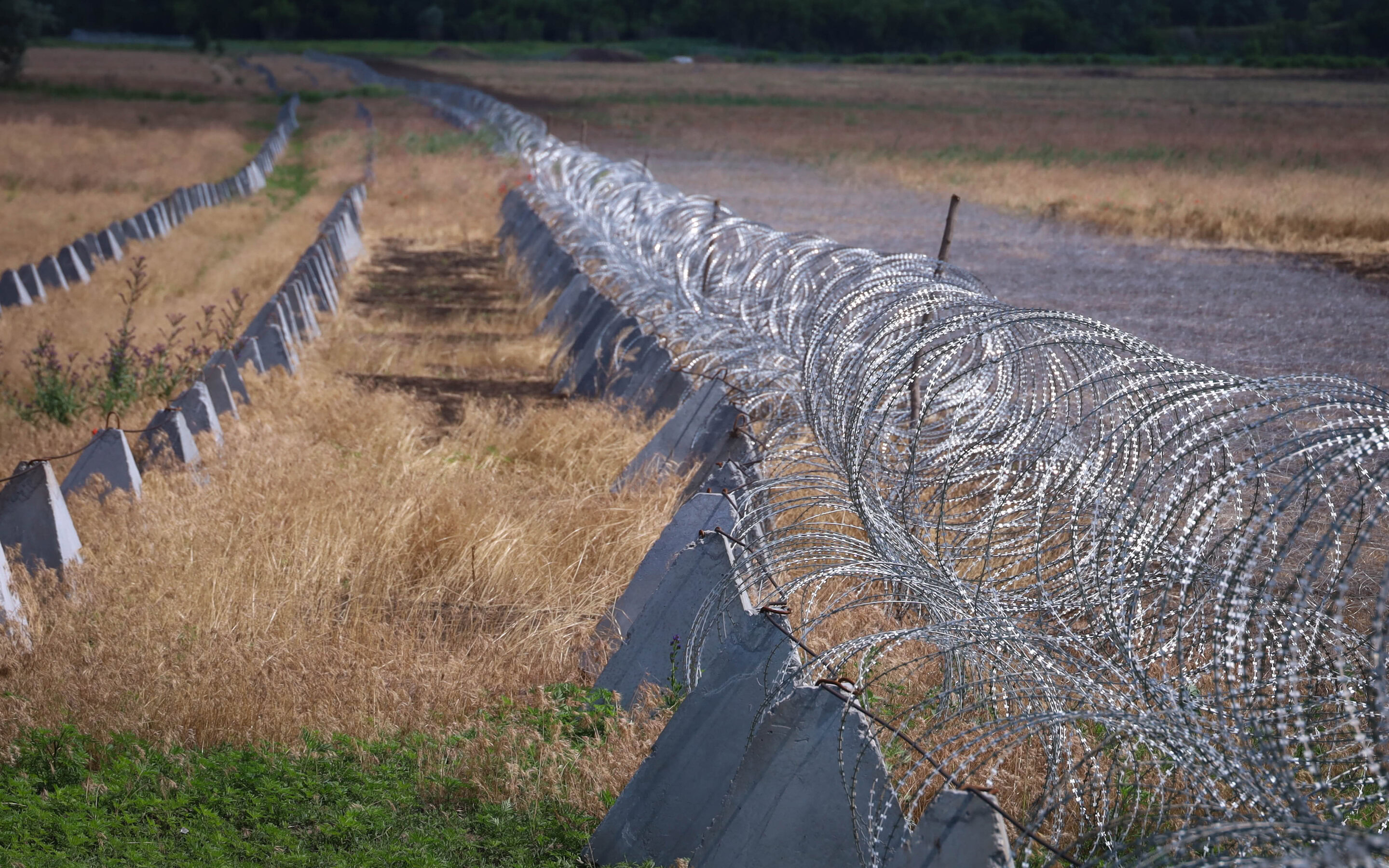
Russian forces failed in their plan to capture Kostiantynivka in April
The Russians planned to take Kostiantynivka under their control by the end of April, but the attempt failed: the enemy managed to infiltrate only the buildings on the city's outskirts. Simultaneously, the Russian army committed significant resources to the offensive on Sloviansk. Online, there has been an active discussion about the threat of Sumy’s encirclement amid intensified hostilities in the border areas. Frontliner analyzes what is happening on the front line.
Russian forces are taking advantage of improved weather conditions and launching motorized assaults on most fronts. In April 2026, there were over four thousand combat engagements with the Russian army, which lost more than 30,000 troops during the month.
What is the situation around Kramatorsk and Sloviansk?
The Russians have concentrated significant forces in an attempt to capture Sloviansk, which is now about 15 kilometers away from the occupiers. The situation is complicated by the fact that the city and its outskirts are bombarded with guided bombs on a daily basis, says Dmytro Zaporozhets, spokesperson for the 11th Army Corps. Active pressure on Sloviansk began after the occupation of Siversk in late 2025. Due to the massive concentration of manpower, the enemy can no longer afford to slow down their rate of advance.

“If they fail to dislodge us from our positions, they will simply perish here on an industrial scale,” Zaporozhets explains.
Until mid-April, the Russians primarily attacked during the day, but now they are pushing forward in the dead of night as well. This tactical shift clearly indicated that additional resources have been deployed to this front.
“The Sloviansk front is a place where the Russians are constantly testing new equipment. For instance, it was here that their ‘Knyaz Veschiy Oleg’ reconnaissance drone was first spotted. We have also recently observed them using UGVs to create a kind of smoke screen,” Zaporozhets says.
Just like in other areas of the front, the Russians are conducting assaults in small groups, frequently using motorcycles. For now, they are keeping their armored vehicles in the rear — in the occupied city of Lysychansk.
The enemy does not face ammunition shortages, even though the Armed Forces of Ukraine regularly destroy Russian artillery. Hostile drones also pose a significant threat. In a single month, 10,000 FPV drones alone were recorded along the Kramatorsk-Sloviansk front. This number will only increase, Zaporozhets emphasizes:
“Difficulties on the Sloviansk front are unavoidable, especially if the enemy commits even more ‘fresh’ infantry to the combat. Much will depend on their resources and our coordination with adjacent units. Our primary task is to eliminate more of the enemy’s manpower than they can bring in.”
Russian forces failed to meet the deadline to capture Kostiantynivka
Some of the fiercest battles are taking place for Kostiantynivka. The Russians are trying to infiltrate the city with small assault groups. In built-up areas, it is much easier for them to hide to accumulate their forces, but significantly harder to engage in direct urban combat.
“In my opinion, the enemy faces exhaustion in Kostiantynivka. They have already missed their self-imposed deadline to occupy the city by April 25. The most optimistic scenario for them is to reach the center of Kostiantynivka in October,” Dmytro Zaporozhets says.
Could the Russians encircle Sumy?
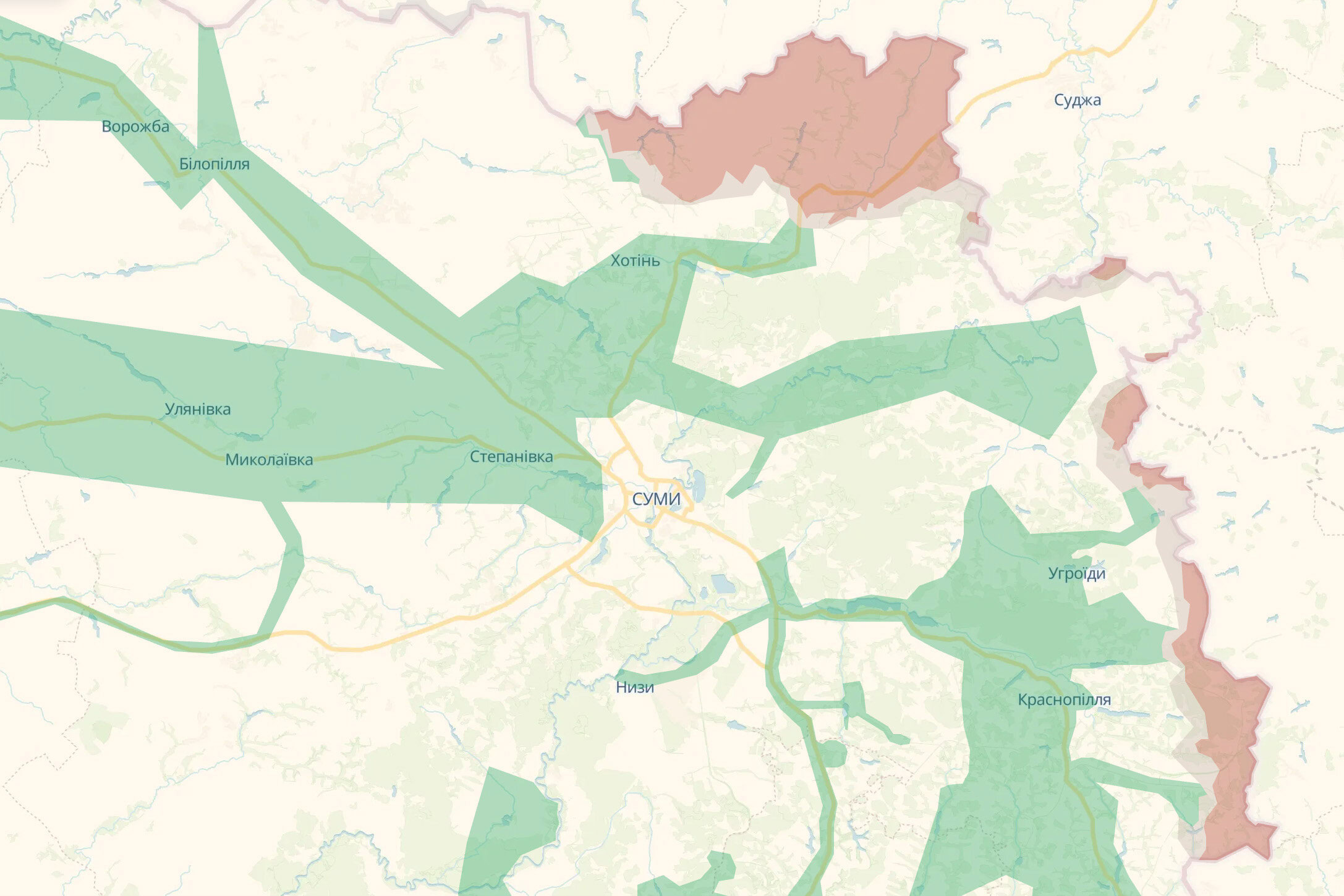
Throughout April, there were heated online discussions about the threat of Sumy’s encirclement. The Command dismisses these concerns: despite the tension in the border areas, a breakthrough of such scale is currently impossible. Instead, the enemy is implementing a different plan — creating localized incursions into state border defenses to consolidate them into a continuous “buffer zone.” This is being done with the intent to push the Defense Forces of Ukraine further away from the border and closer to the regional center.
A new and very real threat to Sumy has emerged: the use of fiber-optic drones. These UAVs are immune to standard electronic warfare (EW) systems. Back in January 2026, the first FPV drones delivered by so-called “mother drones” were spotted in the region. By early April of this year, the use of fiber-optic FPVs was recorded on the city’s outskirts, in the village of Khomyne.
Russian forces have grown weary on the Huliaipole front
In the Zaporizhzhia region, the situation has stabilized somewhat. The Armed Forces of Ukraine have gradually reclaimed their positions, even though the Russians have deployed new units to the area.
“The enemy has become exhausted on the Huliaipole front. The number of attacks is no longer what it used to be. We eliminate up to twenty Russians every day,” says Vitalii Derevianko, Deputy Commander of the 1st Assault Regiment named after Dmytro Kotsiubailo.
The 1st Assault Regiment has been defending a sector of the Huliaipole front since late 2025. During this time, the Russians have not even attempted a large-scale mechanized breakthrough; Ukrainian control of the skies and heavily mined terrain are proving effective.
However, the enemy is not standing still and is deploying new units, Derevianko says. The “kill zone” is expanding, making it more difficult to reach positions for both FPV drones and heavy bombers. There is no distinct front line; there is a grey zone where Ukrainian and Russian troops are intermingled.
“Their objective is not to push us off our positions, but to infiltrate as deep as possible,” explains Vitalii Derevianko, Deputy Commander of the 1st Assault Regiment.

