Robotic warfare: How unmanned ground vehicles sustain front-line logistics
Under a night sky patrolled by enemy drones, a box on a chassis rolls forward. The unmanned ground vehicle (UGV) “Tarhan” carries nearly 200 kilograms (about 440 pounds) of food and ammunition to front-line positions. No soldiers walk beside it, making the scene feel almost unreal. But it’s still people who make this “science fiction” happen on the battlefield. Dozens of kilometers away, an operator steers the vehicle remotely through a camera feed. Unmanned ground systems have taken on logistics missions inside the “kill zone” – areas where movement is too dangerous for troops because of constant drone threats. Frontliner reporters followed the full cycle of robotic logistics, from the workshop where vehicle production never stops to their deployment on a combat resupply mission.
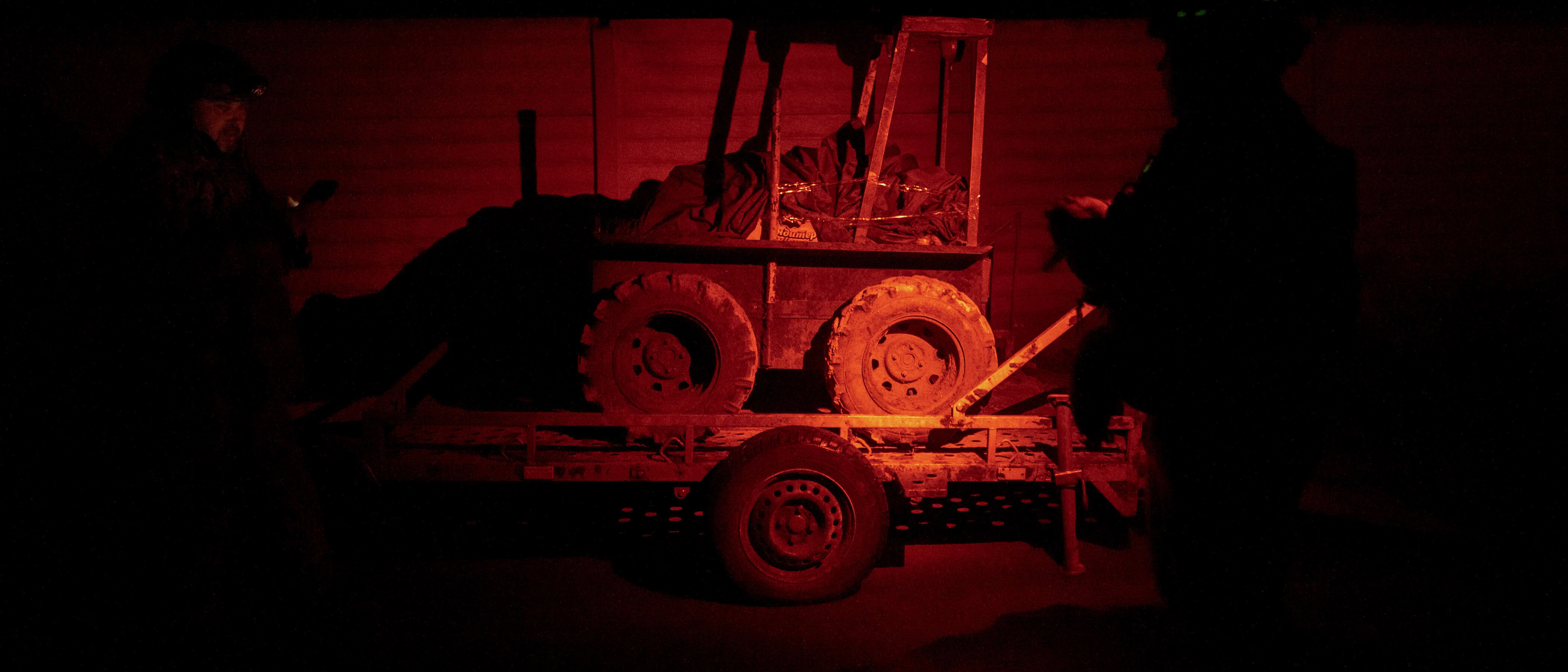
In the evening, a military pickup drives into the workshop yard. Mechanics open the gates, lower the trailer, and quickly load the Tarhan onto it. They then cover it with a tarp and secure it with tape. In this state, the robot resembles a sculpture carefully protected from Russian shelling.
[Translator’s note: Due to repeated shelling and drone attacks on Ukrainian cities and towns during the Russian invasion of Ukraine, municipalities and volunteers take measures to protect cultural heritage, including by encasing statues and sculptures with sandbags and tarps.]

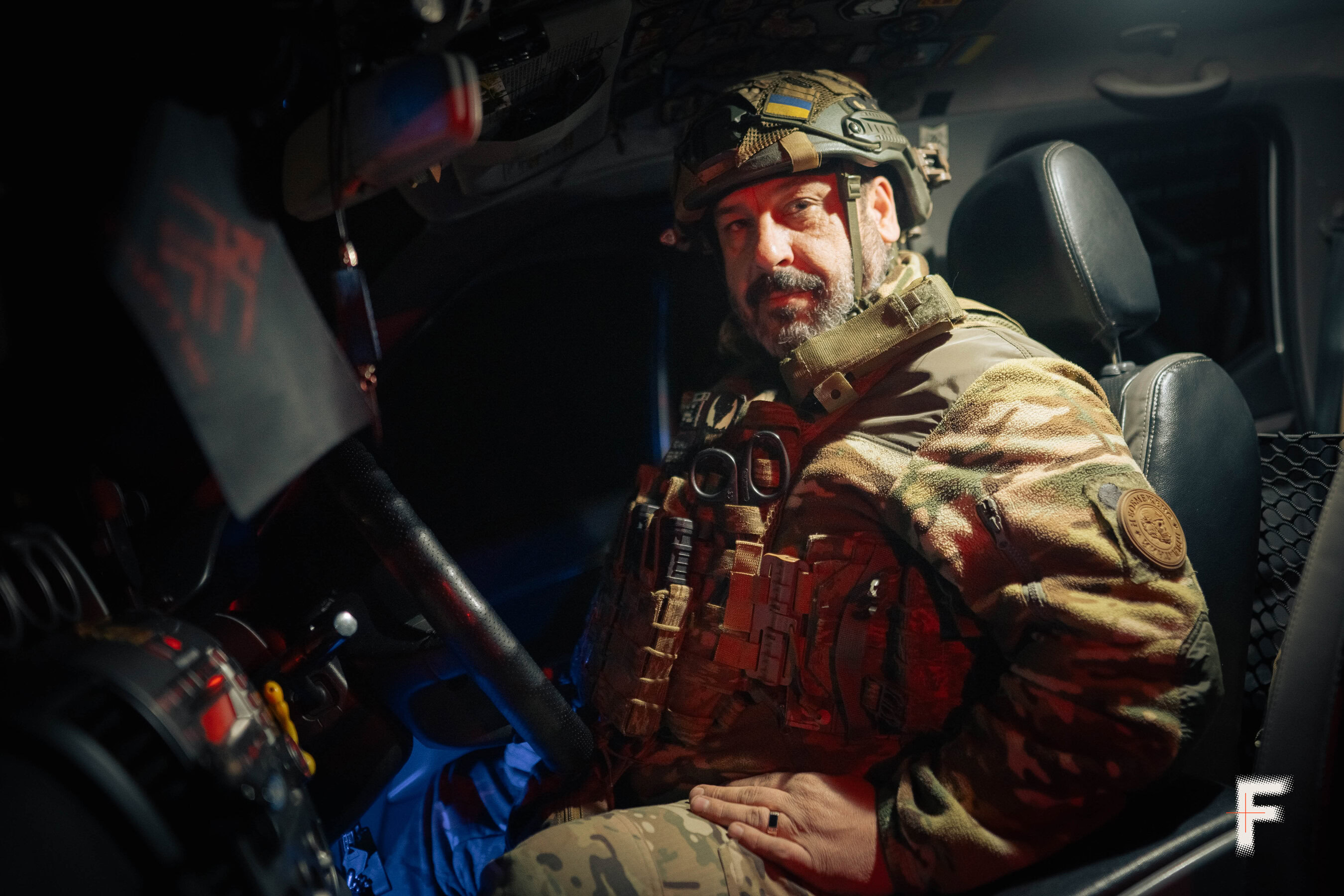
The pickup leaves the workshop yard. After an hour on the road, it stops to pick up a burly, bearded man – the chief sergeant of one of the Khartiia batteries, callsign “Demon.” He is responsible for delivering food and ammunition to the troops. Before UGVs became a standard tool on the battlefield, Demon transported supplies himself. He shares that the most unusual request he ever received from soldiers was for sushi.
Now UGVs handle the supply runs. To hard-to-reach positions, they deliver not only ammunition and food but also packages from soldiers’ families.
“Why wouldn’t we handle packages? Back in the rear they have the regular mail, but here we have our own robotic system. We fight this war the modern way. In places you can’t drive in, our ‘little passenger’ makes the deliveries,” explains “Demon”.
A UGV mission in action
The chief sergeant gives the order to load the UGV. Soldiers stack ammunition, packs of water, energy drinks, and cigarettes on board. The men put on helmets and body armor – a more dangerous stretch lies ahead.

At the launch site, they stop the UGV, remove the tarp, and lower the trailer again. They work quickly – a Russian drone could strike at any moment. “Demon” calls the operator:
“Wishing you good health. We’re ready to start. You can even see me,” he says, waving in front of the drone’s camera that the operator is watching.
A minute passes, and the drone doesn’t move. The indicator lights up, but Tarhan is still stationary. Demon jokes:
“Come on, quad-bro,” he says, half jokingly to the machine, half to the operator. “Maybe I could sweet-talk you into moving?”
And suddenly, the robot rolls off the trailer, as if responding to “Demon”. Despite no one being nearby with a controller, the box on wheels moves on its own, almost alive. Drifting through the mud, it disappears along a narrow dirt path.

“Mission accomplished. Partially,” reports “Demon.”
How robots are saving soldiers’ lives
Indeed, this is just the midpoint of the mission. Next, the operator guides the UGV to combat positions under the aim of enemy drones. The robot moves slowly – about eight kilometers per hour. At this speed, in the darkness, with snow and ice adding to the treacherous terrain, the operator keeps a close eye on its movement to avoid losing the vehicle.
Although the operator is at a relatively safe distance, every night is exhausting and tense. Still, watching soldiers retrieve the long-awaited supplies through the camera makes it all worthwhile.
The delivery mission was successful. It was carried out by the operator with the callsign “Hornet.” He is passionate about his work, seeing the UGV as a way to save the lives of many fellow soldiers while also reducing costs for the state. Hornet approaches war mathematically, explaining the value of ground robots in numbers.

“How much is my life as a soldier worth to the state? Fifteen million,” says the serviceman.
He breaks down the cost of losing a crew and their equipment. If two soldiers, an armored vehicle, electronic warfare gear, and other equipment were lost during a mission, it would cost the state around fifty million. By comparison, a ground robotic system costs roughly one million.
Yet for everyone involved with UGVs, it’s not about saving money. The most important thing is that soldiers don’t die while transporting supplies. Statistics show that the highest number of combat casualties happens during movement. “Hornet” says that every week their work saves the lives of about thirteen soldiers by carrying out the supply runs in their place.
“If a drone gets destroyed, we don’t mind. It’s just a piece of metal that’s worth nothing compared to a human life,” adds “Hornet.”
Inside the UGV workshop
Ground robotic systems are now entering a period of rapid growth, much like drones did in the past. The military has begun developing this field, creating units dedicated entirely to UGV operations. Two years ago, the 2nd Corps of the National Guard unit Khartiia began expanding this area of expertise, establishing a UGV company within the Lava unmanned systems battalion. This company oversees the full cycle of robotic logistics, with a single team responsible for preparing the robots for combat, planning missions, and carrying them out.
-
Unmanned ground vehicle workshop, Kharkiv region, Ukraine, Nov. 10, 2025. (Marharyta Fal/Frontliner)

-
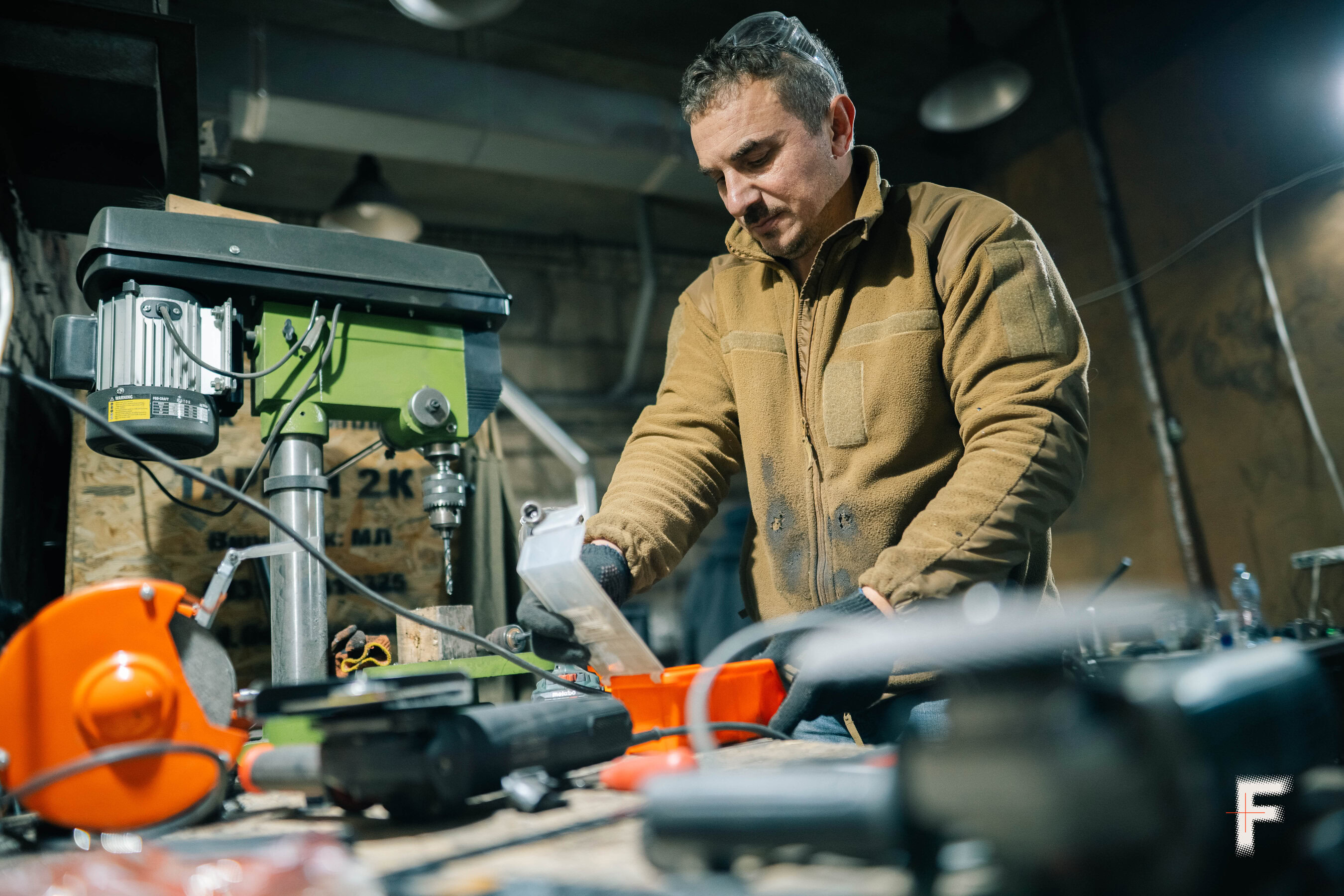
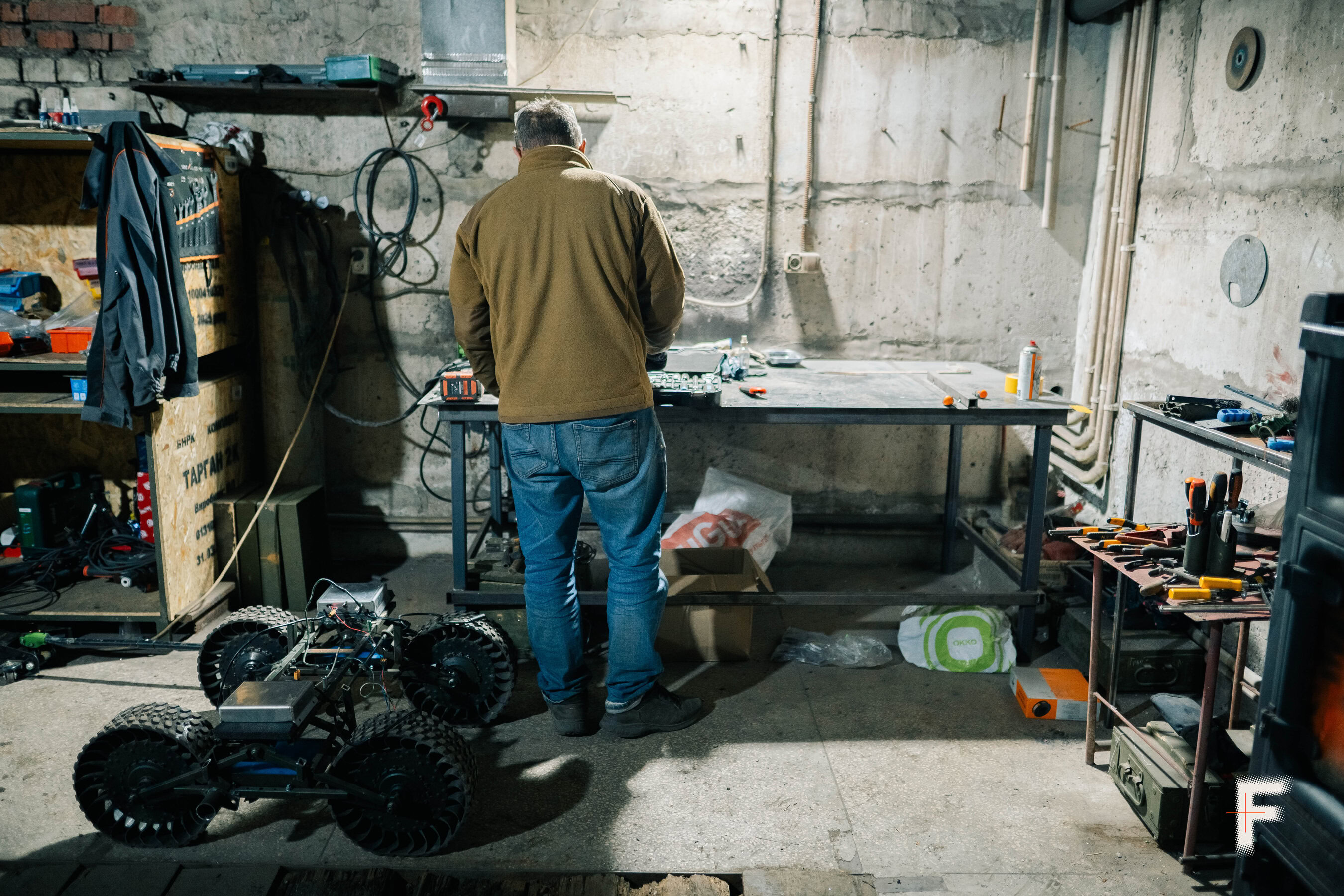
UGV company soldiers call their workshop a service bay, after car repair stations, because the tools and processes are similar. But from a civilian perspective, the workshop looks like something out of the future, as if it could belong in a cyberpunk movie or video game. The concrete walls, floors, tables and plywood crates are scattered with tools, wires, and parts – their arrangement known only to the engineers and mechanics. From a distance, the heat from a wood-burning stove can be felt.
The workshop is filled with young people, some not even of mobilization age. The commander, “Happy,” is 23. Dressed in a plaid shirt and sneakers, he leans over a laptop, planning the next mission. Nearby, a red-haired woman with the callsign “Jess,” 21, solders a flashlight onto a ground drone by the wood-burning stove. More experienced mechanics are also present, but age isn’t the main criterion for joining the platoon – what matters most is expertise in mechanics or programming.

The team works around the clock, with no weekends or days off, to handle most of Khartiia’s supply deliveries. Drones arrive at the workshop unprepared for combat, so they are modified and readied for each mission. Technicians solder additional communication modules, set up connections, and program the systems. The drones are then put through test runs, and only after that are they ready for deployment.