Road to the Unconquered: a veteran’s path to his first victory
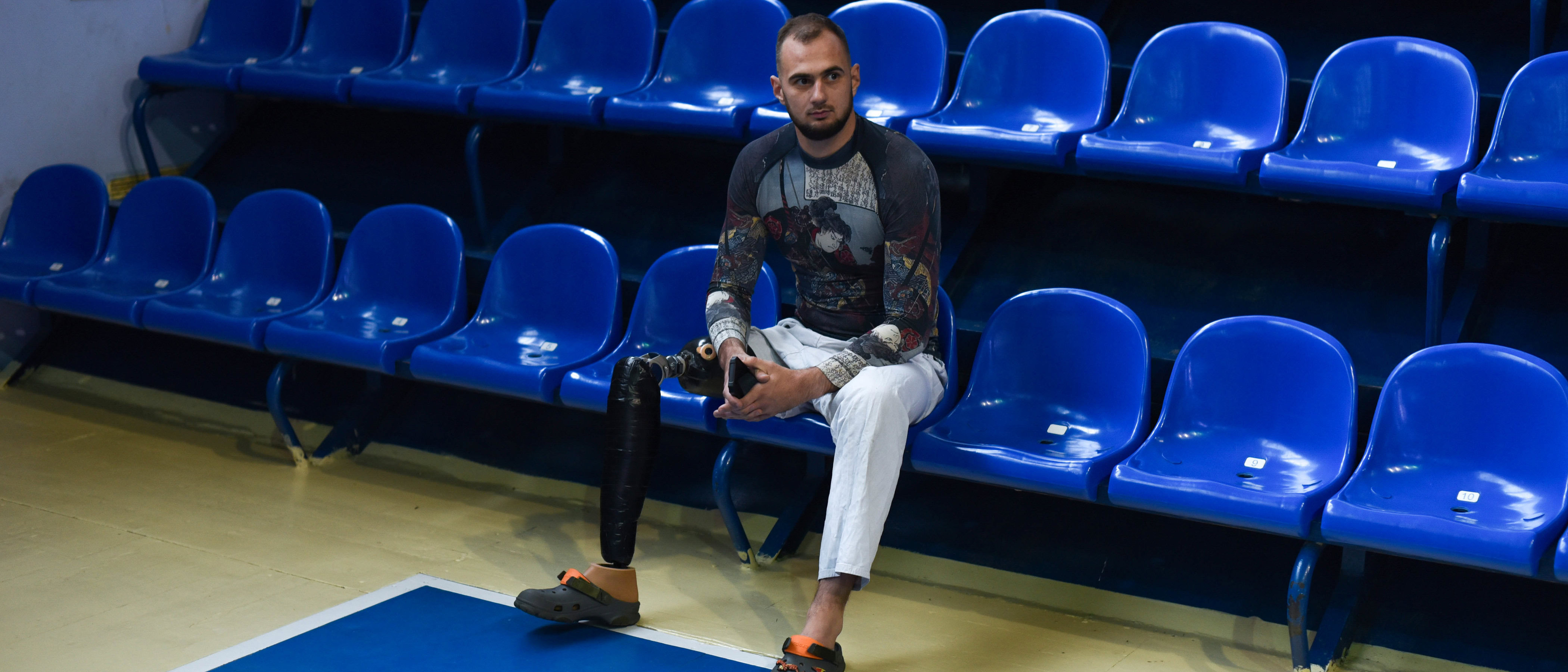
After a mine-explosion injury, Nazar Skyba lost a leg. The amputation changed his body but did not take away what mattered most – his will to move forward. Inspired by the stories of other veterans, he found an outlet in jiu-jitsu and proved at his first “Road to the Unconquered” tournament that victory begins not on the tatami, but with the decision not to give up. Frontliner tells the story of 28-year-old veteran Nazar Skyba: from injury to his first jiu-jitsu tournament.
Nazar’s story is more than a typical tale of recovery. While still in service, he followed veterans with amputations who practiced sports, seeing in their example a possible path for his own uncertain future. After his combat injury, that inner preparedness became the foundation for his return to an active life.
Before the match
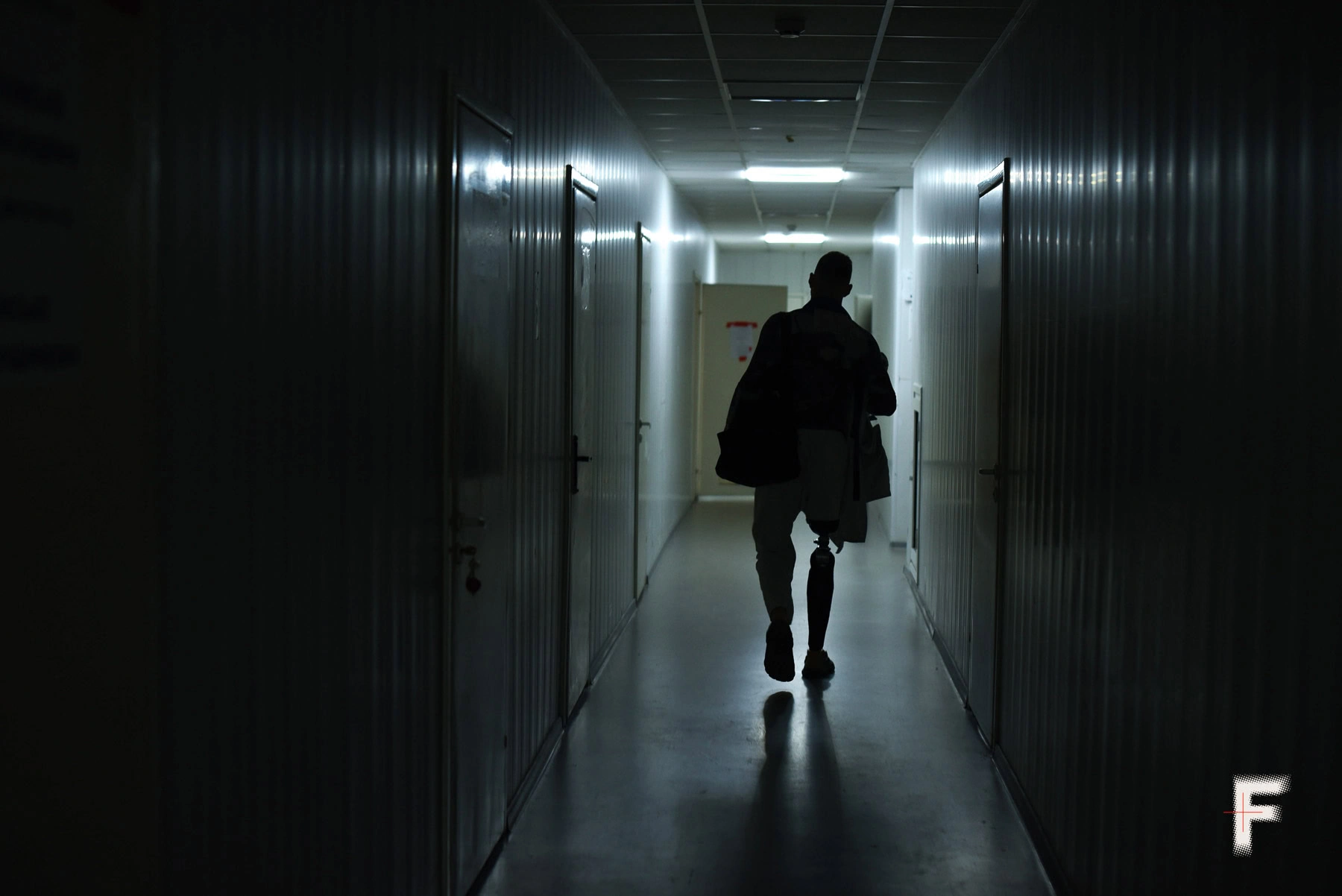
He steps into the match slowly, but with confidence. The crowd hums, coaches shout instructions, and other veterans warm up nearby. As he walks from the locker room to the octagon, he feels the familiar pre-match jitters – that moment when all you want is to step onto the mat and do your job without wasting energy on distracting thoughts.
The tournament was held in early December in Mykolaiv, Nazar’s hometown, and he could feel the crowd’s support and hear his coach’s voice at his side. But once the match began, all of that vanished.
-
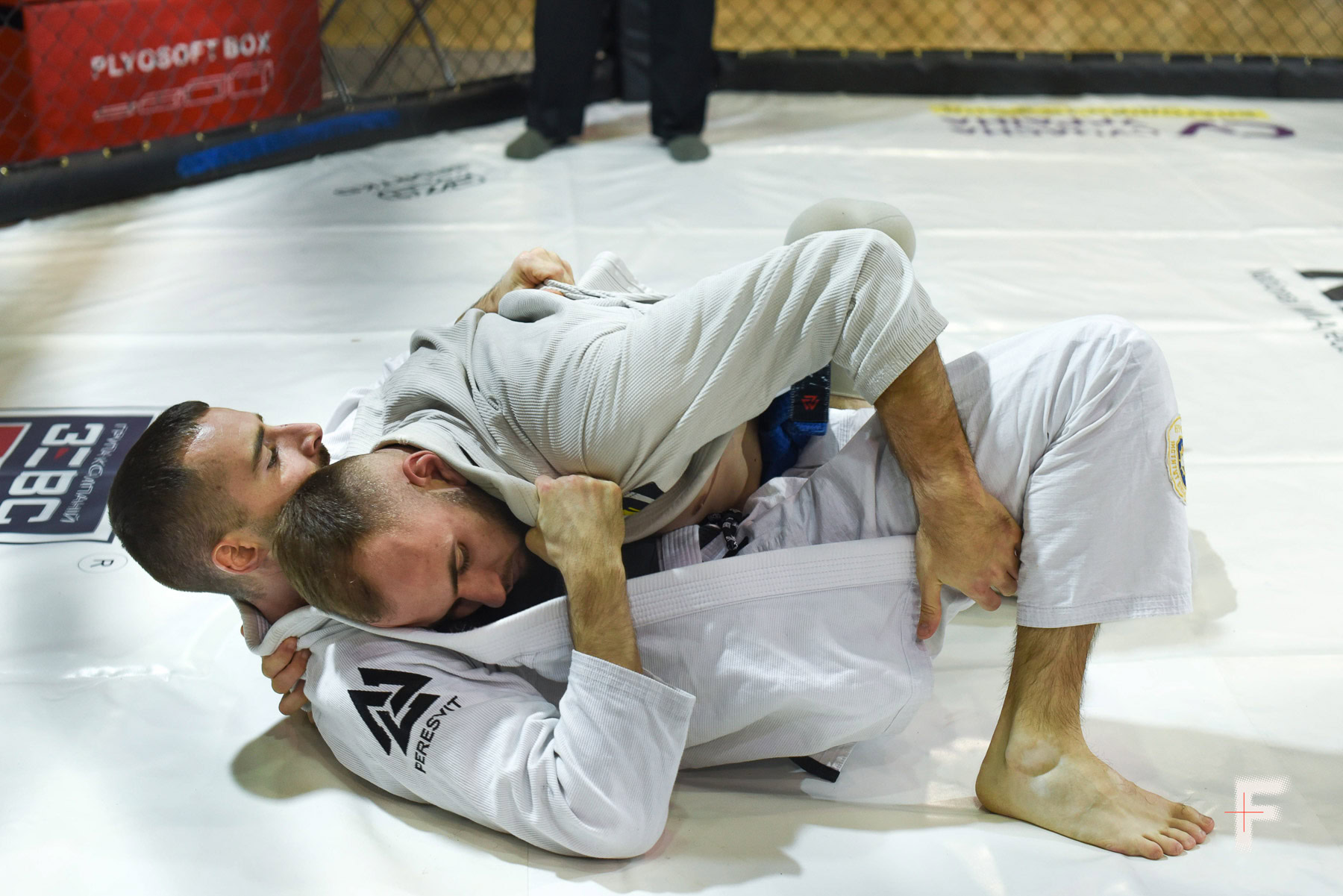
Nazar Skyba and Oleksii Bobchynets in the octagon, Mykolaiv, Ukraine, Dec. 7, 2025. (Tetiana Kreker/Frontliner)

-
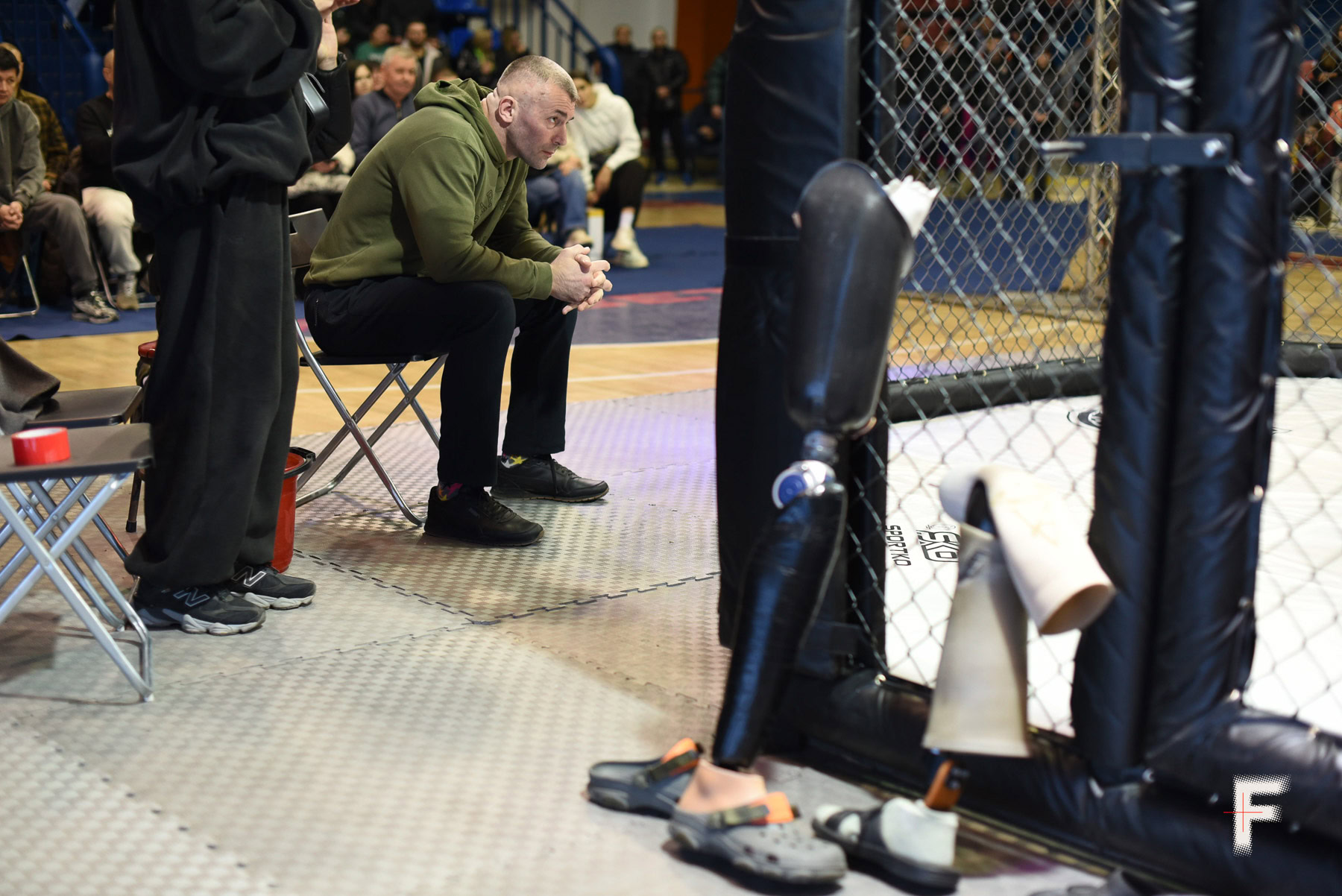
Coach Kostiantyn Brezhniev, Mykolaiv, Ukraine, Dec. 7, 2025. (Tetiana Kreker/Frontliner)

He recalls losing track of his surroundings during the match: “When I was on the mat, I couldn’t see anything, as if the entire two or three minutes were in darkness.” According to him, there was almost no nervousness – instead, he felt an inner calm and a clear understanding of what needed to be done. Before the match, his mind stayed focused on victory and the pre-planned strategy he kept returning to.
Before the war
Before the full-scale war, Nazar’s life revolved around things that felt stable and familiar. He worked as an electromechanic, played rugby for Mykolaiv’s Vitovka club, traveled extensively across the country, and hiked in the mountains. For him, sport was not just about training or exercise; it was where friendships formed and a sense of community took root. With so many close friends on the team, he found extra motivation to attend practices, travel to competitions, and stay part of that circle.
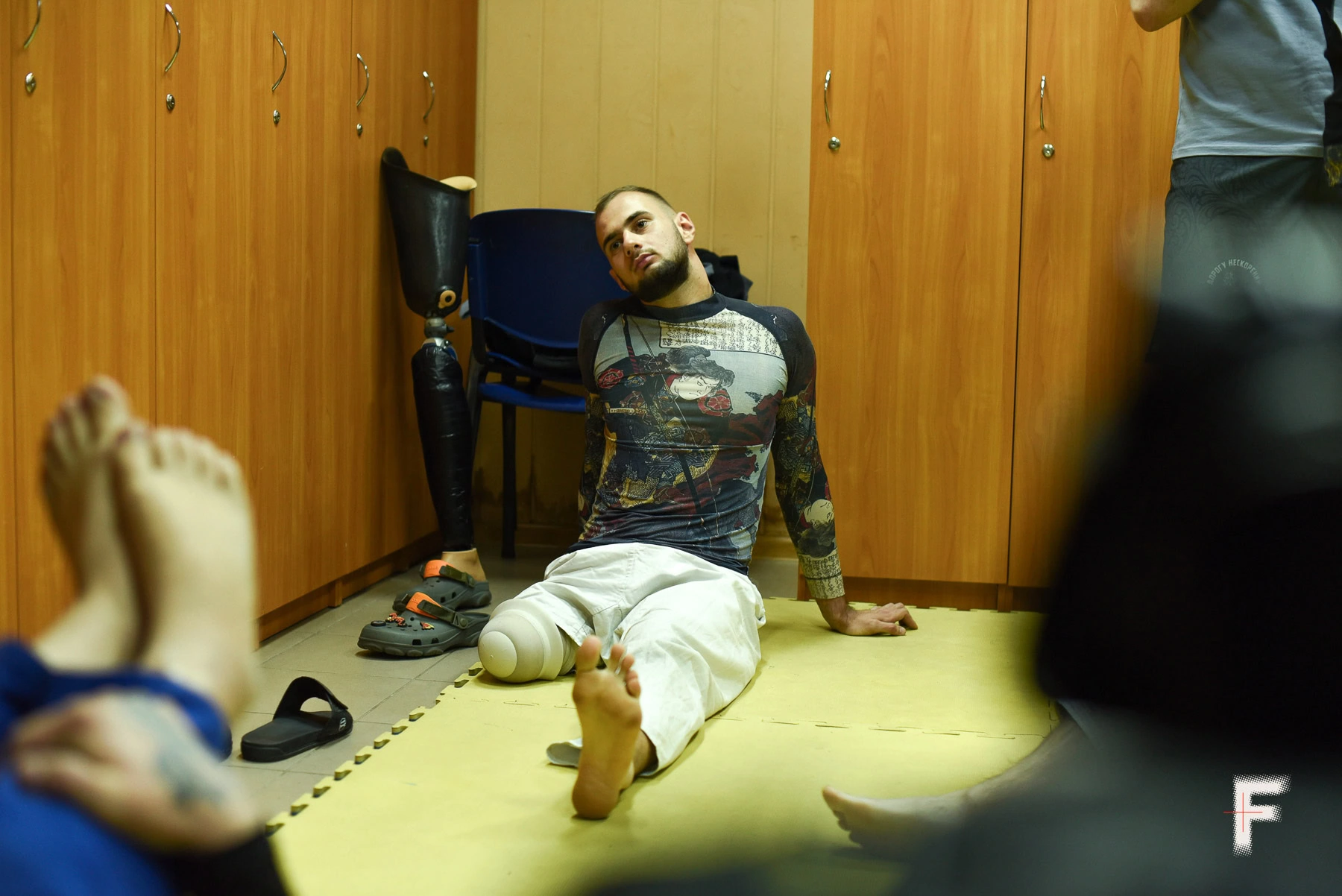
Life doesn’t stop after an injury.
Stories that became a guiding light
Since the start of the full-scale invasion, people with amputations have become more present in public life, sharing their stories and showing that an injury does not mean the end of life.
“Many guys who have had limb amputations started running blogs on Instagram, showing that life doesn’t stop after an injury. I’ve always admired these men. One of the first I came across was Roman Kolesnyk, callsign “Dobriak.” He boxes, hikes in the mountains, and even does flips on his prosthetic. It’s amazing,” says Nazar Skyba.
It inspired both respect and genuine amazement, as Nazar had never seen anything like it before. At the time, he didn’t think it would one day become part of his own life. But these examples became an internal guide, imprinting the possibility that life can continue after losing a limb – for the moments when your physical support is suddenly gone.
Injury and evacuation
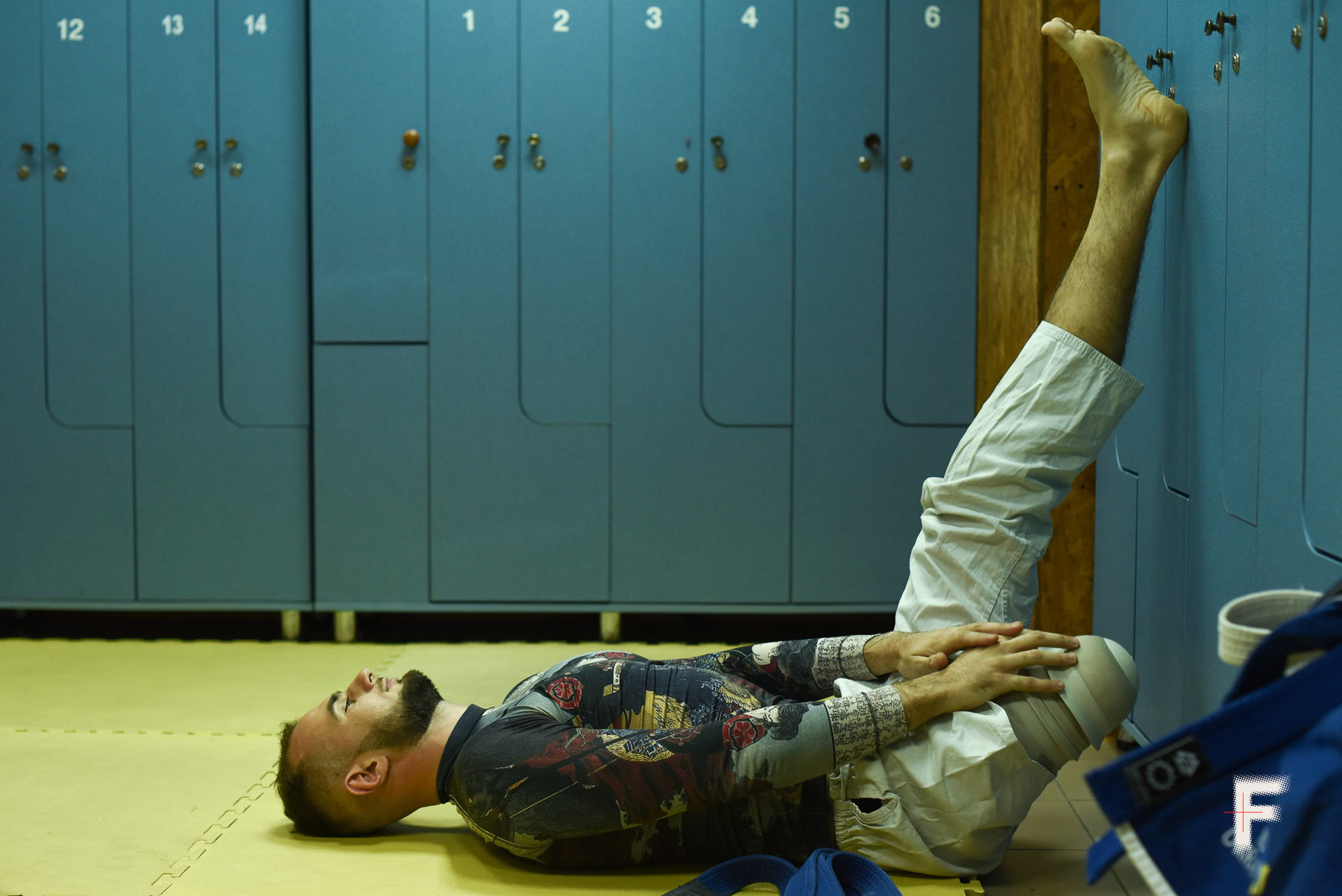
Nazar Skyba joined the Ukrainian Armed Forces in April 2022, serving in the 21st Special Purpose Battalion of the Presidential Brigade, and remained in active service until December 28, 2023, when he was wounded on the Siverskyi front.
The full evacuation to the stabilization point took 28 hours,

“There was a position covered with anti-personnel mines. It was on high ground, making it strategically important to hold. Unfortunately, every time a group entered the position, someone would trigger a mine. It so happened that I stepped on one myself. As they began evacuating me to the location where we could be picked up by vehicles, we came under heavy enemy fire. Sadly, nearly the entire group was wounded, and one comrade was killed. We waited for other soldiers who could extract us. The full evacuation to the stabilization point took 28 hours,” recalls Nazar.
After the amputation
His first thoughts after learning about the amputation weren’t about his own pain, but about how to tell his mother. At the same time, a simple yet sobering question emerged: how would he ever hike in the mountains again?
The following weeks, Nazar recalls, were the hardest of his life. Constant physical pain, high fevers, and phantom sensations were broken only by the endless wait for painkillers just to get a few hours of sleep. Learning to walk on a prosthetic was difficult and painful – fresh stitches constantly reminded him of his injury, his leg sweated heavily, and stairs seemed nearly impossible to climb:
“During the first month, the stairs felt like an actual Everest,” Nazar says. “In the early days, you forget that you don’t have a leg – you stand up from bed and fall. It was strange to look at myself in the mirror. I noticed that after the amputation, my arms became stronger. The phantom pain remains.”
I can still feel my foot, even though it’s gone, and there’s
a vibration exactly where I stepped on the mine.

After rehabilitation, another challenge emerged: returning to public spaces and feeling the weight of strangers’ stares.
“You can see everyone looking at you, children pointing,” Nazar says. “Sometimes you just want the ground to swallow you – you don’t want that kind of attention.” He adds that going through the military medical commission and discharge process deepened his depression: endless paperwork, bureaucracy, and the feeling that some doctors and people in waiting rooms were indifferent to his trauma.
He says it was people – both familiar faces and complete strangers – who helped keep him from sinking into despair. The support from family and friends was so strong that at times Nazar even found himself exhausted by the constant visits and gifts.
The stories of other men with amputations, whom he had followed even before his injury, became an important anchor during his recovery.
A new chapter with Jiu-Jitsu
Nazar first learned about para jiu-jitsu earlier, while watching other veterans train in Kyiv. When a veterans’ group opened in Mykolaiv, he decided to give it a try himself. His first training session was with a regular group, which initially caused some discomfort, but the team quickly adapted. And the coach stayed closely involved, working alongside Nazar to find solutions.
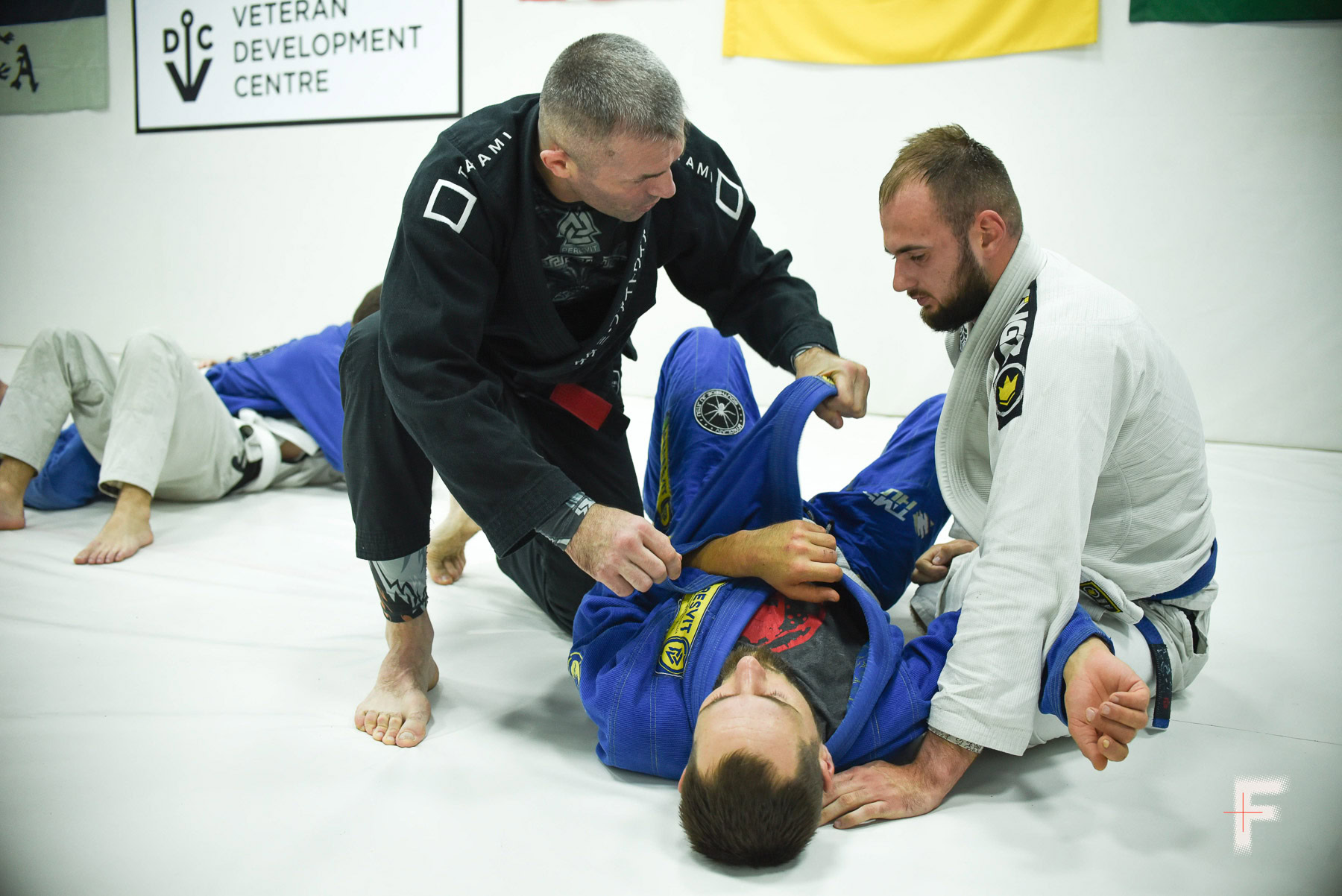
Coach Kostiantyn Brezhniev, who holds a black belt in Brazilian jiu-jitsu, works without pre-set methods. Today, Nazar is the only student in the group with an amputation, so many technical solutions are developed directly during training. The most difficult part, according to Nazar, remains working with his legs, but each time, thanks to the coach’s experience and attention, they are able to find a workable alternative.
Jiu-jitsu gradually changed his relationship with his body and its capabilities. He began to feel a sense of lightness and flexibility, and realized that even without the ability to run, he could still build serious endurance. It’s a sport where he can compete on equal terms with opponents without amputations.

First victory
The “Road to the Unbroken” tournament, honoring fallen soldiers, was particularly meaningful to him, and he considered taking part a great honor.
When I was invited to compete, I accepted with joy. Being the only person in Mykolaiv practicing jiu-jitsu with an amputation, I hope I might inspire someone else to try the sport,
During the match, he focused on staying calm and following his coach’s instructions. At one point, he noticed his opponent beginning to tire and seized the moment, executing a chokehold. After the victory, there was no loud celebration, just the quiet satisfaction of achieving his first competitive success and the awareness that there was still more work to be done.

Not letting fear take control
Today, sport is for Nazar Skyba not just a part of his rehabilitation, but also a way to relieve stress and build his strength. He plans to continue competing, hikes in the mountains on his prosthetic in his free time, and looks forward to future travels.
Don’t wait for the fear to disappear; it won’t.
You just have to carry it with you and take the first step.
After his injury, he felt the value of simple things more acutely – the ability to get out of bed on his own, step outside, or walk through the city without pain. The injury took part of his body, but it did not take his humanity, and life did not stop – it simply became different. In this new life, he can still fight, grow, inspire others, and be productive.
“Don’t pity yourself – try something new. Don’t wait for the fear to disappear; it won’t. You just have to carry it with you and take the first step. Starting over is scary for everyone, but an amputation doesn’t put a full stop on your life. Yes, it will hurt. It will be uncomfortable. There will be falls, stares, doubts, and days when you want to give up. That’s normal. What’s not normal is letting fear decide who you will be. And remember: you don’t have to prove anything to the world. You do it for yourself. Along the way, you might even inspire others without realizing it,” concludes 28-year-old veteran Nazar Skyba.
Author: Tetiana Kreker
Adapted: Irena Zaburanna