One foot in retirement: serving over 50
The Armed Forces of Ukraine are aging rapidly. Older soldiers joke that they will hold each position more fiercely than the younger troops because if they manage to reach it, they might not have the enough strength to return. There is truth in every joke: for fighting men who have already lived half a century, escaping drones is becoming harder and their strength is declining. Despite the pain and fatigue, they must do what they could not do in youth. How do 50-year-old soldiers of the 152nd Jaeger Brigade cope with military service, and is the army ready for warriors who are nearing retirement? Servicemembers shared their thoughts about it with Frontliner.
As of early 2025, the average age of Ukrainian servicemembers was between 43 and 45. Three years earlier, in 2022, it did not exceed 35. The Armed Forces of Ukraine are aging rapidly and a large share of the Defense Forces is now made up of older men. In the 152nd Jaeger Brigade, for example, more than 57 percent of servicemembers are over 45. The brigade has been defending the Pokrovsk front for several years but is rarely reinforced with younger recruits. Consequently, almost all servicemen served as infantrymen, even those mobilized at the age of 50. Only recently have many been reassigned as drivers, artillerymen, or mechanics. However, the toll on their bodies and their health problems remain the same.
At 55, your motivation is to prove you are still needed
For 55-year-old Oleksandr “Makedon”, serving during the full-scale invasion is his first military experience. In his youth he dreamed of joining the army, as military service was held in high regard, but he was rejected due to health problems. For years, during the Soviet era, he was embarrassed by it, feeling as if he had been branded a failure. Later, “Makedon” found his path in civilian life working as a plumber, often taking care of the water pipes at St. Michael’s Golden-Domed Cathedral in Kyiv. Work kept him so busy that during the Anti-Terrorist Operation in eastern Ukraine, he did not contemplate joining the army. But everything changed when the full-scale invasion began.
“When the invasion started, I immediately went to the military recruitment center,” he says. “They told me I wasn’t suitable as not only did I have health problems, I had never served before. But after some time, they called me back. I underwent the medical examination, and once again they declared me unsuitable and sent me home. I was angry. It was humiliating, like I was some kind of second-rate person. I really wanted to prove that I am needed.”
Then in 2024, a new law required people previously classified
as “conditionally fit” to undergo another medical examination.
This time the commission declared me fit for service,
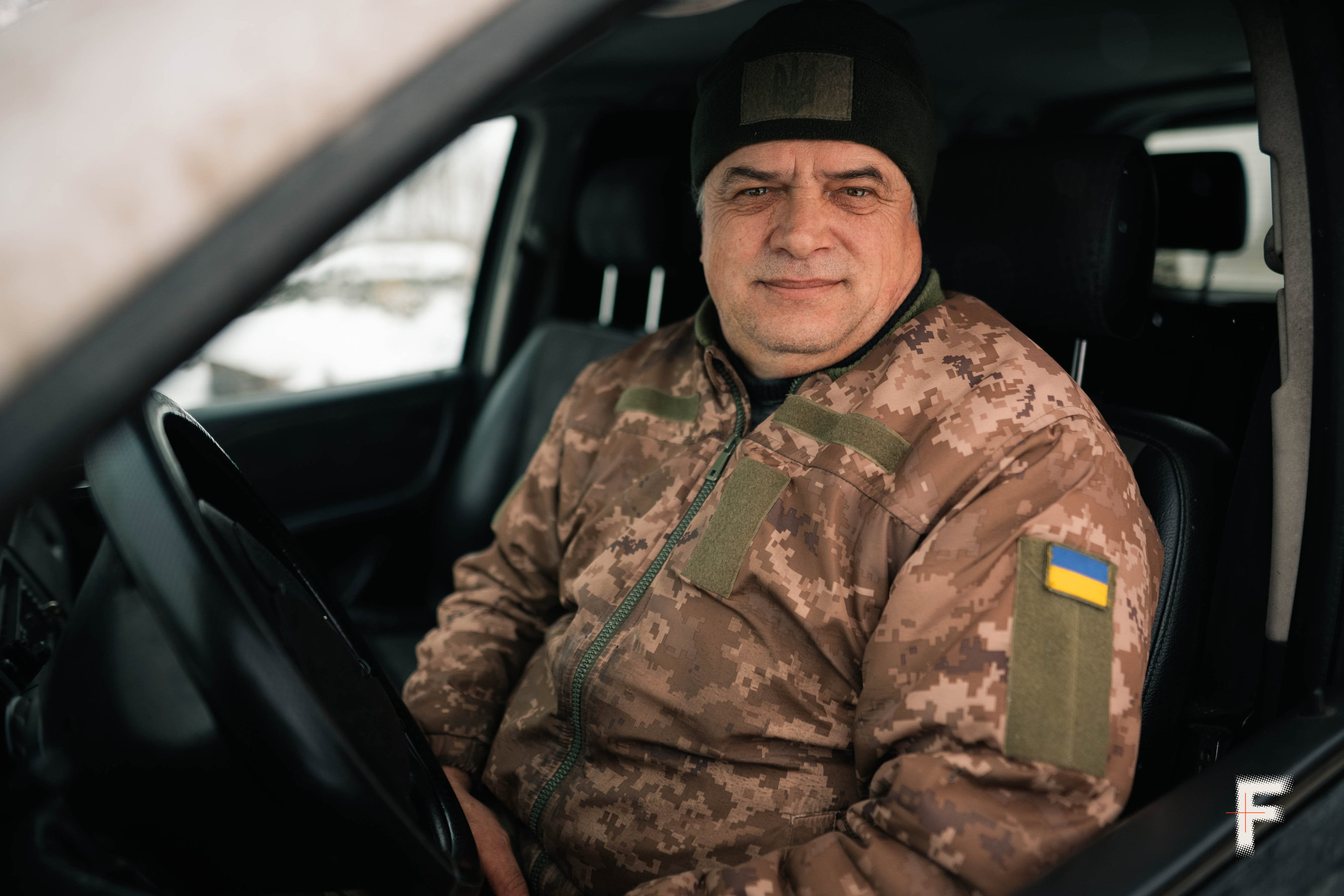
Basic military training was difficult. Being overweight and having trouble breathing made the exercises especially hard. His relatives even tried to find ways to get him discharged before he joined the brigade, turning to monks at St. Michael’s Cathedral to intervene. But Oleksandr wanted nothing to do with it. Despite the challenges, he completed the obstacle course and went through training alongside the others. When he met the rest of the recruits, he realized that even men older than him were managing the pace set by the instructors.
When Oleksandr “Makedon” joined the brigade, he was the oldest soldier in his platoon and no special allowances were made for him. If there was an order, it had to be carried out regardless of age, health problems, shortness of breath, or poor sleep. When asked whether he receives special treatment because of his age, he smiles:
There is no special treatment. I’m the same as everyone else.
I try to keep up with the rest. I try to pull my own weight,
During the interview, the soldier coughs frequently. After a short walk he stops to catch his breath. His health problems are not new, but the symptoms of chronic illness have worsened during service. Still, he insists he does not need special treatment. Maybe only a vehicle, “to spare the lungs,” he adds
I’m not in any deadly danger. I don’t complain. But I can’t run fifty meters.
If I try, I am out of breath after the first few steps.
But if you tell me to go somewhere, I’ll get there. By car.
God has almost spared me from new ailments in the army,

Now 55, “Makedon” says that even if he had the opportunity to leave the army, he would stay. He enjoys working as a driver in his unit. For the first time in his life, he feels truly useful.
I’ve already proved that I can carry out combat missions
alongside everyone else, no matter what is written
in my medical records. There’s no going back.
Besides, I like serving in the army,
For this soldier, military service at this age became a personal challenge, one he ultimately accepted. For many of his comrades, however, the army means years of pain that can only be eased with medication.
Soldiers over 50: more often a burden than support
Fifty-eight-year-old Oleh Naumov joined the 152nd Jaeger Brigade after previously serving in the Soviet army in Germany. At first he served in an anti-aircraft missile unit, but later changed his specialty and became a coder. At the time, he recalls, the job carried a certain prestige, but it was not something soldiers were allowed to discuss openly. He and his colleagues signed non-disclosure agreements because they worked in a special department of the Soviet KGB.
When Russia launched its full-scale invasion, Naumov joined up on February 25, 2022. He first served in the Chernihiv Territorial Defense Forces. The soldiers built checkpoints, patrolled them, and checked personnel identifications. In the early weeks of the big war there was only one rifle for every five soldiers. His service was interrupted in 2023 when he broke his collarbone. After surgeons inserted metal plates and a long recovery he was re-examined and declared conditionally fit for service. A year later the medical commission declared him fully fit, and he was mobilized again. That is how he ended up in the Sumy region and later on the Pokrovsk front.
It was so bad. I felt like my shoulder
was on fire and I was afraid to move
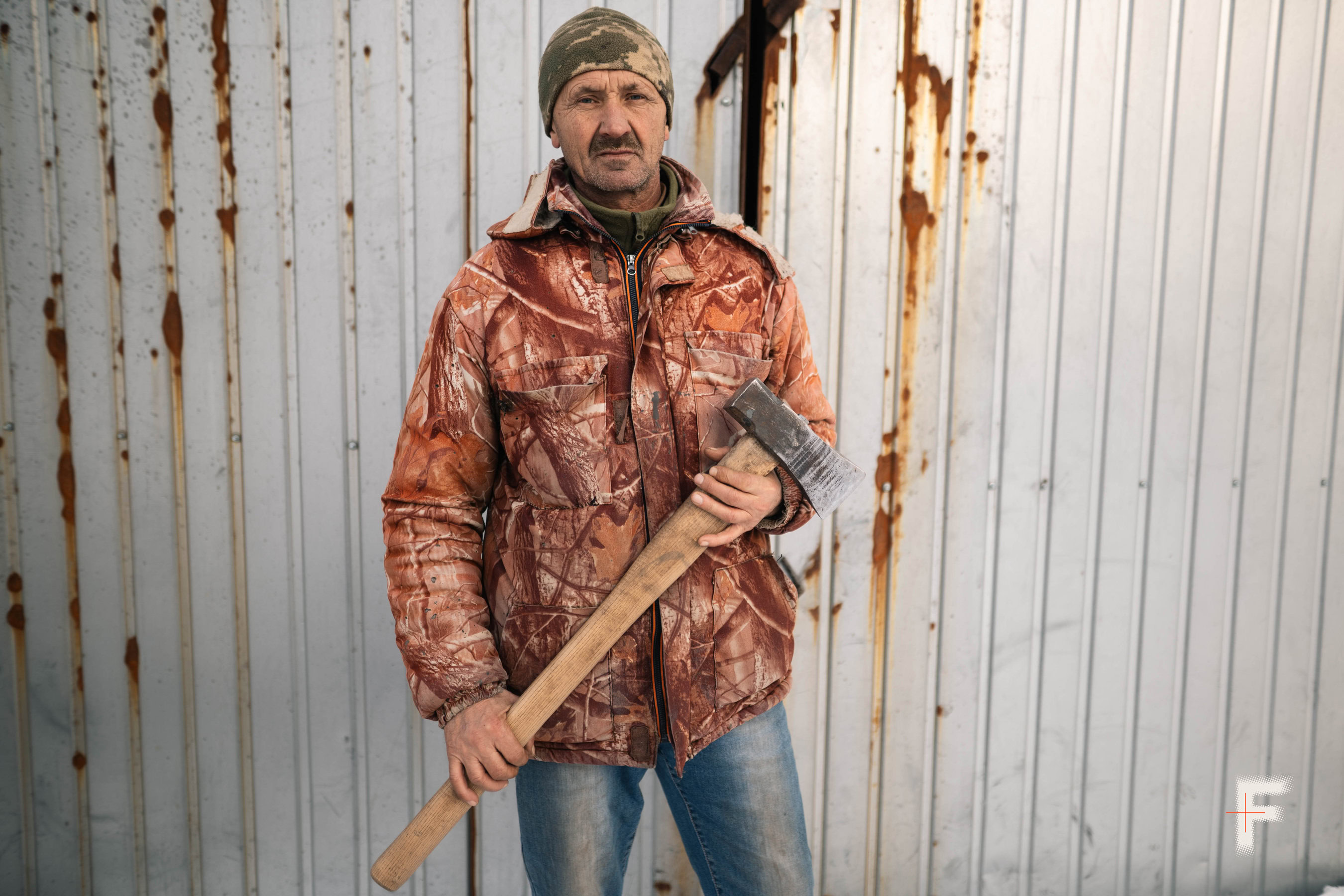
“We trained constantly,” he says. “Push-ups, squats, shooting at moving and stationary targets, ten-kilometer marches in full gear. But because of the metal plates in my shoulder, the training caused severe pain. It was so bad. I felt like my shoulder was on fire and I was afraid to move. One of the commanders eventually sent me to the medic. The medic told me to remove the armor plates from my body armor and train without them. That’s how I serve to this day,” says the soldier.
I couldn’t wear body armor, another guy couldn’t
straighten his back because it hurt so much,
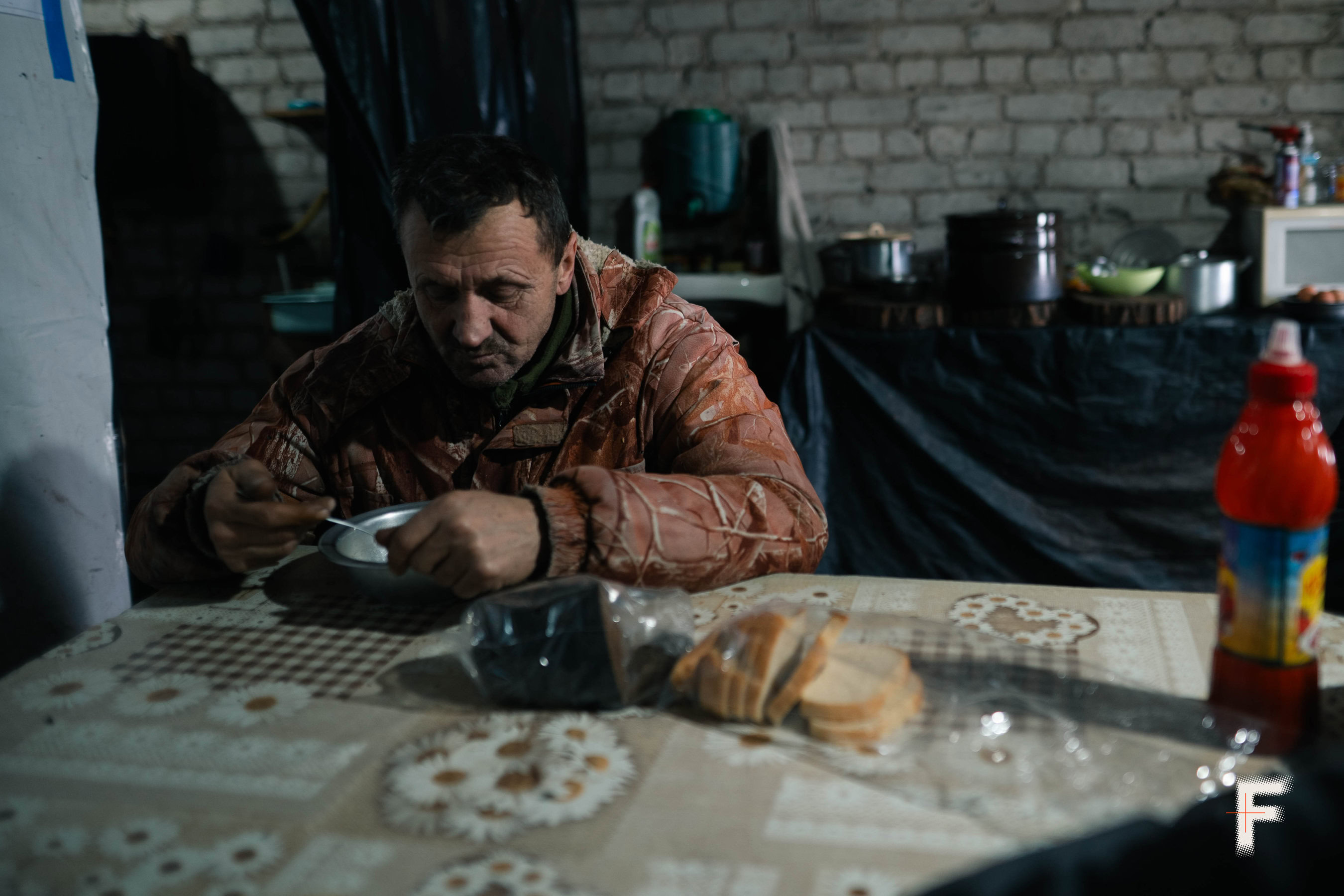
When training ended and Naumov joined the brigade, he and other recruits over 50 were assigned to assault units. There was a critical shortage of troops, so even men with spinal hernias or extremely high blood pressure were needed. Most recruits in basic training were over 55, while only a few were in their thirties. At first the older men joked that their life experience made them more reliable in combat. But within days many began to suffer from aches and physical strain, creating serious problems for their comrades.
Naumov shares: “At the training ground, there was a young soldier training with us. I couldn’t wear body armor, another guy couldn’t straighten his back because it hurt so much. The young soldier said, ‘I do not want to make you upset, but I won’t go on a mission with you. I’ve already been deployed with someone like that, and he could not get out of bed. He was supposed to be combat-ready, but ended up being a problem.’”
The problem isn’t with the military recruitment centers
that mobilize civilians, but with the medical commissions
that declare everyone fit for duty,
Naumov believes mobilizing men over 55 can do more harm than good, like shooting yourself in the foot. They will need constant medical care, and medication support. And they may not be able to carry out the tasks assigned, even on the second or third line of defense.
“My service after 2024 is in constant pain,” he adds. “The problem isn’t with the military recruitment centers that mobilize civilians, but with the medical commissions that declare everyone fit for duty without thinking about what will happen to the soldier a week or a month later. For example, my back hurts. Because of my collarbone injury, I can’t lift anything or wear body armor. Of course, the commanders know how to use me, but between duties I regularly go for IV treatments. Without them, I can’t even lie down properly,” says Oleh Naumov.
He is motivated by a simple goal: either to reach the age of 60 or to take the first chance to leave the army and return to civilian life. For him, and for many of his comrades, service in the brigade increasingly means long hours spent in hospital beds.
Soldiers in their 50s with hernias and heart problems
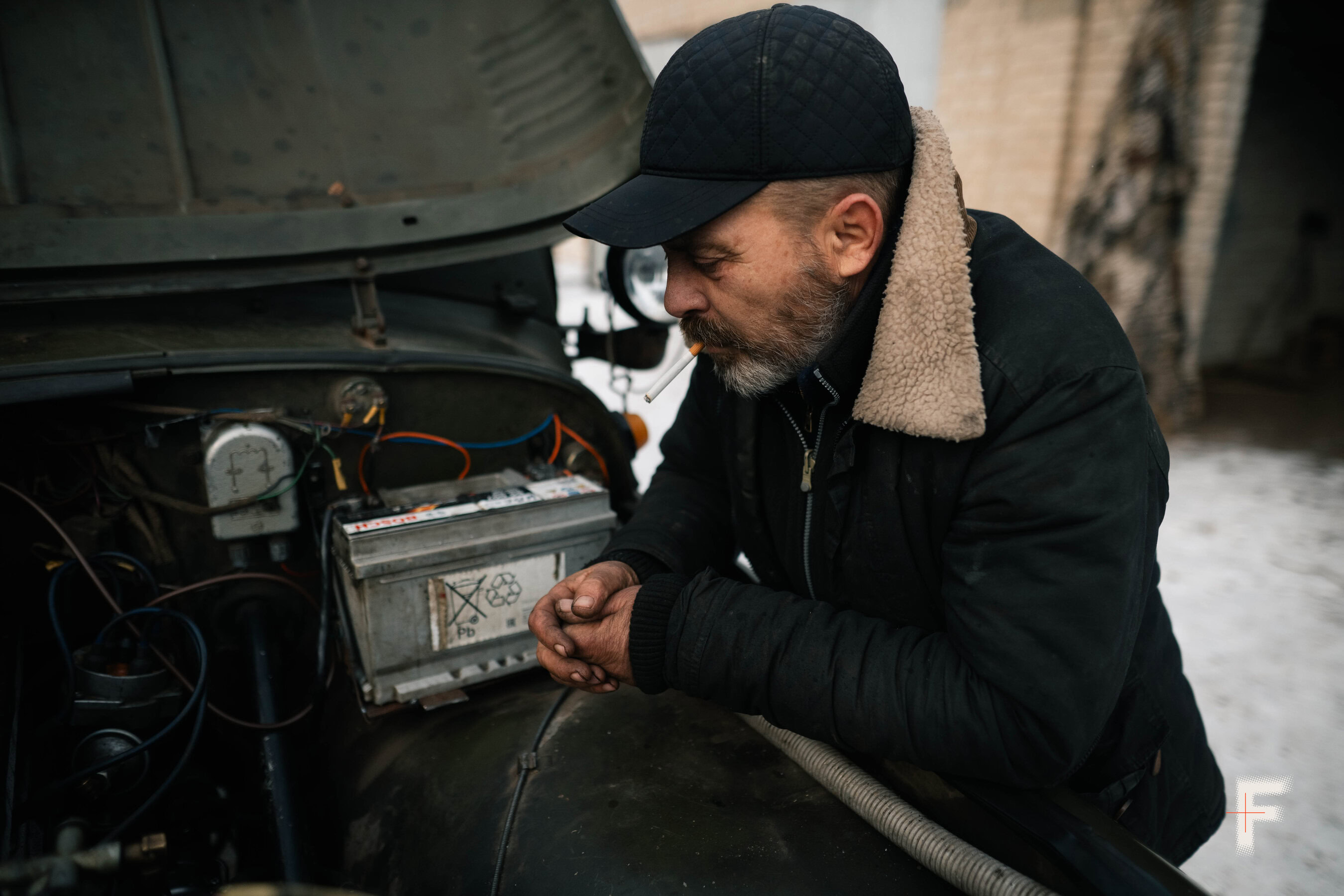
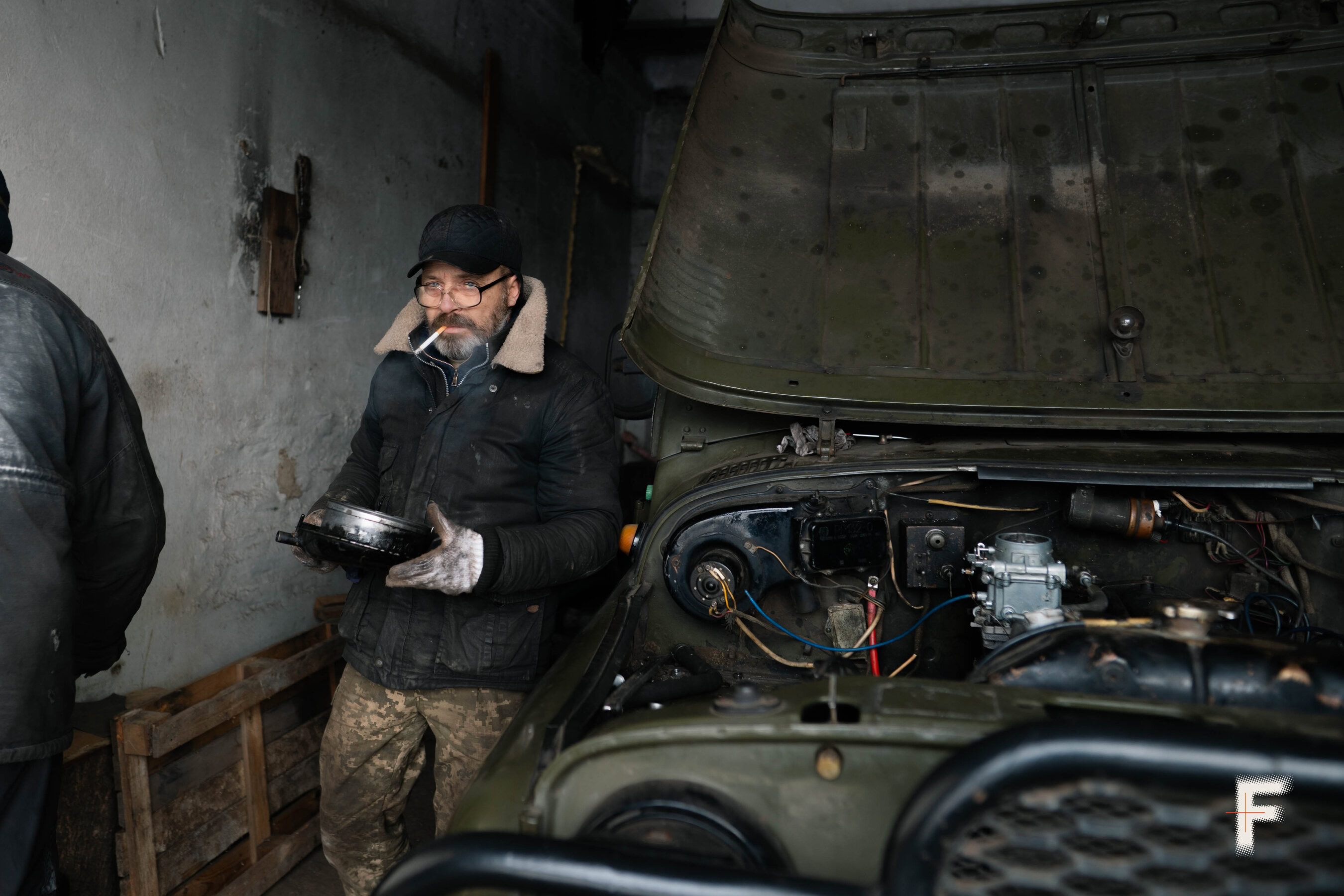
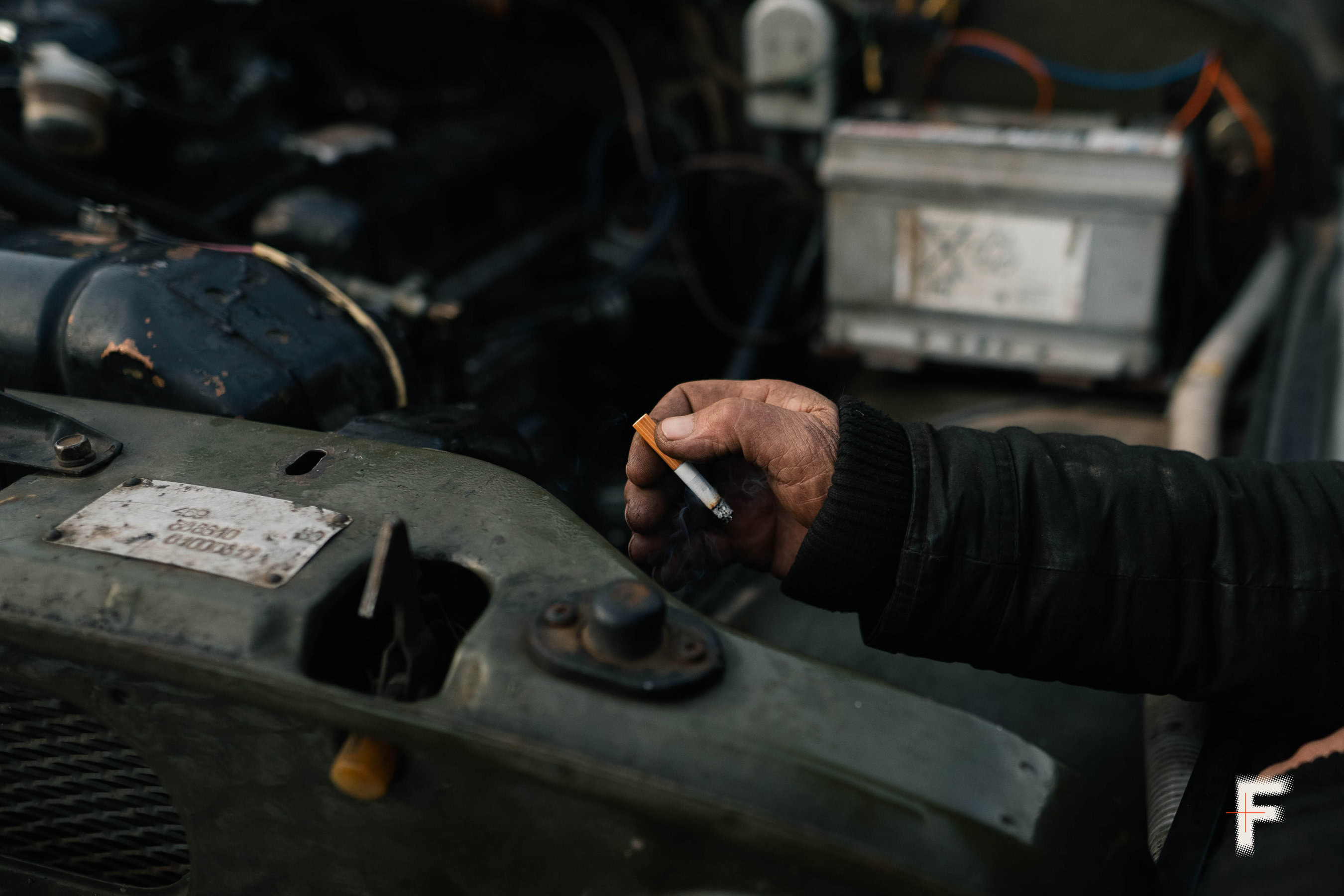
“Yamal”, a 55-year-old soldier, had served as a radar equipment mechanic during Soviet times. In the 152nd Jaeger Brigade, which he joined in 2024, he works as a vehicle mechanic. The difference between military service then and now is striking, he says. “In the past, everything depended on your endurance. Now, physical service is much harder, although he appreciates the lack of a strict daily routine and the chance to serve without combat gear. Otherwise, he says, his back probably couldn’t handle such a load.
Before, I was categorized as conditionally fit.
But after the new examination in 2024, the doctors said
I had no restrictions and was fully fit for service,

“Before, I was categorized as conditionally fit. But after the new examination in 2024, the doctors said I had no restrictions and was fully fit for service. That’s how I ended up in basic training. Most recruits there were over 45. The instructors even separated the older soldiers from the younger ones and treated them a bit protectively. “They understood that many of us might not even be able to stand up after a set of squats,” “Yamal” says with a smile.
During service he was wounded when an enemy drone dropped explosives on his position. Shrapnel tore through his legs, worsening his pre-existing health problems. He was later diagnosed with ischemic heart disease. Now even minor physical effort causes chest pain and shortness of breath. The risk of a heart attack is real and scares him and his comrades. Despite this, he continues to serve, though he no longer goes to the front line to dig positions or build observation posts. After the injury, he no longer has the strength to even repair vehicles.
He says his health makes it impossible to plan for the future, and there is little chance of being discharged before the war ends. What he wants most is simply a replacement. He and his comrades see many potential recruits on social media, yet they struggle to understand why their brigade is rarely reinforced with younger soldiers.
Adapted: Irena Zaburanna