Old weapons against new Russian tactics: how the 1129th regiment protects Kyiv’s skies
Ukrainian service members continue to protect the sky over the country using mostly foreign-made weapons developed in the last century. They still work – but how well do they keep pace with the tempo of modern warfare? In recent months, the number of Russian attacks and effective strikes has increased, and changes in the enemy’s tactics are felt more acutely than ever. The Frontliner team spent a day with the troops of the 1129th Anti-Aircraft Missile Regiment, which protects the Kyiv region, to learn how their work has changed and what challenges they face today.
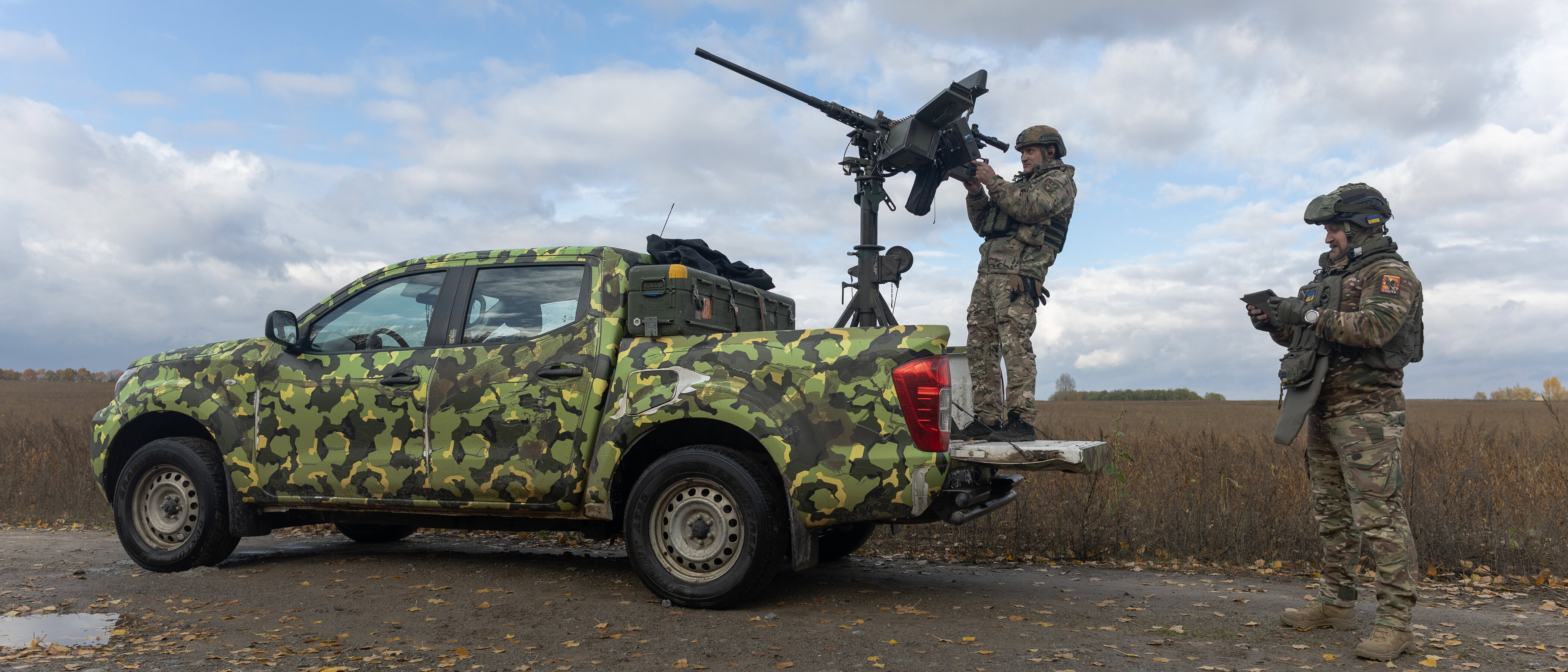
A pickup truck with camouflage netting heads toward a combat position, carrying one of the mobile groups of the 1129th Anti-Aircraft Missile Regiment. The vehicle passes through one of the villages in the Kyiv region. Today is quiet – no air raid alerts since morning, unusual for recent days.
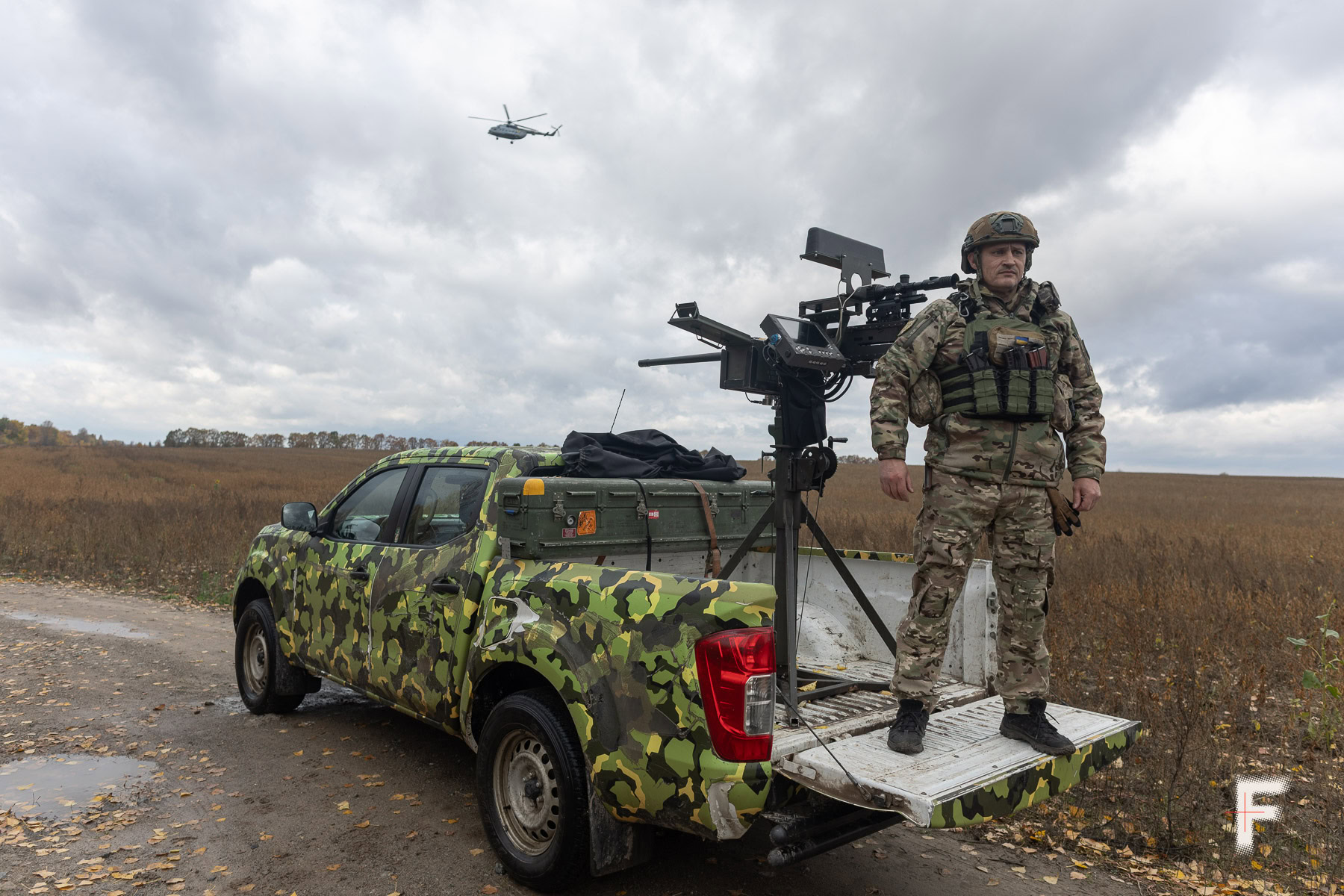
The pickup stops near a field, as far from the village as possible. Air defense teams aim to position themselves away from populated areas to reduce the risk of debris falling on homes.
It’s like a Zaporozhets and a Mercedes
Maksym and Dmytro get out of the vehicle. They walk to the back and begin unpacking their weapons. Maksym removes the cover from the mount: it has a monitor that allows him to see the target, with a machine gun mounted on top. It won’t shoot down a Kalibr missile – but taking out an enemy Shahed drone is definitely possible.
A machine gun like this could have been fired by an American soldier somewhere in Normandy during World War II and today, almost a century later, a Ukrainian defender uses it against Russian drones. This is clearly not cutting-edge weaponry, and not even a modernized version still in use by the U.S. – it’s the Browning M2A1.
Previously, instead of the American ‘old-timer’ Browning, they used a Soviet, Degtyaryov-Shpagin machine gun, DShK. Maksym prefers the American machine gun:
At first, we didn’t really trust these machine guns. But in practice, they turned out to be much simpler and better than the DShK.
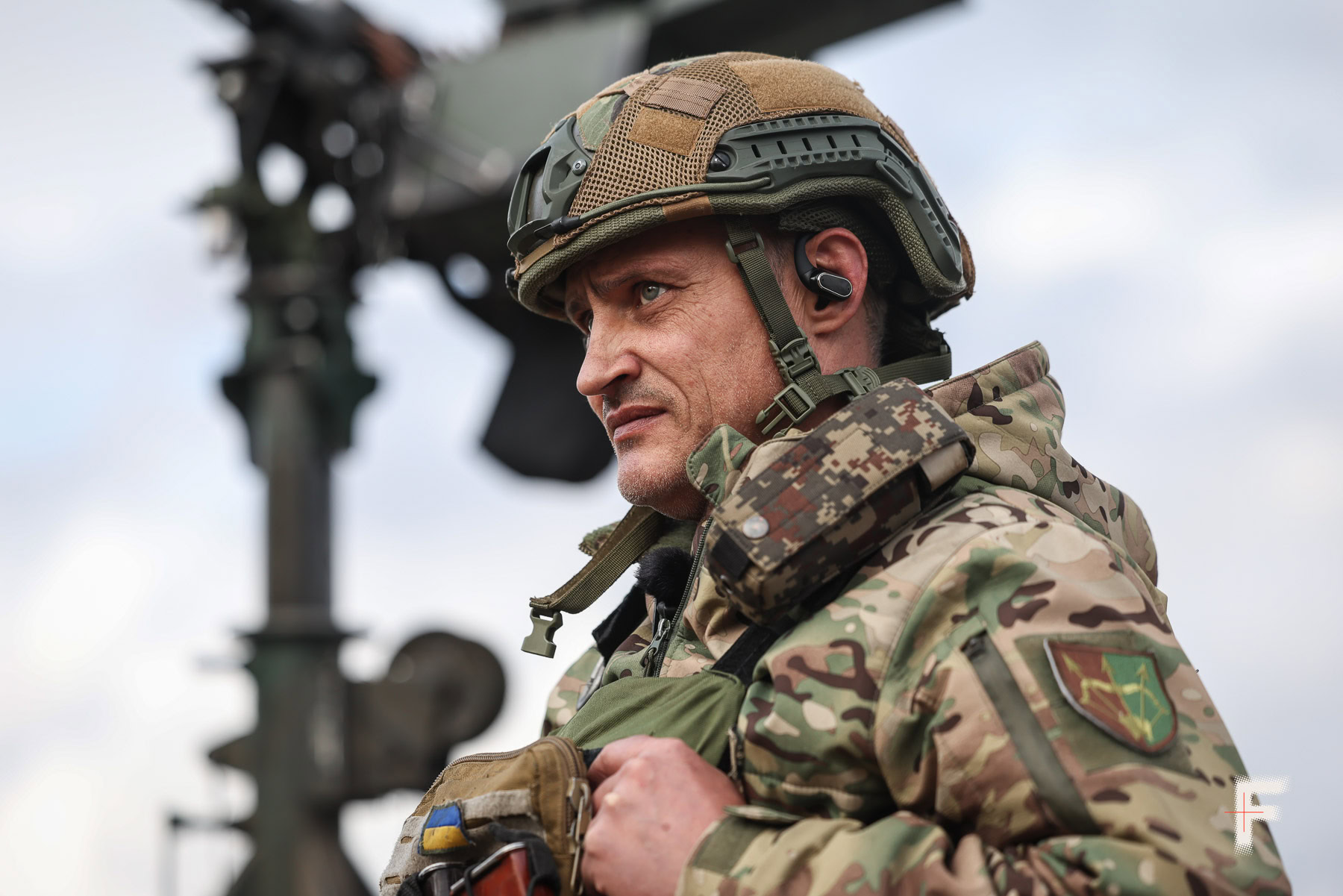
“At first, we didn’t really trust these machine guns – they’re more complicated to take apart and maintain. But in practice, they turned out to be much simpler and better than the DShK. With the DShK, there were constant problems and glitches. With this one, thank God, none of those issues exist. It runs like a good car. It’s like the difference between a Zaporozhets and a Mercedes.”
Maksym climbs onto the back of the vehicle and scans the sky. For now, there are no alerts, and nothing is heading toward Kyiv. He has already managed to shoot down several Shaheds with this machine gun. The last Russian drone they destroyed exploded right in midair.
Unpacking the Stinger
Next to Maksym lies a dark green case. Dmytro approaches and pulls a long, tube-shaped weapon from it – a portable Stinger missile system. The U.S. provided these to Ukraine before the full-scale invasion, and shipments continue to this day. In the first months of the war, they were part of the limited supply of weapons that Western partners had agreed to send to the Ukrainian Armed Forces.
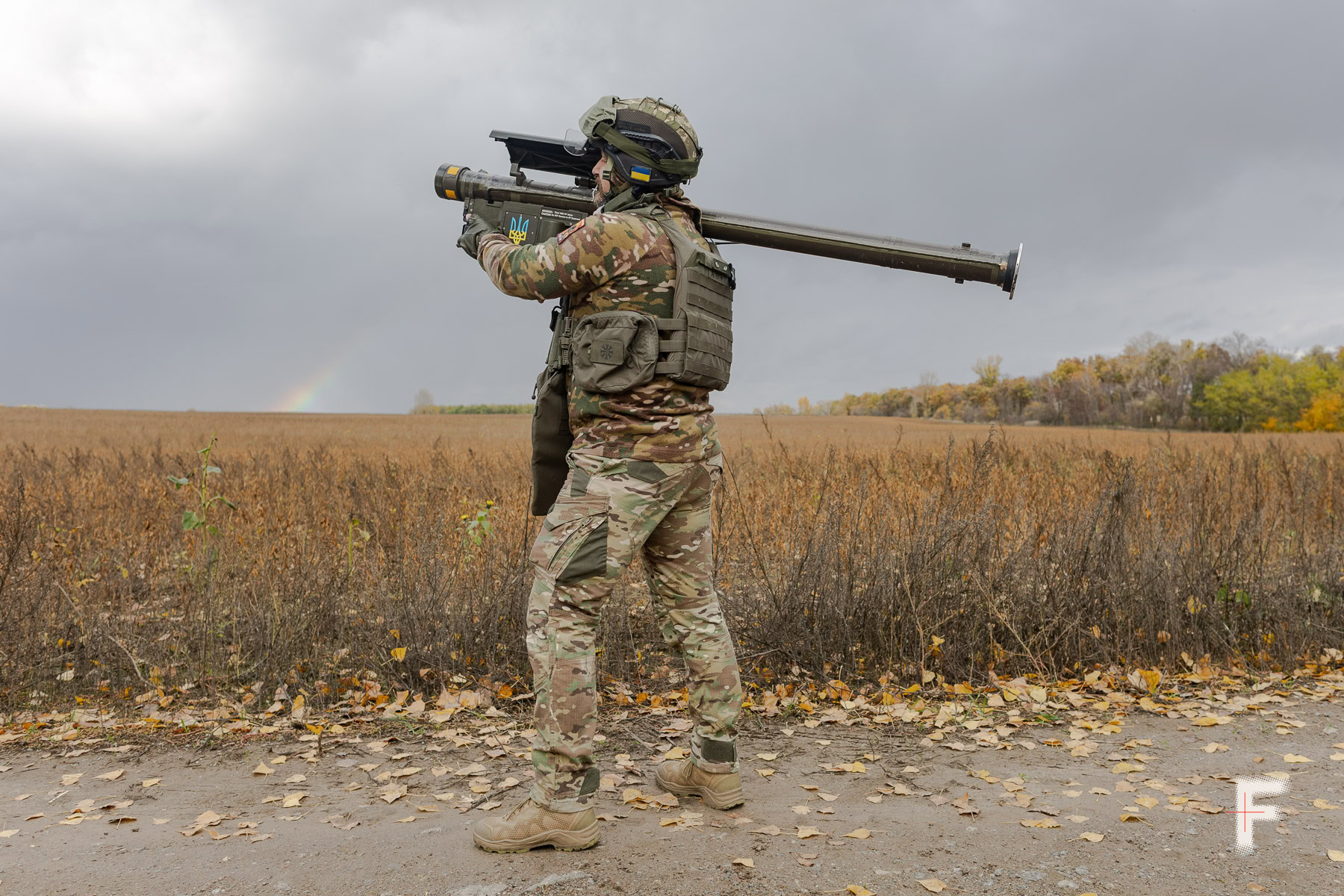
Dmytro and Maksym take turns operating the Stinger, and their mobile group has already shot down two missiles with it. Maksym remembers the first time:
“Our first missile was downed in May 2023. At first, I didn’t fully realize what had happened. I fired, and when we saw the result… I wouldn’t say you feel anything. You just do your job.”
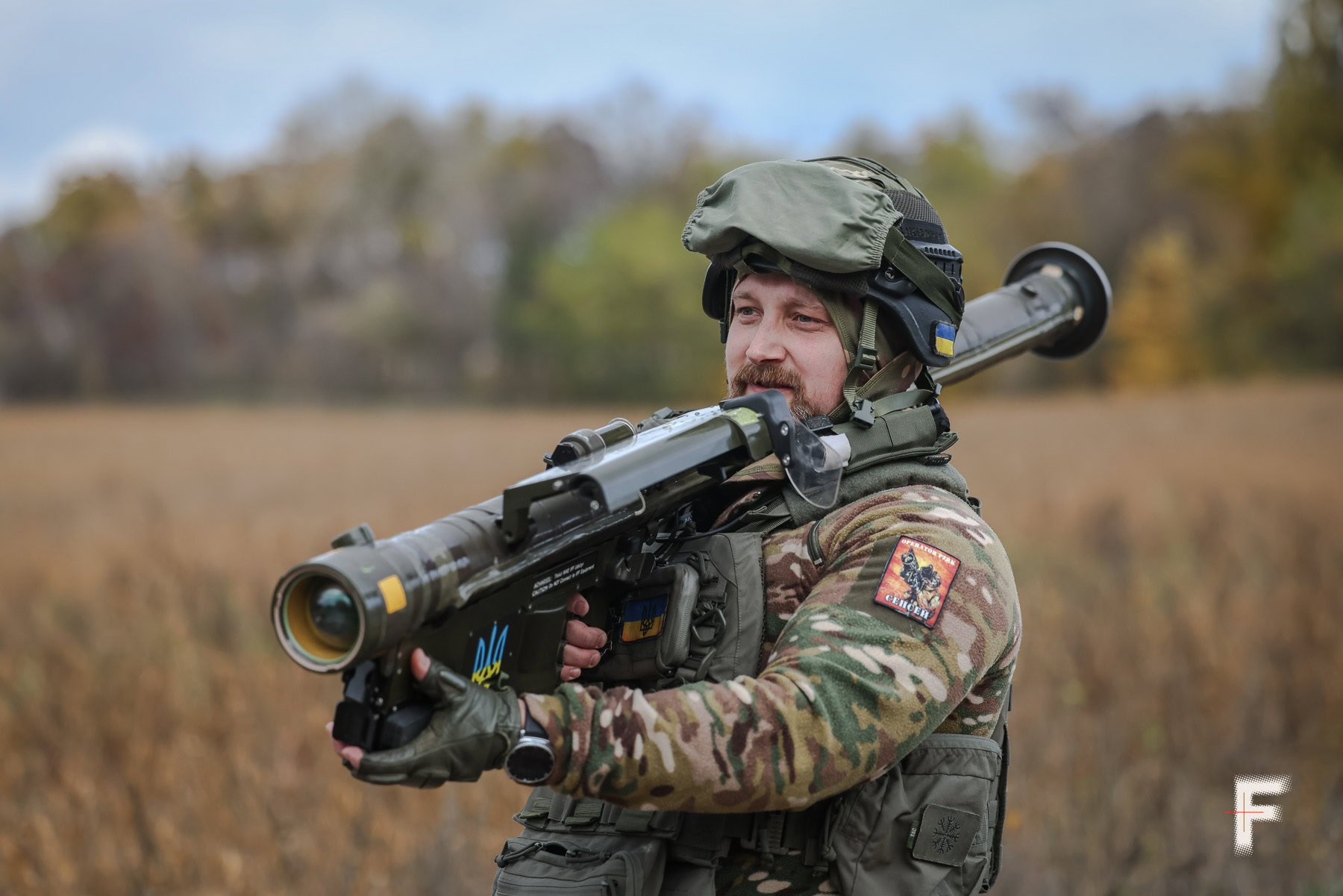
The Stinger was developed in the U.S. in the 1980s. The Pentagon has already begun developing a new generation of MANPADS to replace it. Today, the U.S. uses updated versions, while the MANPADS Ukrainian air defenders operate still date back to the 20th century.
Russia intensifies attacks on the Ukrainian capital
Since the beginning of autumn, air raid alerts have become more frequent: Shahed drones fly over Ukraine in swarms, followed by missiles. In October 2025 alone, Russia launched 270 missiles of various types across the country, according to AFP. In November, the capital faced massive bombardments on a weekly basis. Strikes on energy infrastructure once again caused rolling power outages, while drones and debris hit apartment buildings.
Dmytro Bielyk, the regiment’s press officer, says the recent surge in Russian air attacks reflects their failures on the battlefield:
“The terrorist state understands perfectly well that if you can’t win on the battlefield, if you can’t break the spirit of the Ukrainian army, then you try to break the spirit of civilians. And that’s exactly what they’ve been doing since the start of 2022. We remember the strikes on residential buildings in the first days of the war. Back then, they could still claim that these areas had once been military sites and that housing was built there later – but that excuse could not last long. Now they do it openly. They even say on their own propaganda channels that they need to break the spirit of Ukrainian society,” he underscores.
According to Ukraine’s Air Force, Russia has spent the past six months actively modernizing its aerial strike capabilities and adjusting its tactics. The Financial Times reports that Iskander‑M and Kinzhal ballistic missiles initially follow a standard trajectory after launch but can then alter course, dive at steep angles, or perform maneuvers intended to “confuse and evade” even Patriot air defense systems.
“The enemy changes its tactics every time.”
Maksym stands by his machine gun, while Dmytro is slightly behind, adjusting his comrade’s actions as he observes targets on a tablet running specialized software. The air defenders explain that the enemy constantly changes its tactics – each time introducing something new, altering flight paths and altitudes.
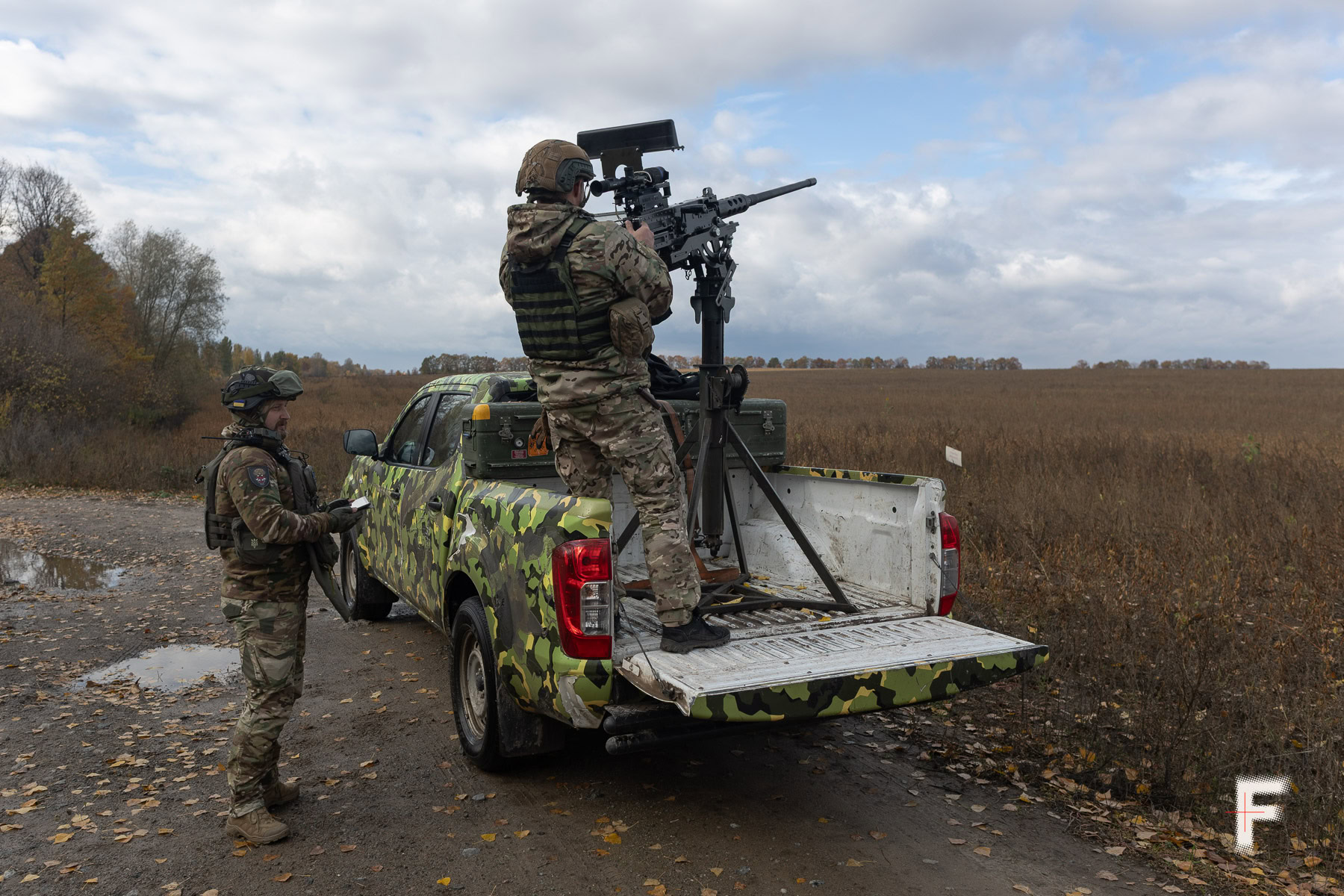
At the start of the full-scale invasion, the Russians didn’t fully understand how to deploy Shahed drones, often launching them at altitudes that were too high. Today, the drones fly just 50–100 meters, sometimes slipping past Ukrainian radar. But when they descend lower, they become easier targets and can even be shot down with a standard machine gun, explains the head of the communications department.
Avenger strikes back
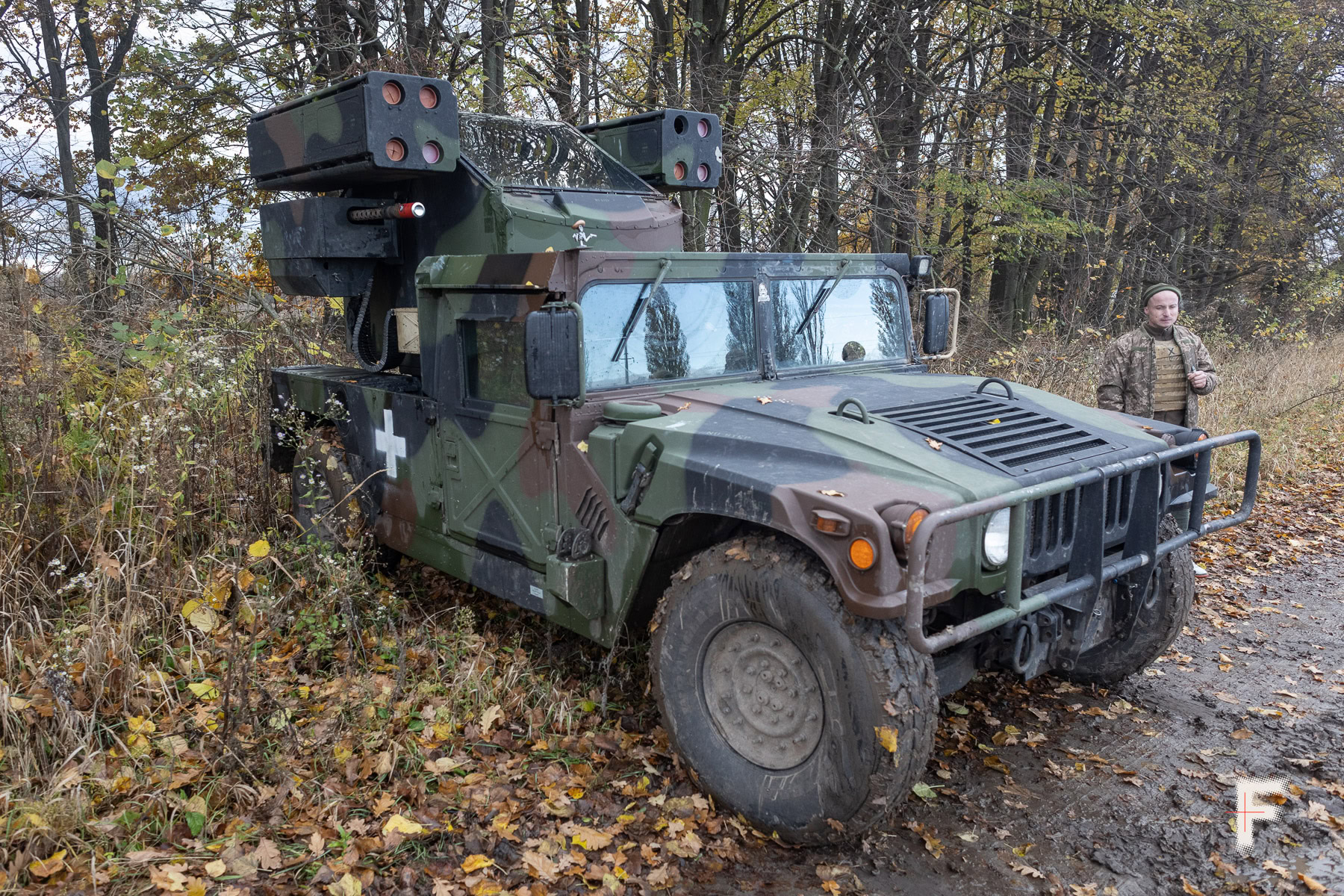
At another location that same day, a different air defense team is at work. On the horizon looms the massive silhouette of a Humvee – but the first thing that draws the eye isn’t the vehicle itself. Mounted on its roof is a combat turret nearly one and a half meters tall. On either side, Stinger missile containers hang like twin steel columns aimed at the sky, bringing the total height of the setup to over three meters. Its imposing, heavy frame lives up to its name – the Avenger – evoking the Marvel superheroes.
-
An American Avenger self-propelled air defense system (AN/TWQ-1), equipped with a machine gun and Stinger missiles, on combat duty protecting Kyiv. This system provides mobile, short-range air defense. It is part of the mobile fire group of the 1129th Bila Tserkva Anti-Aircraft Missile Regiment, which defends the Kyiv region against Shaheds and cruise missiles. Kyiv region, October 29, 2025. Andriy Dubchak / Frontliner

-

-
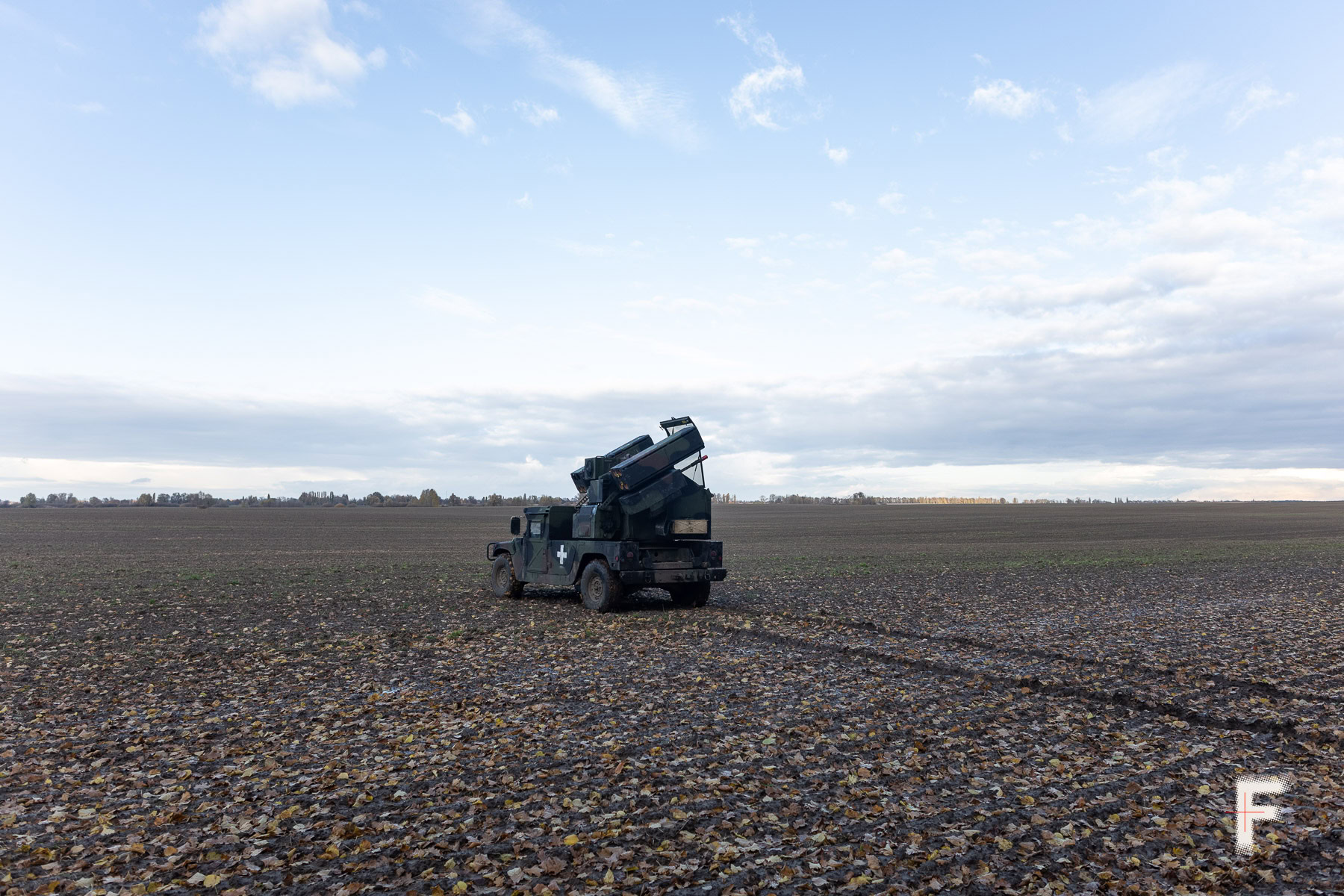
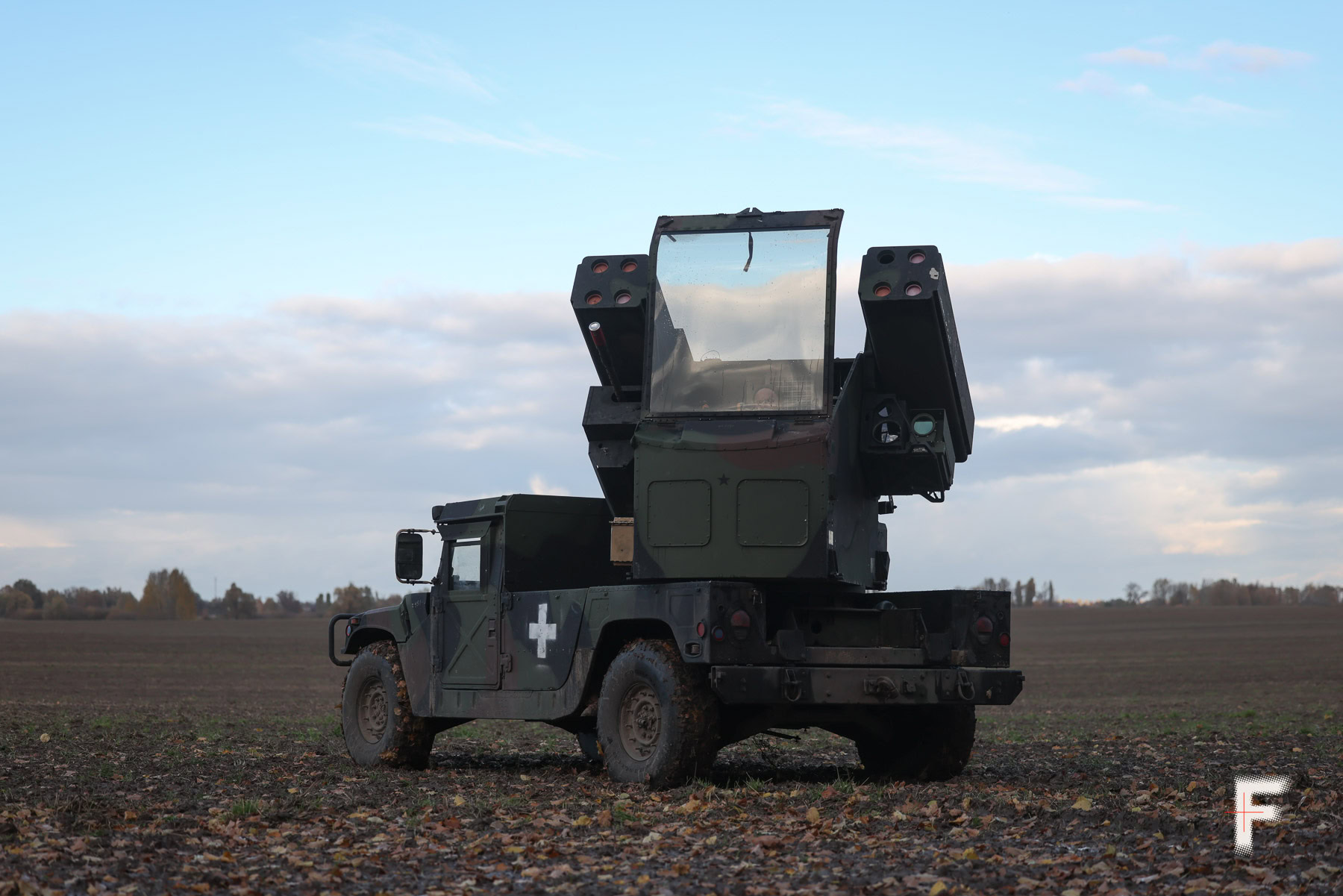
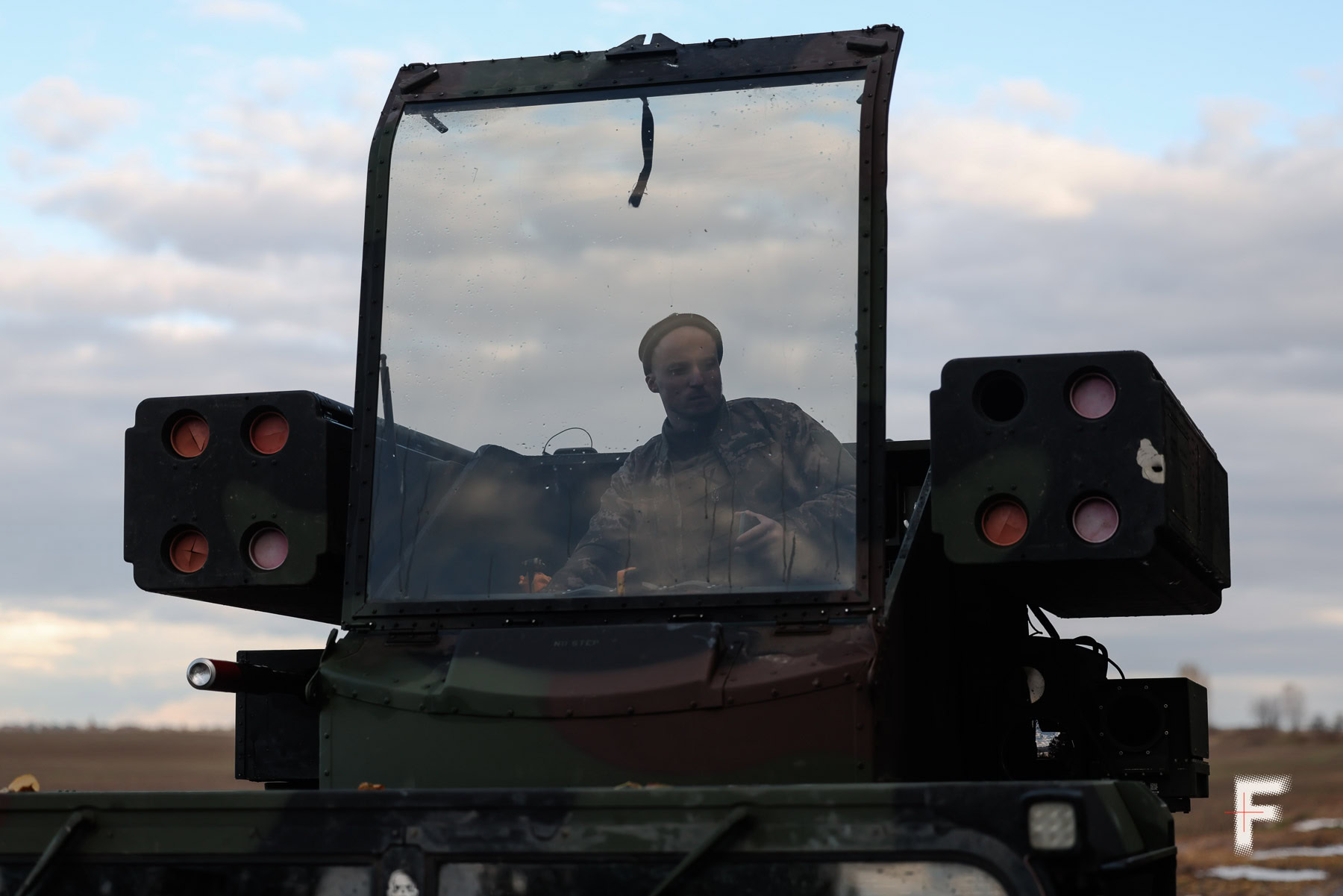
It was developed in the U.S. in the mid-1980s as a mobile air defense system to protect troops in combat. The Avenger has seen action from the Persian Gulf to operations in Iraq and Afghanistan. The U.S. Army still uses the Avenger, though in an updated version, and is already working on replacing it with modern short-range air defense systems.
Ukraine received not the newest, but slightly upgraded versions that the U.S. had held in reserve. This generation dates roughly from the late 1990s to the early 2000s.
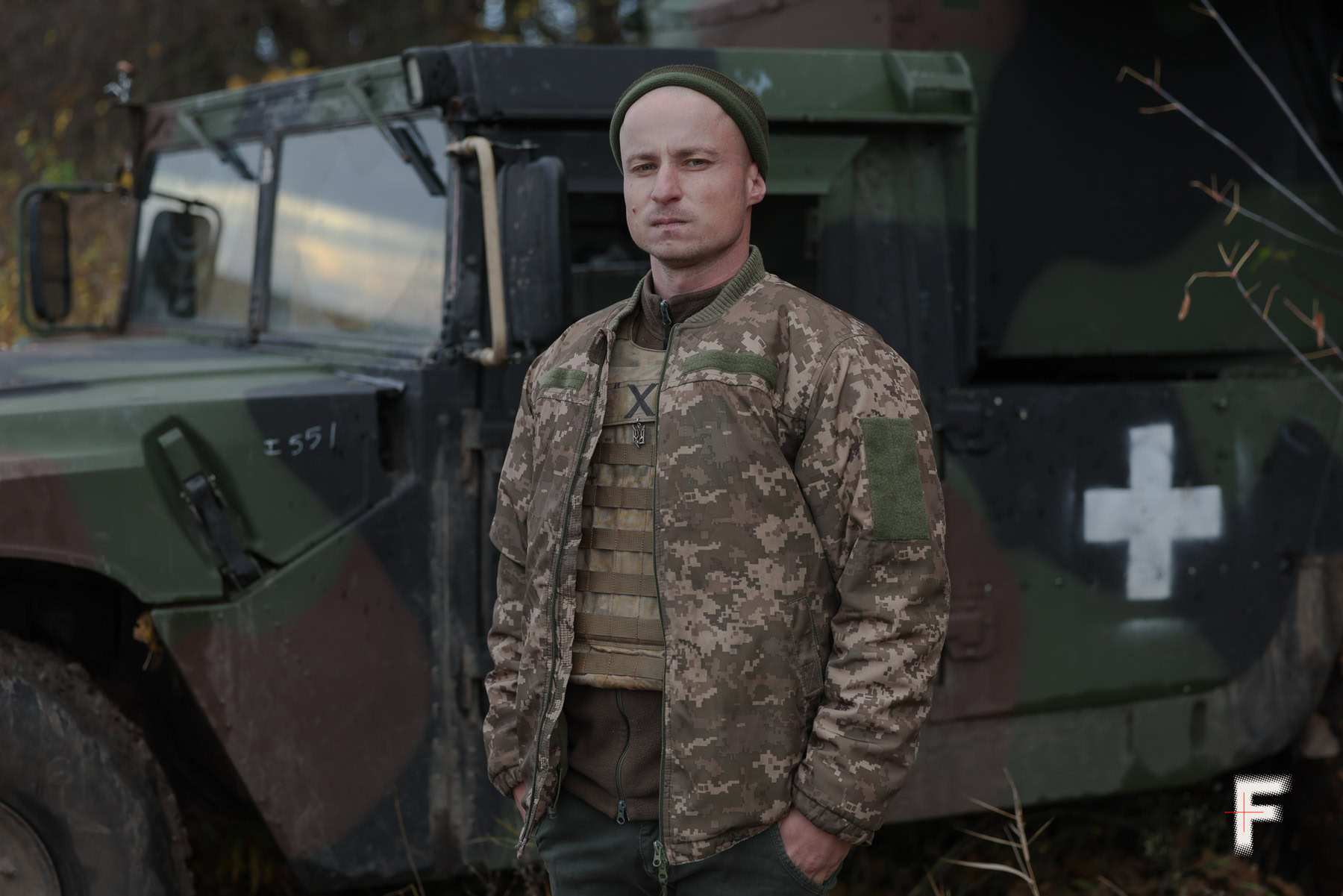
“It’s easy to operate. The vehicle is designed to take down almost all aerial targets. It works quickly, efficiently, and reliably. You can engage either with missiles or with the machine gun – it all depends on the target, the distance, and its type,” says Volodymyr, the crew commander. He has been fighting in the war since the start of the full-scale invasion.
Behind the wheel is Andrii, who will turn 55 in December. He says he is always young at heart and that his age doesn’t hold him back. In December 2021, he returned to Ukraine from Portugal to celebrate the New Year. When Russia invaded on February 24, 2022, Andrii received his draft notice and headed to the front.

“Our task is to destroy the targets the enemy launches at infrastructure and civilians,” the air defender describes his work.
The soldiers acknowledge that the Avenger they operate is vintage equipment, but they have adapted it to the realities of modern warfare in Ukraine.
“Technically it is already outdated, but we’re bringing it back to life, and it keeps working. It hasn’t let us down yet – there haven’t been any misfires. Everything runs like clockwork,” the soldiers say.
Old American equipment in a modern war
Despite the regular, massive bombardments of Ukrainian cities, much of the country’s aerial threats are still being intercepted by systems that are decades old. The Browning M2, Stinger, and Avenger remain the backbone of Ukraine’s air defense. The problem isn’t just that these systems are outdated – they are objectively less accurate, slower, and less resilient against new types of Russian missiles and drones, which now follow more complex flight paths and perform evasive maneuvers. The old systems work well against low-speed drones like the Shahed, but their effectiveness against modernized Iskanders, Kh-101s, or Kinzhal missiles is limited.
Still, Ukrainian air defense units have to get the most out of these systems – and they do so by pairing old hardware with modern digital tools. Crews operate using tablets, targeting software, ballistic calculators, and the Skyloc system, which indicates a target’s direction, altitude, and trajectory. This allows them to fire with lead time and reduce ammunition consumption. Modern applications make up for what the aging hardware can no longer provide: they help locate targets, suggest the correct point of engagement, and warn operators if a target is outside the effective firing zone.
When will new deliveries arrive?
The shortage of newer weapons is directly linked to delays in deliveries from Western partners. Ukraine receives Western missiles and systems inconsistently, influenced by the internal political struggles of its allies. During 2024-2025, the U.S. delayed approval of military aid packages for several months, causing pauses in the supply of missiles for Patriots, NASAMS, and artillery shells. In practice, this means Ukraine fires far fewer modern missiles than the intensity of attacks demands, relying instead on what it already has: mostly systems from the 1970s, 80s, and 90s. The situation worsened with the return of Donald Trump’s administration in the U.S. The shortage of ammunition and dependence on allies’ political decisions leave Ukraine vulnerable – a weakness Russia actively exploits by increasing launches and combining drones with ballistic missiles.
In this context, 2026 looks set to be a period of strategic uncertainty for Ukraine’s skies. Long-term support programs pledged by allies may only take effect partially, while political risks in the U.S. and Europe persist. This means that old systems will continue to shoulder a significant portion of the country’s air defense, even as their physical lifespan is limited.
And while the world debates the delivery schedules of new weapons for Ukraine, the air defenders of the 1129th Anti-Aircraft Missile Regiment continue to hold the skies over Kyiv, adapting vintage equipment to counter the enemy’s evolving tactics.