
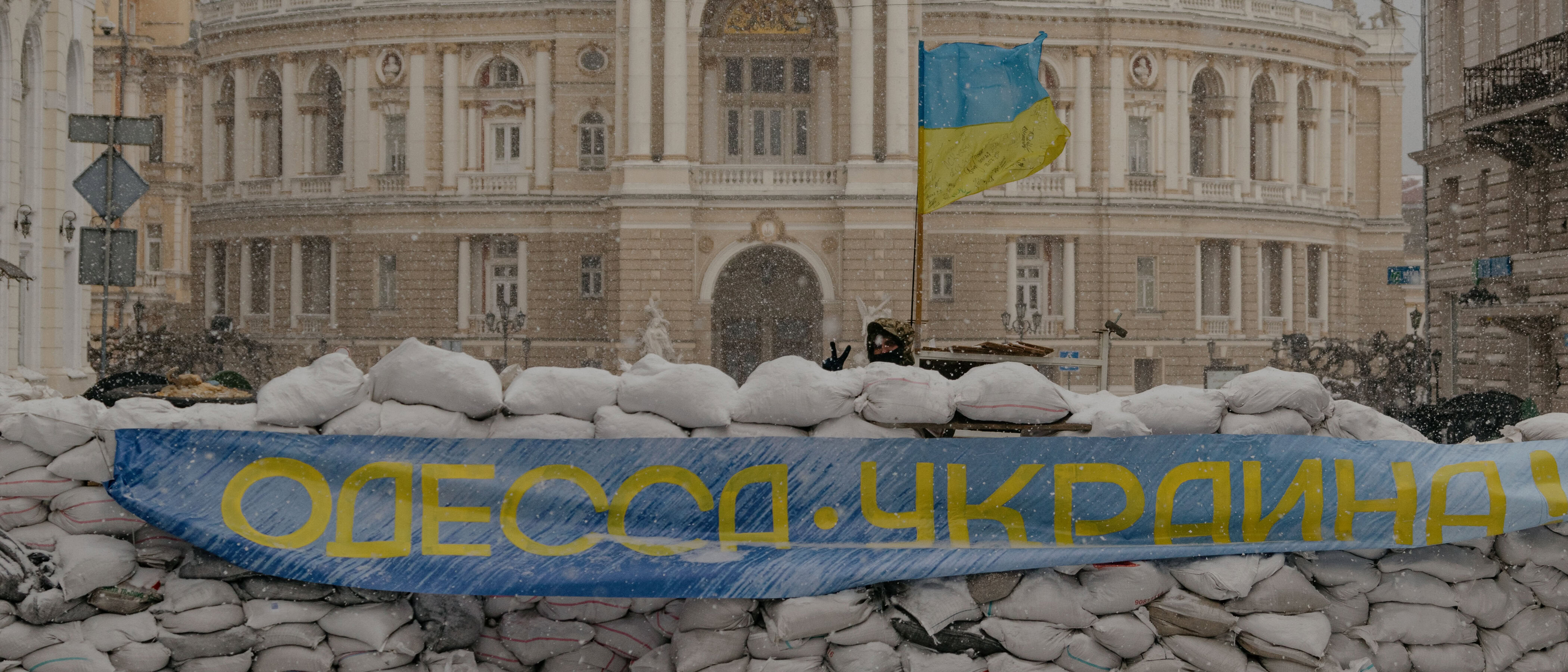
Odesa. Our sea – our strength
Enemy missiles and kamikaze drones approach Odesa from the sea. In the morning, Odesans head to the shoreline – to listen to and gaze into the waves with which they shared another terrifying night. Frontliner reporter Diana Deliurman reflects on how the sea has taken on a sacred meaning for Odesa’s people during the full-scale war.
There is a stereotype about Odesans: when they travel to other places in Ukraine, they say, “It’s nice here. But there’s no sea.” For a long time, I thought that didn’t apply to me. During my studies in Kyiv, my university classmates would ask, “How could you leave Odesa?” I would brush it off, thinking, what was keeping me there? A city with terrible transport infrastructure and neglected architecture. And Trukhanov on top of that.
[Translator’s note: Hennadii Trukhanov served as mayor of Odesa for many years and has been a controversial figure. He faced accusations of corruption, embezzlement, and ties to organized crime. He was also investigated over alleged ties to enemy state actors. These controversies culminated in his removal from office and the loss of his Ukrainian citizenship in 2025.]
“And what about the sea?” the interlocutors continued.
“The sea? I prefer the woods,” I’d reply.
Back then, I could not have imagined that the Russians would launch a full-scale war against us, and that Odesa would become the most important city in the world to me.
How are they, the children of the sea?
Children from Odesa are easy to spot by their tan, which lasts until about the New Year. They just have to get through half a winter, a little spring, and then the little ones return to the sea and to their distinct appearance. Some of them may not even know how to swim, but they’ll spend the entire vacation in the water anyway. They only come out to eat a huge Mikado tomato, generously sprinkled with salt from a matchbox. And they bite into the salty tomato with lips made even saltier by the sea.
Odesa children may not know the meaning of certain words, but they feel them deeply, on a transcendent level, as if they were religious concepts: tsimmes, seashells, rapa whelks. Speaking of rapa whelks: “How much are they selling for?” Besides these, you could buy shrimp, baklava, and corn on the cob on any beach. Or you could buy nothing at all and simply hunt for mussels right on the rocks at the seaside.
My family went to the same beach year after year, Vidrada, even though Odesa has many to choose from. The beach has a big yellow rock that’s a popular photo spot. From time to time we went to Lanzheron – the closest beach if you’re coming from the city center. The thing that stuck with me most from that beach was a local celebrity. All summer and into September and October, an older woman with brightly colored hair spent her days there. Raspberry, lime green – I never saw any other colors. Her hairstyle stuck up in a triangular shape, matching the top of her triangle-cup swimsuit. Spotting her twice in one day – first on the beach, then again on the way home – felt like a stroke of luck. A good omen.
It was my whole childhood – my world revolved around the sea. But as a teenager, for some reason, I desperately wanted to shed that identity. My awe for the sea returned only after the full-scale war began.
The day before the storm
On Ukrainian Independence Day 2021, a grand and poignant parade took place on Khreshchatyk in Kyiv. I, however, was in Odesa, where the sea celebrated the holiday. Dozens of warships rode the waves. Fighter jets streaked overhead at low altitude, firing flares, making me hold my breath while smiling at the same time. Marines landed with Ukrainian flags. No one knew it would be the last carefree summer. Or that later, ships, planes, and landings would take on very different meanings.

Storm, calm, and storm again
With the full-scale war, all important events once again began to unfold at sea – just like in childhood. Every day, Odesans went to the beach to collect sand for the city’s fortifications. Others started mass-producing Molotov cocktails to confront the “Russo turisto.”

The beaches were off-limits for a long time. In the summer of 2022, the tourist season never began, for obvious reasons. I found myself afraid that I might never see the Black Sea again.

The Russians abandoned attempts to land on the beach. The following summer, the municipal authorities reopened the beaches. With each season, more and more tourists arrived, and the summer of 2025 broke all records. The threat from the air forced only a few vacationers to pack up their umbrellas and leave.
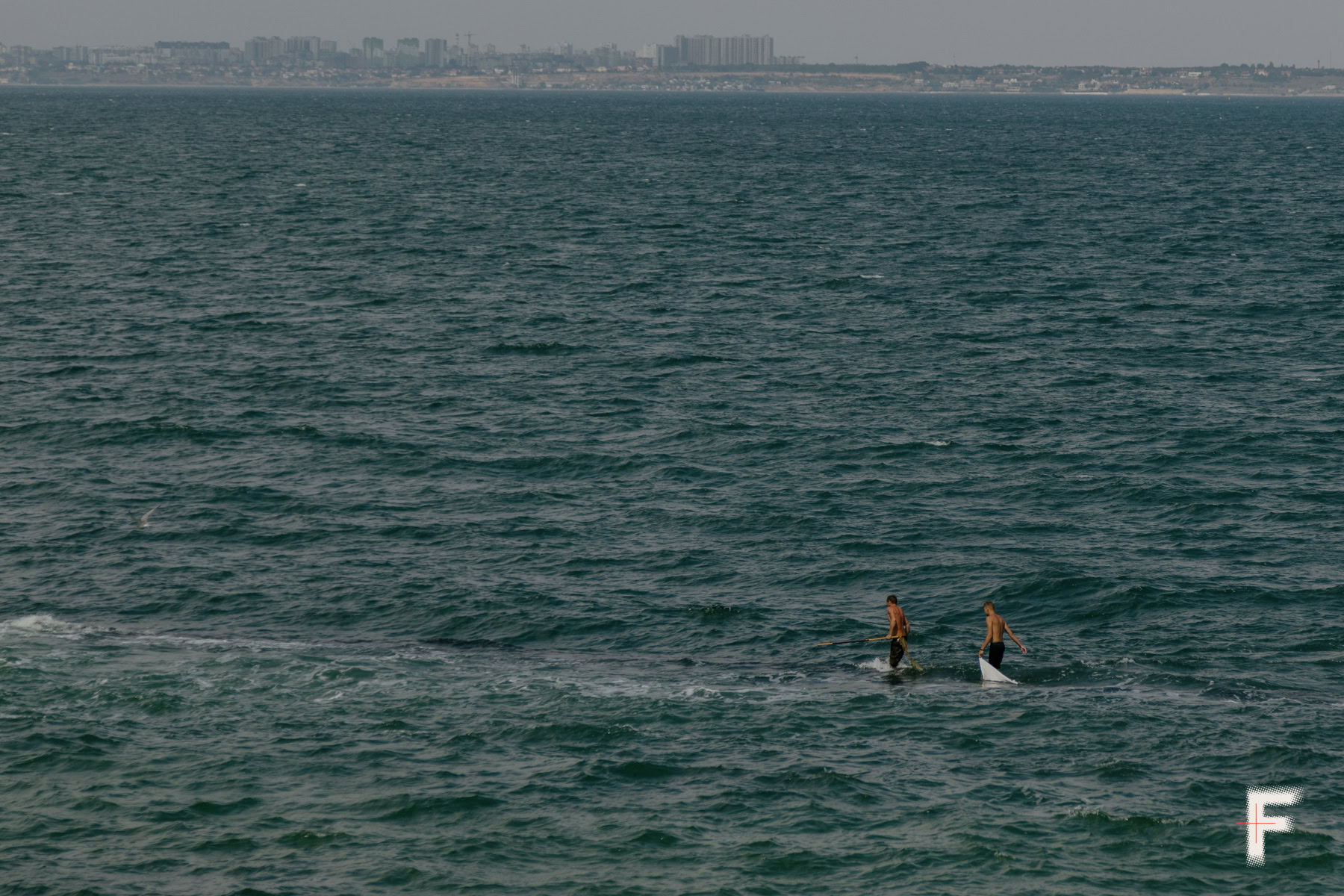
At night, the sea is the first to meet the enemy. After night battles between air defenses and missiles and drones, Odesans head to the shore and meditate while fishing, as if just a few hours earlier they hadn’t been under the aim of ‘Russian roulette.’
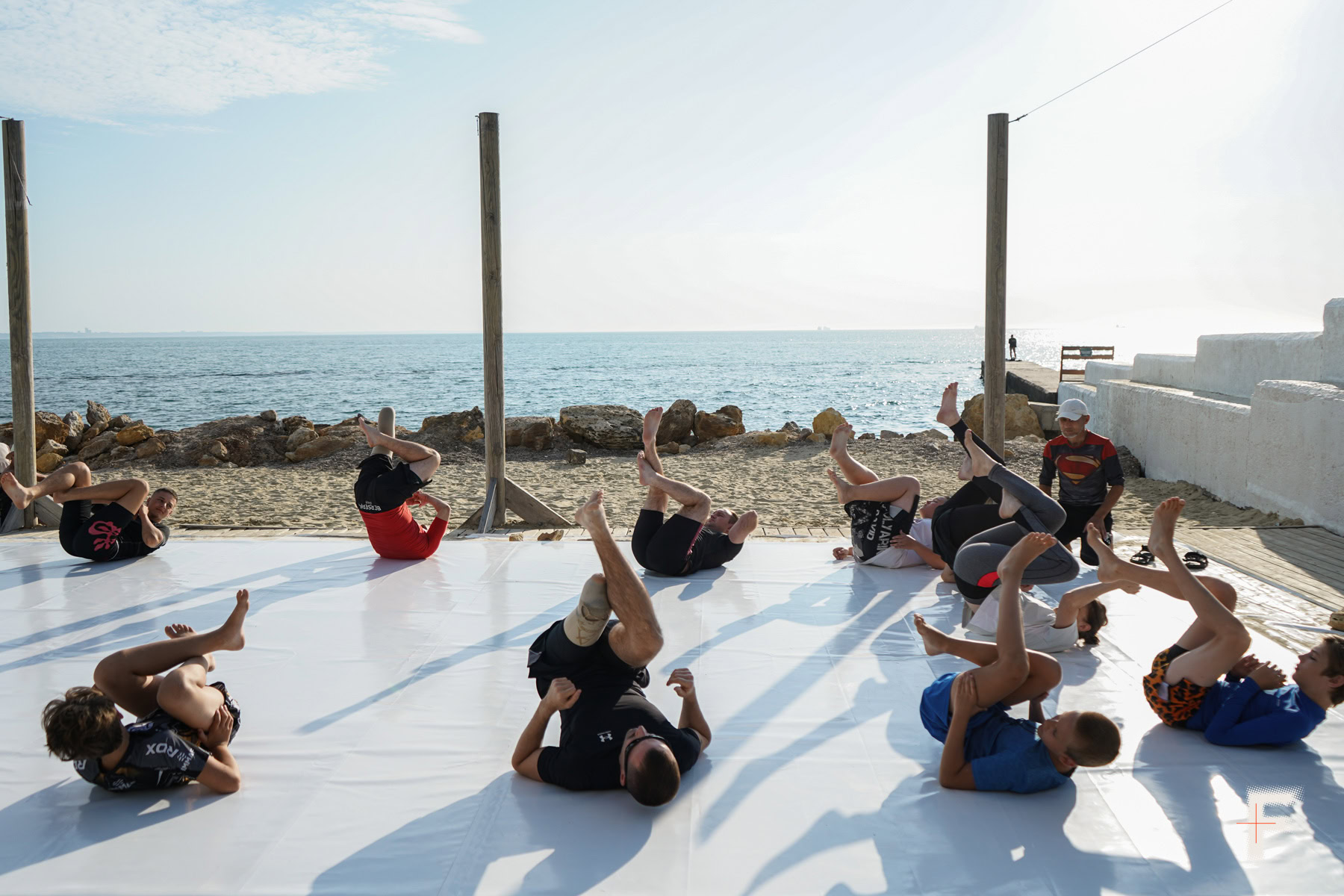
Over the last two years, a number of new inclusive beaches have opened. Veterans come to the sea and test the accessibility of the recreational areas in their wheelchairs. Under the protection of border patrol boats, commercial vessels continue to enter the port, even though the risk of a Russian strike remains extremely high. Our cities are striving to move forward into the future, while Russia seeks to push us back by centuries.
It seems that Odesa’s children are no longer as sunkissed. Perhaps this is not the time to spend every day at the sea. The reason is certainly not fear – my parents even go out into the backyard to watch for Shaheds. And the sea will always be there for them, a sea where, besides seaweed, fish, and jellyfish, naval mines will continue to hide for a long time, their strange shapes reminiscent of a virus.
The sea holds memories of ancient Greek voyages, Ottoman rule, and the siege of Odesa during World War II. And now, it also remembers nighttime duels with precision-guided missiles and modern Russian drones. Somewhere among all these momentous events, the waves have kept the memory of my childhood plunges.
Photos: Tymofii Melnykov
Adapted: Irena Zaburanna

