Motherhood under shelling: Raising two sons alone in Kharkiv
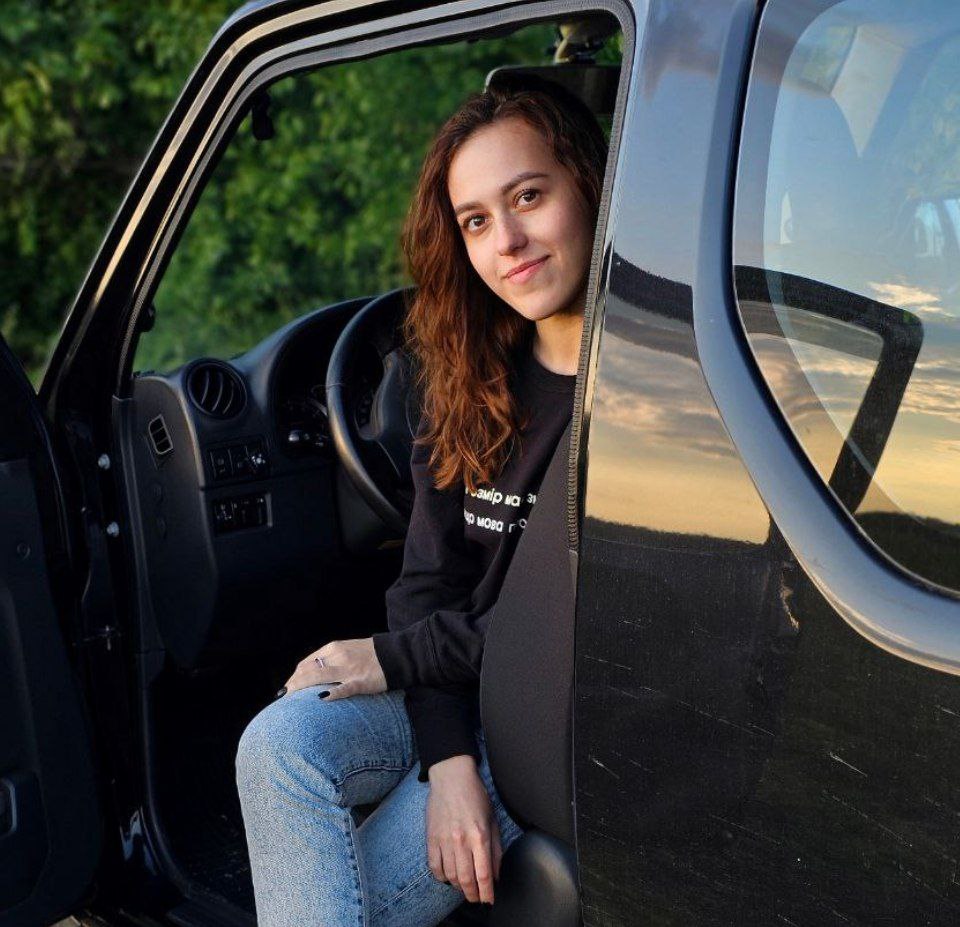
At night, Yuliia Yatlova runs down the stairs from her ninth-floor apartment, carrying her 3-year-old son, knitting needles, yarn and a small stool. While shelling pounds Kharkiv, she knits toys, focusing on each stitch to block out the sound of explosions and to bring small moments of joy to her children. She tells Frontliner why she no longer feels safe at home, how difficult it is to find a daycare in a city under fire, and why putting on makeup has become part of her daily routine.
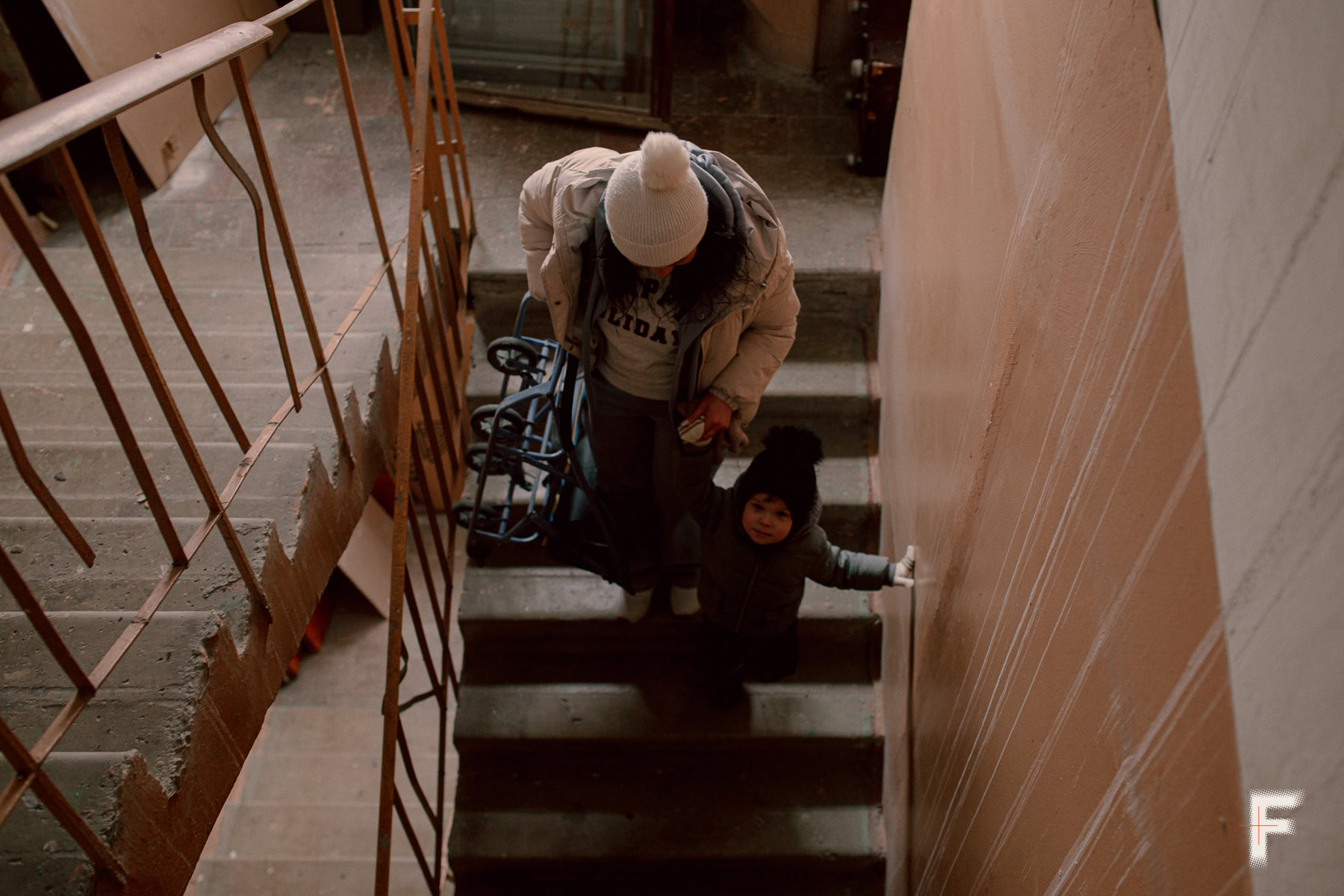
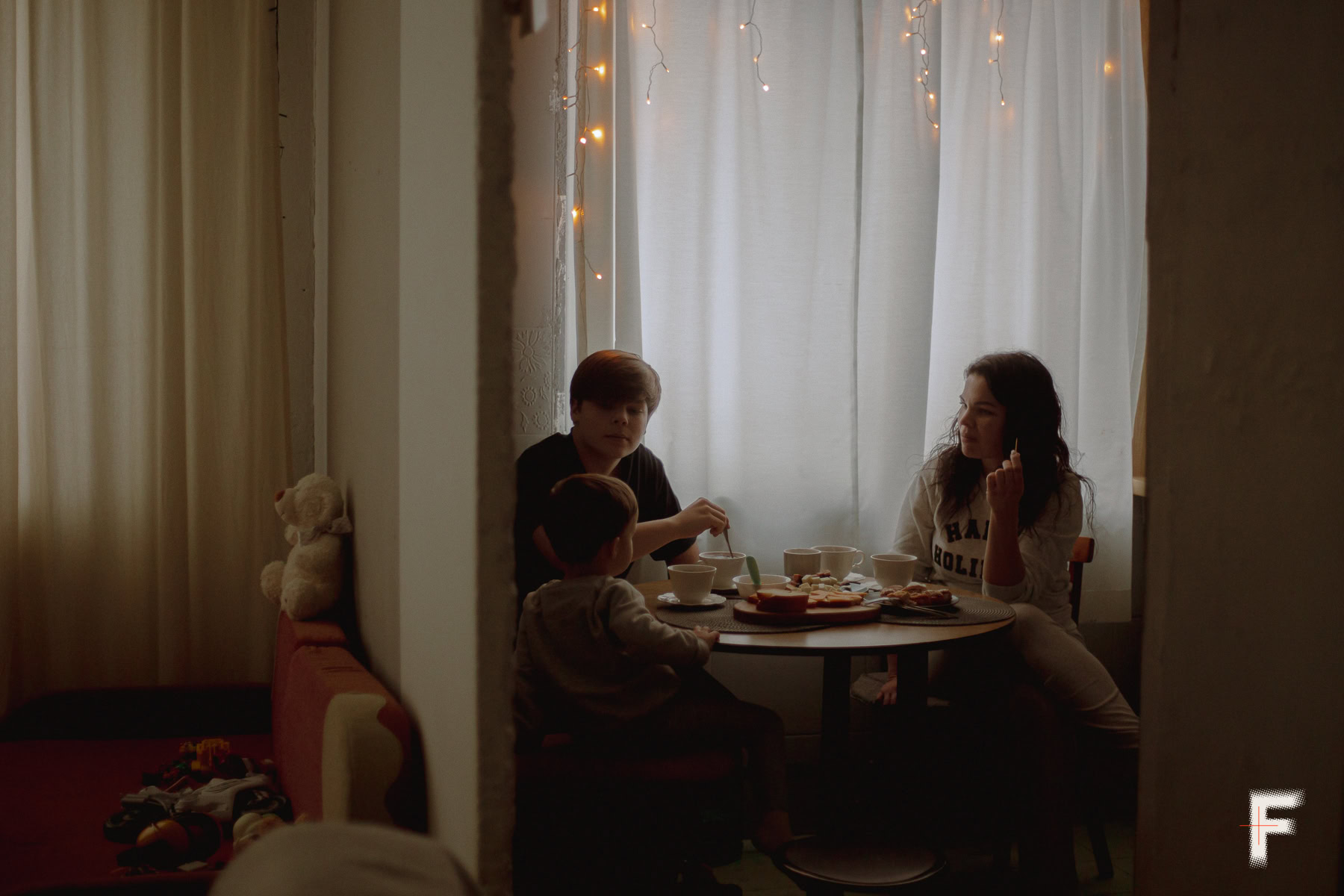
Nearly every night, FPV drones, missiles or large unmanned drones strike Kharkiv. Each time she wakes to the wail of an air raid siren, Yuliia Yatlova lifts her sleeping 3-year-old son, Sashko, grabs her knitting needles, yarn and a small stool, rushes out of her apartment and heads down from the ninth floor to the second.
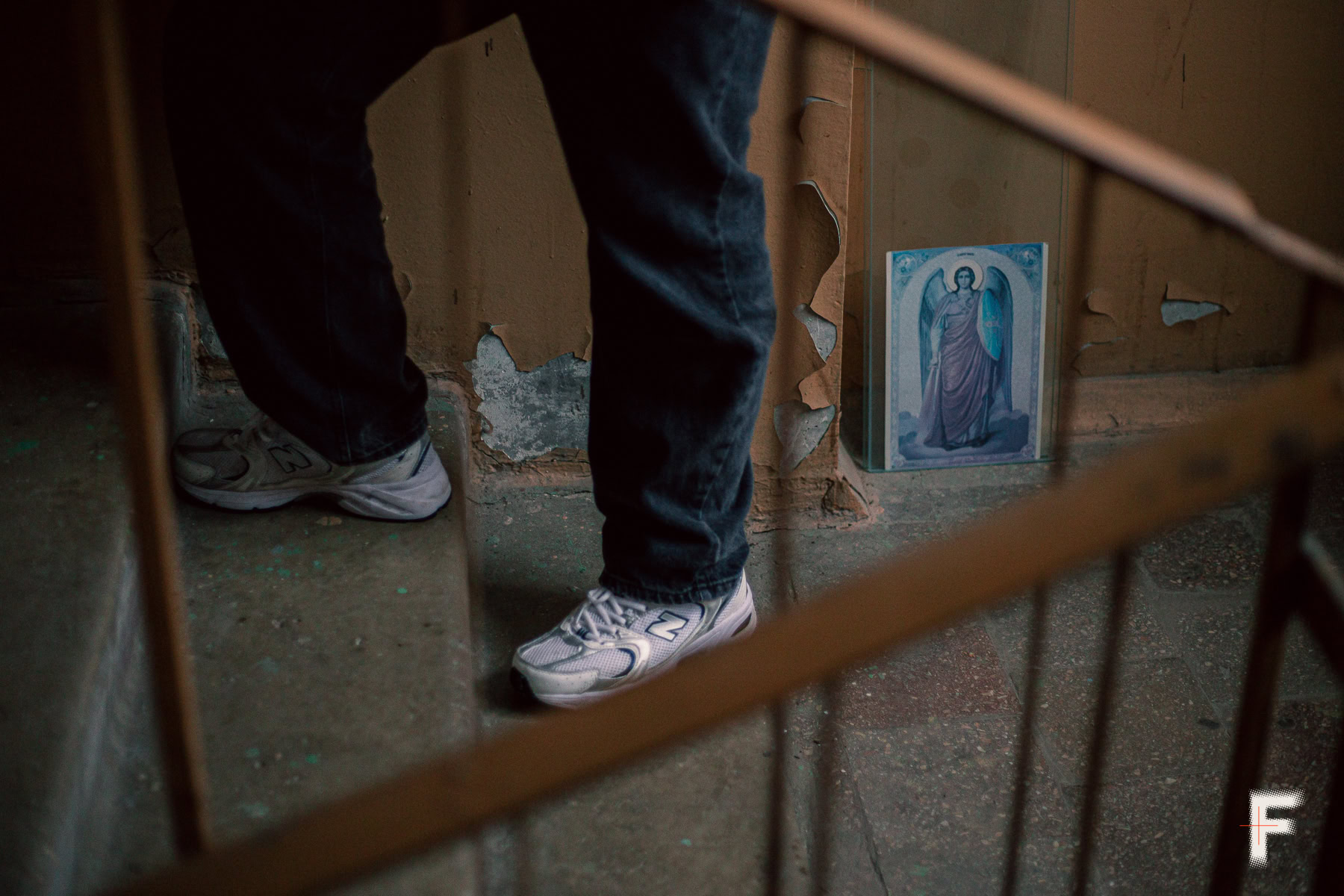
The shelter in her building is not suitable for staying in, not even for adults, let alone children, Yuliia says. She raises concerns about sanitation: it is cold and damp, with a heavy, lingering smell. There is another shelter nearby, but running to it during shelling feels too dangerous. The route passes playgrounds that have already been hit twice during the war by missiles and drones. Instead, Yuliia Yatlova relies on the load-bearing walls in her stairwell. She hopes they will shield her and her son from shrapnel if a strike or blast wave damages the building.
For my own peace of mind, I’ve put blast-resistant film on the window
in one of the rooms, and now my son and I sleep there.
-
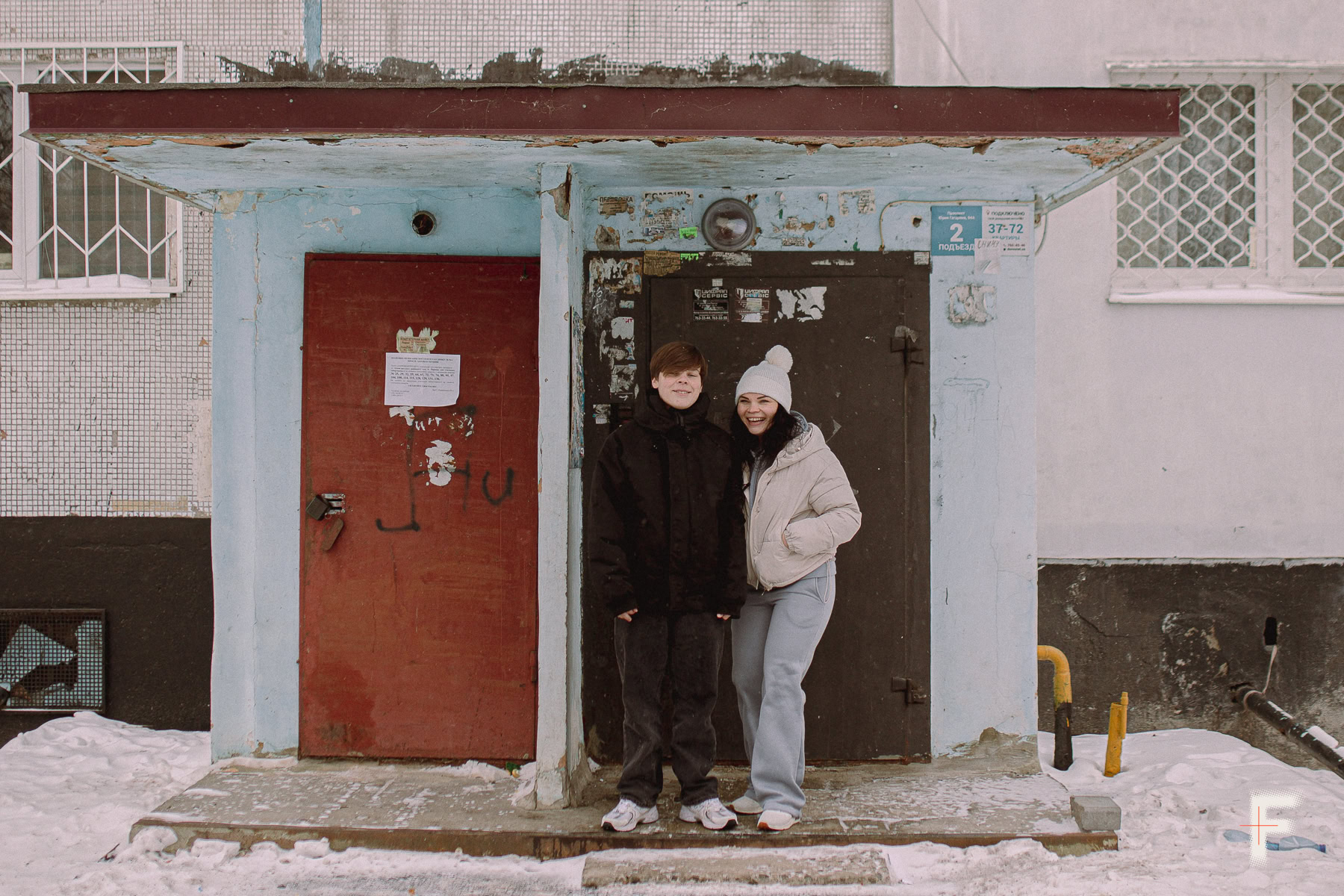
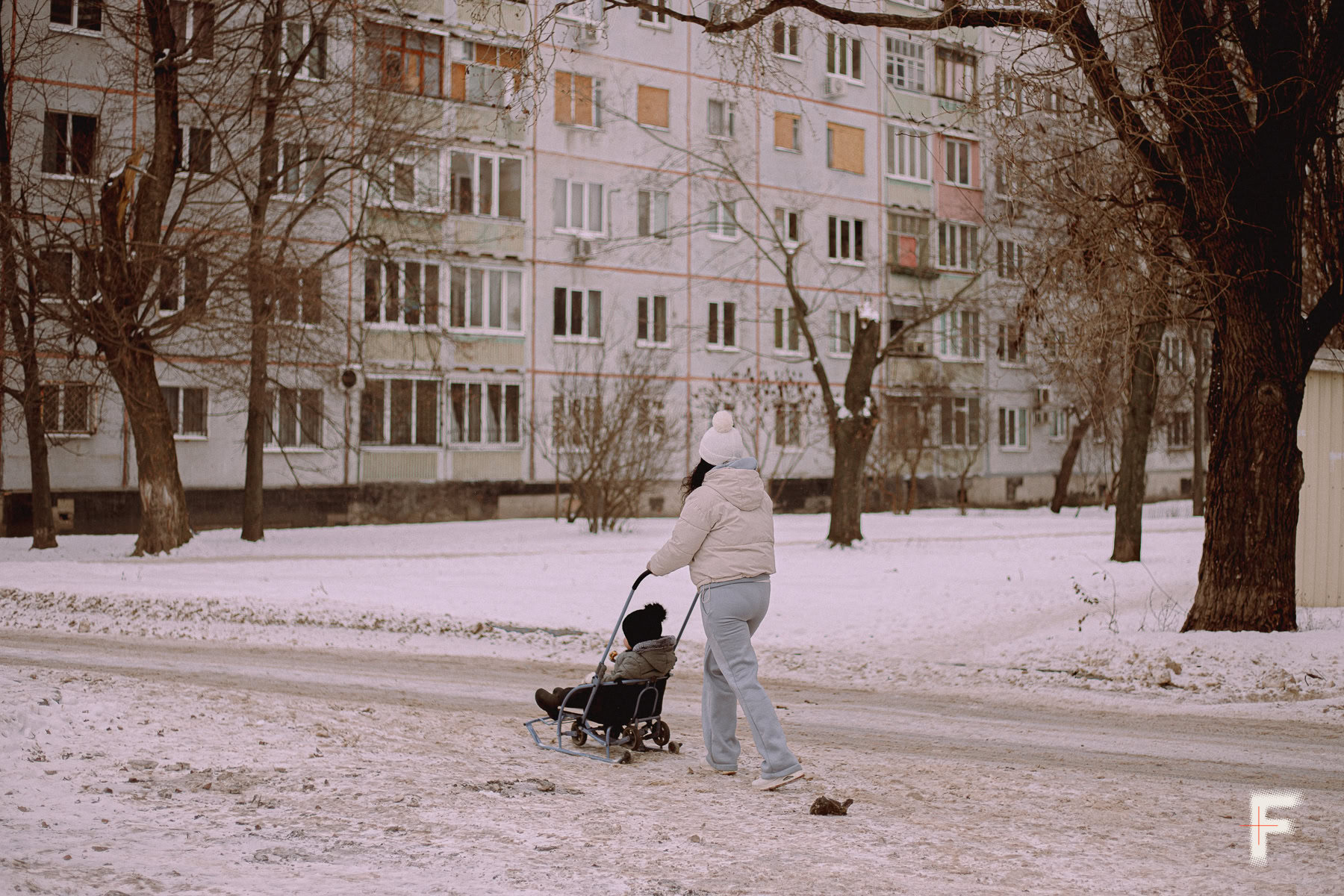
Yuliia Yatlova and her younger son, Sasha, head out for a walk in Kharkiv, Ukraine, Jan. 24, 2026. (Anna Zubenko/Frontliner)

-
A prayer icon on the stairwell of an apartment building in Kharkiv, Ukraine, Jan. 24, 2026. (Anna Zubenko/Frontliner)
“We live on the ninth floor, that’s the top floor. When shelling starts, it’s so frightening,” says Yuliia Yatlova. “The reinforced interior walls run perpendicular to the windows, so they won’t protect us from anything. And the exterior walls of the building are so thin you could cut them with a knife. So any sense of safety is an illusion. For my own peace of mind, I’ve put blast-resistant film on the window in one of the rooms, and now my son and I sleep there.”
As she waits out the shelling, her young son sleeps in her arms. When he wakes and the air raid alert is still in effect, Yuliia turns to knitting. She makes yarn balls that her children later play with, tossing them around the apartment like snowballs on days when they do not want to go outside.
Without a daycare with a shelter, it would be much harder
Yuliia and Oleksandr Yatlov did not plan to have a second child. They were already raising Yuliia’s son from her first marriage, Illia. The family was building its own business and traveling around Ukraine almost every weekend. Life seemed to be falling into place.
Then everything changed. Russia launched its full-scale invasion of Ukraine. Within days, Russian forces struck a playground just 20 meters (65 feet) from the entrance of the building where Yuliia’s family lived. The blast wave blew out all the windows and doors.
“When Illia and my mother were between the eighth and ninth floors, the missile hit,” she recalls. “My son ran into the apartment, sat down behind the couch and froze. That’s the only reason we left Kharkiv — he was terrified. I wasn’t, even though I was pregnant.”
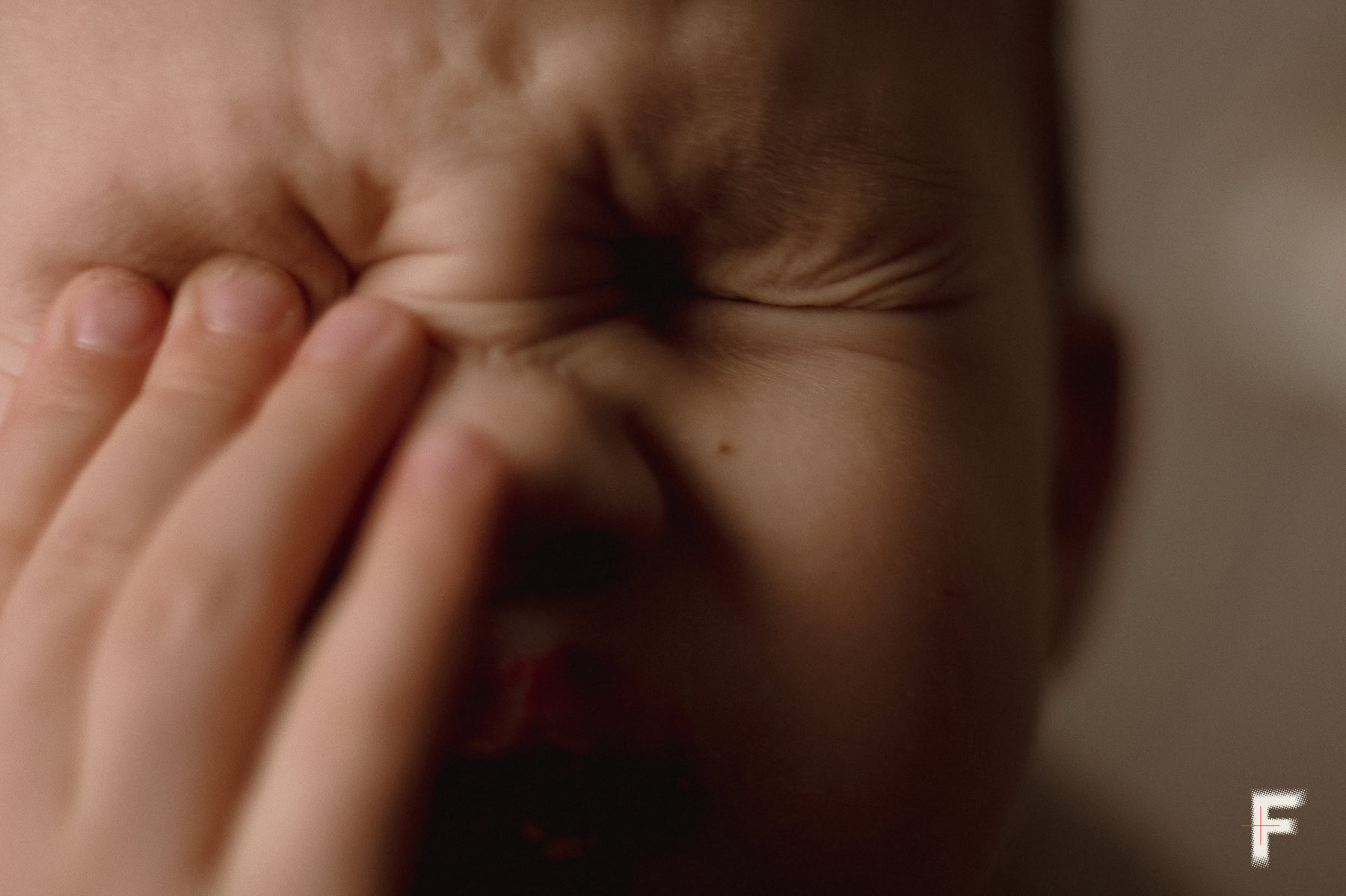
After the explosion, Illia’s behavior changed sharply. He was afraid to even stay in the apartment. The family decided to leave Kharkiv for their country house outside the city. Yuliia was four months pregnant. In late July, she went into labor, two weeks earlier than expected. An ambulance was called. But no matter how fast it rushed to reach her, the baby could not wait. Sashko was born inside the ambulance, somewhere in a field outside Kharkiv.
A few weeks after the birth of her younger son, as the security situation in the Kharkiv region deteriorated further, the family evacuated to western Ukraine. They later moved to Kyiv, but never found a sense of comfort or safety there. In January 2024, the family decided to return home. Back in Kharkiv, it became clear that the marriage had not survived the strain of time and war. Yuliia and Oleksandr divorced. Soon afterward, her former husband was called up for military service. Yuliia remained in Kharkiv and says she is determined not to leave her city again. She would rather live under shelling, she says, than live anywhere else but home.
As Sashko got older, the energetic 2-year-old became curious about other children and began asking to go to daycare. Yuliia did not object. Staying at home no longer felt like enough, she wanted to get out, to build a life of her own and regain a sense of independence. She started looking for work. That turned out to be harder than she expected in a city under constant Russian attack. Because of regular shelling, only a handful of daycares in Kharkiv are operating, and only those with shelters. Eventually, Yuliia found a private daycare near her home that agreed to take Sashko. She also found a job as an event manager at a lyceum. Between her main job and raising her children, she still makes time for freelance work — running her own blog and teaching others how to work professionally with social media.
When Sasha is at daycare and something is flying toward Kharkiv,
I’m terrified.
“Having Sasha in daycare has taken a huge weight off my shoulders. Without it, it would be incredibly hard,” says Yuliia. “With my older son, Illia, there were a lot of people helping from the very beginning. But the younger one is entirely on me. At the same time, when Sasha is at daycare and something is flying toward Kharkiv, I’m terrified. The scariest moments are the minutes between the air raid alert, the explosions, and the message from his teachers saying the children are already in the shelter.”
Fear of shelling keeps the older son living separately
Yuliia Yatlova’s older son, Illia, has never fully recovered from the explosion that hit a playground near their home in February 2022. Loud blasts, air raid sirens and high floors trigger panic attacks. Because of that, he did not want to return to the family’s ninth-floor apartment in Kharkiv. Instead, Illia moved in with his father — Yuliia’s first husband — whose apartment is on the second floor.
“It’s very loud during shelling where we live — it’s the top floor, the acoustics are strong,” Yatlova says. “We hear strikes hitting nearby neighborhoods and the shelling of the suburbs. That’s why Illia is living with his father now. He wants to come home, but only after the war is over.”
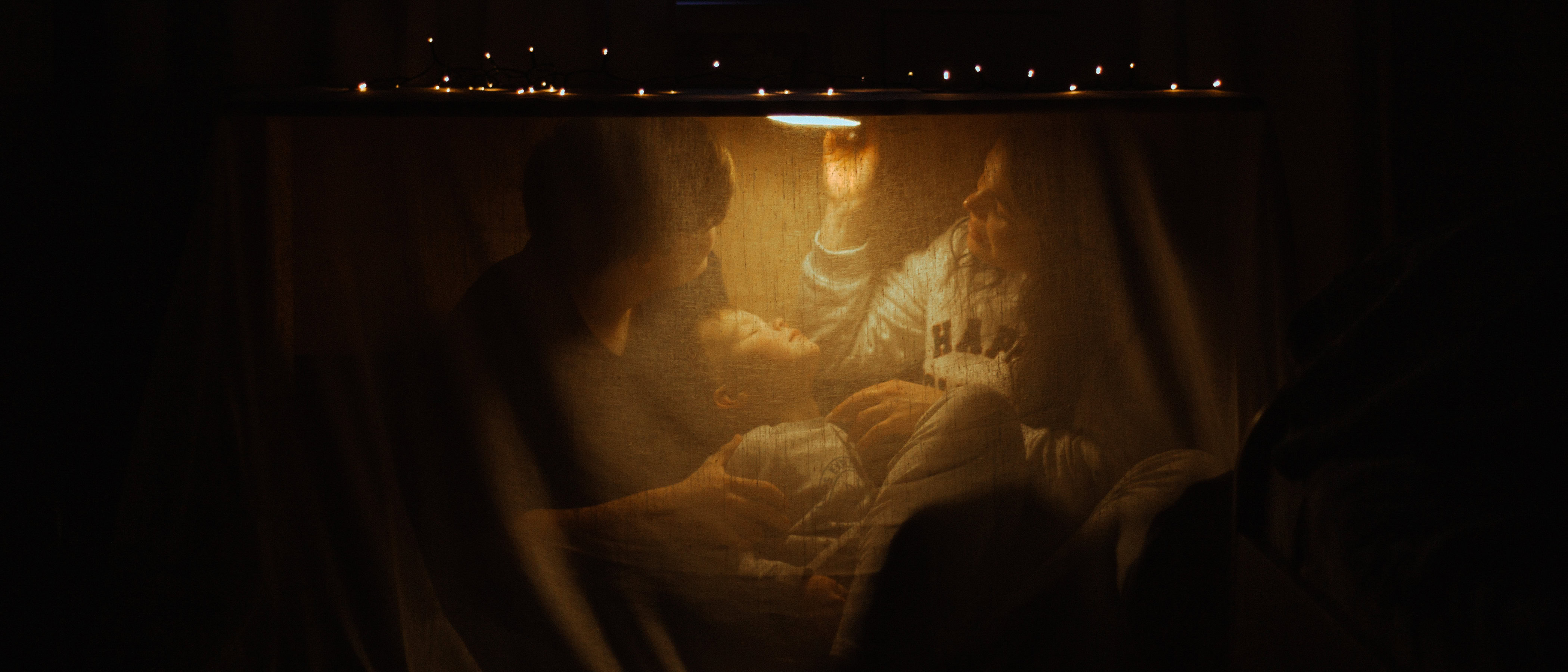
Now Illia comes to visit his mother and younger brother for a few hours on weekends. But if an air raid alert sounds, he doesn’t go up to the apartment and heads back to his father’s place instead. When both boys are together, they play board games or stage mock battles with the yarn “snowballs” their mother has knitted.
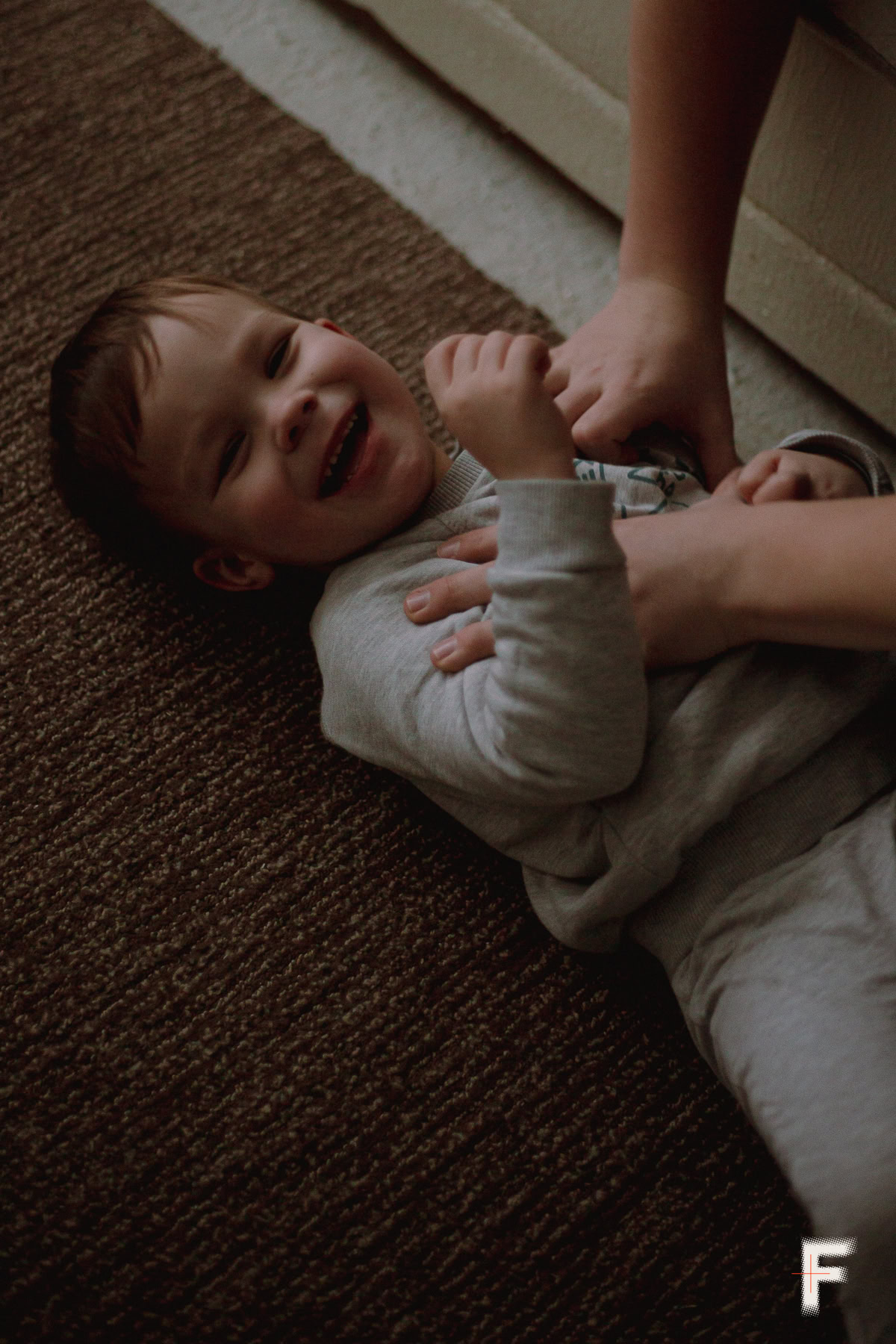
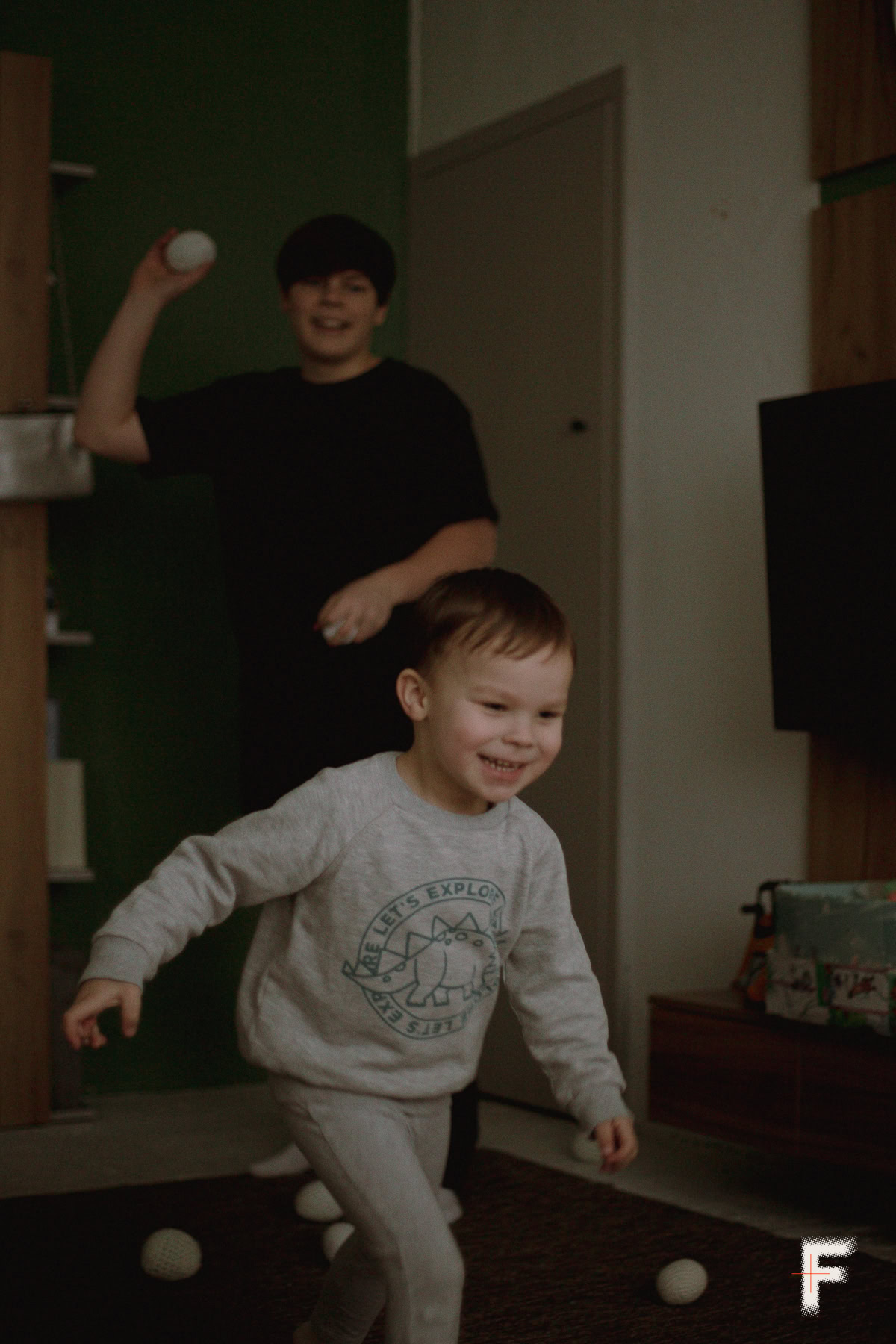
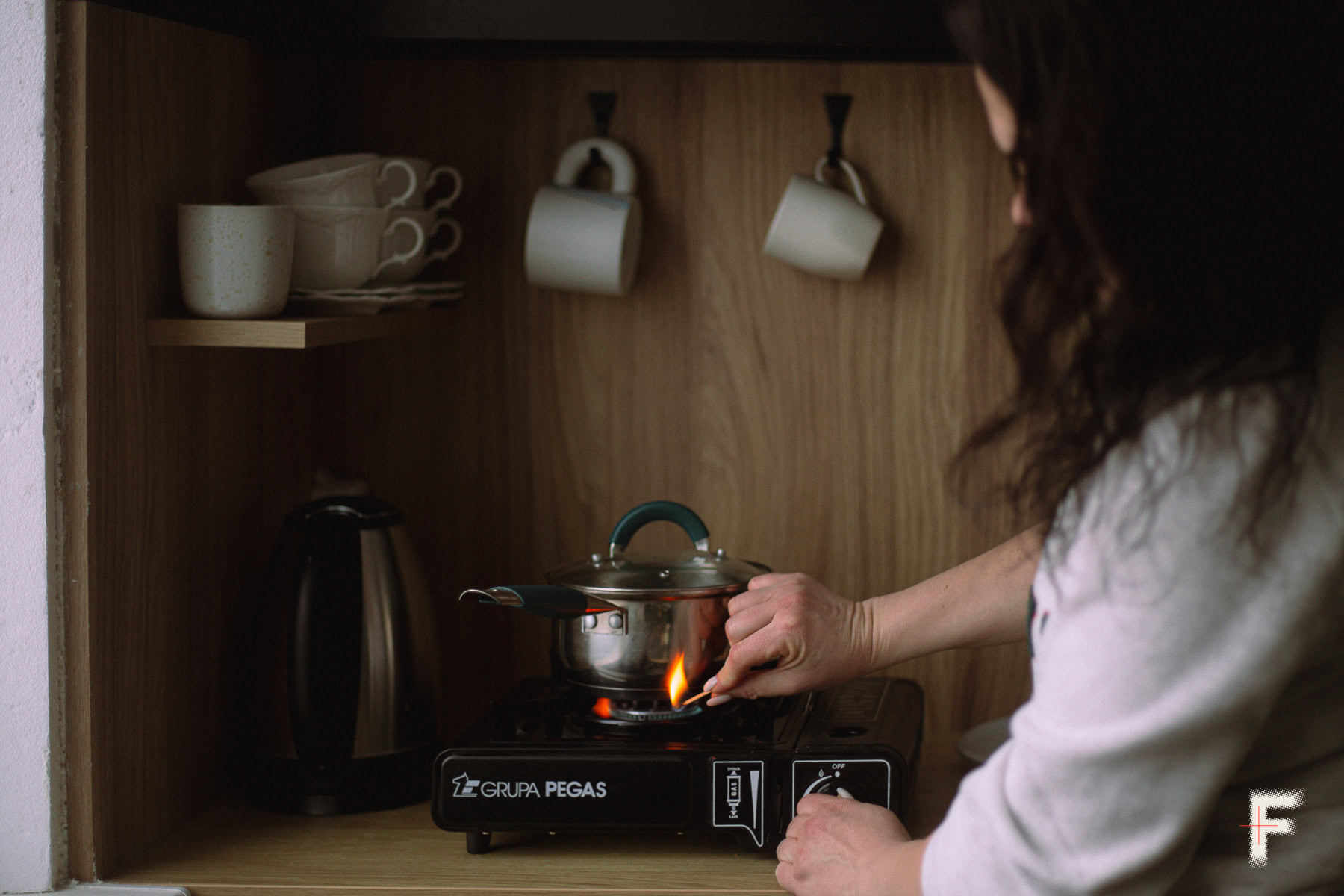
When that wears thin, Yuliia comes up with something new — building blanket forts, cooking together from a different recipe each time, or baking pies and cakes. Making all of that work hasn’t been easy. The apartment has an electric stove, and during power outages she’s had to pull out a long-forgotten gas camping burner. Yuliia says she put it off for as long as she could because it ruins the look of the kitchen.
Mothers who stay home with their kids all the time
don’t just get tired. They lose themselves.
Because the boys live apart, their relationship is easy, Yuliia says. They adore each other, don’t get on each other’s nerves, and love spending time together.
“If they shared the same space or even the same room and were together all the time, it would be Armageddon,” she says, smiling.
“My children are the reason I take care of myself”
Sashko’s father, Oleksandr, is serving in Vyshhorod, so most of his contact with his son is through video calls. Raising two children without a partner nearby is hard, Yuliia says.
“It’s hard being responsible for two sons,” she says. “I have to earn money — child support only covers daycare — and still hold myself together. Mothers who stay home with their kids all the time don’t just get tired. They lose themselves. They stop seeing the world.” I try to avoid that. When we can, we go for walks. I take the little one to daycare and then walk four kilometers to work because that’s what I want to do. In freezing weather it doesn’t happen often, but when it’s warm, I enjoy walking through the city.”
To keep herself going, Yuliia says, she makes time for herself and for the things she enjoys. Every morning she puts on makeup — always mascara and lipstick — meets friends for coffee, and snaps photos on the streets of Kharkiv as she walks or heads to work. She happily “takes her outfits out for a walk,” even when there’s no special occasion. That was one of the reasons she looked for an in-person job, she says — to be around people, not just her sons. For Yuliia, it’s part of self-care: allowing herself to look good even after a night made sleepless by shelling.
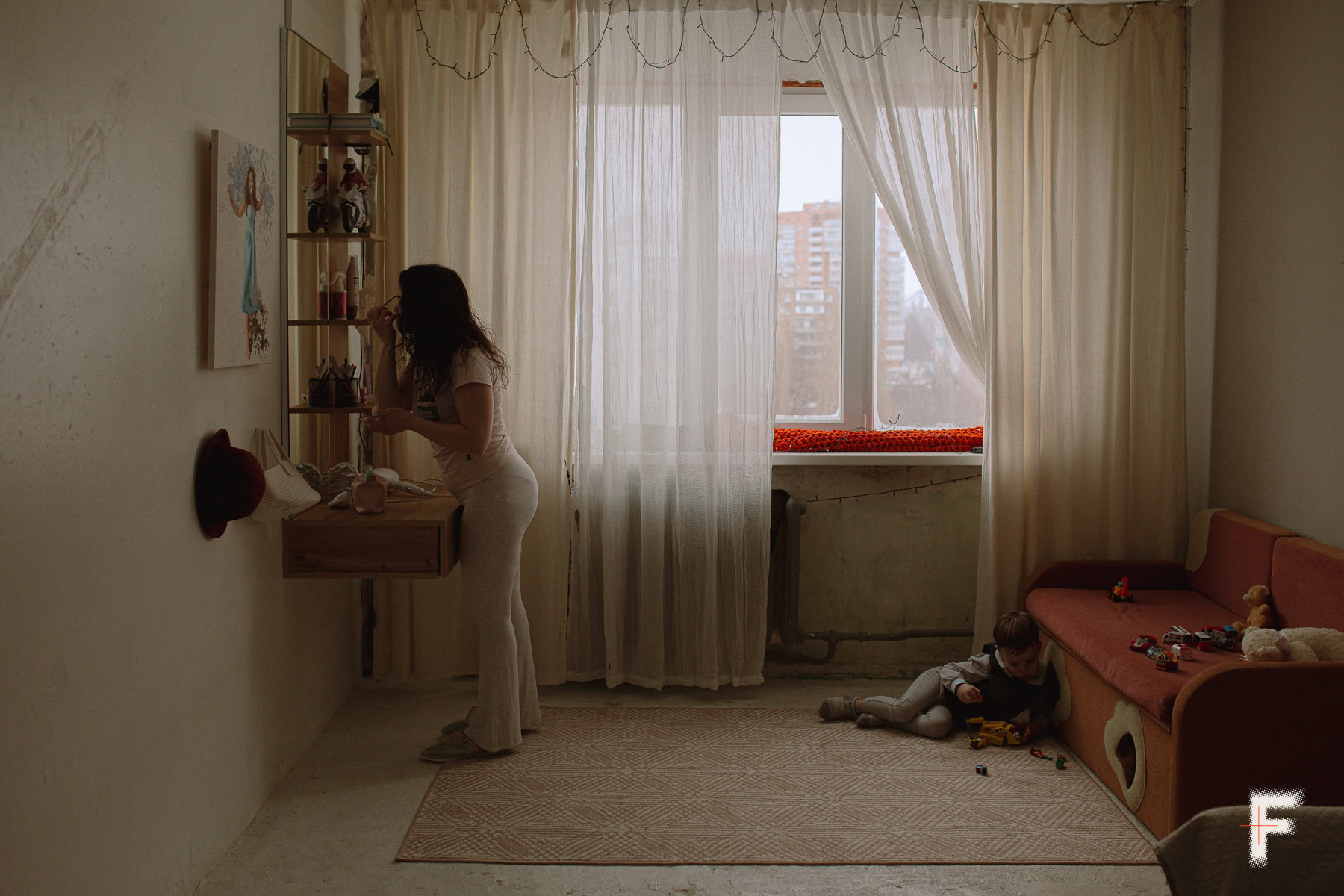
While Yuliia does her makeup, Sashko plays nearby. He picks favorites from his collection of cars and tractors, driving them through the apartment as his mother gets ready. When that stops holding his attention, he switches to a toy train he can run along its tracks. If that doesn’t work either, his mother tries a little bargaining — offering cake, his favorite pancakes or sponge cake in exchange for a few quiet minutes. And if all else fails, she brings out the “heavy artillery”: her own belongings, which fascinate him more than anything else in the apartment.
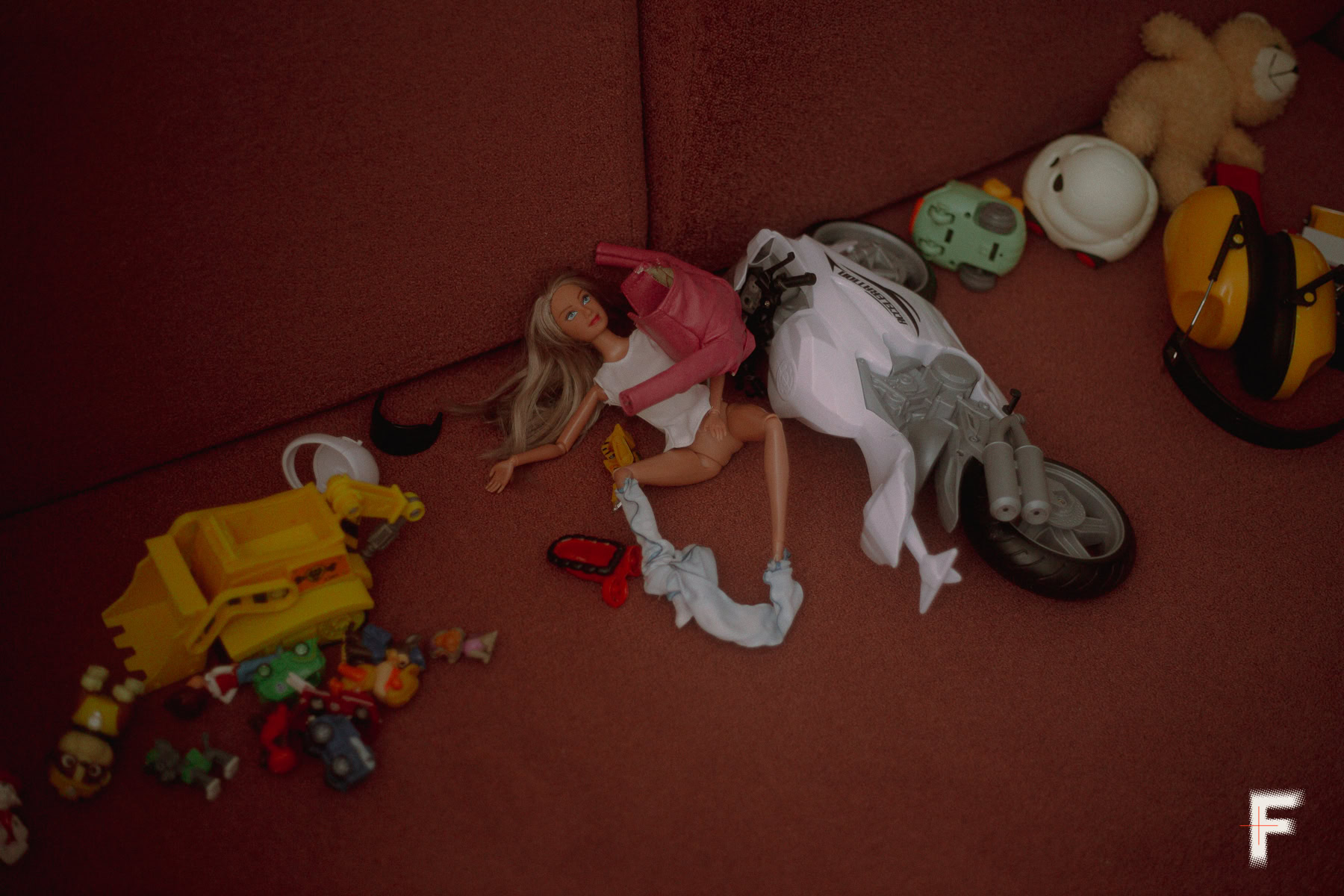
“I got a doll on a motorcycle for my birthday. For Sasha, it’s off-limits,” Yuliia says with a smile. “I try not to let him play with it so he doesn’t break it. But if I really need to persuade him to do something, that’s my last resort.”
Day-to-day chores often have to happen alongside playtime. Most days, that means a game of hide-and-seek — usually with Sasha doing the hiding, which gives his mother a few minutes to take care of chores or herself. Sometimes he helps her cook. When that happens, the kitchen turns into a happy mess.
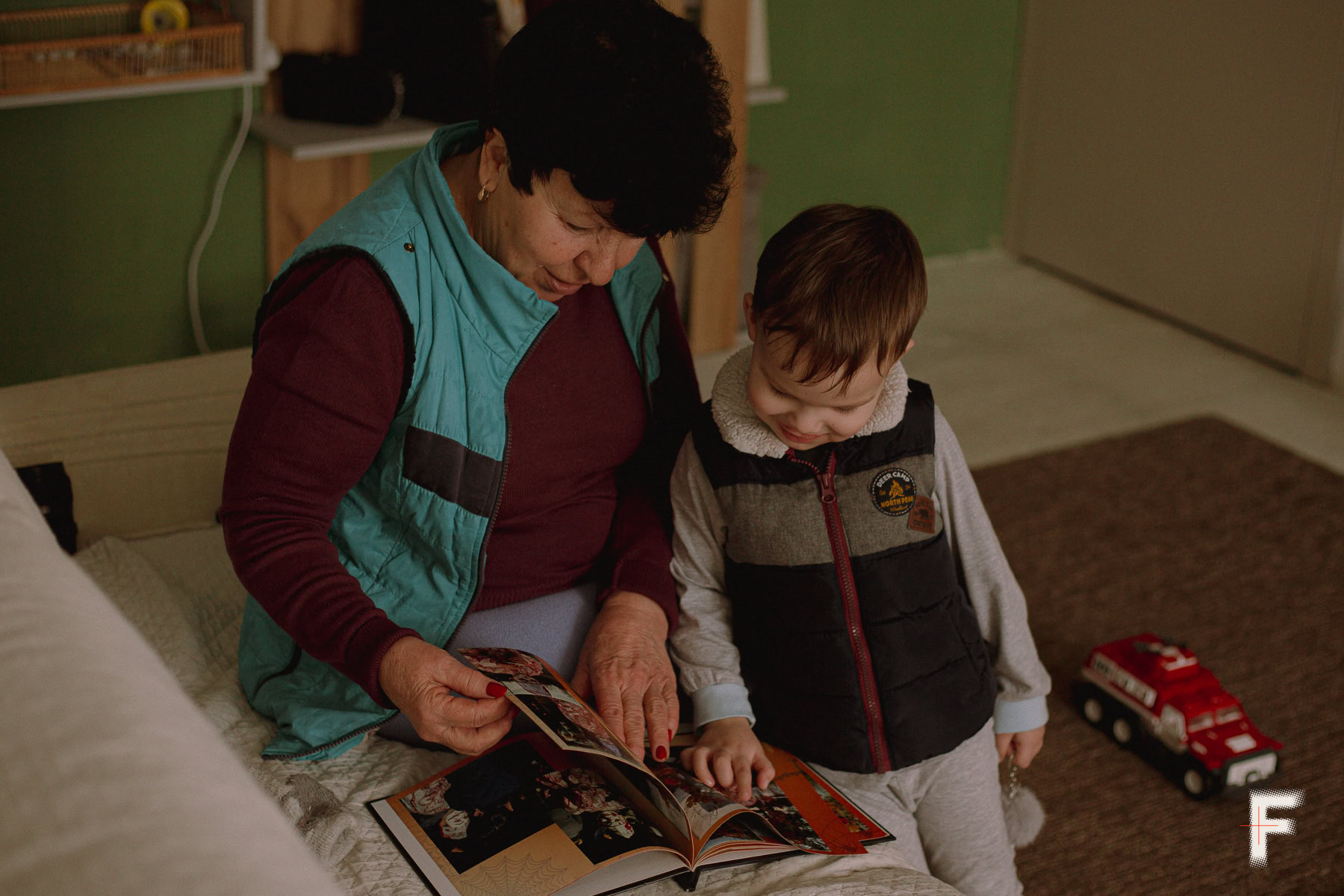
On some weekends, Yuliia’s mother, Lidiia, comes to help. Then Sashko is in her care, often quite literally perched on her shoulders. To keep his grandmother busy, he pulls her into games of hide-and-seek and shows off his fleet of toy cars. When the two women are together, they have a better chance of wearing out the energetic toddler during the day, so he can burn off his energy and sleep through the night.
-
Lidiia, Sasha’s grandmother, and Sasha look through a family photo album, Kharkiv, Ukraine, Jan. 24, 2026. (Anna Zubenko/Frontliner)
-
Yuliia Yatlova and her younger son, Sasha, Kharkiv, Ukraine, Jan. 24, 2026. (Anna Zubenko/Frontliner)
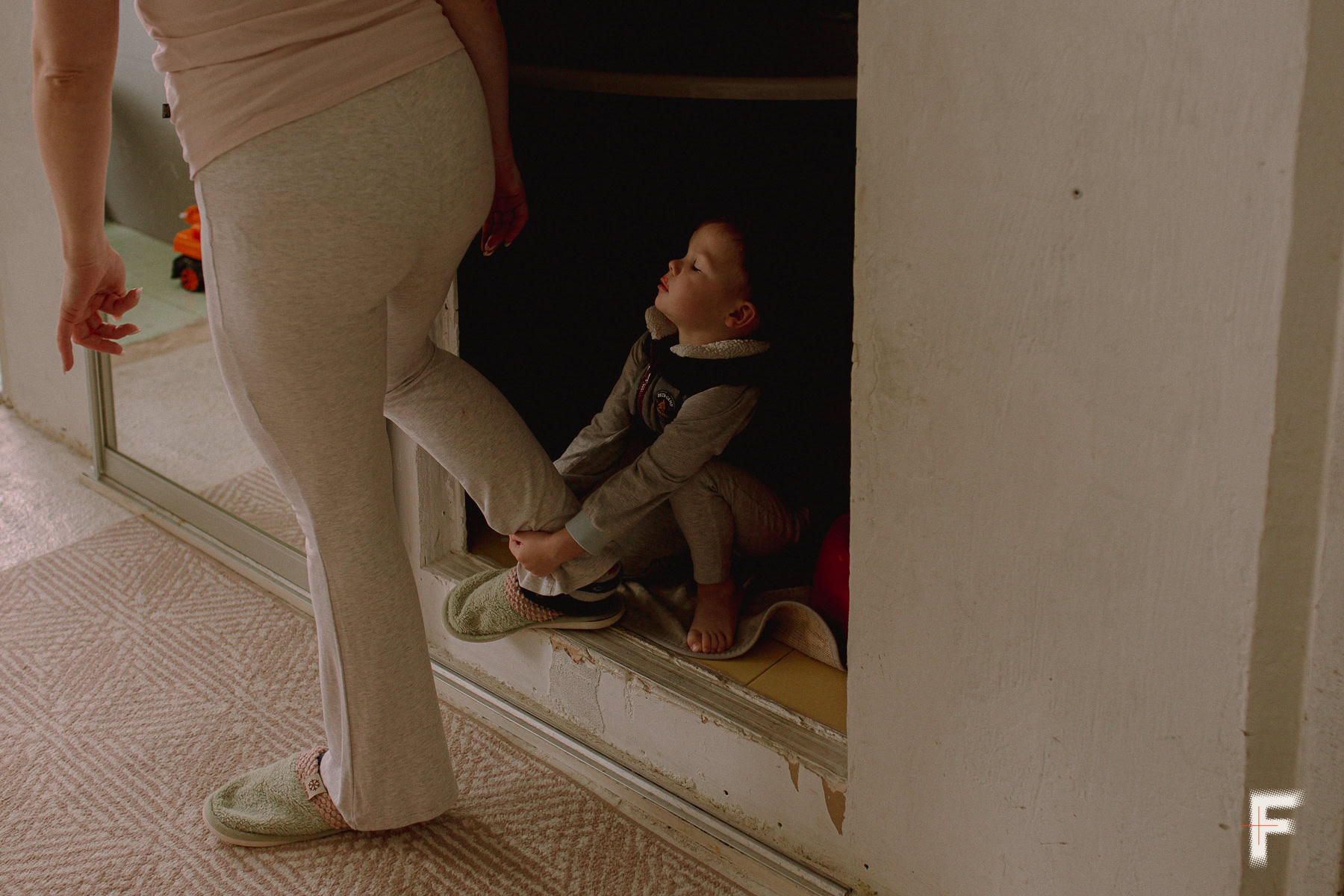
When her son sleeps well, Yuliia does, too, and that matters, she says. Taking care of her health has become especially important, first and foremost for the sake of her children. In wartime, she says, you always need to have some strength in reserve, just in case. That realization is what led Yuliia to seek help from a psychologist, after she recognized she was struggling deeply with her divorce from her second husband. Now, she says, she feels happy, independent and free.
“Having children makes me take much better care of myself,” says Yuliia Yatlova, a mother from Kharkiv. “Every spring, for example, I get a full medical checkup. I pay close attention to my mental health, because everything depends on it. If I don’t get enough sleep, that’s it — I’m irritable, distracted, my head hurts. So I sleep eight or nine hours simply because I need to. My sons depend on how their mother feels.”
I have to take care of myself for their sake, too.
If they were living somewhere else,
I probably wouldn’t be doing that as carefully.
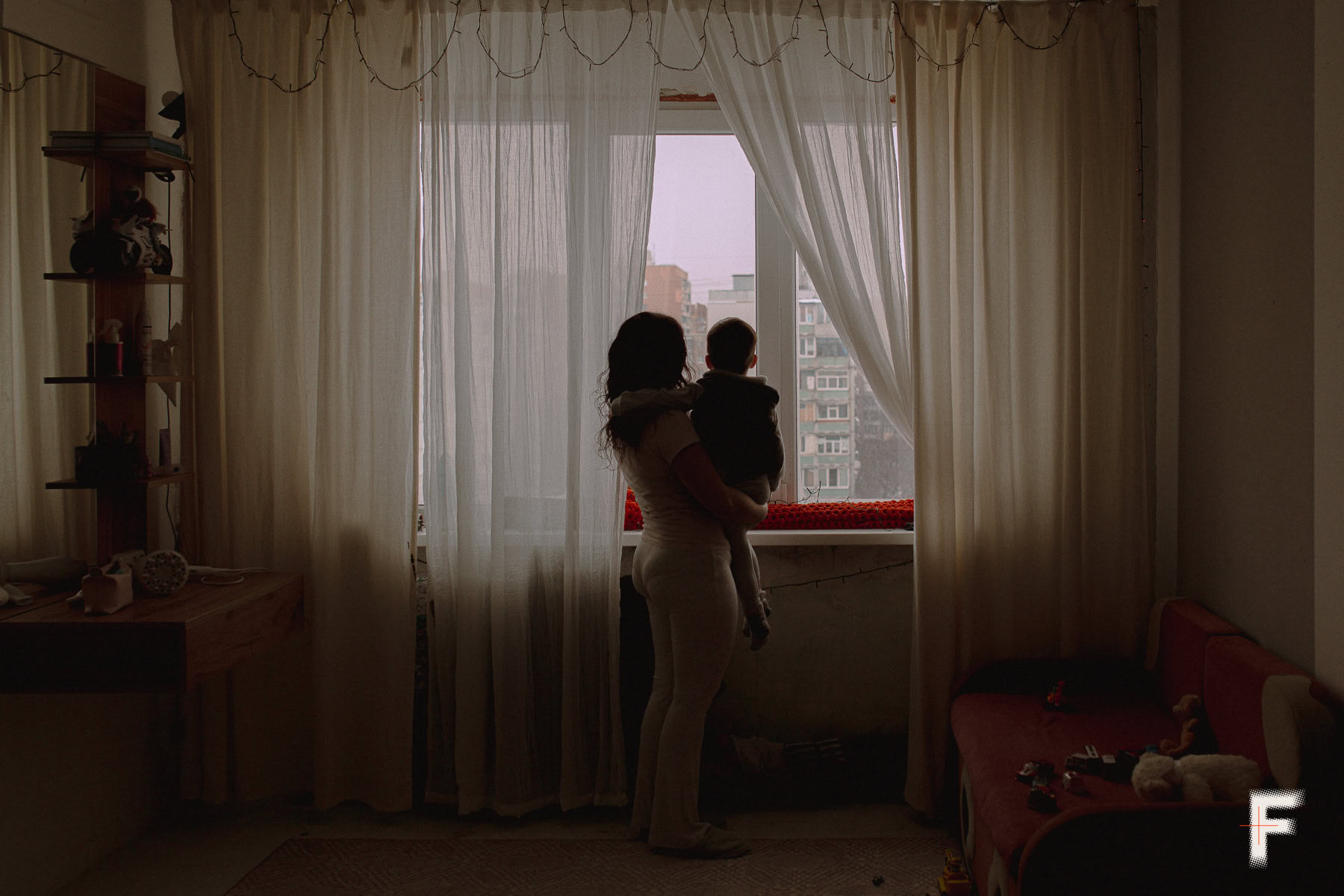
Her children, Yuliia says, have become her greatest source of strength. At least, that is how she feels now.
***
Four years ago, the life of every child in Ukraine changed forever — overnight. One day, there were homes, classrooms and games with friends. The next day brought bomb shelters, forced displacement, shock and uncertainty. In such circumstances, many Ukrainians have found it difficult to decide to have children.
According to official data from UNICEF Ukraine, over the past four years the number of children in the country has declined from 7 million to 5 million. In 2025, 162,778 newborns were registered in Ukraine — the lowest figure since Ukraine regained independence.