Leaving their prosthetics in the stands, veterans enter the ice rink
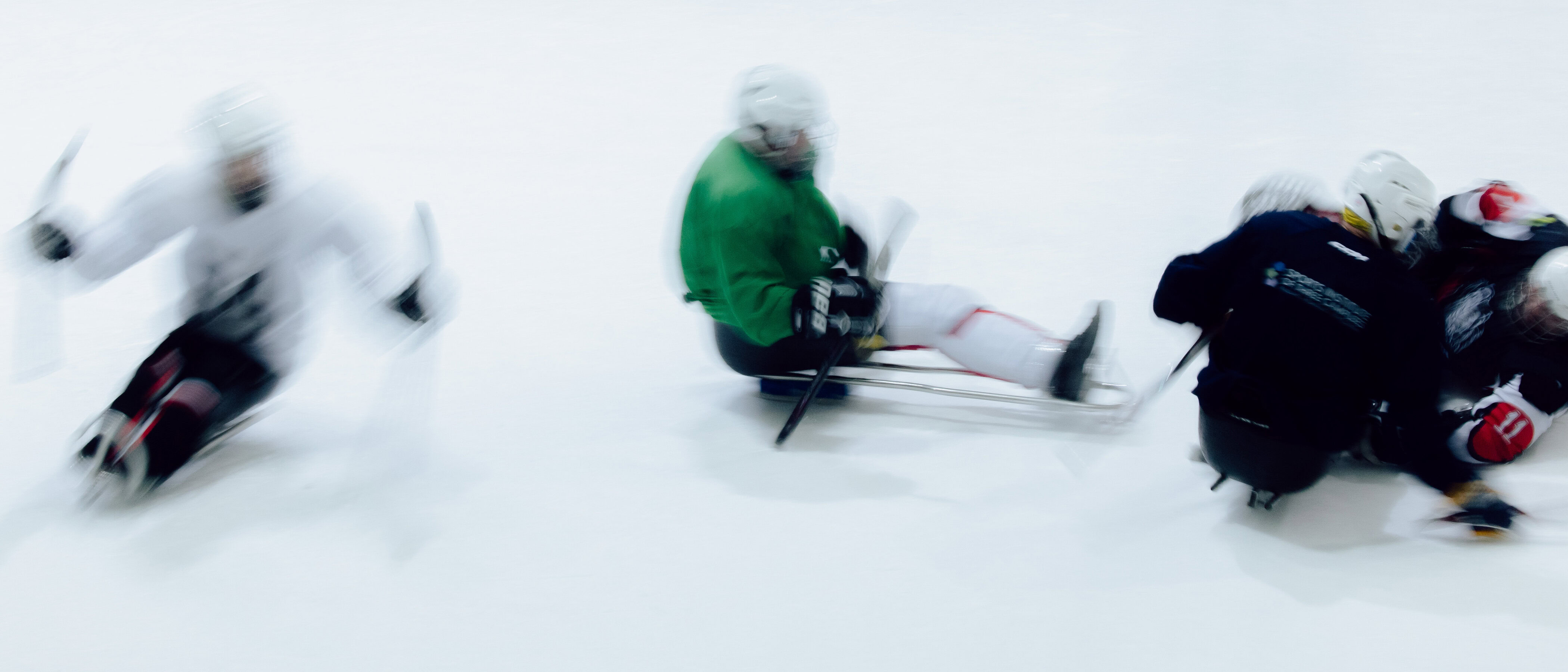
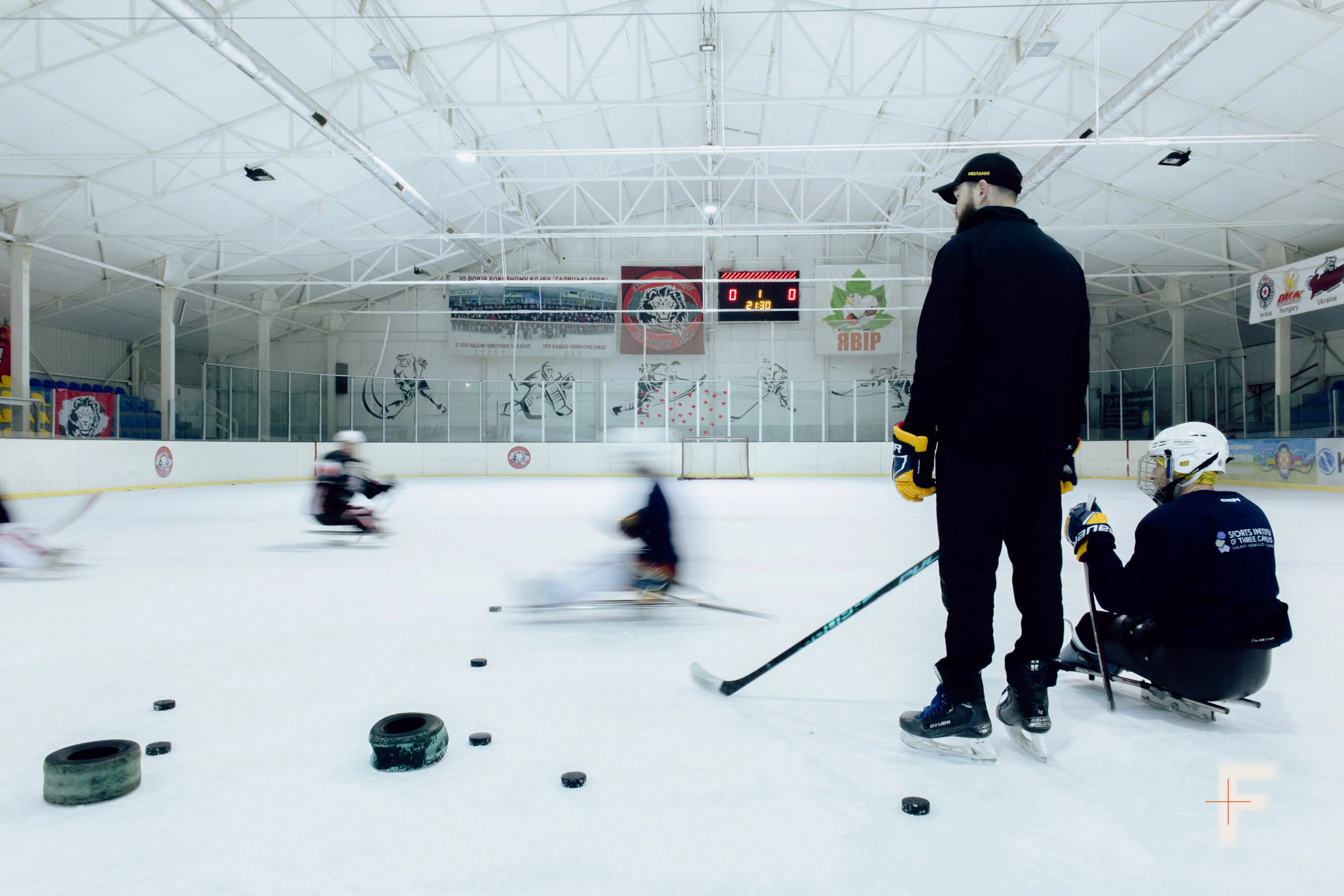
The ice rink is chilly and alive with sound. Pucks slam against the boards as the coach’s instructions cut through the noise; players streak across the ice, clashing into one another loudly. It’s much like a regular hockey game, but only coach Serhii Shvets is wearing skates. Frontliner reporters watch the session unfold.
This was meant to be a story about veterans with amputations who train several times a week in preparation for the Para Ice Hockey World Championship. But had they applied, they would have been forced to compete in a group with Russian athletes, who were allowed to participate by the Paralympic Committee. For this reason, the “Nezlamni” veterans team will not attend the championship this year. Even so, sledge hockey has become more than just a game for them, playing an important role in their rehabilitation and beyond.
Before training, everyone gets into their sled on their own
Sledge hockey training starts at 8:30 p.m. “Good morning, everyone!” quips veteran Oleksandr, call sign “Kotyk,” one of the first to arrive. Before taking to the ice, each player removes their prosthetics and settles into a sledge consisting of a frame, blades, and a bucket seat.
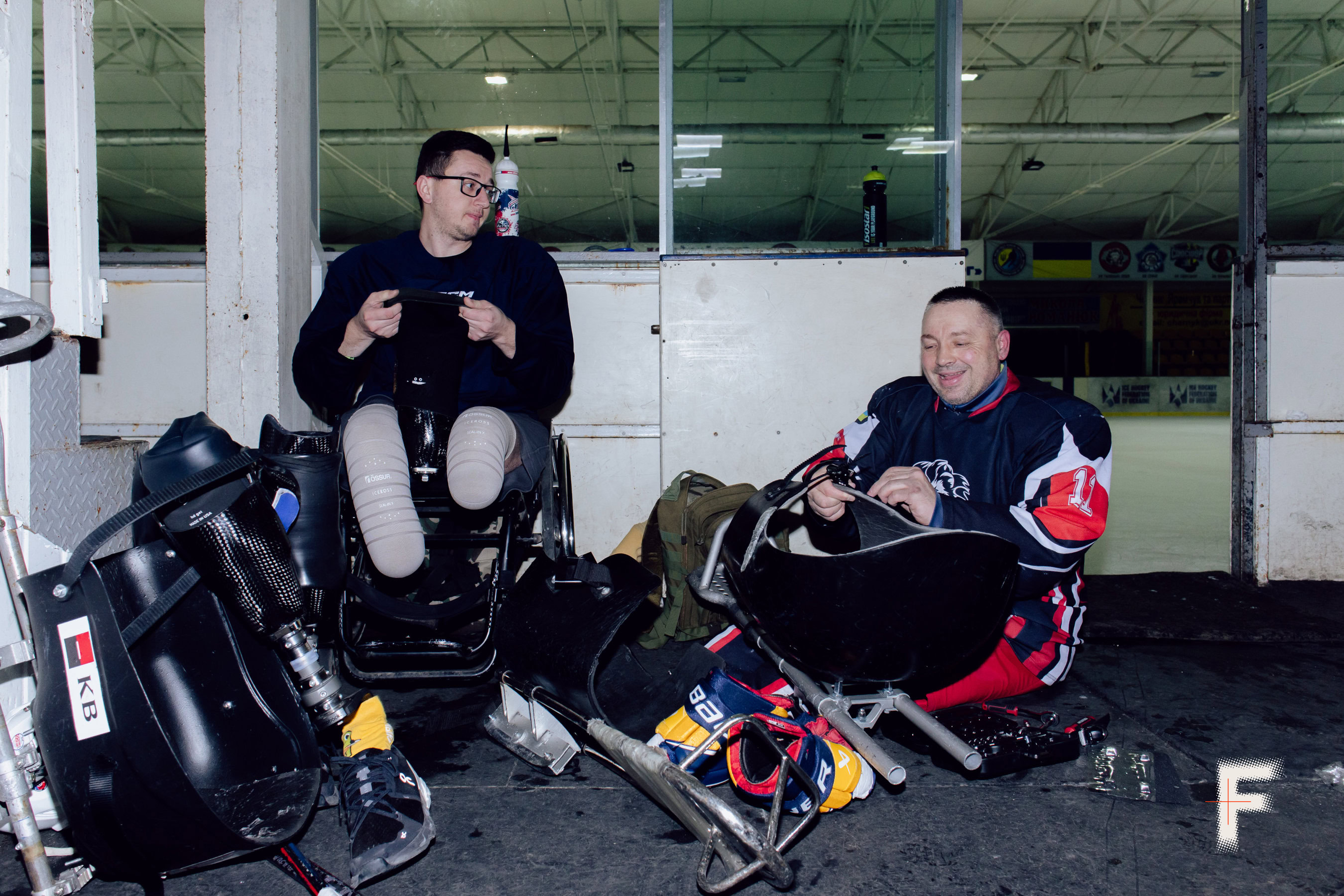
Coach Serhii Shvets brings all the sledges to the edge of the rink, and the veterans transfer onto them on their own and fasten the straps. Each player has two sticks: one for handling the puck and another for pushing off and moving across the ice.
Sometimes the equipment needs a bit of adjustment for more comfortable movement, and today veteran Viktor Deineka is doing exactly that. A career serviceman, he has been fighting since 2014 and was severely wounded in the first year of the full-scale invasion. He is tightening the bolts on his sledge to raise the front bucket slightly higher, a small tweak that should give him better maneuverability on the ice.
The main thing is to not fall out,
and like with any other task.
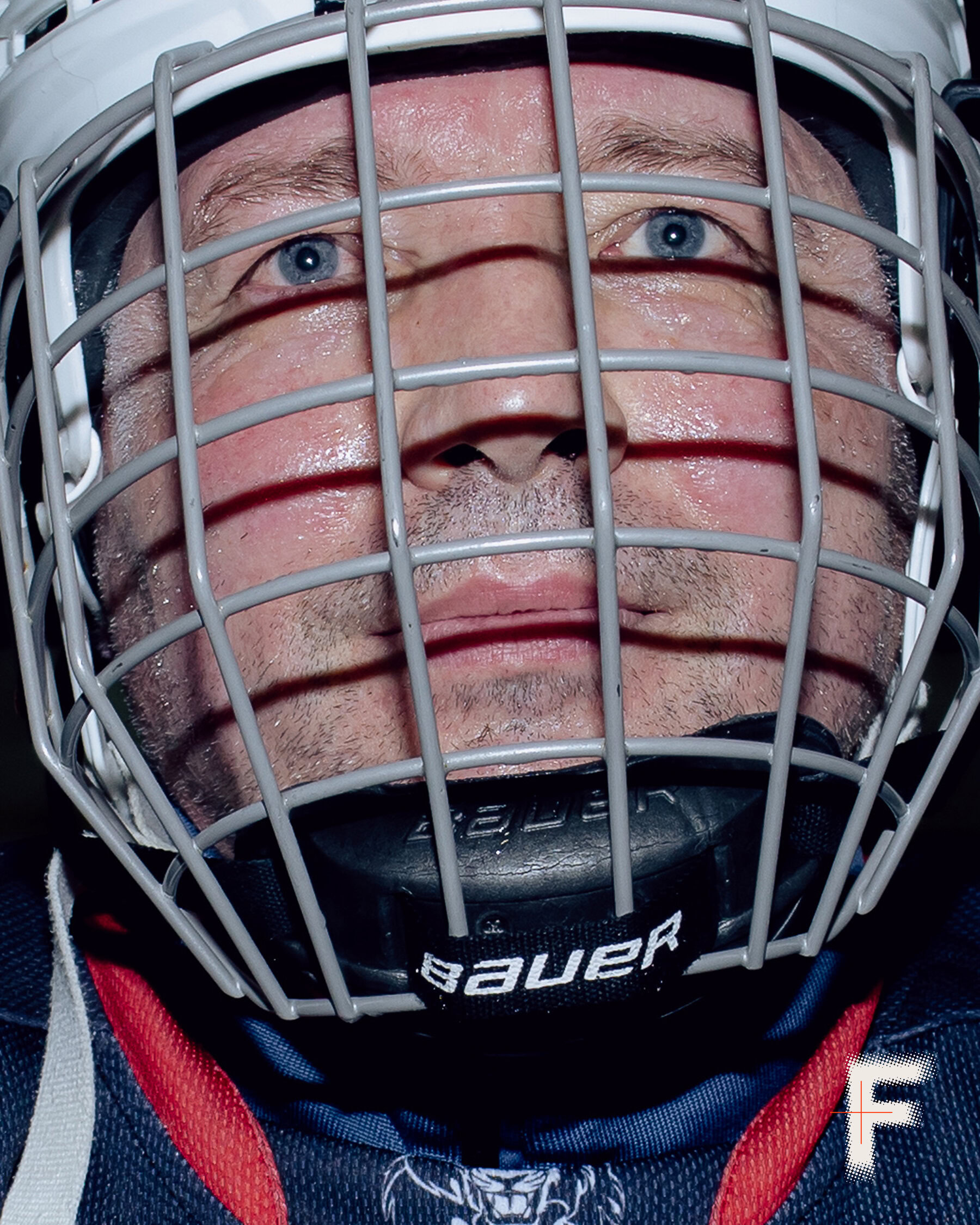
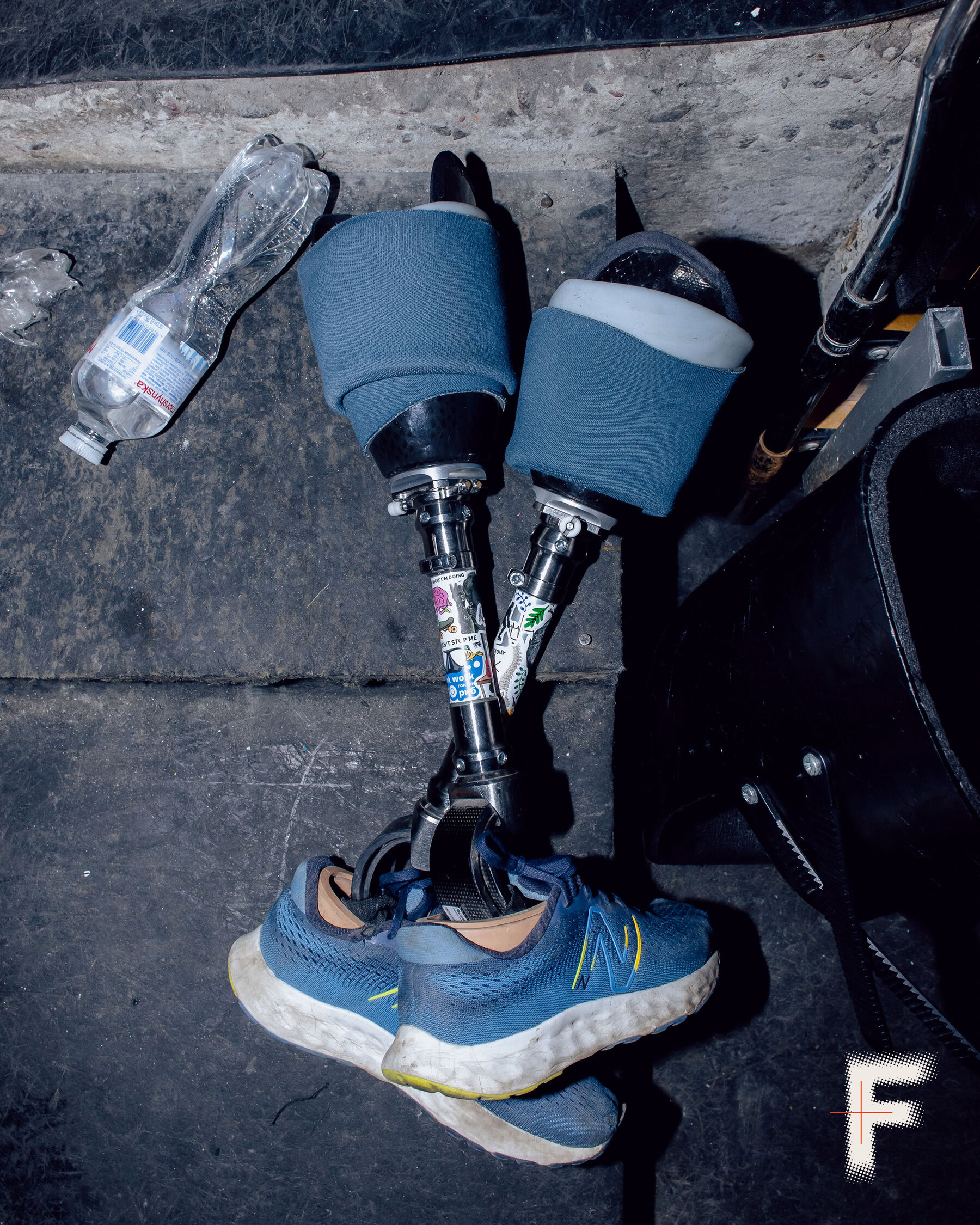
“The main thing is to not fall out, and like with any other task, if you have the will and motivation, you can do anything. You just need to adjust the sledge to fit your injury. All of them are a bit beat up, and we’re a bit beat up too,” Viktor Deineka says with a smile.
The veterans laugh at this joke, the kind of humor only they understand.
Show an example that anything is possible
Viktor Deineka started playing sledge hockey at the end of 2024. He knew nothing about the sport before, and when he was invited to give it a try, he never imagined he would not only master it but actually enjoy it. He used to weigh 120 kilograms and has now slimmed down to 96. He says that regular sledge training has made him feel more energetic and strong enough to walk around the city on his prosthetics without crutches.

Viktor has already traveled to Finland and the Czech Republic, and has participated in games in Vinnytsia and Kyiv. These trips gave him new experiences and helped keep him from getting bored at home. Viktor is confident that he and his teammates are setting an example for other veterans, showing that anything is possible and that it’s always worth giving it a shot.
“No one is measuring up to us, Vit. Don’t overthink it, and life will be a little easier,” says veteran Oleksandr, call sign “Kotyk,” who has played sledge hockey since the summer of 2025, with a hint of sarcasm.
After being wounded in 2023, undergoing leg amputations, and receiving prosthetics, Viktor Drachuk tried several sports. He practiced archery, took part in water tourism, learned rock climbing, and a year ago discovered sledge hockey. Since then, he has been hitting the ice twice a week for regular training.

“Training keeps my muscles toned, that is why I stay in shape. Our coach is relentless, but that helps,” says Viktor Drachuk.
A relentless coach who spares no one
Oh, two-legged one,
you’ll be our runner!
– Meet your coach, Serhii Serhiiovych.
– Oh, sorry!
Serhii Shvets first met the veterans on the bus to a training camp in Slovakia in November 2024.
Serhii had been playing hockey for almost 20 years by then. His father had brought him to his first practices as a child, so from an early age there was no time for “bad” company or partying. There was only hockey and the guys from the Halytski Levy hockey team, who became like a second family to him.
Hockey became Serhii’s way of life, but an injury brought his playing career to an end. More than four years ago, the management of the Halytski Levy hockey club asked him to start coaching children. Then in 2024, as para hockey was taking off, he was invited to coach veterans.
Becoming a coach was not a part of Serhii’s grand plan, but now he glides across the center of the ice rink, guiding the players he considers his family.
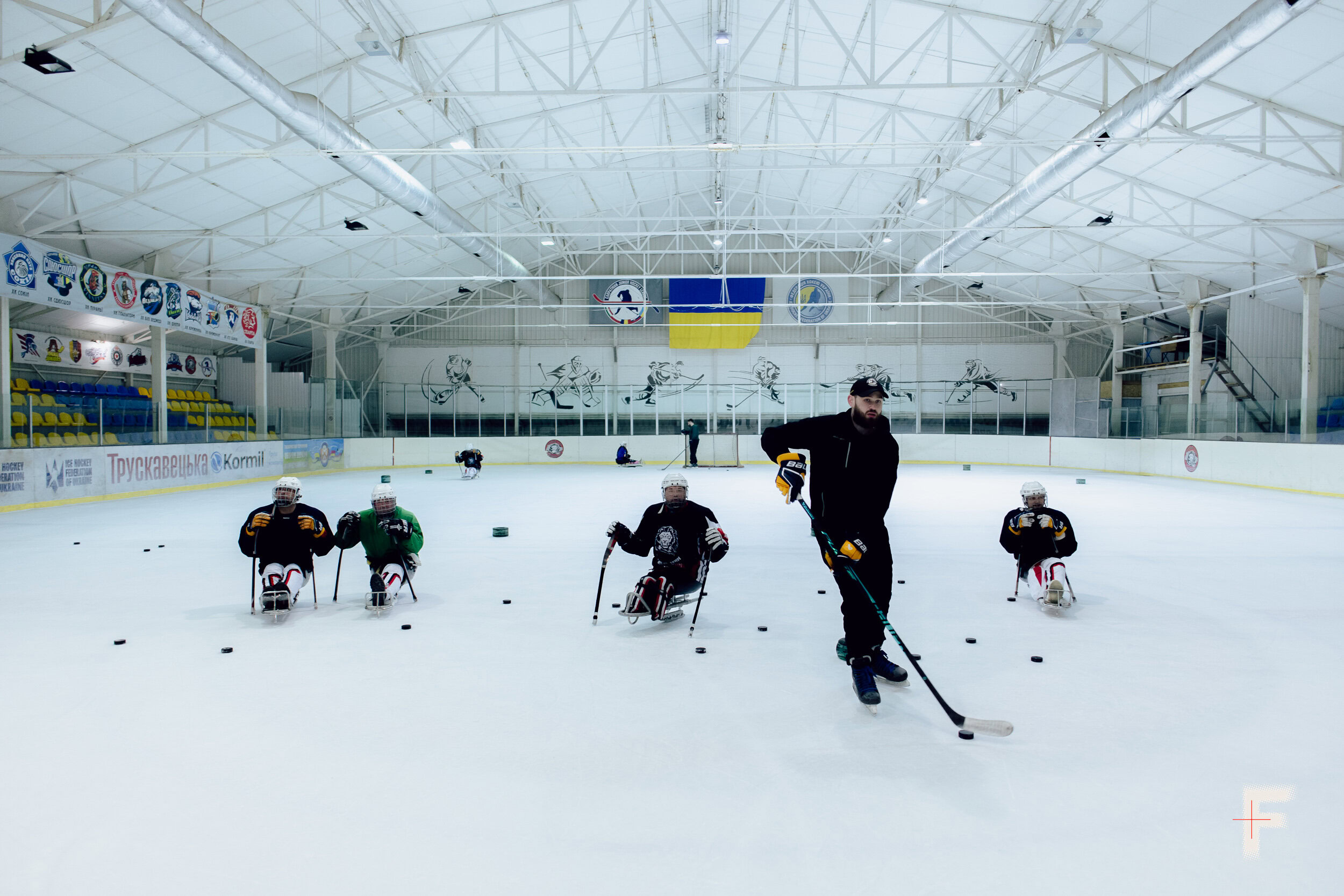
The coach remembers feeling very nervous when he first started working with the veterans. He had no prior experience interacting with veterans, especially those recovering from injuries, and asked management how to connect with them without saying the wrong thing. Eventually, he realized that coaches speak to athletes very differently than rehabilitation specialists or psychologists speak to patients.
Serhii says he and the players have already been through a lot together. More than once, he has climbed into a sledge himself just to understand how the team members experience the game. He quickly learned that sledge hockey is far tougher than regular hockey, even though the strategy and tactics are the same.
You’re really pushing yourself today,
When he sees two players collide during practice, he shouts for them to bring even more force to the play, leaning into each other with their full bodies.
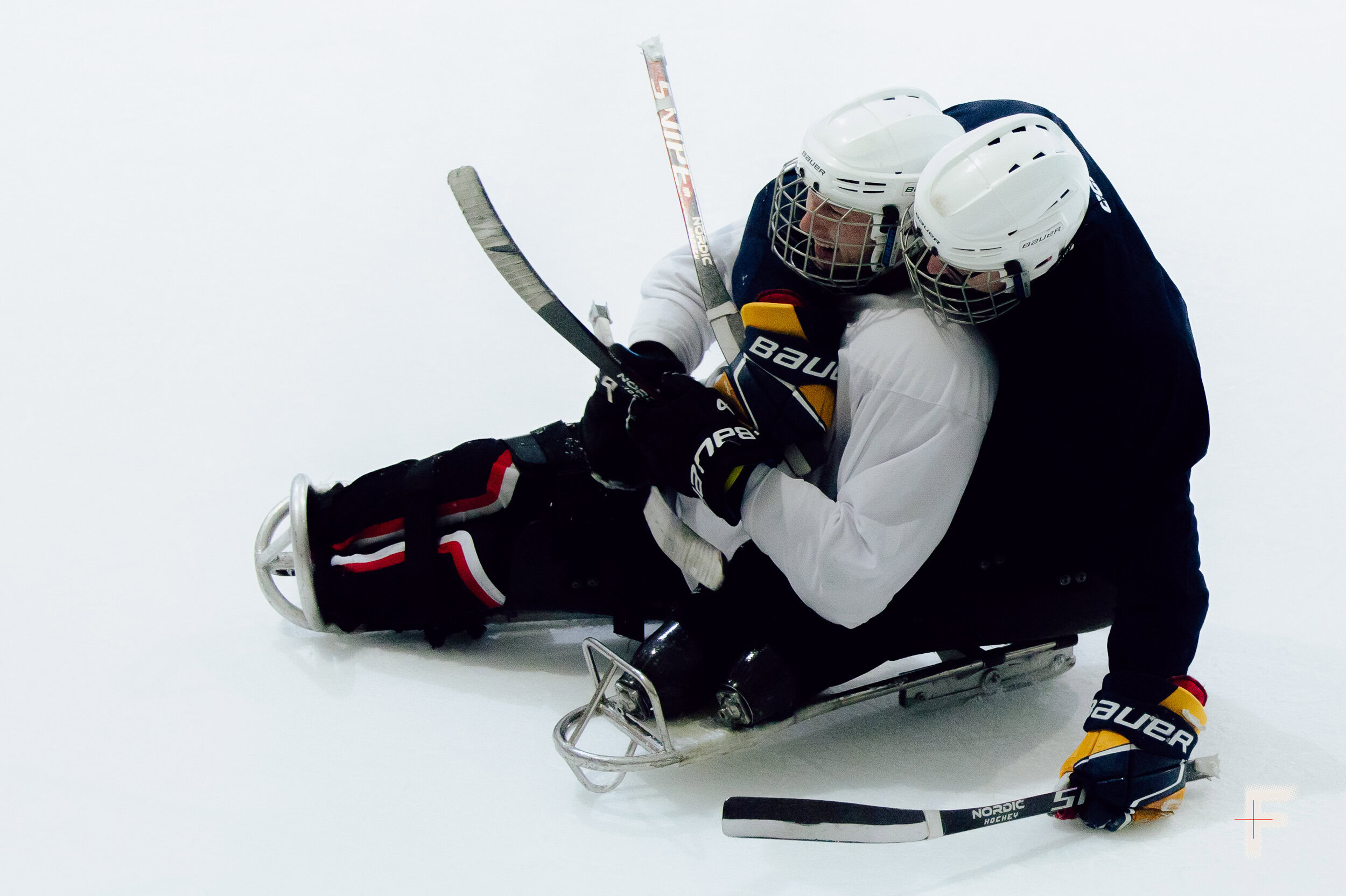
Physical battle is at the heart of this sport. There is no room for self-pity. The players leave that behind on the stands along with their prosthetics.
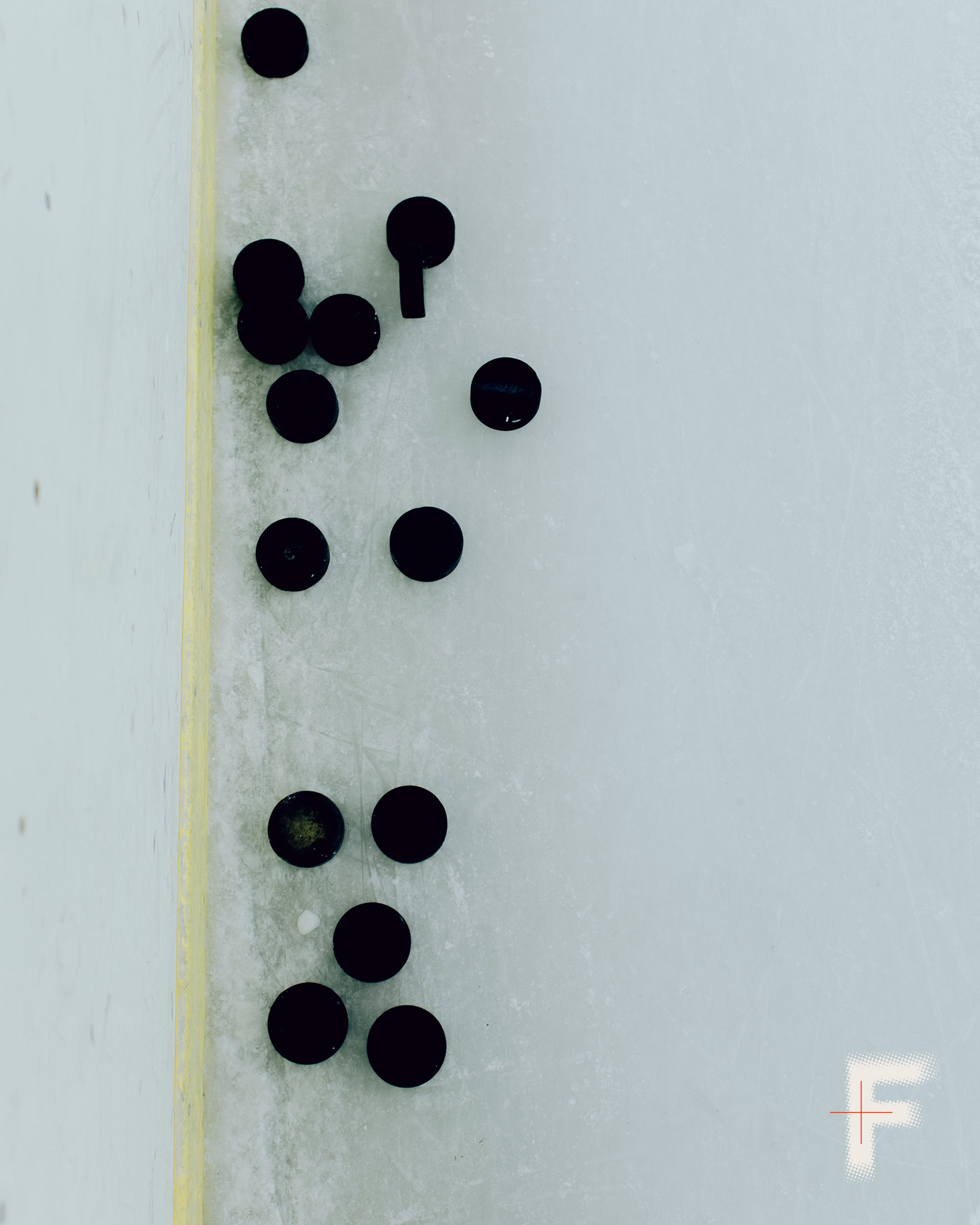
Serhii assigns the players their roles as forwards and defenders. For a year now, they have been running the same drills to the rhythm of pucks striking the ice. When they get it right, Serhii celebrates with a coach’s signature gesture of joy — slamming his stick a few times against the boards of the stands.
Well done, Kit, well done! What,
Uncle Vitia, didn’t see that coming?
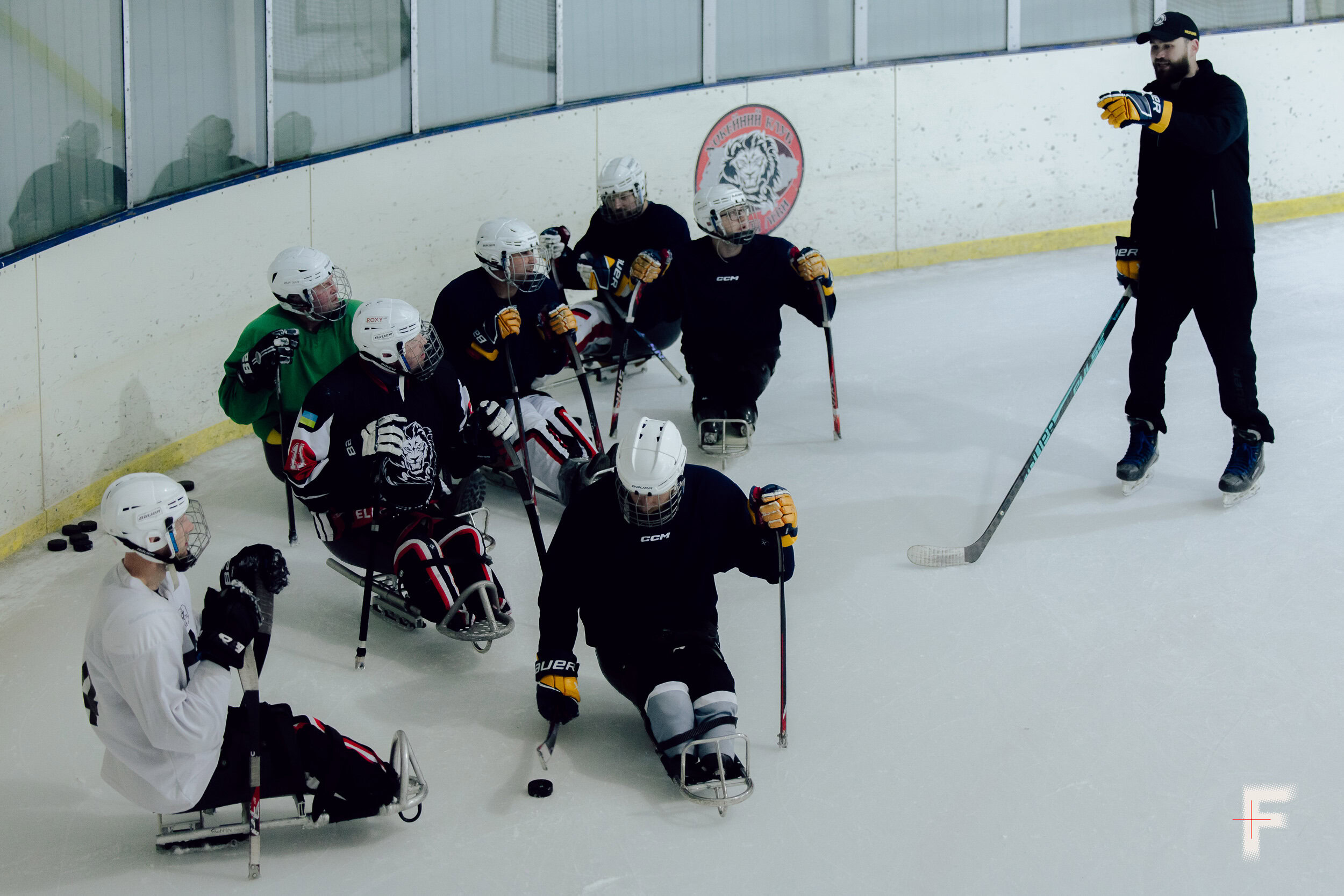
But alongside these players, Serhii is more than just a coach. He also carries gear, is a psychologist, a medic, and a friend off the ice. One of the team members, Viktor Drachuk, organizes river rafting and rock climbing trips for veterans in the summer, and in the winter he invites them to go sledding. In this way, they continue to adapt to civilian life together outside the rink.
Sledge hockey as both challenge and support system
Serhii explains that many of the players see sledge hockey as a challenge. Some have chosen it to continue their rehabilitation. Para hockey helps with recovery because it engages the back, core, biceps, and triceps. Others want to pursue the sport professionally and have the potential to join the national para hockey team.
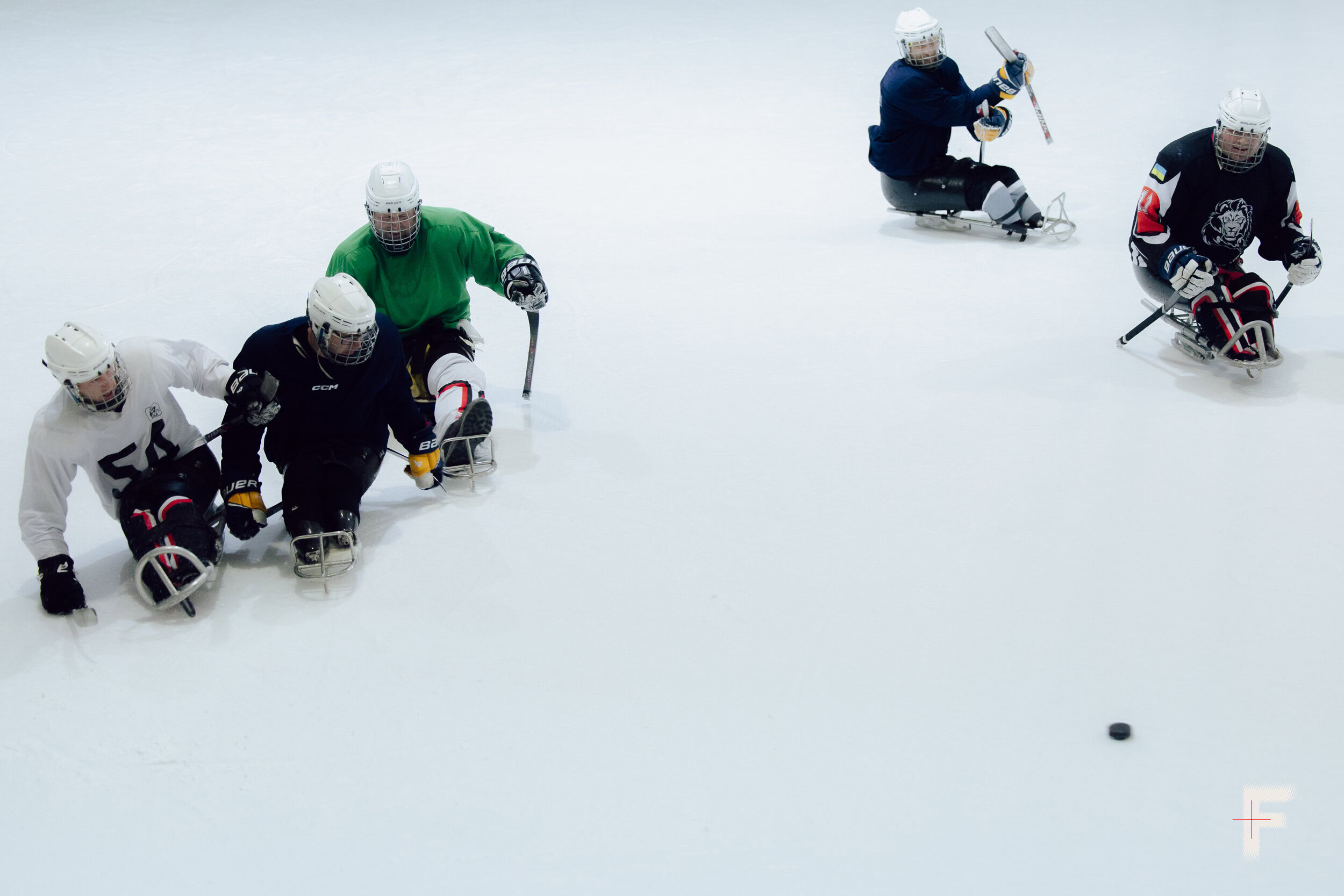
“If work gets in the way of playing hockey for these guys, they’ll just quit their jobs,” Serhii jokes.
He says that anyone can learn sledge hockey if they put in the effort. So far, he hasn’t met a single person who trained regularly but couldn’t play.
Today, Team “Nezlamni” consists of 20 veterans who attend practices. Not everyone can come regularly due to work, military medical exams, or other rehabilitation activities. Nine players are training at the rink today.
Among them is Oleksandr Zhavnenko, who opened a dance studio in Lviv with his wife after rehab. He decided to play hockey for the team spirit and the chance to play alongside veterans with similar stories.
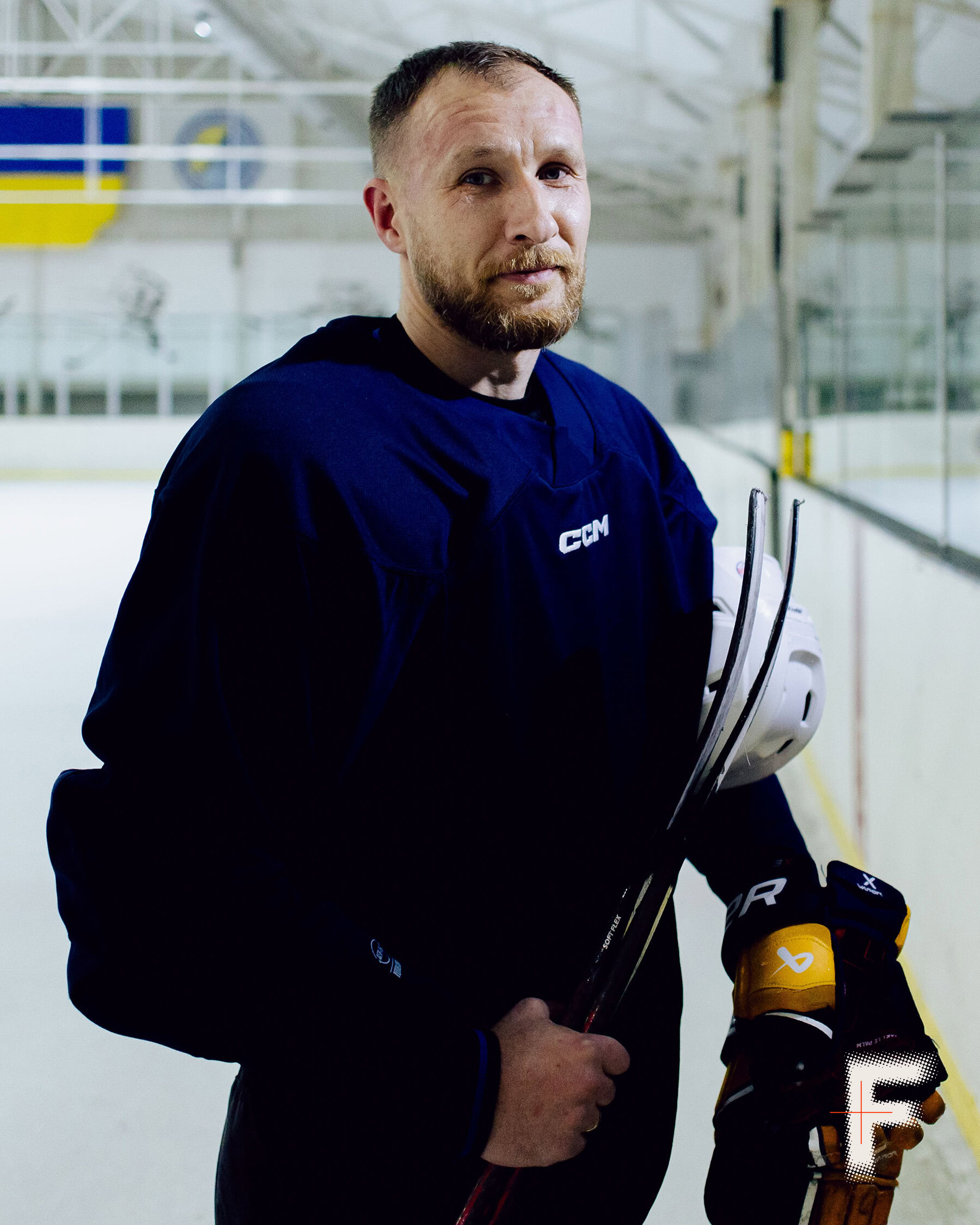
“Serhii told us to play harder and really use our bodies. At first, it felt awkward hitting our own teammates, but then we realized it’s actually fun,” Oleksandr says.
Para hockey has also changed Oleksandr physically. The training has built his muscles, and he had to go up a clothing size. More importantly, it gives him a space to release negative energy, and he considers these teammates his family.
Traveling across Ukraine and abroad
Last year, the “Nezlamni” team was the only sledge hockey team in Ukraine. Today, veterans’ teams have formed in Kyiv, Vinnytsia, Odesa, and Kalush. Players don’t get paid for these friendly games or competitions, they play out of passion and a shared goal. Before each match, the team listens to their coach’s instructions and receives a quick pep talk to get them ready.
The veterans also travel abroad for competitions and friendly matches. In March, they were in the Czech Republic, and before that, in Finland and Slovakia. Overseas, they most often compete against civilians with amputations or spinal cord injuries, and occasionally, other military personnel.
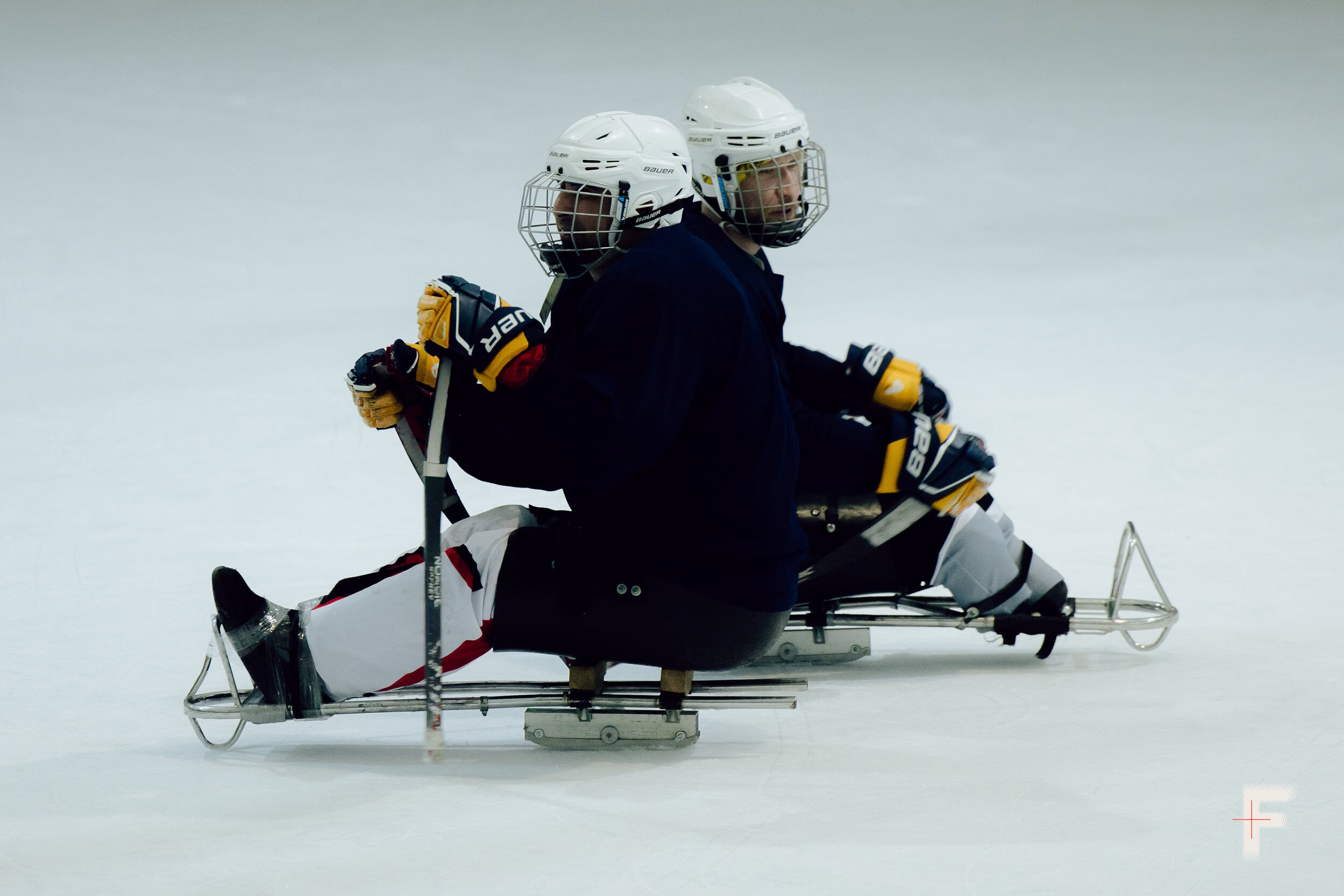
Serhii says sledge hockey demands persistence and endurance. The advantage of working with military veterans, he notes, is that they’re used to following orders, so they respond to a coach’s instructions more naturally.
Para hockey, he adds, is a sport on a rise. It’s easier than it seems and can become a way of life, but it usually takes more than one try. Many players quit after their first session because they don’t get the results they expected.
After finishing the drills, the players finally ask the question they’ve been waiting to ask: “Can we play hockey now?”
Serhii splits them into two teams and watches the game closely:
“Blue is attacking, blue! Move it out of the zone!”
After a long, two-hour practice and game, the players take three minutes to cool down, skating around the rink so their muscles won’t be sore the next morning.
The training can be intense. During this session, a streak of blood from one player’s finger smeared across the ice, almost in the shape of a hockey stick. The veterans gasp and sweat through the tough workout, yet they walk away feeling strong, energized, and ready for the next challenge.

***
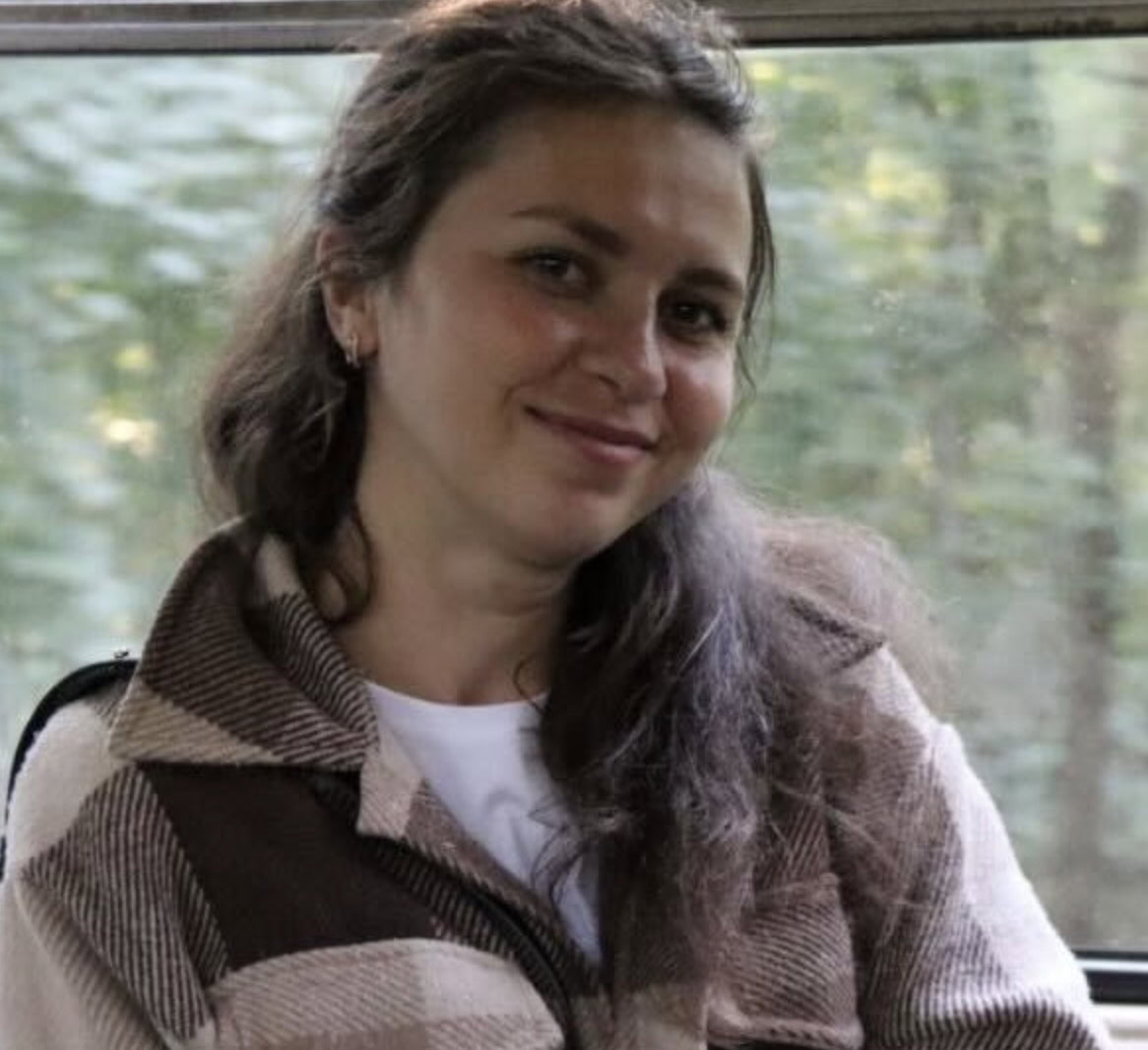
Hi, we are Mariia and Anna, the authors of this article. Thank you for reading to the end.
This is a story about veterans of the Russo–Ukrainian War who survived severe wounds and the loss of their legs, but not the desire to live fully. They train at an ice rink three times a week, preparing for friendly matches and competitions. Most importantly, they continue their rehabilitation through sledge hockey and show other veterans with amputations that with effort, anything is possible.
Join the Frontliner community to help us continue telling important stories about Russia’s war against Ukraine and its hybrid warfare tactics.
***