Kostiantynivka is fighting for its life: the city, one step away from war
“Look at the sky ahead and on the right side” –– those are the first instructions you hear when you start a trip to Kostiantynivka, which is located a few kilometers from active fighting. The city market is still working, the flowers are growing in the park, but nearby you see burnt-out places, collapsed buildings, and the threat of drones, artillery, and aerial bombs. People who haven’t left are still living here, as do the soldiers who hold the frontline. Frontliner’s report is about the city, which balances between daily life and death.
“Listen now, you look at the sky ahead and on the right side,” instructs Maks, the driver and the press representative of 93rd Kholodny Yar Motorized Rifle Brigade. The other guys in the car get remaining directions. The road to Kostiantynivka lies ahead.
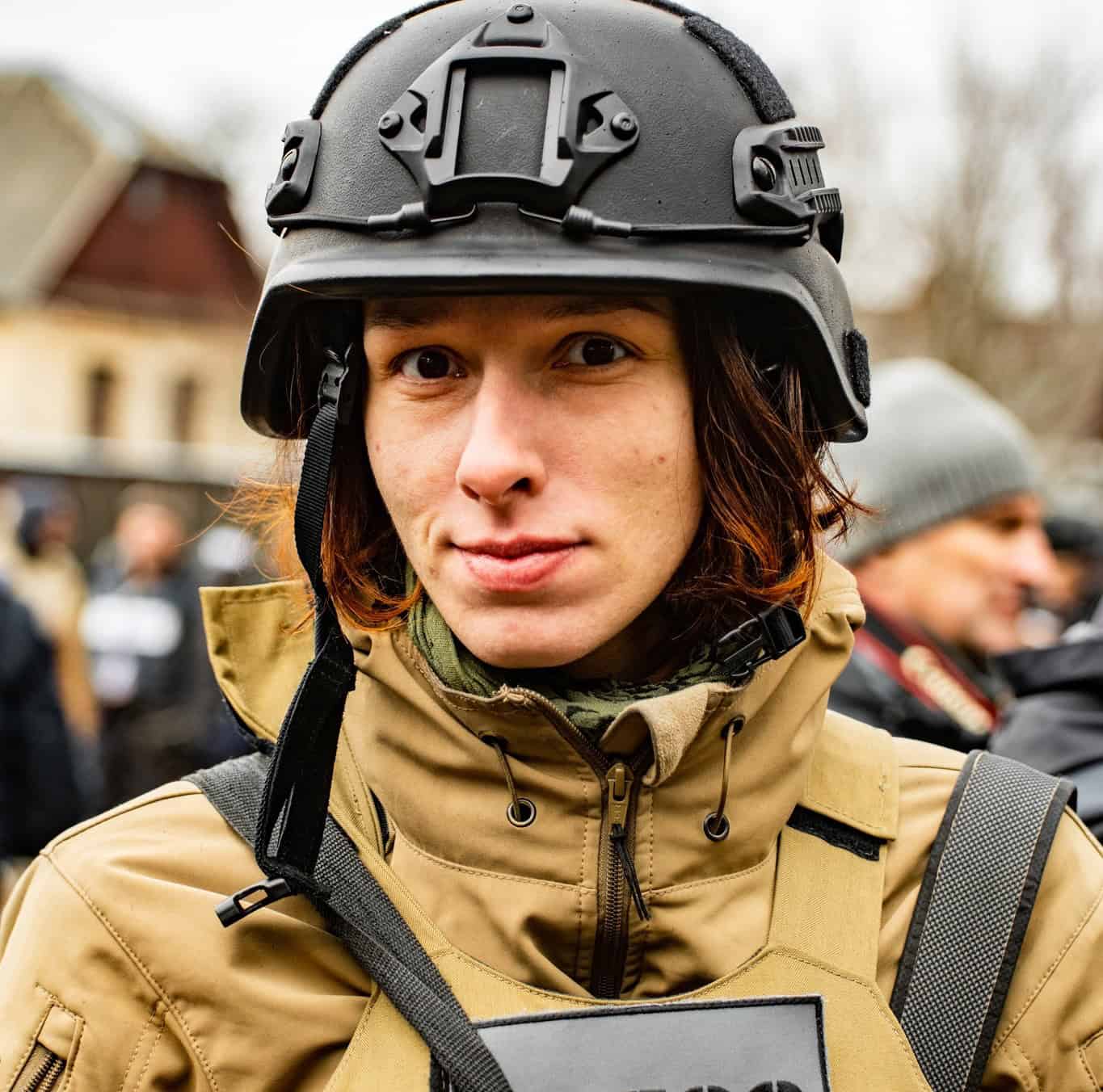
The instructions make me feel uneasy. Not from fear of being killed, but from fear of missing the threat and letting the group down. In case an FPV appears, you should scatter in different directions and hide in the bushes. The branches make a natural obstacle for a drone. The nets, which are built here and there above the road to make “tunnels”, also become an obstacle. The travellers are in full kit, wearing bulletproof vests and helmets. The guys keep their weapons at the ready. All of a sudden, a pickup with similarly geared up soldiers overtakes them –– they are smiling and posing for a photo.

It is that war which we haven’t internalized yet,
In the meantime, an old minibus is driving in our direction, filled with locals, mostly elderly women. One could think it is a surreal scene, a well-directed plot of an arthouse movie, but no. It is happening here and now to us.
“Did you turn on EW?” one of the soldiers asks him.
“Of course, don’t you hear it?” he answers and makes the rap music louder on the player.
Translator’s note: Electronic warfare (EW) refers to military methods used to jam, disrupt, or intercept enemy communications, radar, and drones.
At the best of times, Kostiantynivka was a kind of transit point between the front and the rear. Before the full-scale invasion, you could get here with the Intercity train. At the station, the military met you and drove to the positions. A few days later, they drove you back. Often we had to wait several hours for the train, and we could wander around the city. It was obvious how it developed despite the war or perhaps because of it. A nice place called Druzi (meaning Friends in Ukrainian) was opened. You could work there with coffee and good internet, browse books, and meet local active youth and foreign guests. There was also the decommunized park, which was called Yuvileyny and its Russian letters were rearranged to spell the word “Love.”

Here are the ruins of a glass factory transformed into an art space, where several festivals were organized. Here are comfortable modern restaurants, hotels, and shops. The railway station was full of military personnel who were returning home. You could also find there one of the most delicious chebureki in the world. Eating chebureki at the Konstakha station was a long-standing tradition, a must do for all journalists writing about the war. Without it, the report would be void.
Currently, the tour around the city reminds me more of the cemetery. Guided aerial bombs and artillery are reaching here, but the biggest threat is drones. Here is a gas station that burned down. It was the “center of civilization.” Even when it was too dangerous to be here, this place was always crowded, and you could always meet a friend. The soldiers were offered free coffee and hotdogs at the gas station. People would stop here to take off their bullet-proof vest and have some rest after being on a frontline. Now it is a burnt-out place and a zone of increased danger.
-
Destroyed railway station, Kostiantynivka, Donetsk region, Ukraine, June 19, 2025. (Olena Maksymenko/Frontliner)

-
Destroyed church, Kostiantynivka, Donetsk region, Ukraine, June 19, 2025. (Olena Maksymenko/Frontliner)


On the next stop, you can see the ruins of the railway station with graffiti and a destroyed church. You have to be really careful here. The drones on fiber optics often get here. You should stare at the sky until your eyes start to hurt. It seemed that there was an FPV above us, but the flying object turned out to be a bird.
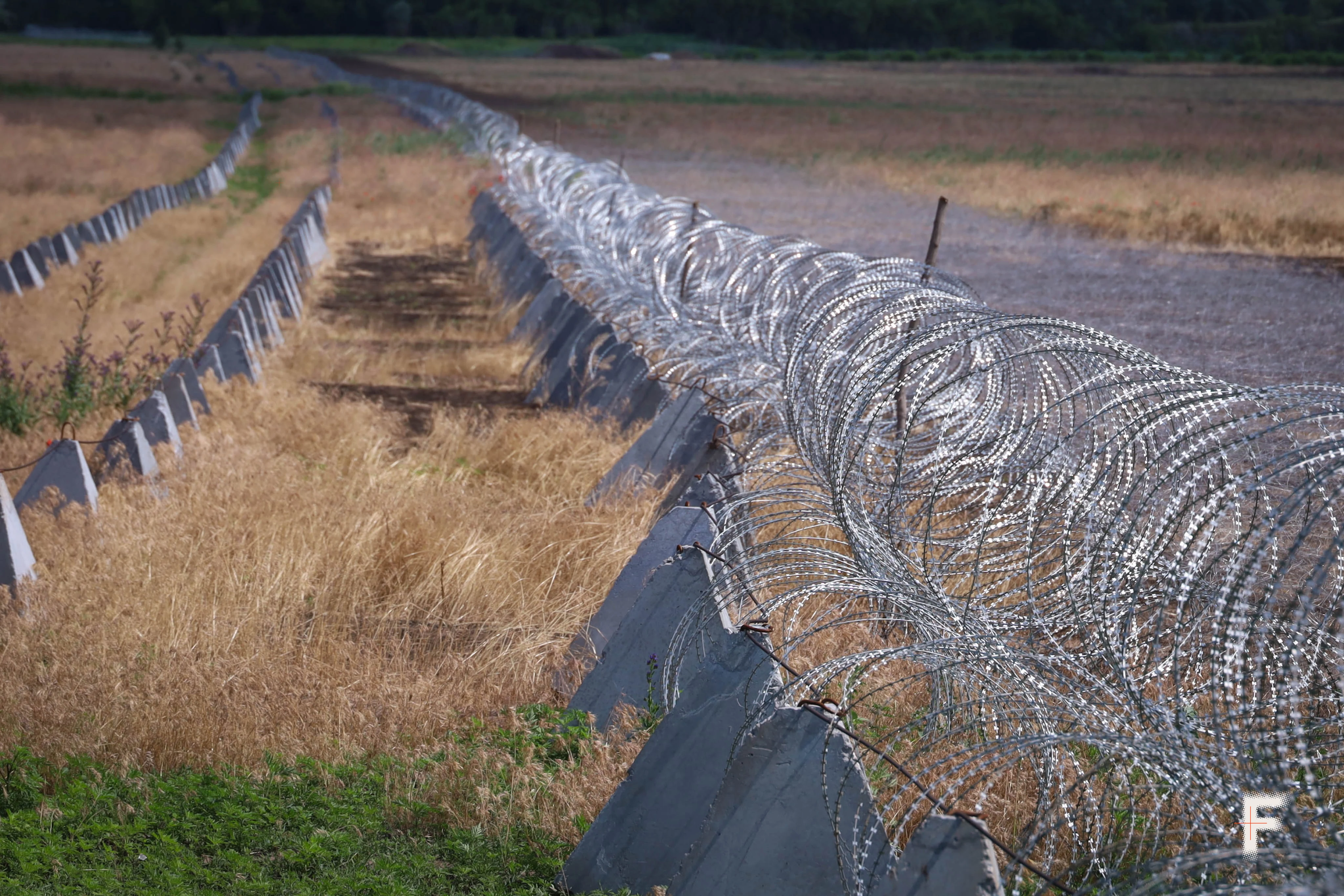
The road out of the city is a way to Bakhmut. It’s empty and surrounded by sand mounds.

“We were swimming here last year!” says Dmytro, one of the soldiers in our crew.
“The fuckers are 4-5 km away from here,” says Maks.
People are coming back. They wander around, and their money runs out.
Two-three months and that’s it,
If the city looks completely dead on the outskirts, there is still life and coffee in the center. The market is also quite crowded. People sell vegetables, cottage cheese, and milk.
There were 67 thousand residents before the full-scale invasion. Currently, there are a few left who either don’t want or can’t leave.
“Where should we go? – says Lida, a municipal worker who is resting in the park with her coworker. – People are coming back. They wander around, and their money runs out. Two-three months and that’s it.”

Thanks to her and her colleagues, a half-destroyed city stays clean and taken care of. Flowers are planted in the park. Although she looks over her domain with a critical eye, and says that the park doesn’t look as it should.
Next to the ruins of a high building, we hear an explosion. It’s the release of artillery. The sound is sudden and loud; it makes you shudder. The dog lying nearby does not react in any way.
Similar scenarios of a slow death of the city one could see more than once. Bakhmut, Avdiivka, New-York, Toretsk, the list goes on. With risky missions to evacuate people and animals. With ruins, the percentage of which exceeds the percentage of intact buildings. With infantry holding the city till the end, digging into the shattered earth. Love for cities is like love for people. For everyone involved in the war, military, volunteers, journalists, activists, the cities of the Donetsk region have become something personal over the years of fighting. They have overgrown with stories, memories, and associations.
Each new dot on the Deep State map is perceived as a personal loss. Despite the fact that the enemy concentrated all its forces in this direction, we want to believe that Kostiantynivka will stand. That one day we can return here without a bullet-proof vest and a helmet. That you can have coffee again at the petrol station, chebuker at the railway station, accidental meetings in Druzi space, and have festivals in the industrial zone of the plant. And of course, there will be people who make the city alive.

Adapted: Natalia Zvarych