
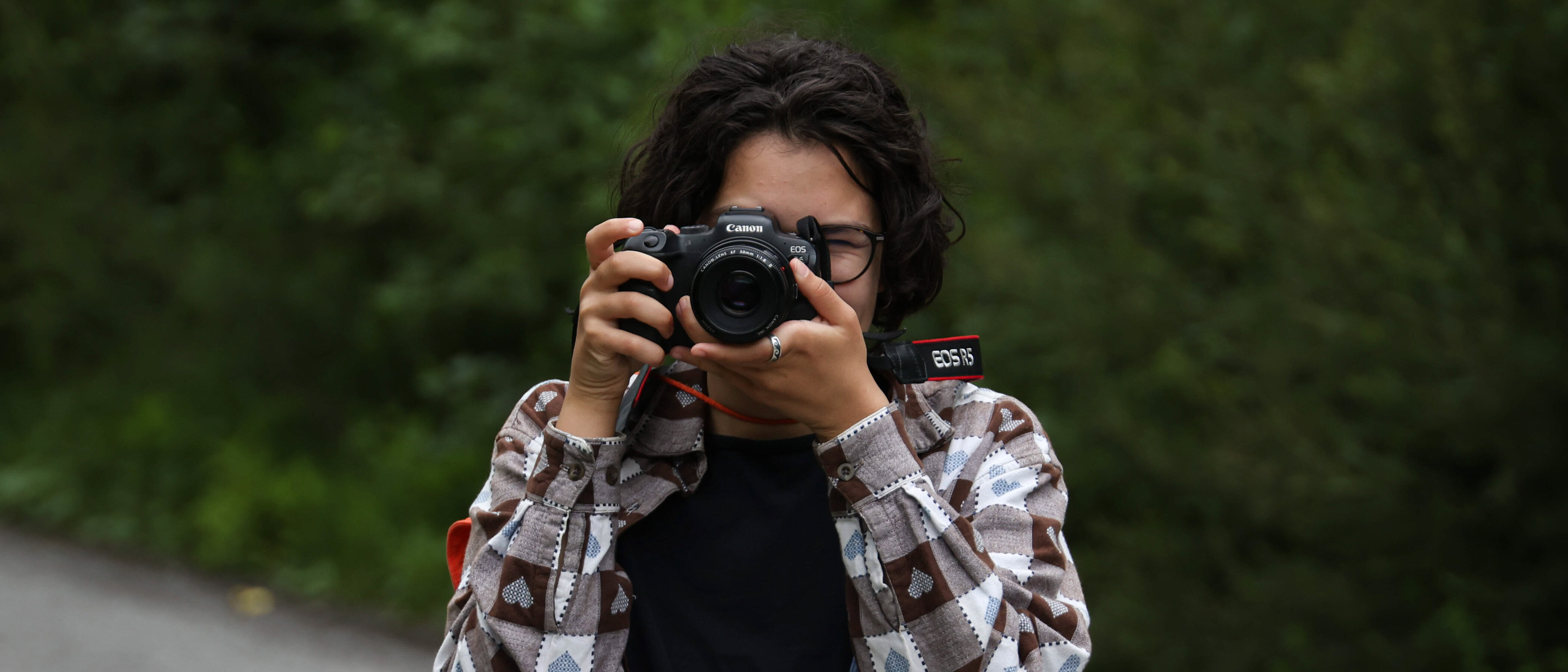
Journalism is a calling you carry with you for life
If journalism is truly your calling, you know it almost immediately. It feels like falling in love, as if everything falls into place despite the challenges, emotional uncertainty and tears. Frontliner reporter Diana Deliurman shares how her search for purpose led her to adulthood and eventually to war reporting.
I am a journalist because I cannot be anything else. And I cannot be anything else because I am a journalist. Journalism cannot be reduced to simple definitions like “a job” or “a profession.” It is more of a way of life. That may sound a bit grandiose, like something from the world of toxic productivity and performative success. But it is true.
When I fall asleep, the stories I’ve already covered play over in my mind. Walking my dog, images of the places I’ve seen resurface. Sharing a drink with friends, I hear echoes of my subjects’ words. You can’t simply switch off from this work or leave it behind. To paraphrase Hemingway, journalism is a calling that stays with you.
Sometimes I regret not choosing to become a journalist sooner. But just like meeting the love of your life, finding your calling isn’t easy. And it’s frightening to spend the best years of your life on something that isn’t truly yours.
So sometimes I play out an imagined scenario in my head, where I meet my mentor. I’m about four years old, playing in a sandbox. A person in hiking clothes, carrying two cameras slung over their shoulders, approaches me. They grab me by the shoulders, shake me gently, and say:
You won’t understand this now, but remember it!
You want to be a journalist. Start reading books about it
and take an interest when you’re older.
It would have significantly shortened my path to finding my calling. But the irony was that I didn’t even know such a profession existed. Although I loved writing and creating stories, and had already written a few short pieces, somehow in my teenage years a career in acting seemed more plausible.
This idea had been with me since elementary school and stayed until graduation from high school. I was lucky to have my mother, who supported my efforts and paid for lessons. But as I was preparing to apply to Karpenko-Karyi University at the start of my final year, I suddenly realized that it was all a mistake. That I didn’t want this anymore.
For me, it was truly a turning point. I had always known what I wanted. I had a clear plan for the next few years. But suddenly I felt completely lost. And I found this completely unacceptable.
I started weighing my options. Each new idea seemed to fill my mother’s eyes with more fear.
“Detective?” I suggested.
“No, you don’t understand. It’s not the kind of profession you think it is,” she said.
“Psychiatrist?”
“Worse!”
Soon after, my mother suggested, “Maybe you should try journalism? You’re creative, you care about justice. It suits you.”
At the time, I really didn’t like the idea. After Euromaidan, my mother had developed a habit of watching the news constantly on TV while doing chores or relaxing. It annoyed me. Politics seemed so boring, while the biographies of Van Gogh and Gustav Klimt were exactly what I was interested in.
In the end, I chose art history. I never imagined that this choice would change my life, although it would take me away from art itself.
At the history faculty, I began to change. I admit that until I was 20, I was narrow-minded. I wanted to move to Europe and forget Ukraine. But gradually, studying history, following the news, and reading thoughtful articles in quality media brought everything together. I realized that I had been searching for a way to leave a meaningful mark on the world, to make it better, and the opportunity had been right in front of me all along. That opportunity was helping to make Ukraine the kind of country I had dreamed of finding somewhere else.
This thought made me give up art history. I knew I could contribute to the study of art and the Ukrainian academy, but my youthful idealism demanded faster results. On top of that, I was unsettled by the statements of pro-Russian agents spreading disinformation about the Ukrainian language, the land market, vaccination, the church, the U.S., the EU, NATO, LGBT issues, and more. Any pressing issue, social trend, or even long-forgotten topic could be used as a tool for manipulation. Unfortunately, the rhetoric of pro-Russian forces resonated with parts of society.
Then a miracle happened. I realized I could act here and now. I could work in journalism and tell the truth. That was when I finally understood that a war was raging in Donbas. I felt ashamed that I hadn’t understood it sooner. To close the gap, I devoured everything I could find about the conflict –– films, music, podcasts, and, eventually, documentaries. Over time, I developed empathy for other nations caught in war. I began reading about the experiences of people in Bosnia and Herzegovina, Georgia, and Syria.
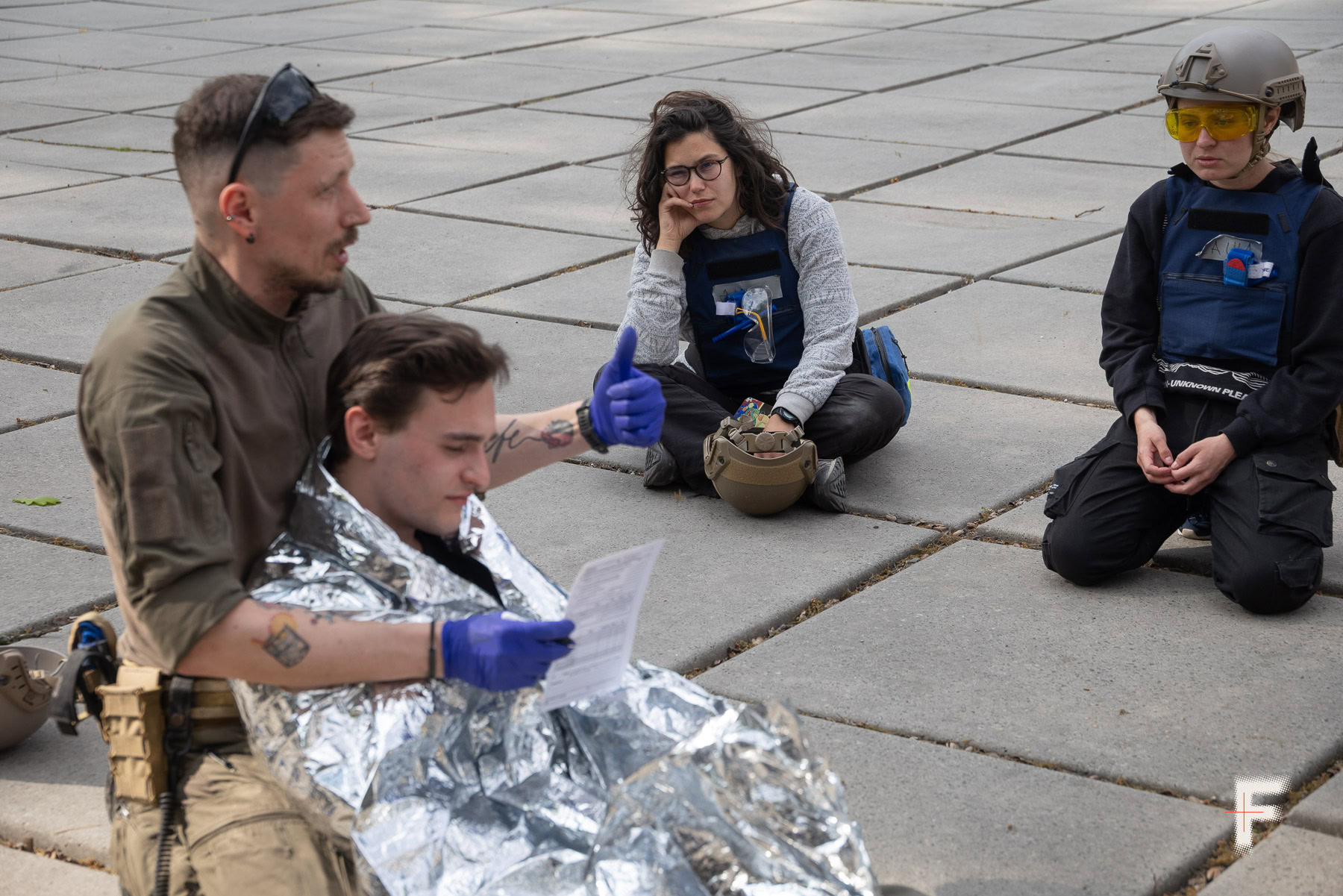
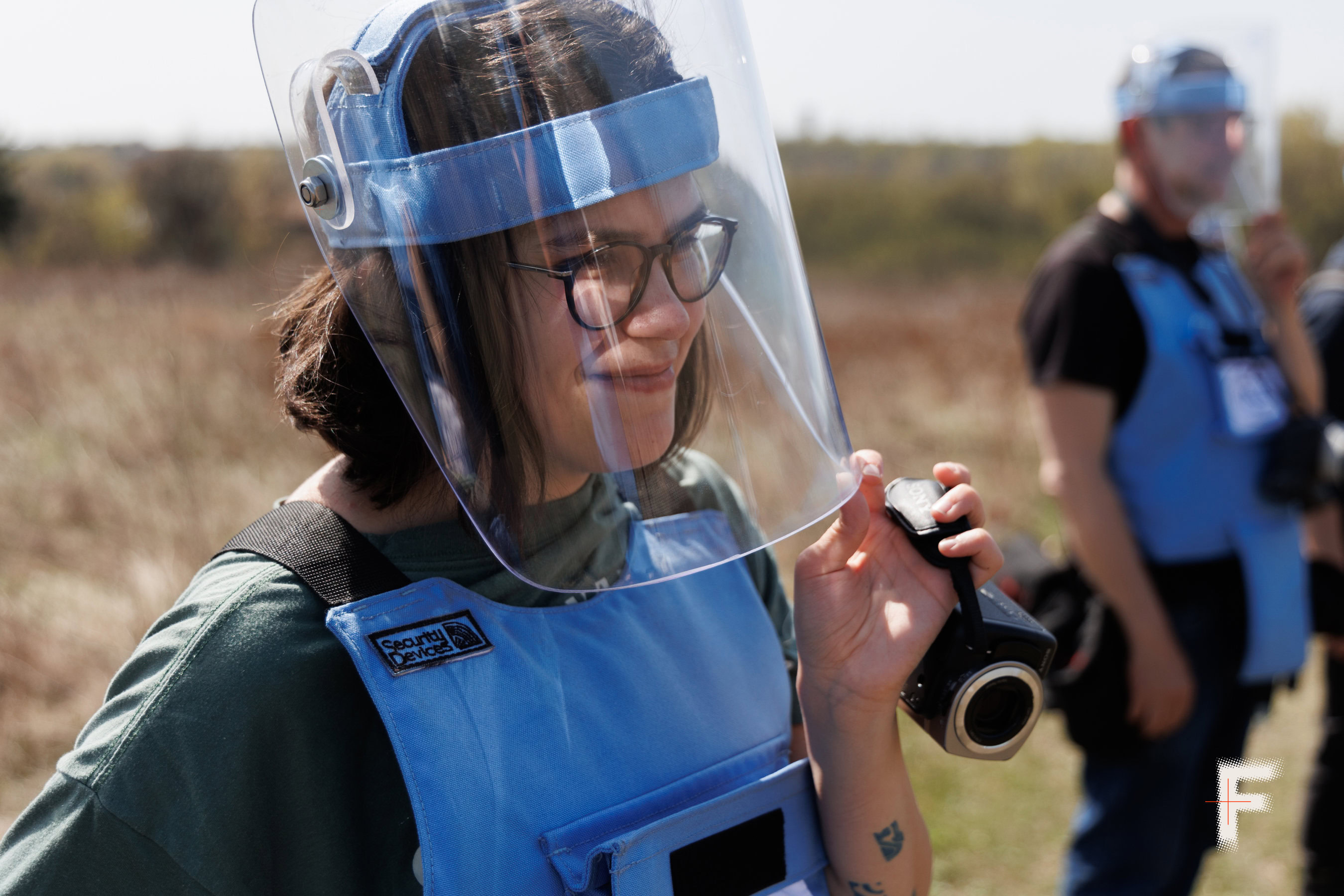
Soon, I enrolled in a military training program to be ready for a full-scale Russian invasion. I also wanted to prepare myself to report on the war professionally.
In the summer of 2021, I participated in a program for young journalists organized by the Souspilnist Foundation and landed an internship at the Kyiv bureau of Radio Free Europe/Radio Liberty. I chose to work with Tetiana Yakubovych, head of Donbas.Realities. While I was writing my first real articles, a tall man approached me in the newsroom. He had blue eyes, one pupil larger than the other, and an earring in his ear. He looked cool. He said:
“Hi, I’m Andriy. I founded my own media outlet, Donbas Frontliner. Follow us.”
Maybe he was the mentor from my imagination. Three years later, we met again, as I began working for his media outlet, which had since dropped “Donbas” from its name, reflecting the grim reality that the war had spread far beyond that region and engulfed all of Ukraine. By then, Andriy was no longer working with just a few colleagues, but leading a large team of reporters, editors, and back-office staff.
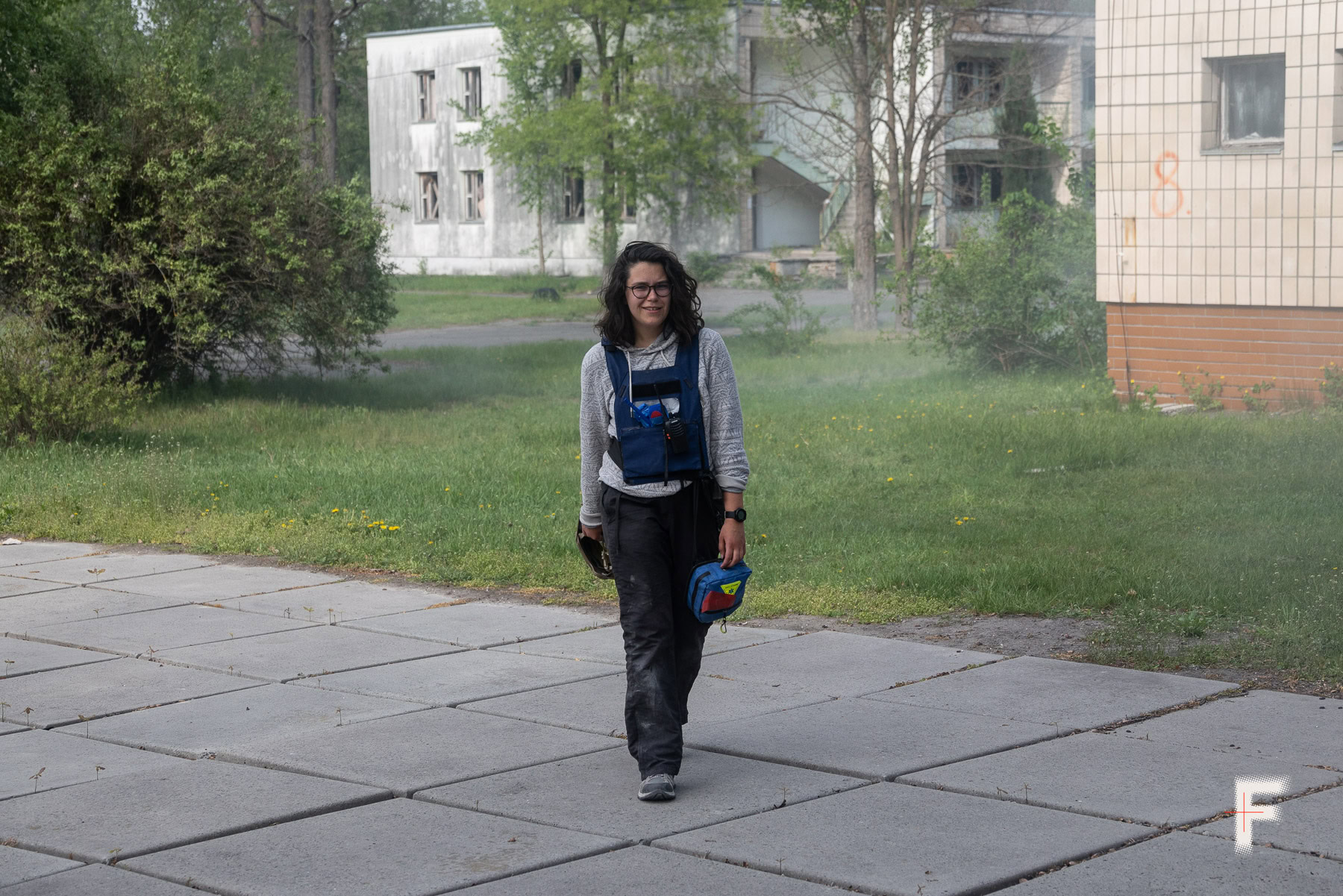
That’s how I found myself in war reporting, a field defined by lifelong learning. Continuous education is essential for a war correspondent, because the war itself forces us to adapt as conditions constantly change. Now we sharpen our skills reporting under drones in the “kill zone” and build not only emotional resilience but physical endurance, since sometimes you can’t truly witness the war unless you reach it on foot.
This story could almost be distilled to a Hemingway-like minimalism: “Mom was right.”
Adapted: Irena Zaburanna

