Frozen motherhood: How the war forces women to put themselves on hold
Since 2022, a growing number of women, particularly those serving in the military, have been turning to egg cryopreservation, says reproductive medicine clinic director Liubov Mykhailyshyn. The procedure increases a woman's chances of becoming a mother during a less turbulent time than the one Ukraine is currently experiencing. Women who have decided to preserve their chance at motherhood tell Frontliner reporters they hope to have children after the war ends.
The clinic is as cozy as a medical facility can possibly be. Mostly women are waiting in the hallway, but Liudmyla stands out from the rest in her military uniform. Wearing pixelated camouflage, she looks younger than her 36 years.

At one point in her life, she decided that if she had not found a partner and become a mother by 34, she would freeze her eggs. When the full-scale invasion began, Liudmyla pushed that thought aside and volunteered for the armed forces. Although she does not serve directly on the front lines, health and safety risks still accompany her in her line of duty. Exposure to electronic warfare systems, intense stress, and sleep deprivation all reduce her chances of getting pregnant. Time passes, and adapting to new realities takes its toll, while the possibility of having a child someday feels increasingly distant. Consequently, motherhood is postponed to an indefinite “later,” waiting for a time when the world becomes a safer and more stable place.

Liudmyla traveled to Lviv from her post in the Sumy region to get her medical screening. In a few weeks, provided her command grants her leave, she will proceed with the next stages of the egg cryopreservation process.
Egg freezing
To freeze an egg, the natural fluid inside it must be replaced with a special solution. The cell is essentially suspended in time and can be used later. A similar procedure is carried out for men by freezing their sperm.

“With women, it is much more complicated. But they are also out there on the front lines,” says reproductive specialist Liubov Mykhailyshyn.

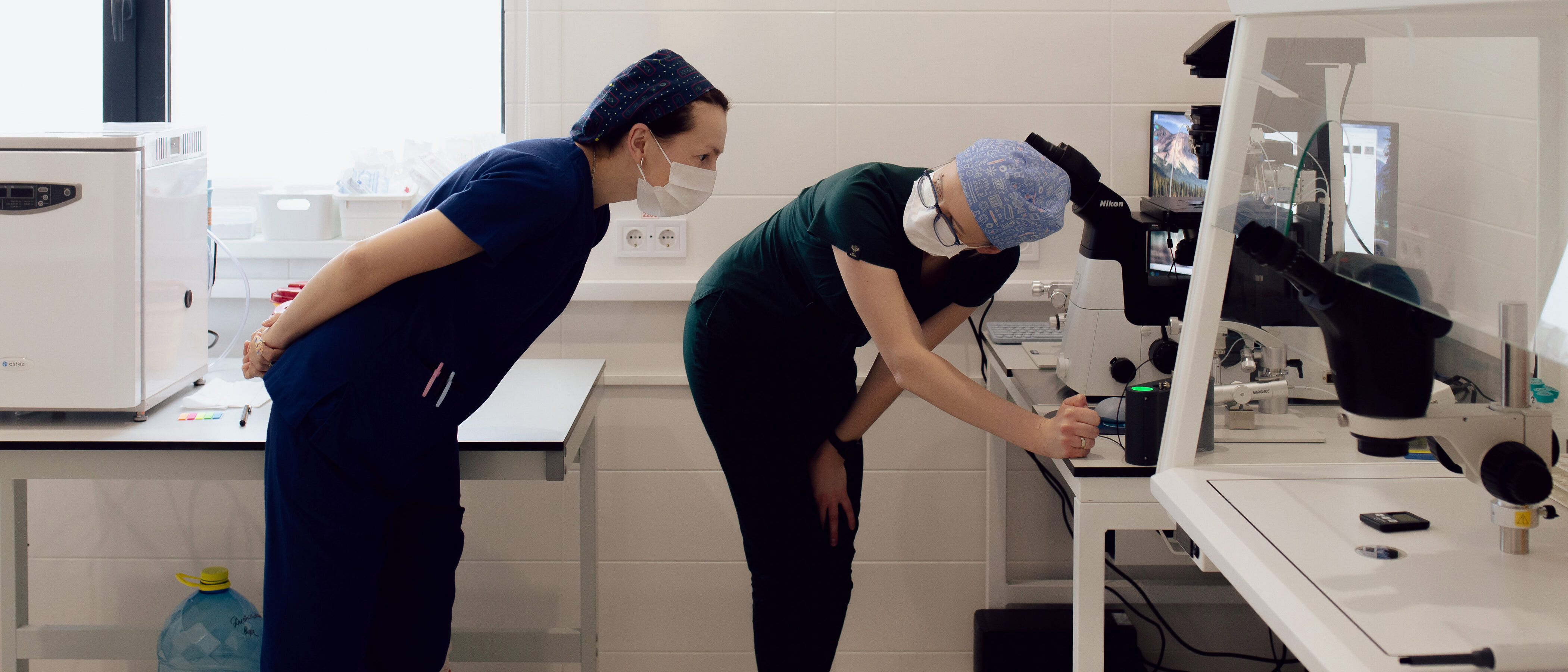
In her clinic, she has created the necessary conditions for military personnel to undergo these freezing procedures. For men, taking a single day off from their deployment is enough to complete the process. However, freezing eggs requires first undergoing a medical examination, doctor consultations, and therapy.
The therapy, which involves hormonal stimulation, lasts about two weeks and increases the number of mature eggs from 1 to between 5 and 10. Egg cryopreservation in Ukraine costs approximately 60,000 hryvnias. Thanks to a grant, freezing and storing reproductive material is free for military personnel.

Delayed motherhood and delayed life
Olha Konoval is a volunteer, public activist, and advisor to the head of the Ternopil Regional State Administration. She says she dedicates herself entirely to supporting the army and youth projects, constantly finding new ways to raise funds. Her husband, Serhii Konoval, was killed in 2024, and Olha established a foundation in his name. The immense workload took its toll, and she began to notice her health failing her more frequently. Consequently, she decided to undergo cryopreservation. The unpredictability of the future was another major factor, Olha notes.
We live in a world where we do not know what tomorrow will bring.
It is just like saving money for a rainy day,

Despite the complexity of the egg freezing procedure, women are increasingly using this method to postpone motherhood. The war has altered plans and forced many to doubt their own future. This uncertainty triggers delayed life syndrome, a psychological state where important decisions or the realization of plans are pushed back to an unspecified “after,” such as the end of the war. Ultimately, egg cryopreservation safeguards the very possibility of having a child.

The cryopreservation of reproductive material is available at clinics in major cities, including Kyiv, Lviv, Odesa, Dnipro, and other regional centers. Egg freezing for female military personnel is funded by the National Health Service of Ukraine (NHSU) and takes place at clinics contracted by the NHSU. These include the Nadiya, Parens-Ukraine, and Mother and Child clinics, among others.
Women can also undergo the procedure for free at private clinics through specialized projects. One such initiative is “Save Your DNA for the Future,” which is funded by the United Nations.

To freeze eggs, a woman must undergo a preliminary examination, hormone therapy (lasting 10 to 12 days), and a retrieval procedure. Afterward, the eggs are frozen and stored until she is ready to become a mother.
***
Hi, we are Yuliia and Anna, the authors of this article. Thank you for reading to the end.
Every story starts with your support. Join the Frontliner community so we can keep up documenting Russia’s war against Ukraine from the front line and the rear.
***