Rescuers: how the East SOS evacuation mission operates in Donetsk
Being under fire is terrifying. But it is many times worse for a bedridden person who cannot make it to a shelter or leave a dangerous city on their own. People with limited mobility rely on family, social services, and rescuers, and a single mistake or delay can cost them their lives. When state relocation mechanisms cannot keep pace with the war, volunteer and humanitarian missions fill the void. Frontliner spent a day with the East SOS brigades, observing evacuations at various stages.
War hits the most vulnerable hardest. Shelling and strikes lift the veil of invisibility from those whom most people normally overlook. A person in a wheelchair, or bedridden, cannot make it to a shelter, let alone evacuate on their own. Police units, foreign volunteers, and non-governmental organizations step in to help.
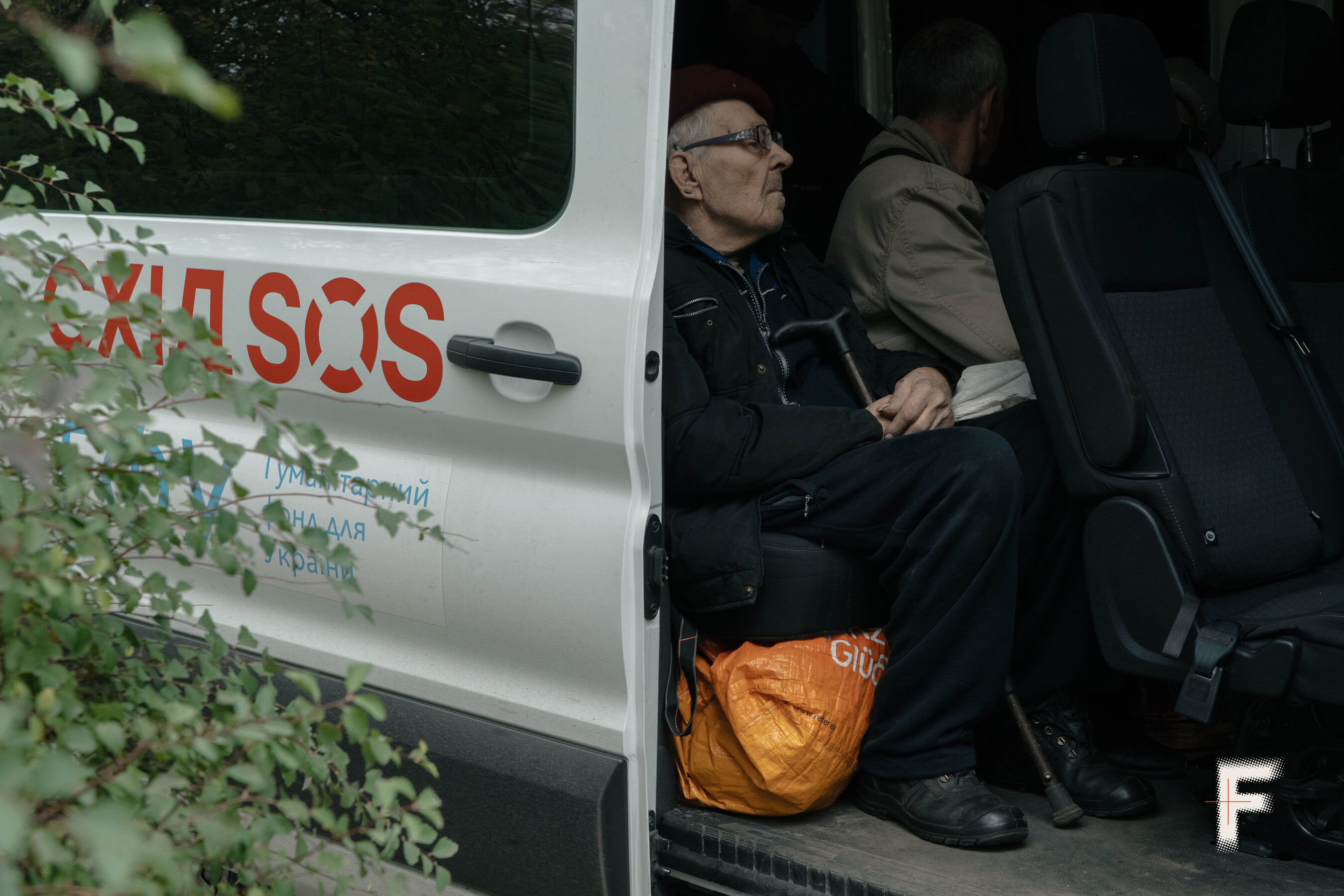
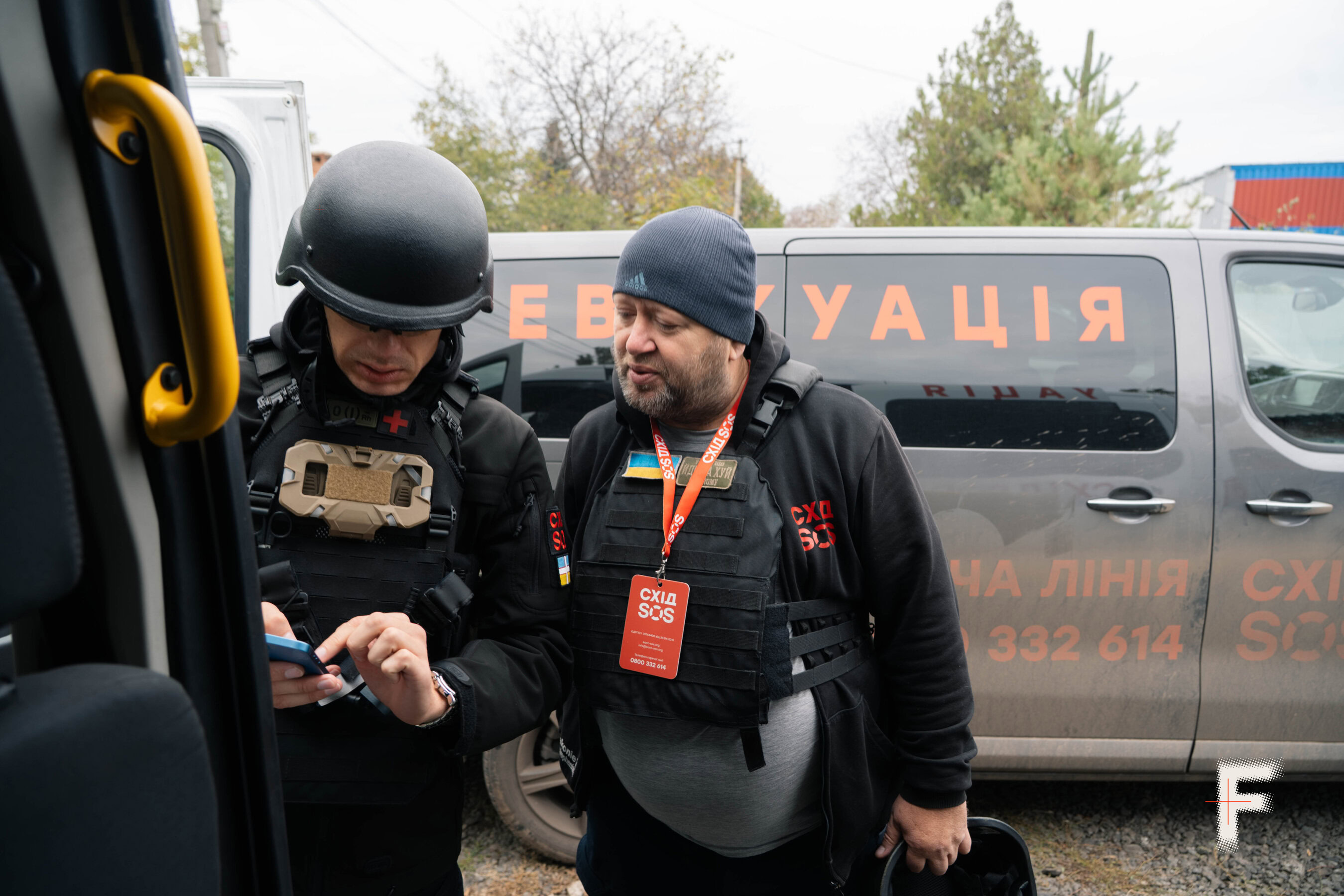
An evacuation van from Kramatorsk heads toward frontline Druzhkivka. Strikes on the city have become more frequent, and entering is difficult due to the curfew, which runs from 3:00 p.m. to 11:00 a.m. Those helping with evacuations know exactly what their passengers are going through – the foundation’s staff themselves come from occupied territories. Vladyslav Arsenii is from Donetsk, and Eduard Skoryk is from Bakhmut.
The seats of the van are covered with pet hair. Rescuers never turn away people traveling with animals. Once, they evacuated a mother and daughter along with seven cats. Recently, they helped a family with three dogs and five cats. However, traveling with pets is only possible by arrangement – state relocation programs do not accept people with their animals.
People most often stay under shelling because they cannot afford rent and have no friends or relatives to take them in. Rescuers confirm that no central state relocation program exists, yet there are always options for those with nowhere to go. Regional administrations provide dormitories or repurposed schools as housing. Not exactly luxury accommodations, of course, but far better than facing death from incoming shells.
“Cities change, and so does the situation. A community sets up a spot, people are brought there, and once it fills up, they say, ‘That’s enough for now,’ and then we look for another community,” Vladyslav explains.
Just getting a person from point A to point B isn’t good enough,
There are transit shelters where people stay while awaiting state relocation. Those who cannot care for themselves are placed in private shelters or nursing homes. There are also programs abroad: people who can manage on their own may find refuge in Norway, while those in need of medical care can go to Germany.
There are specific challenges related to transporting people. Rescuers keep up the pace while skillfully avoiding potholes on rough roads. Eduard explains that the blood vessels in a bedridden person’s brain are much more fragile, and this must be taken into account:
“If the head is turned to the left, you can’t suddenly turn right, as the blood flow to the brain could cause a stroke. If the head is facing forward, you can’t brake abruptly; it’s basic physics. Just getting a person from point A to point B isn’t good enough,” the driver explains.
In demand: pizza, drones, and faith
Evacuation missions experience periods of calm as well as high-pressure periods, depending on the course of the war. According to Vladyslav, the current stage is moderate: “The most recent operation was an evacuation from Dobropillia during an increase in attacks. People left Dobropillia very quickly. Now Druzhkivka is starting to evacuate,” the rescuer says.
He adds that currently, they evacuate 10 to 15 people per day.
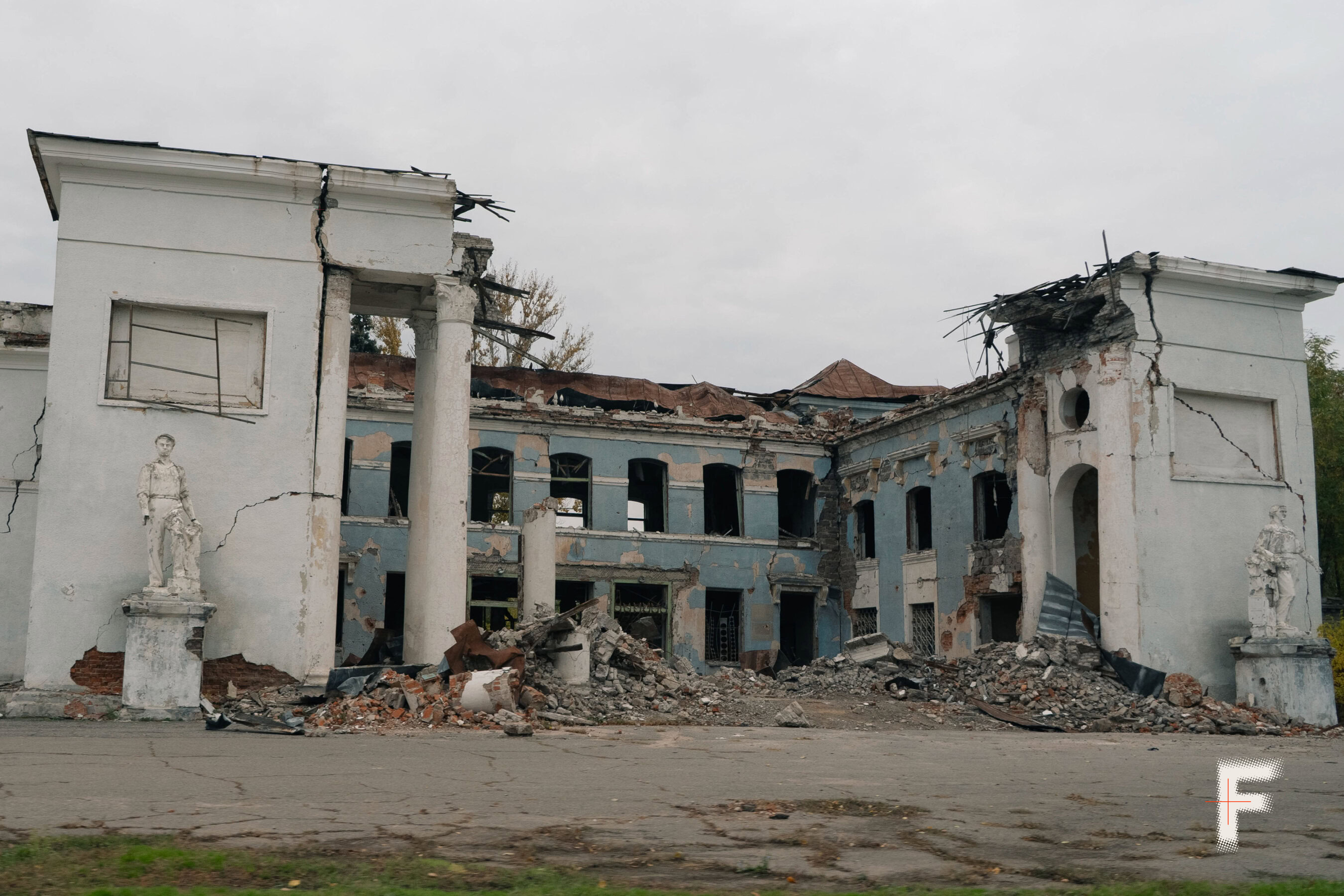
The van enters the city. Rescuers point out the “fresh” strikes and note that requests for help often come from areas near recent explosions. Some ruins are still smoldering.
Eduard points to one of them:
“This community center was hit while I was here. People fell, there were fatalities. A tram comes along – people get on and go…” he recounts, describing the daily life of the city.
Vladyslav is calling people on the list:
Hello, this is East SOS, evacuation mission. Are you ready?
We’ll be there in five minutes.
The notices at the entrance of the building catch the eye with their contrast: “I want pizza!” and “I’ll buy drones in any condition.” In the hallway, a window has been broken and covered with plastic, and next to it are a few religious pamphlets. Pizza, drones, and faith – that’s the main supply and demand around here.
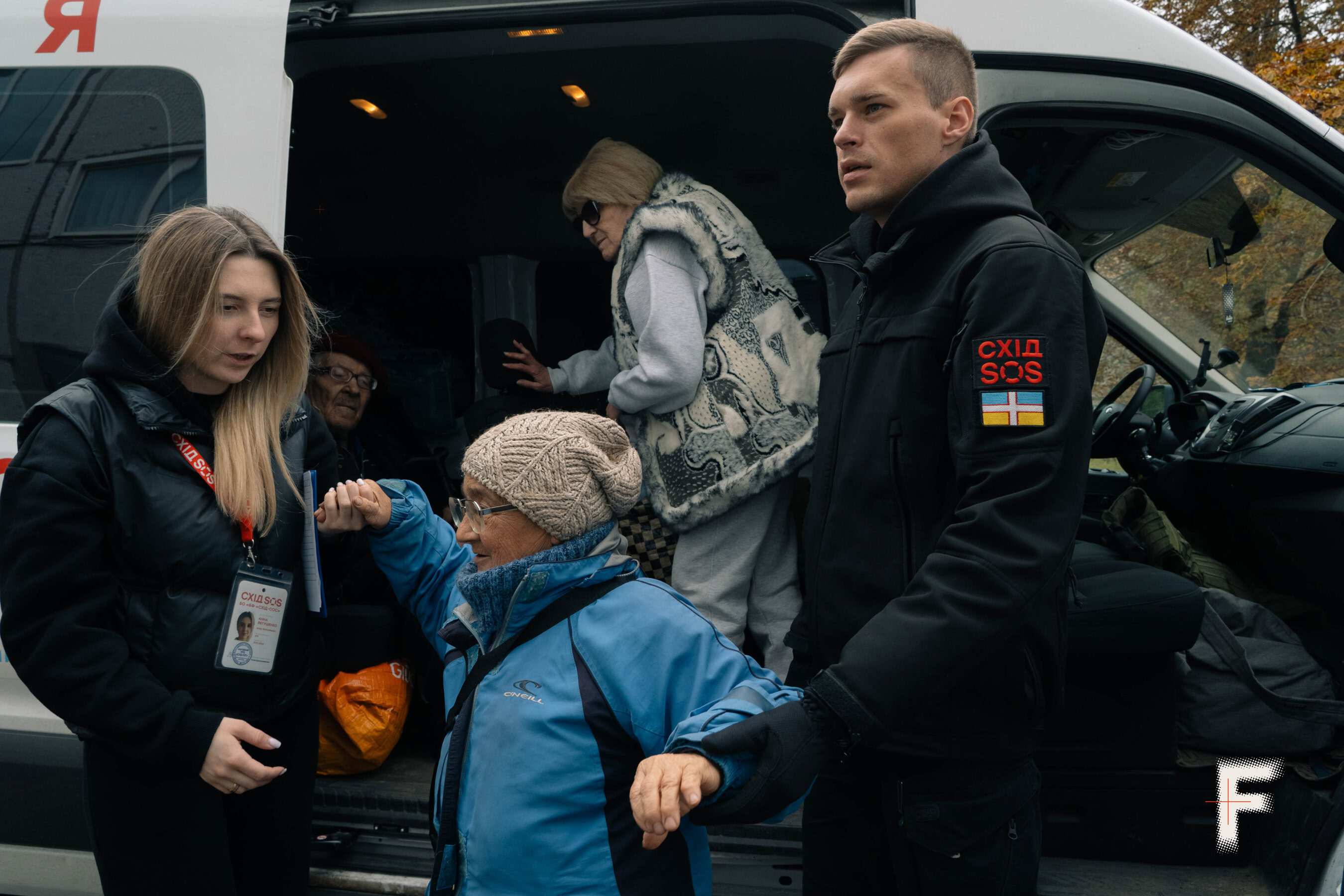
Valentyna and Oleksandr Pytkin get into the van. First, they will be taken to a temporary shelter in Lozova, and from there they will travel to stay with friends in the Poltava region.

Oleksandr emotionally recalls one of the recent attacks:
“We were terrified when Shaheds were flying last night! They dive straight for a house – you don’t know where it will strike. It hit somewhere right around here!” he says.
“Better to leave, don’t you think?” his wife repeats, asking.
The couple are retirees, though the husband worked at a factory until recently. Special wartime passes were not issued to employees, so he had to take detours to get to work, avoiding law enforcement.
Half of the city’s shops have closed, yet despite the constant danger, many people still remain in Druzhkivka, including children. Oleksandr believes this is due to prejudice toward residents of the Donetsk region:
“Because not everyone can leave, no, really! How are you supposed to pay for an apartment? They skin us alive. If you say you’re from Donbas, they won’t even talk to you!” the retiree claims.
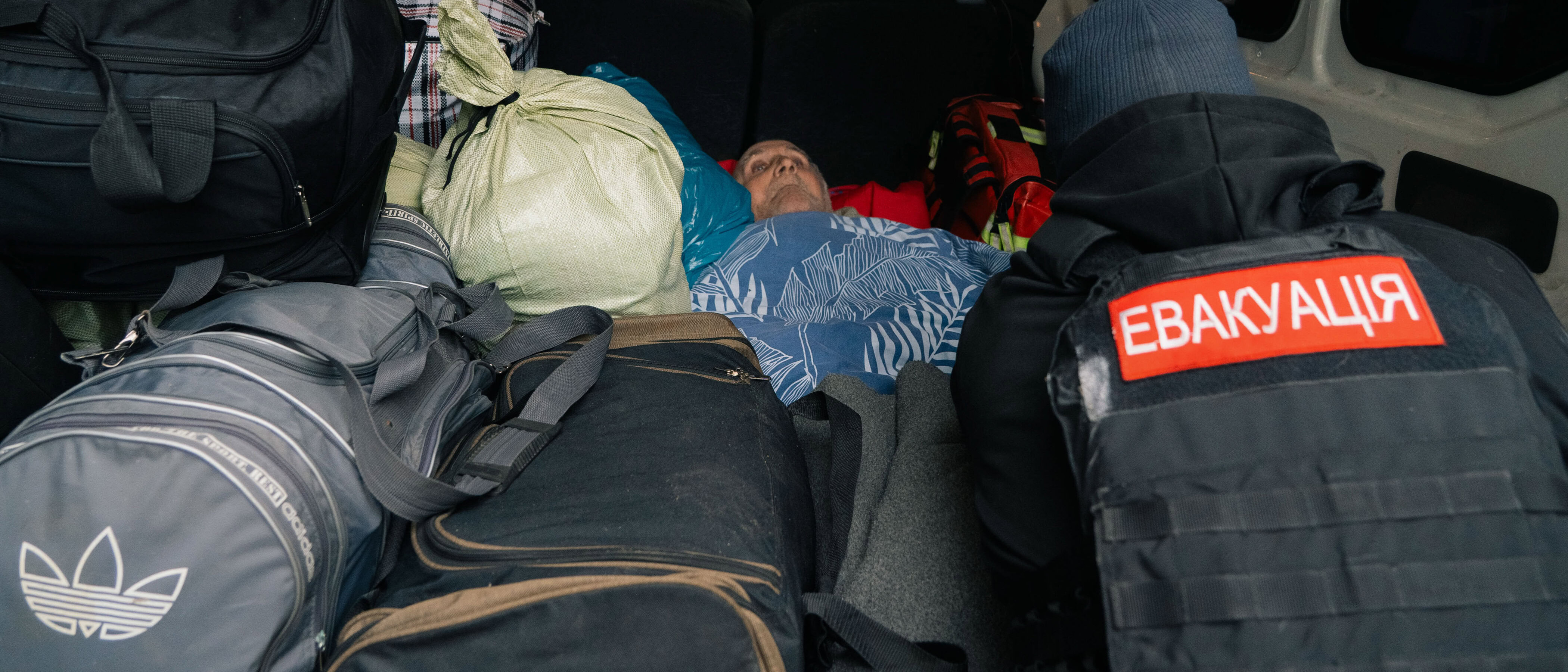
At the next stop, a bedridden man and his wife are waiting. The couple has ignored the foundation’s “three bags per person” rule. Their belongings total at least fifteen bags – far more than can fit in the vehicle along with all the people. Unwilling to leave anything behind, the family chose to postpone the evacuation. It later turned out that the next couple scheduled for evacuation had already mailed their belongings ahead via Nova Poshta, physically bringing with them only the essentials. With space freed up in the vehicle, the rescuers returned for the previous couple. The man is placed on a stretcher in the rear compartment, surrounded by the soft bags. His wife says he has been unable to walk for fifteen years. Some of their belongings had to stay on her lap during the ride. The couple is bound for a nursing home, stopping first at a temporary shelter.

After picking up the evacuees from Druzhkivka, the van returns to Kramatorsk. The rescuers split up: Eduard drives the evacuees to transit shelters in Pavlohrad and Lozova, while Vladyslav heads to Novodonetsk to meet with the police, who will transfer people from a more dangerous area.
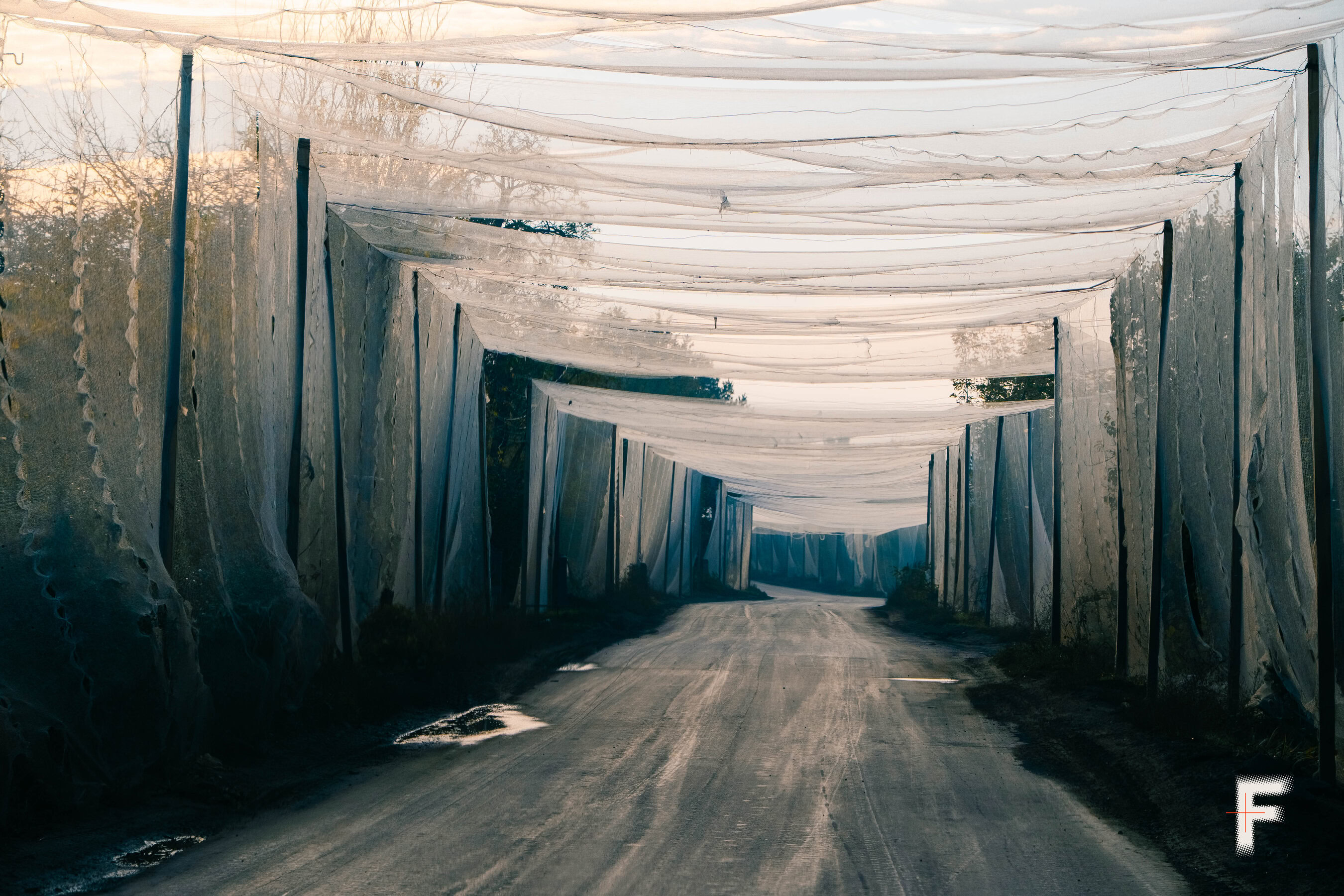
The roads of Donetsk region resemble the setting of the game S.T.A.L.K.E.R. Anti-drone nets often stretch across them. Along the roadside are the charred skeletons of burned-out cars, some still smoldering. Against this backdrop are well-kept houses and gardens, with harvested crops.
The long road encourages conversation, and Vladyslav shares that East SOS was founded in 2014 to assist internally displaced people. The core of the organization was formed by activists from the Luhansk Maidan. Many evacuations are carried out in collaboration with other humanitarian missions, police, local administrations, and churches that help with housing. The foundation also rebuilds damaged homes, provides humanitarian aid to those in need, assists schools, documents Russian crimes, and offers legal, social, and psychological support. The evacuation program was added with the start of the full-scale invasion.
“For some, home is an anchor”
In cities without reliable communication, such as Kostiantynivka, evacuation requests come from relatives. According to Vladyslav, about a quarter of such people refuse to leave when the rescuers arrive:
“This happened in Bakhmut. There was a plan to evacuate 100 people, and the church asked us to help. Our team held a kind of council: how would we manage it? There wasn’t enough transport. I said, ‘Wait! This is an ‘official’ list, submitted not by the people themselves, but on their behalf!’” In the end, only 45 out of the hundred left.
In another case, a daughter submitted an evacuation request for her elderly father in Bakhmut. When the van arrived, he refused to leave. The rescuers recorded his refusal on video as proof that they had tried to carry out the request. Two weeks later, the same woman submitted another request for her father. His house had been destroyed, and this time he agreed to evacuate. Vladyslav explains:
For some, home is their anchor. And when they realize it’s gone,
that’s when a person finally lets go,
Rescuers try to persuade those who refuse to leave, well aware of a scenario that, unfortunately, often repeats itself. Over time, the situation worsens, and constant danger takes its toll. People may finally be ready to evacuate, but by then, getting into the city is virtually impossible.
Most roads are totally destroyed, completely bombed out,
“She buried her husband and left”
In Novodonetsk, Vladyslav’s van waits for the crew of the White Angel, a police unit that drives armored vehicles closer to the front line. Up to ten people were scheduled for evacuation, but only seven are being evacuated.
Hennadii Yudin, a major in the White Angel police unit and a native of Avdiivka, describes today’s mission:
“Today, we carried out a planned evacuation from the village of Hryshyna, in the Pokrovsk area. People had been waiting a week for evacuation. There were seven in total, and everything went smoothly – they gathered at a single address when we arrived, and we quickly loaded them. Most roads are totally destroyed, completely bombed out, so we had to take dirt backroads to reach the people. They are now in a safe location, where we hand them over to our partners at East SOS. From there, they will either go to relocation sites or to relatives,” Yudin says.
Streets were heavily hit by shells, and houses were flattened to the ground,
A few days earlier, a White Angel vehicle was attacked by an FPV drone while returning from Kostiantynivka. Thanks to its armored exterior, everyone inside escaped unharmed, though the vehicle is now in for repairs. Hryshyne lies about eight kilometers from Pokrovsk. The police officer describes the situation in the area:
“In just a week, the situation completely changed – streets were heavily hit by shells, and houses were flattened to the ground. One week ago, a woman and her husband were hit by an aerial bomb and the husband was killed. She buried him and left with us,” says Hennadii.
Passengers load their belongings into the East SOS van. People cry, laugh, and hug each other. Some smoke, others take photos with the police. One woman has her arm in a bandage. Everyone tries to get a cellular signal to let their relatives know they’ve left. According to the people, about 200 residents still remain in the village. Among the passengers is an employee of the last store still in operation.
Everyone barely fits into the minivan. As it moves, people continue trying to get a signal to call their relatives. One passenger sobs quietly:
“My ducklings… my Malysh stayed behind…”
Halia, our house is gone,
While the evacuation was underway, their home was destroyed by a shell.
The evacuees are taken to Oleksandrivka, a neighboring village where the humanitarian mission Proliska is based. People are seated and offered food and hot tea. One woman has her blood pressure taken, while another, possibly suffering from low blood sugar, is assisted by a medical worker.
Broken lives and bones
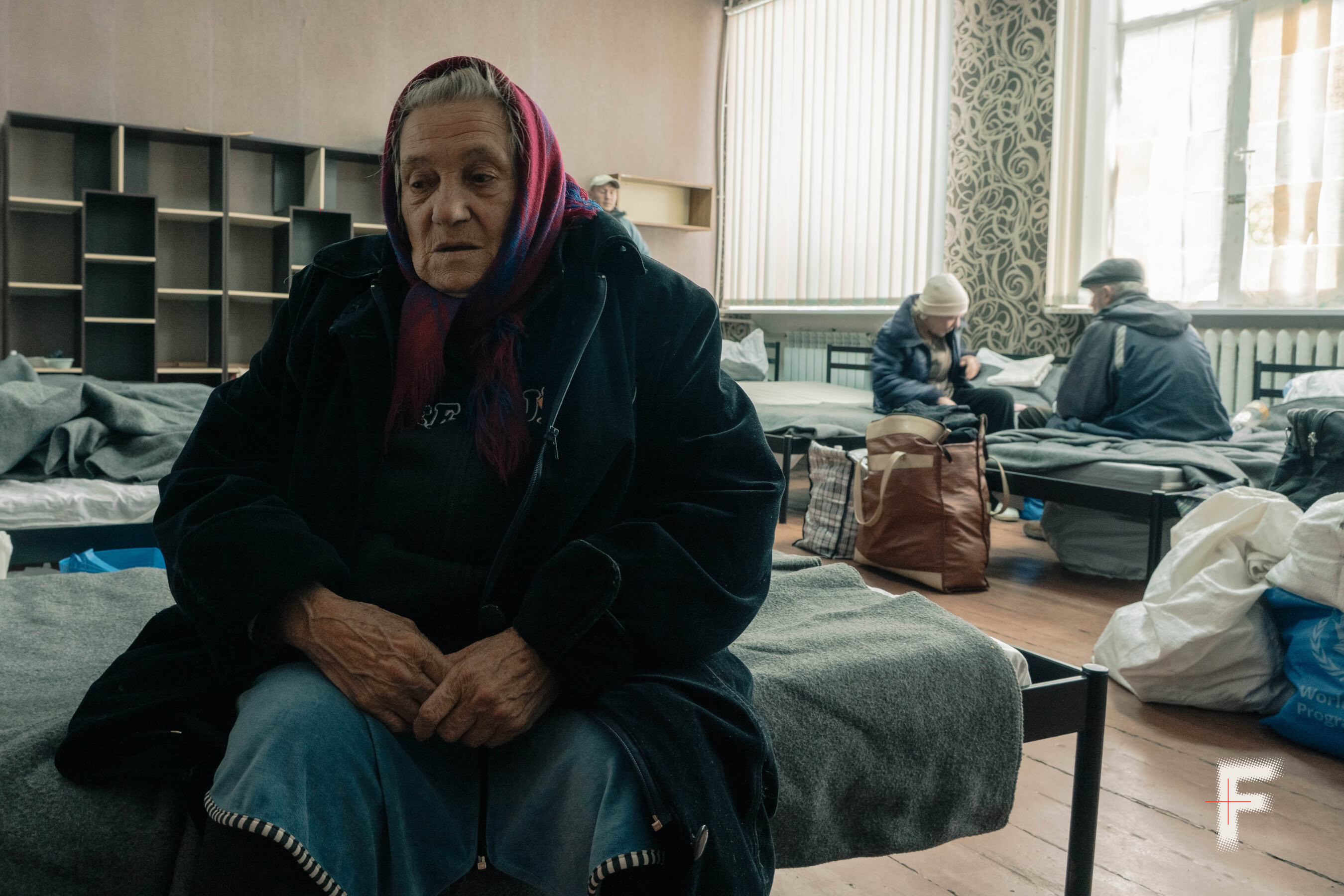
Meanwhile, Eduard is transporting evacuees from Druzhkivka to transit shelters. The first stop is a temporary shelter in Lozova, a repurposed school, with rooms accommodating up to six people each. The passengers are unloaded quickly.
In one of the rooms lie two elderly men, both from the village of Riznykivka near Siversk. Seventy-five-year-old Mykola Hryhovorych has a disability and multiple fractures. He sobs:
“Give us back 2010! In 2014 my mother died, and the war started – everything just spiraled from there! No home, no apartment, no garage, no car – nothing! Just us – me and Serhii Ivanovych, from the same village. We cry to each other. We’ve come to this… We’ve been lying here for a week. I asked to go to a care home because my leg is useless. My arm is broken, my pelvis is broken – I’m broken all over. And he is using a walker,” the man laments.

Last night, two rockets and four bombs hit. The apartment is destroyed.
Mykola Hryhovorych was evacuating with his 39-year-old son. However, they were stopped at a checkpoint – the son had an outstanding warrant for failing to update his military status records. The elderly man insists that, as the caregiver of a person with a disability, his son should not be subject to mobilization, but it is currently unclear whether he really holds this exemption status. The man also has a daughter and grandchildren in Novomoskovsk, but he lost their contact information when he got a new phone. A foundation staff member is asking for details to try to locate her.
From here, people are usually sent to Kropyvnytskyi or Odesa. Mykola Hryhovorych will most likely be headed to the second destination.
The man continues to mourn his losses:
“It’s so sad. They destroyed our village, Siversk, Kirovka, Riznykivka… Last night, two rockets and four bombs hit. The apartment is destroyed. My parents died, and I moved into their house. The house was destroyed – Serhii Ivanovych, Vovka, and I were in the bedroom. When it hit… dust everywhere, everything shattered! Everything!” shares the evacuee.
Near another shelter in Pavlohrad, large tents have been set up as a dining area. One of the residents, 79-year-old Nadiia Datsko, speaks about her stay with appreciation:
“So grateful, they fed us, gave us beverages… They said they would give me a walking stick… Such attentive people, very kind,” the woman says.
She evacuated from Pokrovsk to Serhiivka and lived there for a year. She was then forced to leave, and Serhiivka had also become unsafe. So she moved here and is now waiting for state-assisted relocation.

Train from the war
The rescuers return to Kramatorsk, where another mission awaits them – helping a family board a train with a mobility-impaired woman. Liudmyla Poltavets, along with her husband and mother, are heading to Kyiv, where her children will meet them. Liudmyla says that the children have rented a house for them in Boryspil.
Her mother has not been able to walk for ten years. She is carefully lifted into the van, and they set off. The train station is dark and unusually empty. Everyone waiting for the train sits in their cars at a distance. The rescuers explain that the station has been hit multiple times, so people try to spend as little time there as possible.
Liudmyla shares that life in Kramatorsk has been tough since 2014:
“We lived here, while working and during retirement… our whole lives…” the woman opens up.
She hopes that life in the Kyiv region will be better for them – at least calmer, and with more chances to see their children.
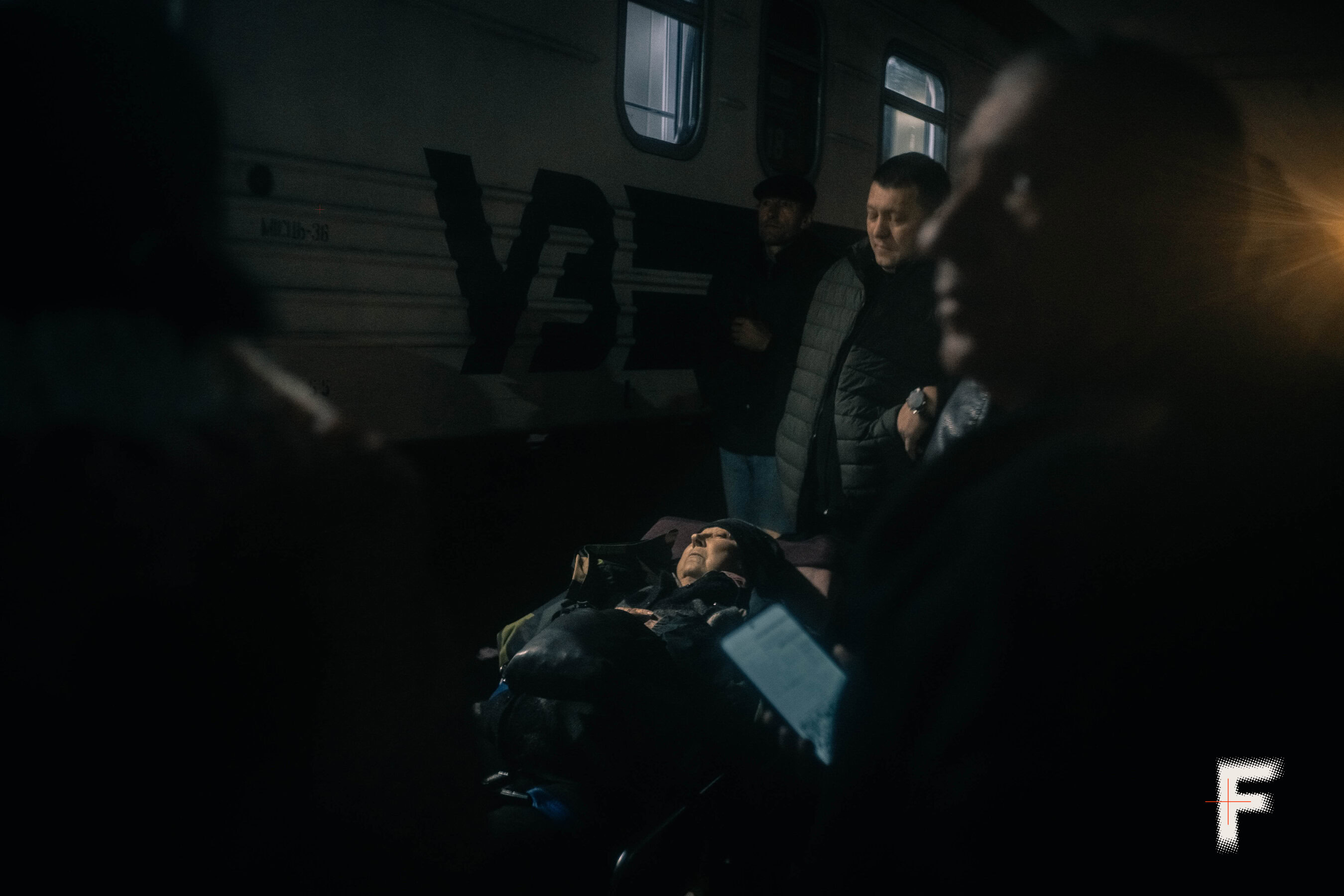
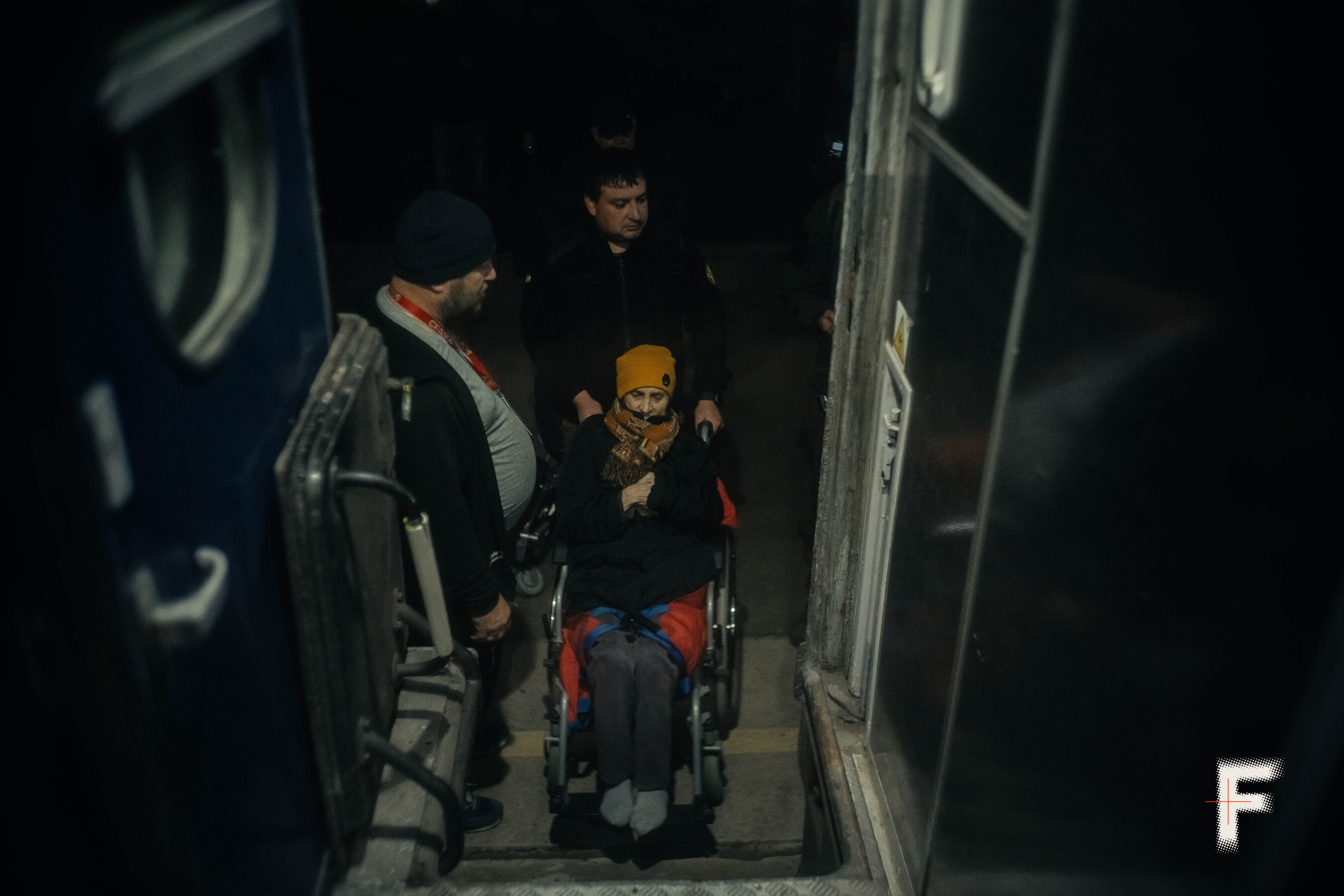
Nearby, a van from another humanitarian mission waits with a mobility-impaired male passenger ready for evacuation. As the train pulls in, the station briefly comes to life. Most of the passengers are in uniform. The rescuers lift the man first, then the woman, onto the train. Within minutes, the station becomes deserted again.
-
Volunteers help a mobility-impaired person onto a train, Kramatorsk, Donetsk region, Ukraine, October 18, 2025. Marharyta Fal / Frontliner

-
To make these missions successful, the foundation’s team regularly trains in combat medicine, psychology, and mine and drone safety. Some of these skills have already been put to use; near Chasiv Yar, Eduard treated a soldier wounded by a mortar round and a civilian woman injured by shrapnel.
There are many ways people can learn about evacuation opportunities. The foundation has a hotline, though often its numbers are shared by word of mouth. They are also distributed through social services and hospitals – after injuries, people’s desire to leave tends to increase.
The rescuers acknowledge that facing human suffering day after day is exhausting.
I saw how many people are trapped in their own ‘prisons,’
unable to move.
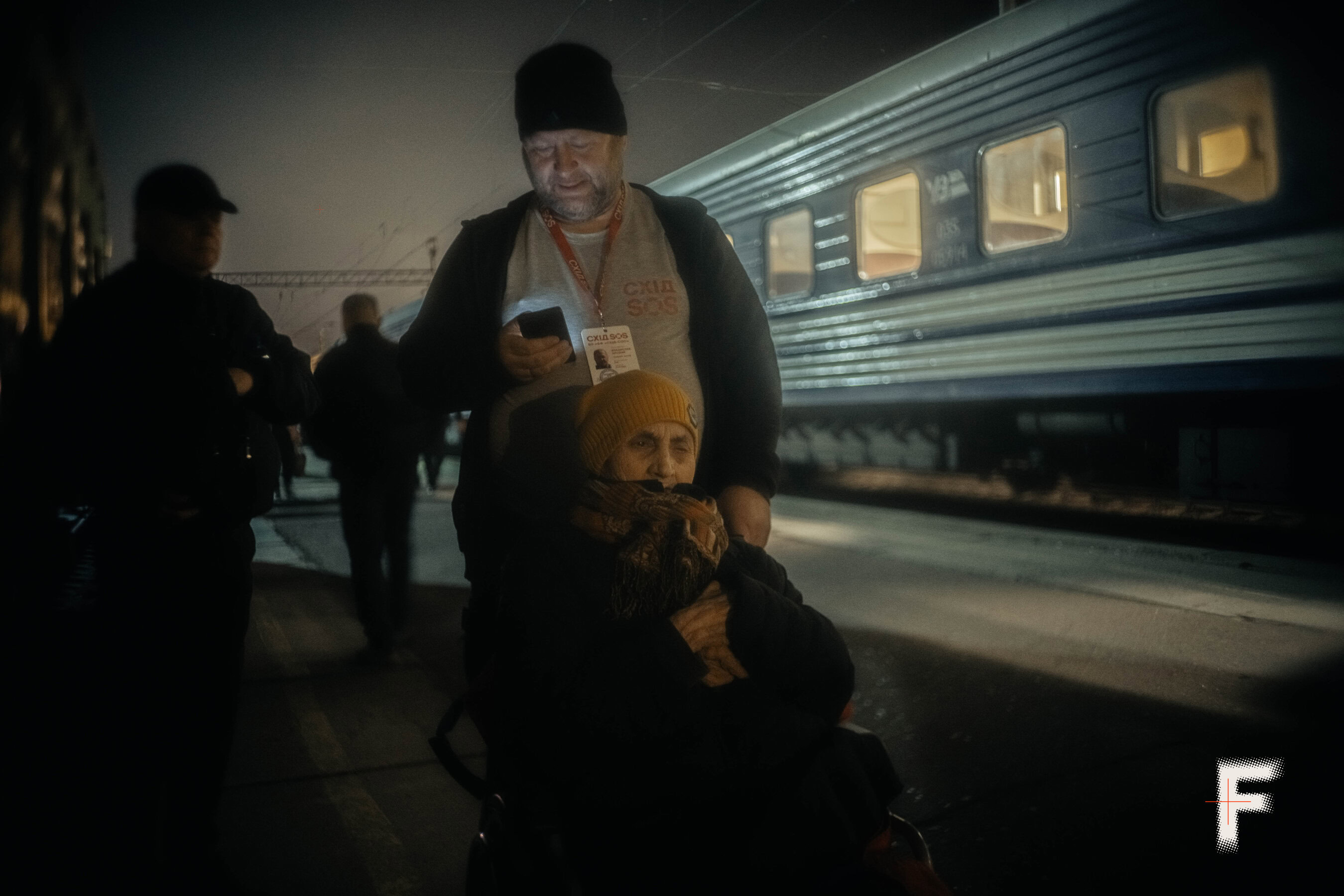
“Honestly, I realized I had a problem. I saw how many people are trapped in their own ‘prisons,’ unable to move. Social services are overloaded – a social worker might bring medicine and bread two or three times a week. But to take someone out for a walk? That’s almost impossible. For example, a woman in a wheelchair, 45 years old, hasn’t left her apartment in three years. She can only move around inside her flat, because it’s a five-story building on the fourth floor – no one to take her out. At most, she made it to the balcony. We don’t see these people, but there are loads of them!” – says Vladyslav.
Eduard has found his own way to unwind after tough evacuations: Chinese tea at a local tea house. He says that the drink has almost the same effect as alcoholic beverages.

“I drink it relatively quickly, in small sips. Then I think, ‘I’ll go throw the cup away,’ and realize I’m not going anywhere. It’s exactly what you need after an evacuation, after an emotional day. Of course, we’re trained, we have sort of immunity, but there are still moments when you really feel burned out,” says the rescuer.
Adapted: Irena Zaburanna