Escape from occupation: Ukrainian youth strive to preserve their identity
Inna left Donetsk as soon as she turned 20. She grew up under occupation, but despite years of living under Russian propaganda, she chose to remain Ukrainian. Making that choice required action, even without the support of her closest family, her parents. Frontliner tells the story of how she remained true to herself and found the courage to escape Russian-occupied territory.
Inna (name changed for safety reasons) carefully packed a bag, taking only the essentials so as not to draw attention. She told her parents she was going with a friend to Rostov-on-Don in Russia, but in reality she was heading in a completely different direction: through Minsk to Kyiv.
Inna was about to turn 20. Under Russian law in the temporarily occupied territories of Ukraine, she would have been required to get a new ID at that age, but Inna had no intention of complying. Without a set plan and with no idea what awaited her on the other side, she stepped into the unknown.
A childhood stolen by occupation
Inna was born in Donetsk and was just eight when Russian forces occupied the city.
Most locals had left, and only a few families with children remained. The Ukrainian language all but vanished, rubles appeared, and Russia launched an active propaganda campaign, especially targeting young people. Inna remembers the following years as empty and monotonous.
It was a very sad life; I can’t even remember any good moments
from those years,
The only exceptions were short trips with her parents to unoccupied Mariupol, where she could catch a glimpse of normal life. In Donetsk, however, life was reduced to daily restrictions: water was available only every few days, and the once-vibrant city gradually lost its colors.
Occupational propaganda painted Ukrainians as “‘Banderites’ and killers.” At one point, Inna herself began to internalize these narratives:
“When I started fourth grade, I gradually got used to the fact that this place was now the ‘DPR.’ They told us, ‘We wanted to separate from Ukraine and create our own state.’ At first it felt strange, but then I just thought, ‘Well, okay,’” she shares with sadness and a touch of shame.
[Editor’s note: “DPR” refers to the self-proclaimed Donetsk People’s Republic, a Russia-backed separatist entity in eastern Ukraine. Its establishment violated international law and is not recognized internationally.]
Representatives of pro-Kremlin and separatist groups, including the “People’s Militia” and “Young Republic,” visited the school. Calling themselves volunteers, they urged students to join their ranks, claiming they were helping the city and supporting the “new republic.”
“I remember thinking, ‘Wow, that’s so cool, I want to do that too.’ But my mom told me, ‘You won’t be able to go to Ukraine.’ So I didn’t join, and thank goodness I didn’t,” she says.
Defying her surroundings
Inna’s older brother had a profound influence on her. Their conversations slowly shaped her perspective. When the full-scale war broke out, he became the only family member with whom she could talk openly about the events unfolding around them.
“He said that the ‘DPR’ was BS and that it was better for us to look toward Ukraine. He said he didn’t want to live under occupation and planned to go study in Mariupol in the summer of 2022. I knew we were on the same side,” Inna says.
As time went on, these conversations shaped her own views, and Inna began speaking openly at school about her desire to leave Donetsk after graduation.
Before the full-scale war, many considered leaving. Some had family in Ukrainian-controlled areas, while others went there to study. But in 2022, however, even talking about Ukraine had become dangerous, as those who supported Russia had grown more aggressive.
Inna’s parents insisted she enroll at Donetsk University. During her time there, students were routinely involved in Russian projects, from contests and language tests to various other programs.
They offered us opportunities to attend student programs in Russia.
I refused and didn’t go, but I was constantly pushed to participate
in propaganda events. It made me very uncomfortable,
In 2022, when the full-scale invasion began, Inna reached a point where she realized she could no longer stay under occupation. She started preparing for her departure in ways she could control, focusing on her language skills. She watched Ukrainian content, searched for friends outside the occupied territories, and sought people to practice Ukrainian with.
“I met a girl from Lviv who offered to help me practice Ukrainian. We began chatting regularly, and now my language skills are far better than they were in 2022,” says Inna.
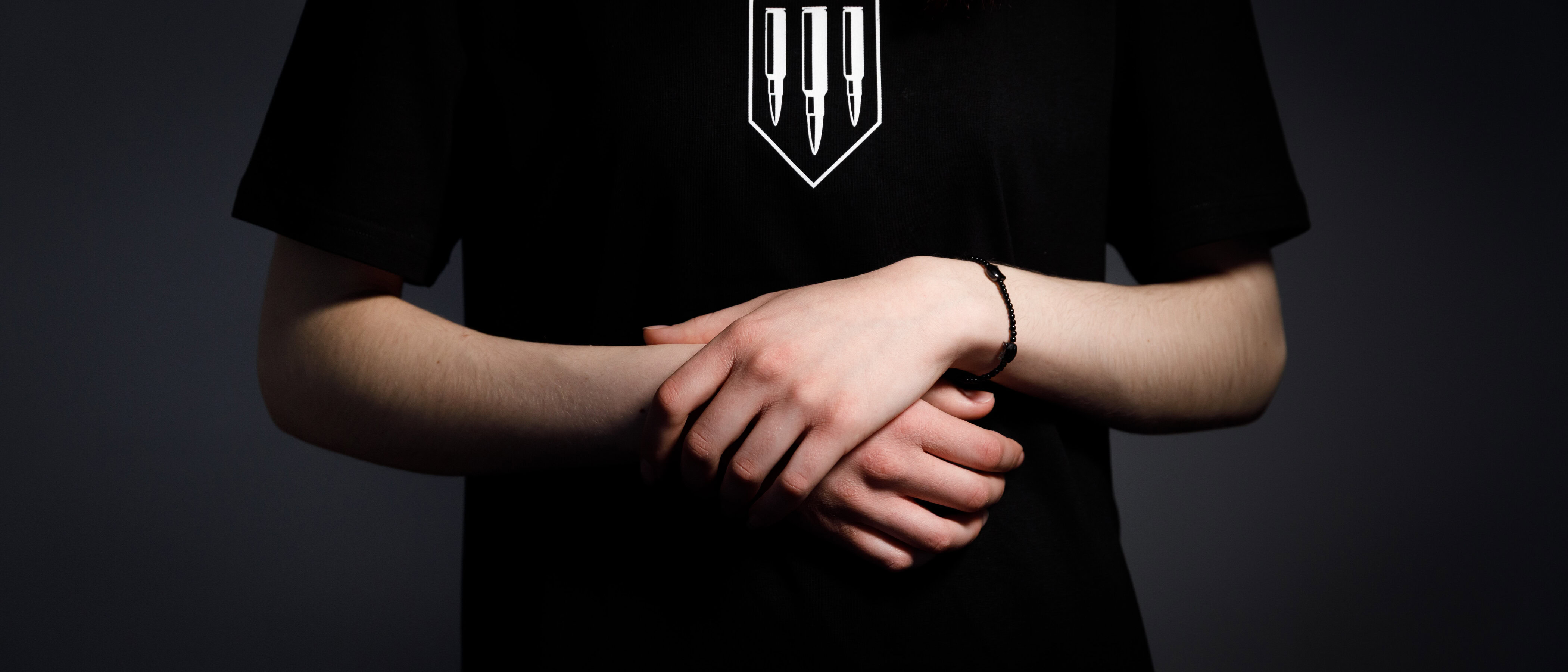
Wanting to express her connection to Ukraine, Inna crafted a herdan, a traditional Ukrainian beaded necklace. Wearing it outside was risky, yet she still found the courage to do so.

“I am Ukrainian, and I wasn’t afraid to show it, even as some people wore clothing with Russian or ‘DPR’ flags,” the young woman emphasizes. Inna hoped that someone would see and understand that not everyone in the occupied territories supports Russia.
A decision that was met with disapproval
Inna decided to leave before turning 18, though she knew the journey would have to wait. While preparing, she coordinated with friends in Kyiv about a place to stay and mapped out her route. Then, one day, she confided her plans to her parents:
They weren’t happy. The conversations dragged on and were unpleasant.
And then my mom took away my Ukrainian passport.
I had no idea how I was supposed to leave now,
Inna found herself alone with the problem. She had no support, as her parents, in their attempts to “protect” her, tried to persuade her not to leave.
“They told me I wouldn’t manage, that I was still a child, that I would be alone there, that something might happen to me. I worried both for myself and for my family, especially my grandmother and grandfather,” the young woman says.
Inna felt drained and discouraged, and for some time she set aside any plans to leave. The last straw was a law enacted by occupying authorities: at 20, she would be forced to replace her passport, something she had no intention of doing.
She learned about the Helping to Leave project, which provides free assistance for people trying to leave temporarily occupied territories. Inna got in touch with an operator and felt relief for the first time as they told her they would help her escape the occupation. By following their instructions, Inna soon found herself in Belarus.
Since her Ukrainian passport had been taken by her mother, Inna couldn’t enter Ukraine. At the Ukrainian embassy in Minsk, she was issued a “white passport,” a single-use document that allows citizens to return home if their passport is lost or no longer valid.
After that, she was finally able to enter Ukraine through the only operational humanitarian corridor for Ukrainians seeking to reach free territory: Mokrany-Domanovo.
Living under occupation means
having no future.
“You’ll definitely like it here.”
Now Inna lives in Kyiv. She has already found a job and is working to put her documentation in order, applying for assistance, and adjusting to the rhythm of a new city.
Her daily life now consists of practical things: stabilizing her life, getting back on her feet, and learning to maintain a balance between work and her own needs.
In these circumstances, thoughts of continuing her education are on hold, not out of indifference, but due to a lack of time and resources. It is important for Inna to understand who she truly wants to become in order to choose her path consciously.
At the same time, Inna is trying not to lose what she already has and what matters to her: hanging out with friends, going for walks, attending events, and experiencing new things.
“This is why I left – to finally live,” she says. For most of her life, Inna had to hide her true self and follow a path imposed by occupying authorities.
“It’s important to understand that living under occupation means having no future. There isn’t a perfect way to leave right now, and there’s no clear system for those who have recently arrived here. But there are people ready to help. If it’s hard for you there, you will find it better here,” Inna says, addressing young people who are still unsure whether to leave the temporarily occupied territories.
A few days ago, for the first time since leaving occupied Ukraine, Inna spoke with her grandfather by phone. In a brief conversation, he asked a question she did not expect.
“He asked how I was doing. I said I was fine and that I had found a job. And he replied: ‘You could have found one here too. Have you found anything for your soul?’ And that was the most important part. It was very touching that he saw that and truly understood me,” Inna, a young woman who escaped Russian-occupied Donetsk, said.
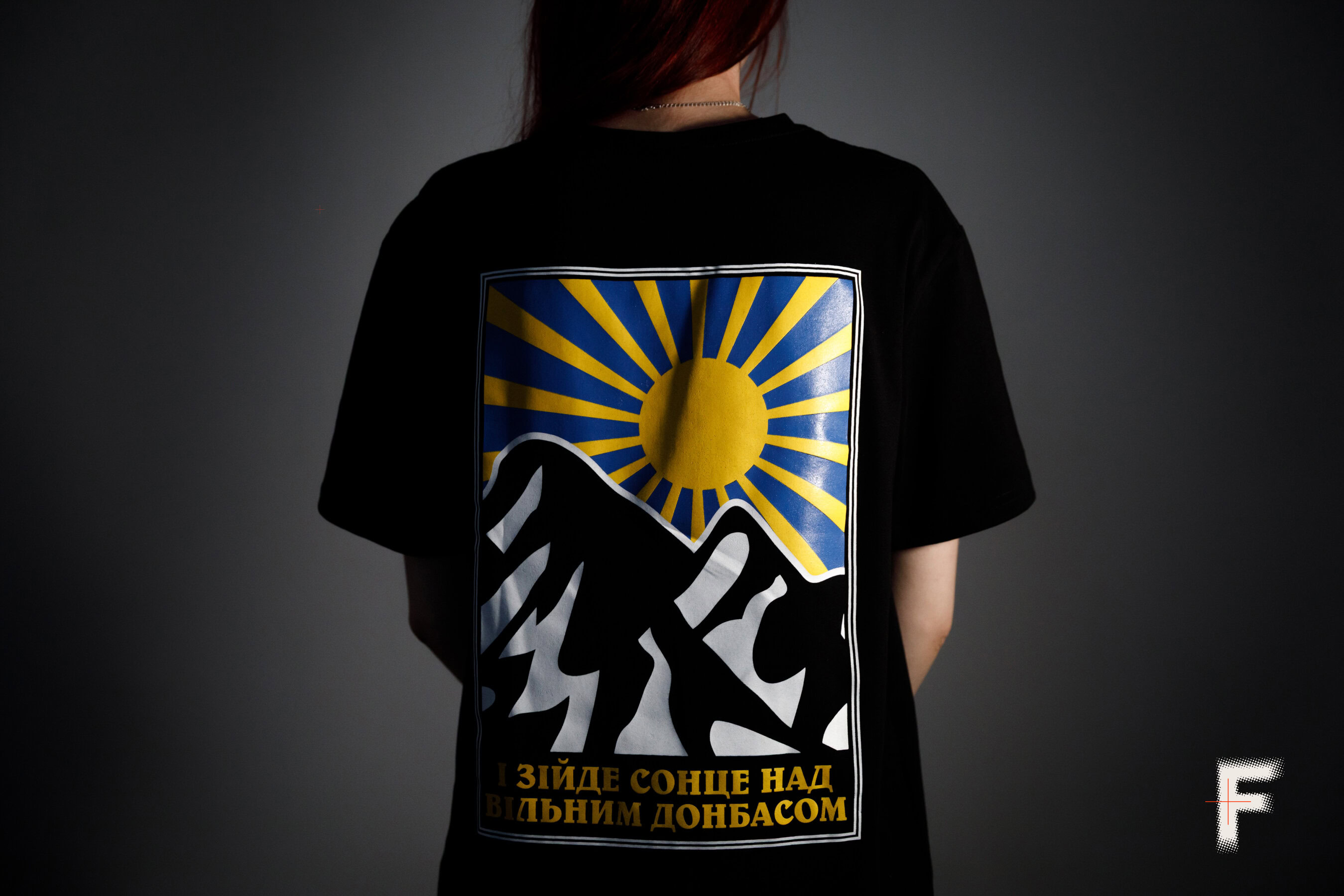
Up to 1.6 million children remain in the temporarily occupied territories of Ukraine, spending their entire childhood in the Russian education system. But not all of them accept these rules. Some young people try to preserve their identity and leave.
***
Hi, I am Yuliia, the author of this article. Thank you for reading to the end.
Childhood under occupation is an experience that is difficult to imagine for people in the territories controlled by Ukraine. For me, it is important to give a voice to those who are rarely heard: the youth who still live in the temporarily occupied territories, but do not want to stay there.
Every story starts with your support. Join the Frontliner community so we can keep up documenting Russia’s war against Ukraine from the front line and the rear.
***