Easy money from the enemy: how not to become a Russian agent
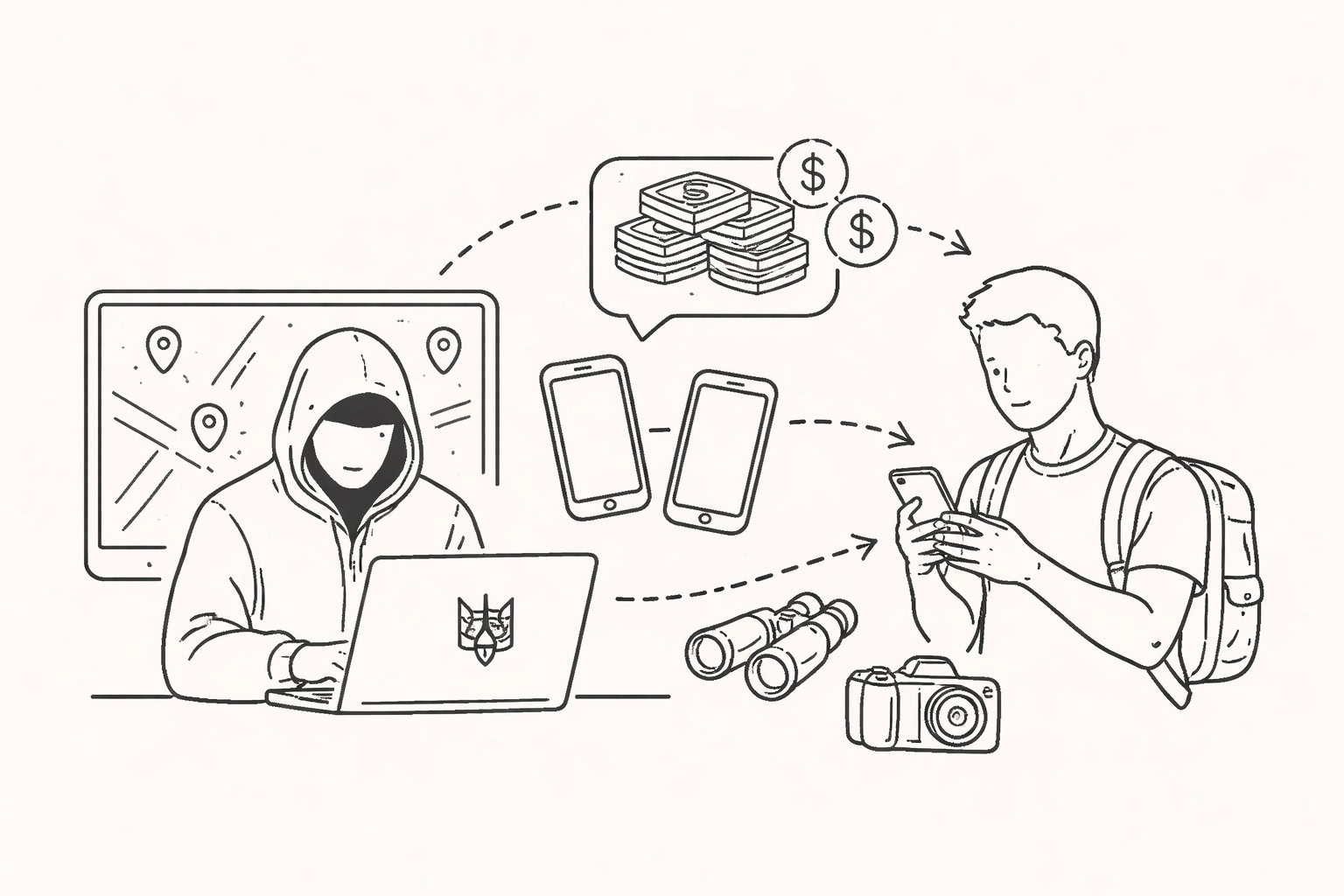
Ukrainian law enforcement regularly reports arrests of people who carried out tasks for Russian intelligence services. In most cases, they are not trained operatives or professional saboteurs. More often they are ordinary Ukrainian citizens recruited through social media. The most common contact channel is Telegram, where under the guise of part-time work or anonymous tasks, individuals are offered money to carry out illegal activities. The Ukrainian media outlet Frontliner examined how these schemes operate and how people can avoid falling into the trap of Russian intelligence.
Russian intelligence services have long used social media as a recruitment tool. According to Ukrainian authorities, dozens of anonymous accounts and channels are created on Telegram and other platforms to search for individuals willing to carry out sabotage or espionage.
Potential targets receive private messages or see advertisements offering “simple work” with payment for one-time tasks.
Typically, it begins with a seemingly harmless request. The person might be asked to photograph a building, share coordinates or leave a package in a specific location. The tasks appear simple and not particularly dangerous. Over time, however, their nature escalates — from collecting information to arson, sabotage or planting explosives.
Common targets include burning vehicles or infrastructure facilities, sabotaging railway lines and transmitting coordinates of military or strategic sites. In some cases, recruited individuals are instructed to assemble or install explosive devices or carry out other actions that fall under charges of terrorism or treason.
How recruiters gain trust
Recruiters rarely present themselves as members of Russian intelligence. Instead, they may pose as entrepreneurs, intermediaries or even Ukrainian security personnel.
The conversation usually begins with an offer of quick money that requires no experience and supposedly carries no risk.
Once a person agrees to perform the first task, they are gradually drawn into additional activities. Initially, it may involve information gathering or surveillance of certain locations. Later, the assignments become more serious and directly related to sabotage or preparations for terrorist attacks.
Another common tactic is blackmail. Recruiters may demand further cooperation by threatening to report previously completed tasks to authorities or release personal information. In such situations, individuals find themselves trapped, with each step only worsening their situation.
How it usually ends
Stories of such “side jobs” almost always end the same way. The promised payment often never arrives. Russian handlers are not interested in long-term relationships with their operatives, as they are treated as disposable resources.
For the recruited person, however, the consequences can be severe. Ukrainian security services regularly expose these schemes and detain participants in sabotage groups. Cases then proceed to court, where defendants face serious sentences for sabotage, espionage or involvement in terrorist activities.
In the end, someone who accepted “easy money” is left without payment and facing years in prison.
How to avoid the trap
- Do not agree to anonymous “side jobs” offered by strangers on social media.
- Do not share coordinates, photos or information about infrastructure or military sites.
- Ignore offers involving arson, property damage or placing packages in public areas.
- Avoid private communication with accounts offering payment for suspicious or illegal activities.
- Report recruitment attempts to law enforcement through official channels.
- Remember that even completing a single such task can result in criminal charges and imprisonment.
Russian intelligence services rely on carelessness, financial difficulties or simple curiosity. But every such contact carries the risk of being drawn into actions that work against one’s own country.
The simplest way not to become a tool of a foreign intelligence service is not to engage in these schemes at all.
Adapted: Kateryna Saienko
***
Frontliner wishes to acknowledge the financial assistance of the European Union though its Frontline and Investigative Reporting project (FAIR Media Ukraine), implemented by Internews International in partnership with the Media Development Foundation (MDF). Frontliner retains full editorial independence and the information provided here does not necessarily reflect the views of the European Union, Internews International or MDF.