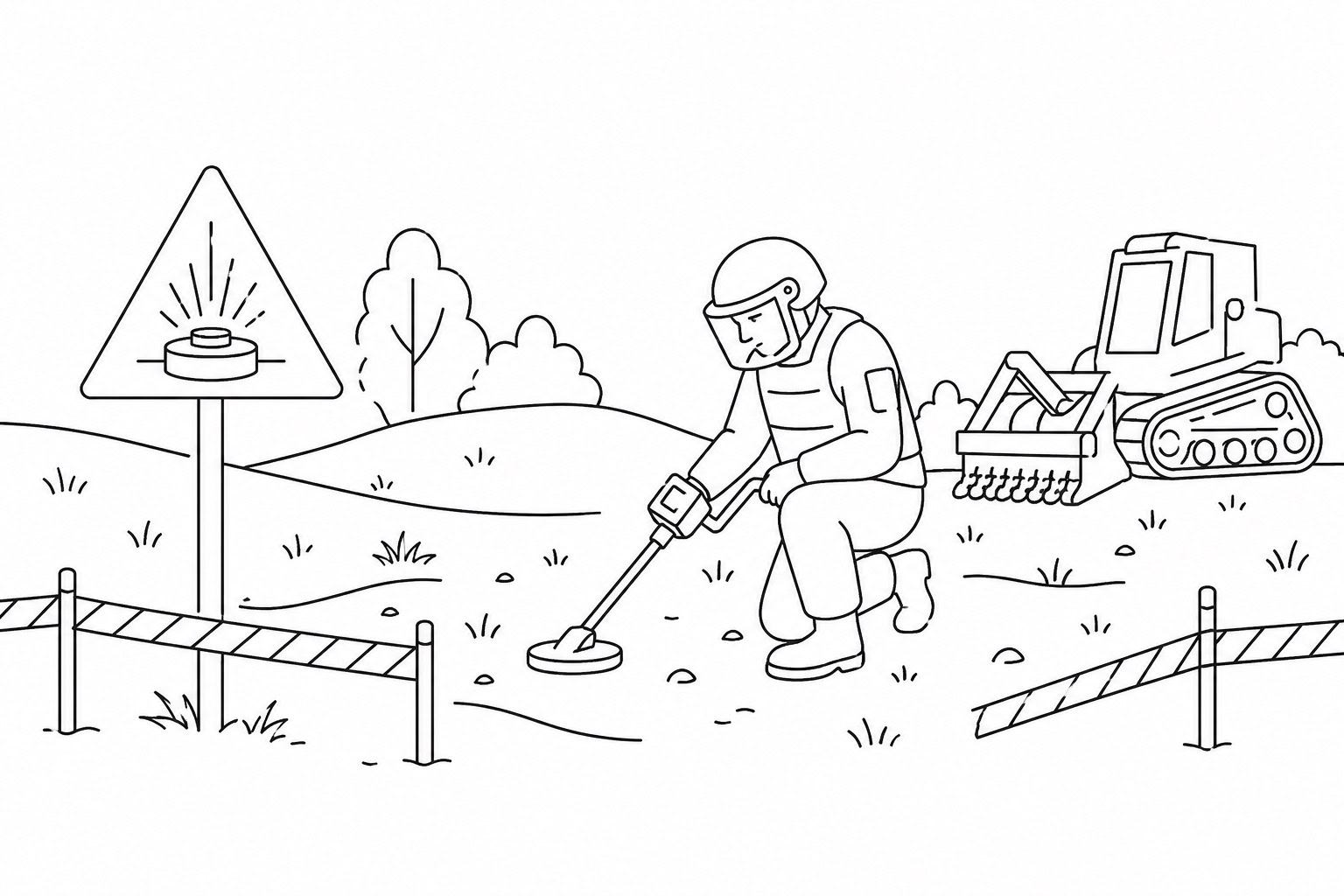
Dangerous ground: how Ukraine is clearing mines
Ukraine remains one of the most heavily mined countries in the world. As of 2026, around 139,000 square kilometers of territory, more than 20% of the country, are considered potentially hazardous. After two years of intensive demining, those figures are gradually declining, but risks to civilians remain systemic. Frontliner examines how the situation is changing and what it means for people living across the country.
Following the liberation of large areas in 2022 and 2023, Ukraine inherited vast stretches of mined land. According to emergency services and government data, hundreds of thousands of hectares still require inspection. The danger extends beyond the front line to farmland, forests and roadsides.
Fully clearing Ukraine of mines could take decades and require tens of billions of dollars. While demining teams clear thousands of hectares each year, ongoing combat continues to create new contaminated areas.
Has Kyiv region been cleared and where is the danger greatest?
Kyiv region became one of the first areas to undergo large-scale demining. According to official data, major settlements, roads and critical infrastructure were cleared by 2023. However, the region is not considered completely safe. Forested areas and some isolated sites still require inspection.
The greatest risks remain in frontline regions, including Kharkiv, Donetsk and Kherson regions, as well as parts of Zaporizhzhia and Mykolaiv regions. These areas account for the highest number of civilian incidents involving mines and unexploded ordnance. According to Ukraine’s Ministry of Defense and the State Emergency Service, thousands of people, including children, have been injured or killed by mines and unexploded explosives since the start of the full-scale war.
Western regions, where active fighting did not occur, are considered relatively safe. Even there, however, unexploded munitions are periodically discovered.
How much territory has already been cleared?
By 2026, tens of thousands of square kilometers had been returned to use. Large areas of agricultural land, in particular, have been surveyed and cleared for farming.
Demining efforts accelerated significantly in 2024 with the involvement of international operators and specialized equipment. Ukraine is also developing a humanitarian demining market to bring in private companies. This has helped speed up operations, though it requires strict quality control.
How demining programs operate
The effort involves units from the State Emergency Service, Ukrainian forces and international organizations, including HALO Trust and the Danish Refugee Council. Their work includes both technical demining and the training of local specialists.
Another key focus is public awareness. Mine safety programs target schools, local communities and displaced people in an effort to reduce accidents caused by carelessness or lack of information.
What civilians should do
- Do not enter forests, fields or abandoned areas unless they have been checked
- Do not touch suspicious objects
- Report discoveries to emergency services or police
- Pay attention to warning signs
- Explain mine safety rules to children
These precautions remain critically important throughout Ukraine.
Why the problem is long-term
Ukraine’s demining will take years. The scale of contamination and the variety of munitions used make the process especially difficult. Some mines contain complex triggering mechanisms and can remain dangerous for years.
At the same time, ongoing fighting continues to reshape the map of risks. Even territories that have already been cleared may require repeated inspections.
Ukraine has already reduced the amount of hazardous land, but fully clearing contaminated territory will require years of systematic work. Until then, living near potentially mined areas will remain part of everyday reality for millions of people.
***
Frontliner wishes to acknowledge the financial assistance of the European Union though its Frontline and Investigative Reporting project (FAIR Media Ukraine), implemented by Internews International in partnership with the Media Development Foundation (MDF). Frontliner retains full editorial independence and the information provided here does not necessarily reflect the views of the European Union, Internews International or MDF.