A culture of remembrance shapes life in Khmelnytskyi for the better
Khmelnytskyi is a city little known to people outside its region of Ukraine. It is not a tourist destination yet it has nevertheless become home to many service members. Though small, it has welcomed 130,000 displaced people since the start of the full-scale war. The city is located 600 kilometers from the front line, yet it has developed a strong culture of remembrance. Frontliner reporter Albina Karman reflects on her experience of living in Khmelnytskyi during the Russian-Ukrainian war.
“Want me to introduce you to my guys? That way you’ll know who you’re walking past next time,” says a friend, a special forces soldier, as we turn toward the Alley of Glory located on the central street of the city.
Many kind and wise eyes look down on us from the portraits above. Here, it is impossible not to feel the scale of the tragedy.

Remembering the Revolution of Dignity
I was about to turn eleven when I cried myself to sleep in my room over the Maidan killings my parents had told me about. A few days later, the news showed more deaths: a woman in a white coat lay dead in the heart of my city. She had been murdered for supporting the Revolution of Dignity, right outside the SBU headquarters. Two activists had been killed and about a dozen more were wounded.
Now I stand on the Alley, which starts with the dates of deaths from 2014, before the portraits of my friend’s comrades, who he had only moments before shown alive in a video. People are bustling all around. In the midst of this chaos, Khmelnytskyi is strikingly beautiful. The cobblestone path to the town hall runs between historic buildings. A mechanical trumpeter sounds from the hall three times a day, having ‘taken up residence’ just before the full-scale war.
Remembering the beginning of the full-scale invasion
Empty and cold, the city has yet to adjust to the war raging across the country. I walk past the same Alley of Glory, much smaller back then, carrying a box of baked goods to the main reception point for displaced people, where everything is in short supply. At 9:00, I pause with the boxes beside the trumpeter, now wearing a military helmet, and listen to the Ukrainian anthem and Chervona Kalyna song. The second week of the full-scale war has just begun. People from Kharkiv continue to arrive, letting their children warm up sometimes, as they haven’t always had time to grab warm clothing amid the shelling. Children from Mariupol and Kherson are arriving in the same large numbers. It’s terrifying. One of them, ‘Pablo,’ came here at sixteen. Today, he looks down on us from the Alley of Glory with kind and wise eyes. He signed up as soon as he turned eighteen and was killed.
[Translator’s note: Chervona Kalyna (Eng. ‘Red Viburnum’) is a Ukrainian song that has become a symbol of Ukrainian resistance often sung at rallies, events, and by the military.]

I hope all these children enjoyed our town hall and the trumpeter. There’s something about it that gives hope for light. But you can’t stay here long because of the noise of the traffic; your feet carry you toward some quiet, even if for a bit. Then, only two intersections away, you reach the waves of the Southern Bug. As you step down to the water, the city seems to recede. Calm returns, and the weight of chaos eases from your shoulders. Standing on the pier, the waves carry you gently without moving you – a wondrous ability they possess.
A few legends of Khmelnytskyi
When I take the city guests through the park by the river on our way for coffee, I always tell them a local story about the playground there. Each morning, the parents of the late Ukrainian Minister of Internal Affairs, Denys Monastyrskyi, exercise on that playground. When Denys died in a plane crash in 2022, his parents were there on the playground, without phones, and didn’t immediately learn of their son’s death. In the days that followed, locals formed a line outside their home for several days to pay their respects. I learned this from local journalists.
Remembering a walk amid smoke from strikes
Summer 2023. I’m walking through Shevchenko Park in Kherson, wearing a new T-shirt. It depicts my city and reads: “I promise, we will once again enjoy the peace of our parks. Yours, Khmelnytskyi!” A friend from Kherson asked, “And now, you’re not enjoying it?” I paused to answer, recalling the park: “Well…the last time I came home, after working for six months in Kherson, from every side of the park, columns of black smoke rose from ammunition depots that had been hit. In nearby villages, not a single house was left undamaged, and parts of the city were struck as well. The detonations lasted four days.”
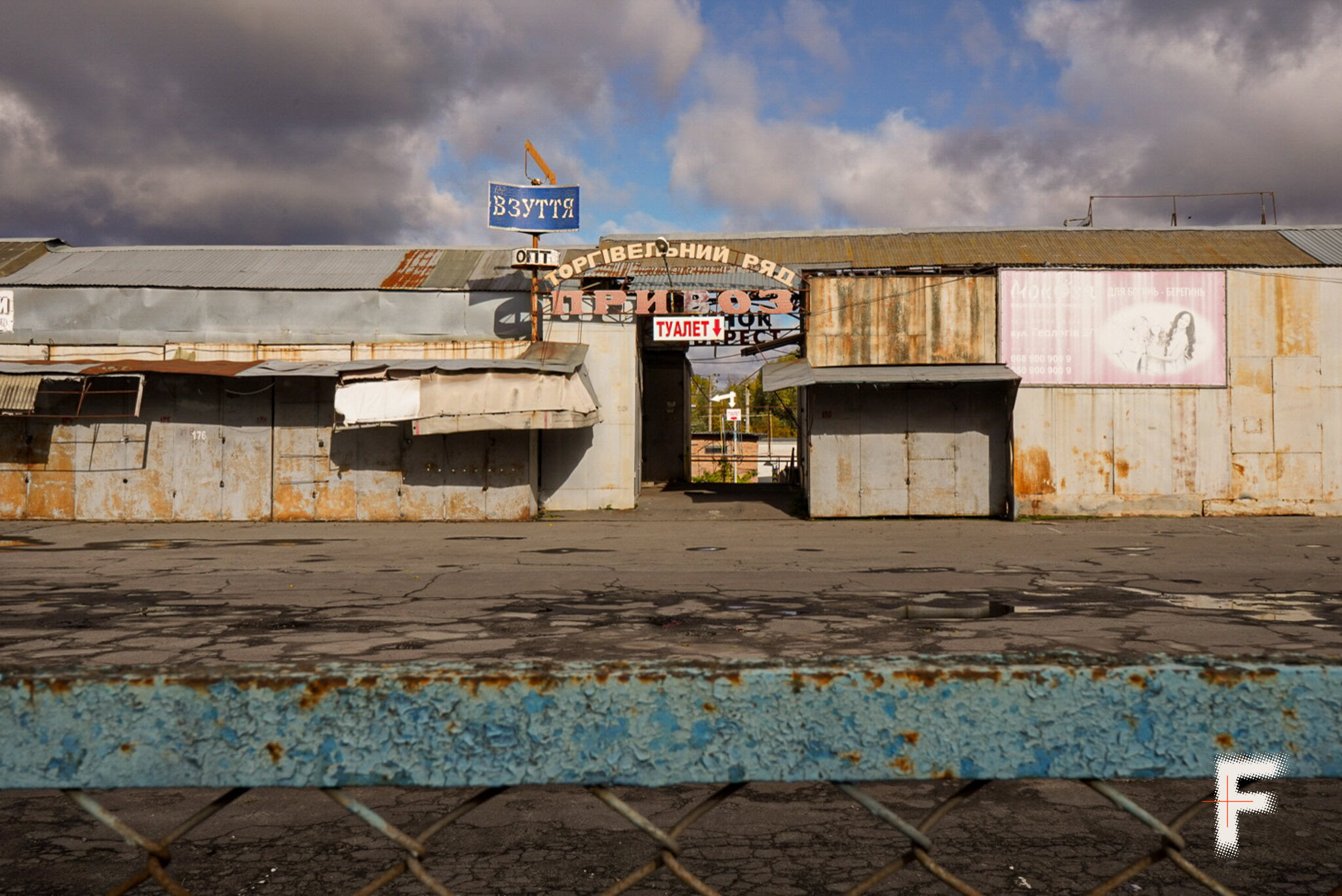
The park brings back sad memories. Let’s move to happier stories: the Khmelnytskyi city market, among the biggest and most popular in Ukraine. It’s a far cry from what it was in the early 2010s, when I first visited. Today, children rarely shop there for school supplies.
Remembering the city market from childhood
I’m walking behind my mother through the market, everything seems fine, when suddenly she gets distracted by something, and I find myself standing alone in the crowd. Strangers – men and women – ask what happened and where my mother is. Of course, I want to answer them, but the truth is, I’m crying because I don’t know. Luckily, my mother always appears in the end. My tears dry quickly, and I get ready for the next round of tiers – they’re inevitable, because every trip to the market ended the same way: instead of buying what I liked, we bought what my mother liked.

So what is Khmelnytskyi really about?
Actually, I want to dispel the myth that Khmelnytskyi’s main claim to fame is the market, as people from other cities might think. Khmelnytskyi is a home to numerous Special Operations Forces units, the Bohdan Khmelnytskyi National Academy of the State Border Guard Service, and a military veterinary hospital.
It is the courage to welcome 130,000 displaced people in the city and more than 380,000 across the region. Ultimately, it is the roar of aircraft from Starokostiantyniv waking you at six in the morning on an otherwise quiet day, patrolling the sky. Or circling over your home at night, shielding you from a Russian Shahed drone that is, in fact, above your home as well.

“Look, there’s ‘Pablo,’ the one I told you about, and these are the firefighters who responded to one of the first attacks on Khmelnytskyi and were killed by a double tap by a Shahed,” I say to my special forces friend, who has already “introduced” me to all his comrades on the Alley of Glory. Here, the culture of remembrance has made dialogues between the living and the fallen a reality. And no passerby is surprised by these – quite literal – conversations anymore. This is the kind of ‘comfort’ in wartime we’ve learned to accept, which helps make life in the rear psychologically easier after returning from his frontline missions or my own time at the front.
Author: Albina Karman
Adapted: Irena Zaburanna