An army of corps: how Ukraine’s defense forces are restructuring during war
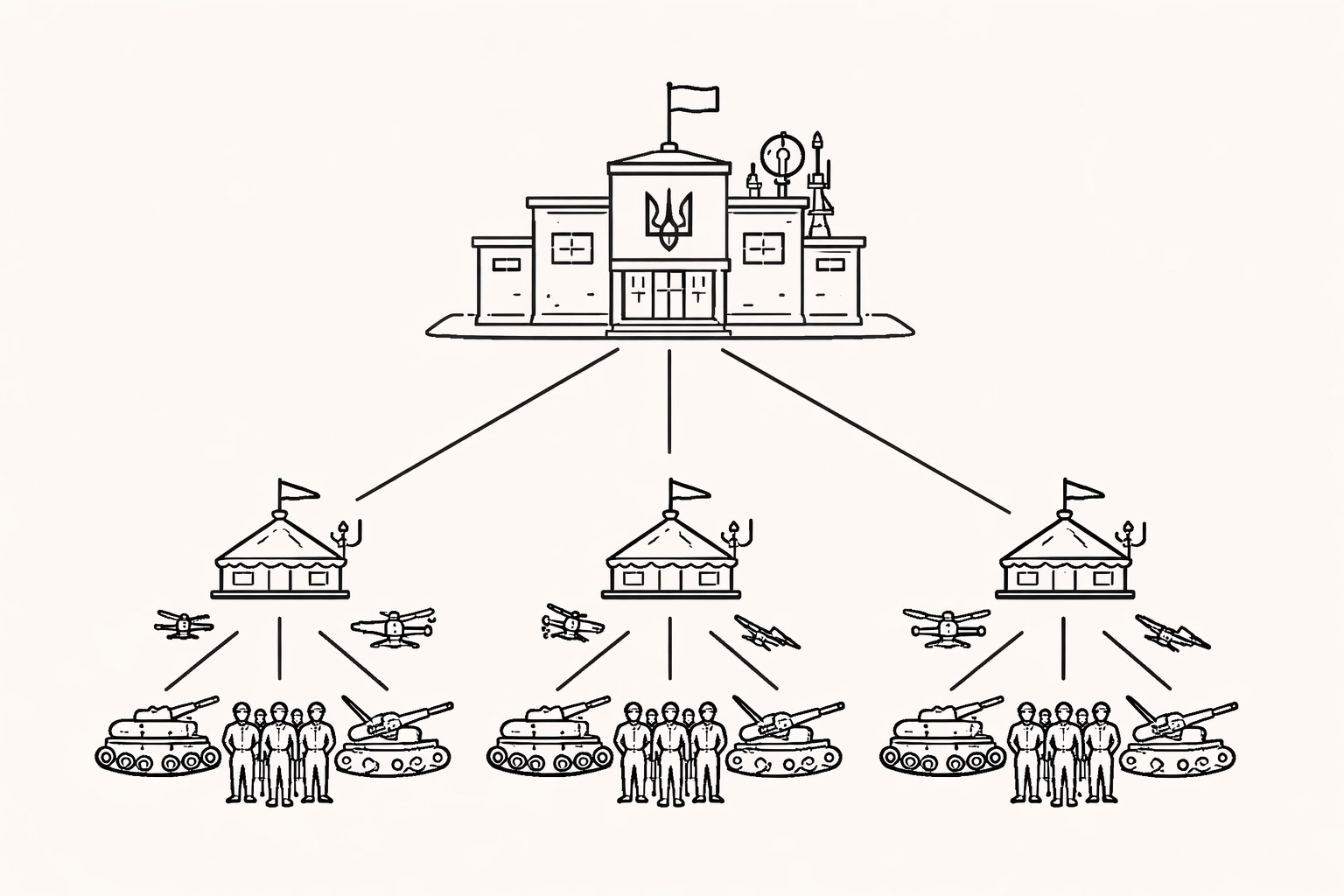
Ukraine’s military is undergoing one of its largest organizational reforms since the start of the war. Instead of a system where brigades served as the primary combat unit, a new command level is being introduced — army corps. These are large military formations that coordinate several brigades and are capable of conducting independent operations along specific sections of the front. The Ukrainian media outlet Frontliner explains how the structure of the Defense Forces is changing and what the transition to a corps system means.
Ukraine began shifting to a corps-based structure in 2025 as part of a broader reform of military command. The idea is to create large operational formations that integrate brigades, artillery, drone units, logistics and intelligence under a single command.
This level of command is intended to improve coordination along a front line stretching more than 1,000 kilometers and to accelerate decision-making on the battlefield.
The formation of corps is a response to the scale of the war. When dozens of brigades operate in one sector, managing them without an intermediate level of command becomes difficult. The corps system allows units to be grouped into larger formations with their own headquarters, operational planning systems and combat resources.
What is an army corps?
An army corps is a large military formation that combines several brigades along with support units. Such structures are capable of independently conducting combat operations in a specific direction while coordinating multiple branches of the armed forces.
Typically, a corps includes several combat brigades and supporting elements. In Ukraine’s current model, a corps may consist of two to five brigades and tens of thousands of personnel, along with artillery, intelligence, drone units, logistics and medical services.
In effect, the corps becomes an intermediate command level between operational groupings of forces and individual brigades. It is at this level that operations are planned, resources allocated and units coordinated.
What the new military structure looks like
Under the corps system, the chain of command is structured approximately as follows:
- Supreme Commander-in-Chief’s Headquarters
- Commander-in-Chief of the Armed Forces
- General Staff
- Operational and strategic groupings of forces
- Army corps
- Brigades
- Battalions
- Companies, platoons and squads
The introduction of corps means brigades no longer report directly to operational groupings. Instead, an additional command layer is responsible for coordinating combat operations in specific sectors.
How many corps are being formed?
As part of the reform, Ukrainian forces are forming 18 corps across different branches of service:
- 13 corps within the Ground Forces
- 2 corps within the Air Assault Forces
- 1 Marine Corps formation
- 2 corps within the National Guard
Most corps are expected to include around five brigades, though some formations may be larger.
Why the reform is needed
The transition to a corps system is driven by several practical factors, primarily the scale and complexity of modern warfare. Large groupings of forces, artillery, drones and long-range strike systems must operate simultaneously.
The corps level allows for faster coordination on the battlefield, more efficient allocation of reserves and improved planning of complex operations. It also brings Ukraine’s military structure closer to that used by NATO countries.
Key objectives of the reform include:
- Simplifying command over large numbers of brigades
- Improving coordination between different branches of the military
- Increasing responsiveness to changes on the front line
- Creating stable force groupings in specific operational areas
Reform still in progress
Although most corps have already been formed and are carrying out combat tasks, the process of staffing and training them continues. After establishing corps headquarters, the military must distribute brigades among them, build command systems and ensure logistical support.
The transition to a corps system is not an overnight change. It is a gradual restructuring of military command taking place alongside active combat operations.
In effect, Ukraine’s armed forces are moving away from a Soviet-era model toward a modern system designed for managing a large wartime army. While the final results of the reform are yet to be seen, it is expected to shape the structure of Ukraine’s military throughout a prolonged war.
***
Frontliner wishes to acknowledge the financial assistance of the European Union though its Frontline and Investigative Reporting project (FAIR Media Ukraine), implemented by Internews International in partnership with the Media Development Foundation (MDF). Frontliner retains full editorial independence and the information provided here does not necessarily reflect the views of the European Union, Internews International or MDF.