All above all: inside a combat brigade’s underground museum
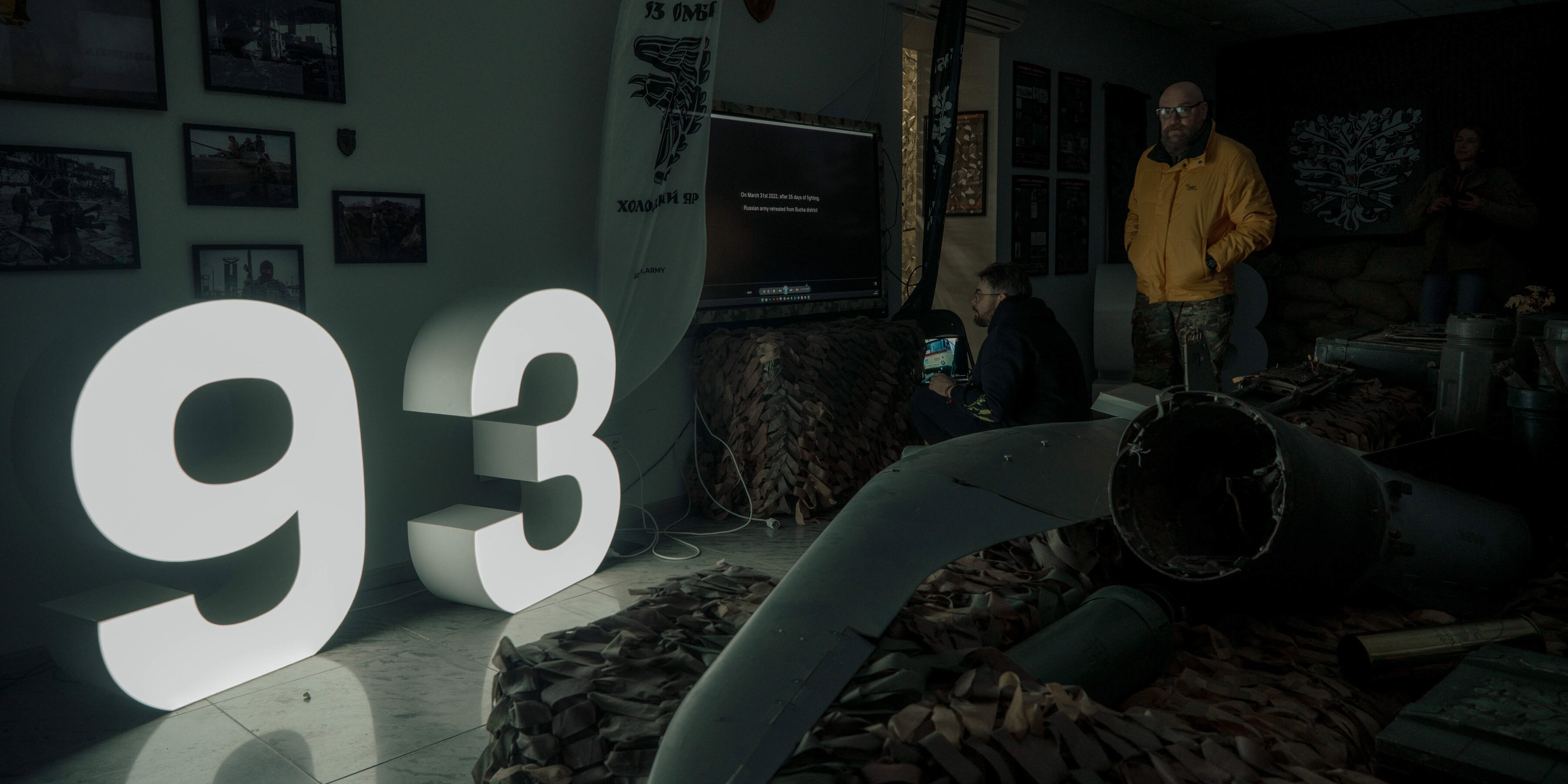
The museum of the 93rd Mechanized Brigade Kholodny Yar is located in one of the frontline towns of the Donetsk region, so for safety reasons it is almost entirely underground. It bears little resemblance to a traditional museum where you can check the website for opening hours, buy tickets, and spend an educational weekend with your family. Only brigade service members, volunteers, journalists, or friends of the brigade can enter – and only if they learn the location and have arranged the visit in advance. The Frontliner team was able to obtain this priceless information, explored the exhibition, spoke with the artist who curates it, and attended a film screening for the soldiers.
The museum serves two purposes. The first is to chronicle the brigade’s combat path since 2014. Photos, artifacts, informational panels, and themed art pieces – in this sense, it resembles a traditional museum.
The second purpose is to be a space for their own: a place where soldiers can come together, pause and breathe, talk, and rest after the battlefront in a relatively safe environment. Everything needed for this is here – a coffee machine, a collection of teas, a projector for film screenings, plenty of chairs, and most importantly, the right atmosphere.
Art as rehabilitation
Dmytro Kolomoitsev, callsign ‘Rozfokus,’ is an artist and formerly also a designer. His role in the brigade is exactly this – to create themed art objects. Some of them become museum exhibits, some are sold at auctions to raise funds for the brigade’s needs, and some even represent Ukraine at international art events.
Dmytro fought during the ATO in 2015-2016 as an anti-aircraft gunner in the 92nd Mechanized Brigade named after Koshovyi Otaman Ivan Sirko. Later, he spent some time returning to civilian life and adapting. Afterwards, he went through a period of reintegration into civilian life:
After demobilization, I started rehabilitating, and eventually rehabilitated to the point that, together with another artist, we opened a gallery in Podil,
Dmytro literally infects everyone with his enthusiasm and inspiration. He constantly generates ideas – some already realized, some still in progress. For example, a carved portrait of the brigade commander created for his birthday.
Within the brigade, the artist is attached to the press service – the very unit that came up with the idea of creating the museum:
“There were discussions about somehow preserving for posterity what happens in the brigade. You can’t capture everything, but at least something. The idea was to show the brigade’s path from 2014 up to the most recent events,” ‘Rozfokus’ explains, adding that there are still some units that haven’t contributed exhibits, which would allow for a more complete representation of the brigade. However, it’s not currently possible to display all the exhibits they would like due to the secrecy of some of them.
Cities that became hieroglyphs
The photo gallery is organized by phases of the war – ATO, JFO, the full-scale invasion. It is also arranged by the fronts in which the brigade has fought or is fighting. Here, as everywhere in war, there is no room for political correctness, so some of the artworks on display are a mix of grotesque and dark humor. For example, one piece is titled “Accelerator of Sh*t”, while another is “All Above All.” The latter even inspired a brigade patch.
[Translator’s note: ATO (Anti-Terrorist Operation) was the official term from 2014 to 2018 for Ukrainian military operations in the Donbas region against Russian-backed forces. The term continued to be used colloquially even after 2018. JFO (Joint Forces Operation) is the official designation used by the Ukrainian government from 2018 until the full-scale invasion in 2022 for ongoing military operations in the same region.]
Among the exhibits are painted shell casings, captured drones, flags, and patches. A colorful toy – a stitched black raven, the brigade’s symbol – was a gift from the patronage service. Even the traditional Japanese maneki-neko cat, the talisman of luck and prosperity, is dressed here in camouflage and a balaclava.
[Translator’s note: The patronage service (служба патронату) is a Ukrainian military support unit that assists soldiers and their families with welfare, administrative, and social or psychological support.]
-
Exhibits at the military museum of the 93rd Mechanized Brigade Kholodny Yar, Donetsk region, Ukraine, October 17, 2025. Marharyta Fal / Frontliner

-
-
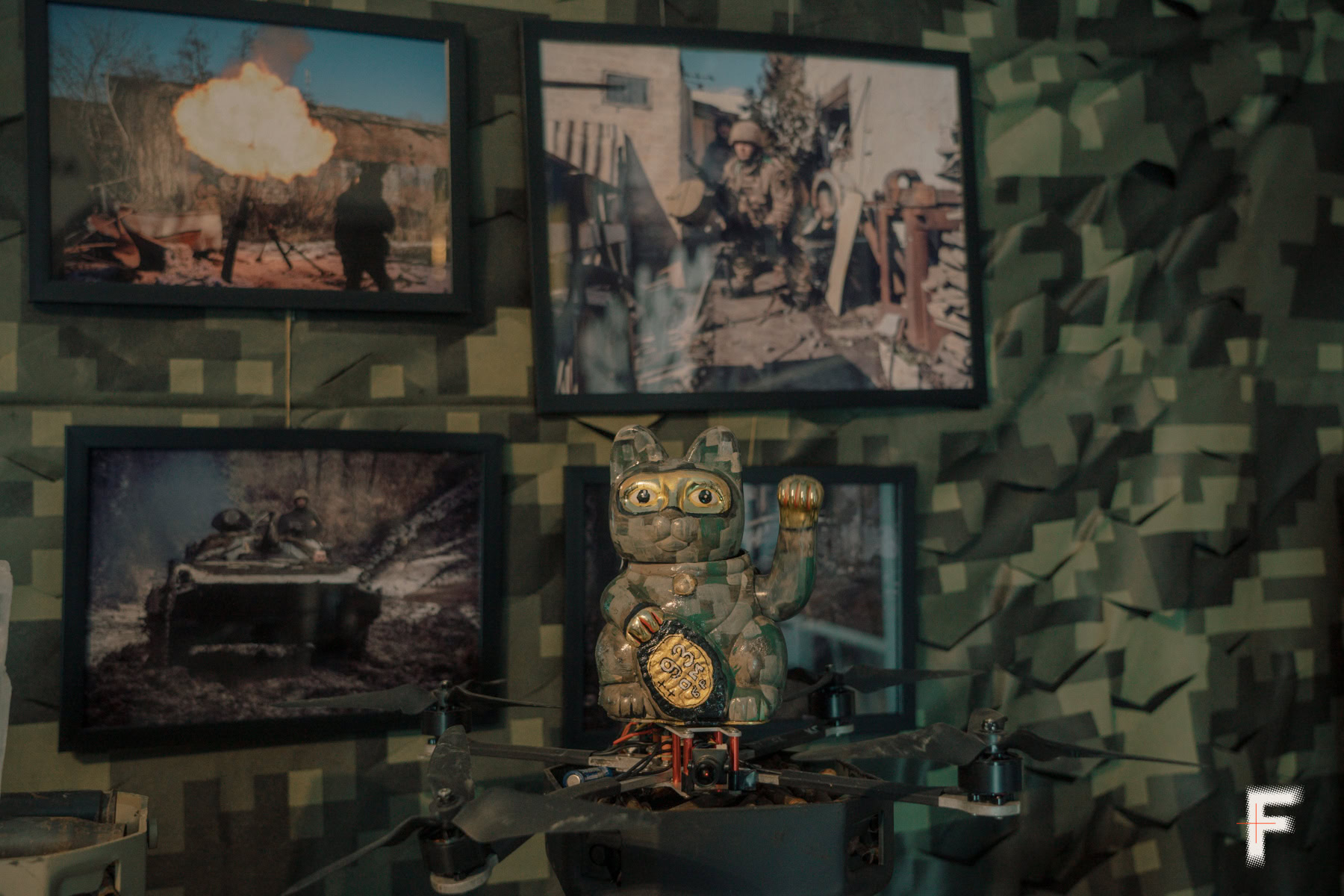
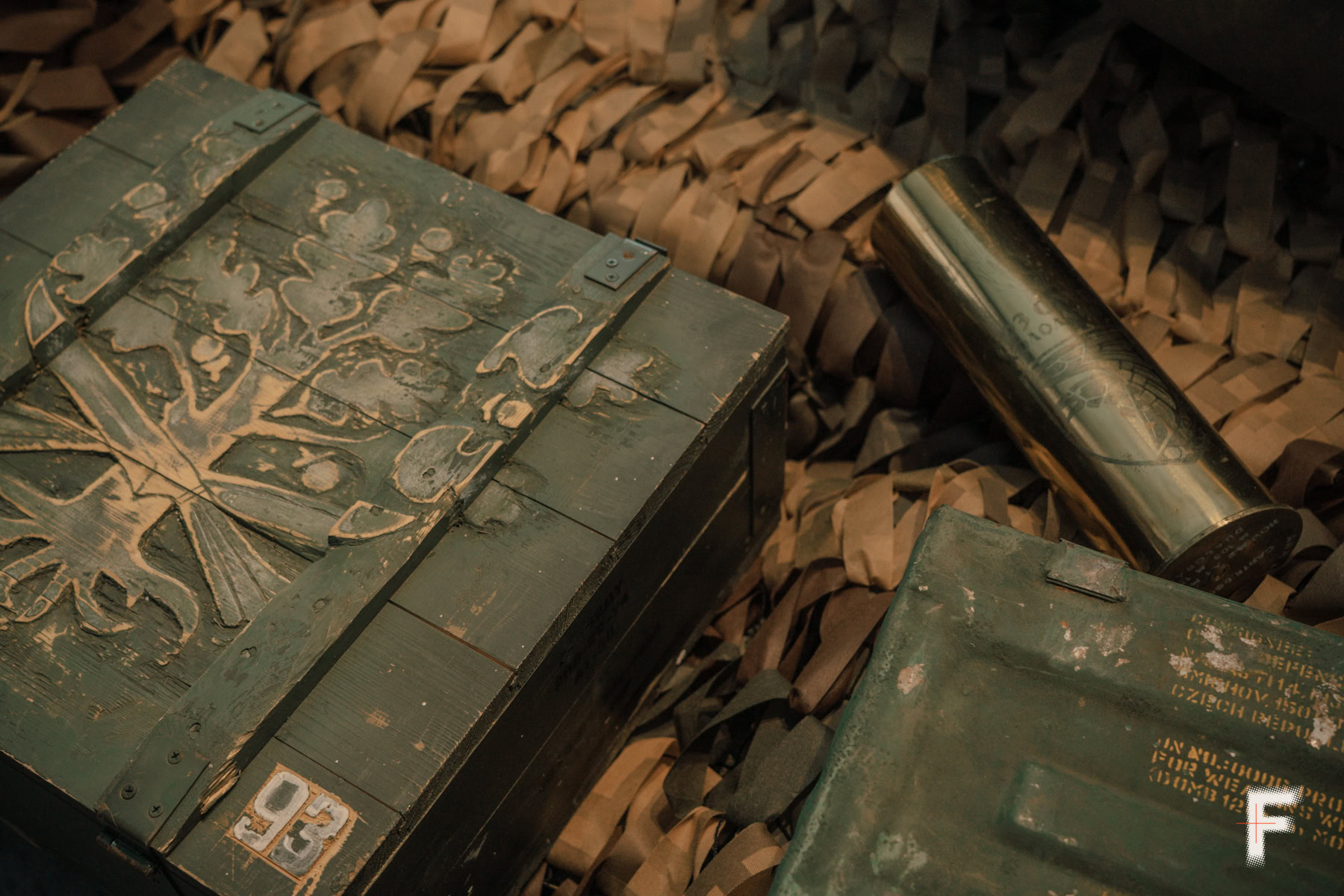
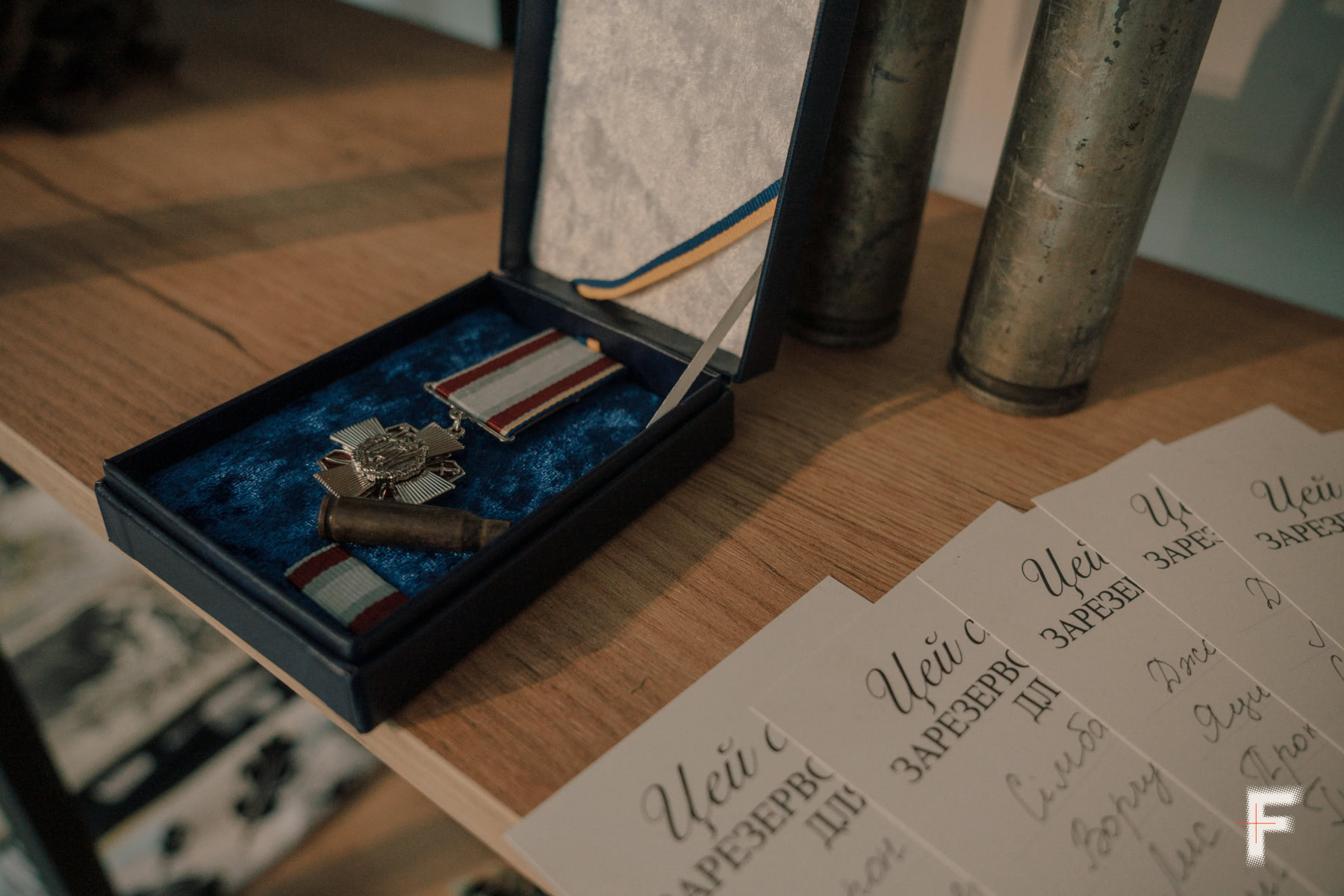
“The kitty is basically an active ingredient, a wish for happiness, health, and pay. I just made it a little more military-themed, so it conveys the same wish, only toward victory,” says ‘Rozfokus’.
The exhibition begins with a historical note recounting the struggle of the anti-Soviet Kholodnyi Yar Republic, in whose honor the brigade was named.
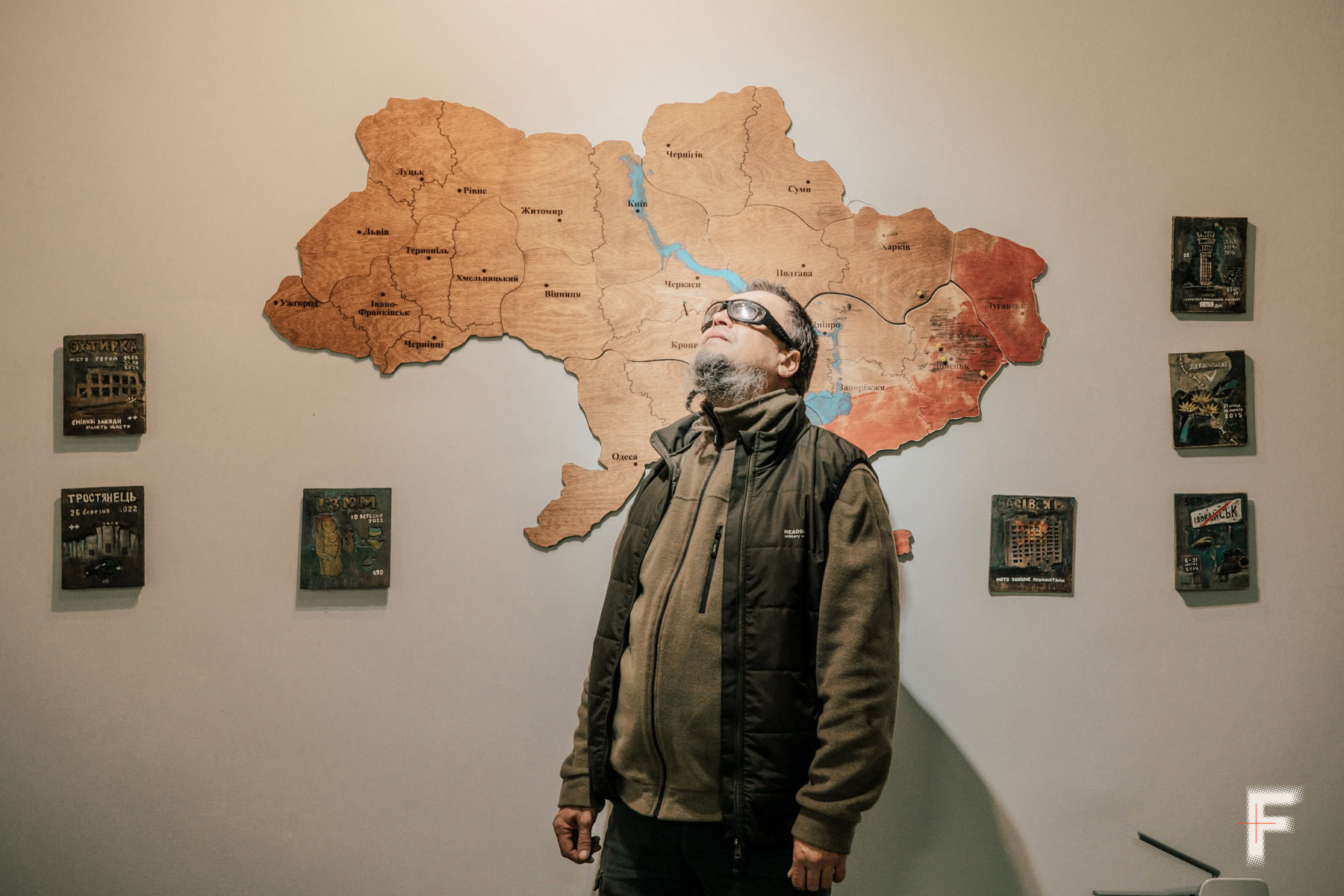
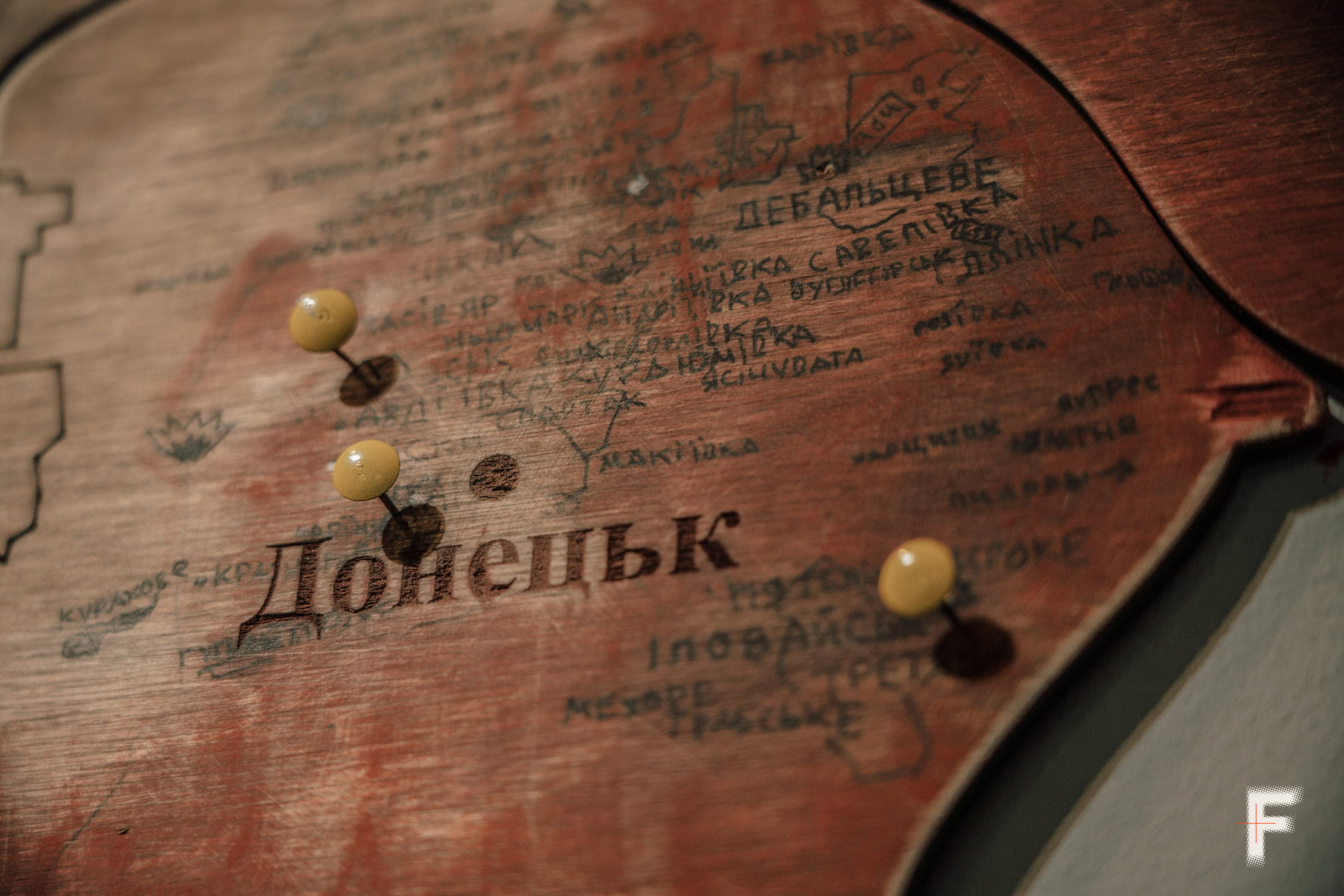
Another hall features a wall-mounted map of Ukraine, crafted from wooden pieces like a mosaic, each representing a separate region. The map marks the cities where the brigade fought. Surrounding the map are wooden plaques, carved and painted with individual cities tied to the combat path of the Kholodny Yar fighters. Some of these places have already been completely destroyed or occupied, including Chasiv Yar, Ilovaisk, Trostianets, Okhtyrka, Izium, and Donetsk airport. According to Dmytro, Bakhmut was also featured, but he has since gifted that piece. The collection is fluid and constantly evolving – some works are newly created, others are given away, and still others are sold.
[Translator’s note: The Kholodnyi Yar Republic was an anti-Soviet partisan state in central Ukraine during the early 20th century, centered around the Kholodnyi Yar forest in the Cherkasy region. It resisted Soviet forces from 1919 until roughly 1922, making it one of the longest-lasting anti-Soviet strongholds.]
I can dive into a project and lose track of people
and events around me.
Dmytro says that on these plaques he creates what could be called ‘city hieroglyphs,’ and the material of this size happened to come his way by chance:
“I didn’t have any materials at all, and here everywhere were ammo crates. Most likely, some shells were stacked with these planks in between, and it’s very easy to make something out of them,” the artist says.
He uses acrylic, a simple paint that dries quickly and adheres to any surface. To stay connected with the realities of war, ‘Rozfokus’ travels with journalists to active hotspots.
“My work is the kind where I can dive into a project and lose track of people and events around me. But going out to the field brings you back to reality, you understand what’s actually happening right nearby,” he says.
Recently, two of Dmytro’s works represented Ukraine at the Burning Man festival in the United States.
On this day, a documentary screening is planned for When Spring Came to Bucha, directed by Ukrainian filmmaker Mila Teshaieva and German filmmaker Markus Lenz. And recently, a serviceman from the ground robotic systems unit, with the callsign ‘Fokusnyk,’ performed magic tricks – true to his name. Dmytro shared his impressions with enthusiasm:
“His colleagues, about 15 people, gathered as he performed magic tricks, really cool, very fancy. You could tie him up with anything, and he’d be like, snap, and he was free from all of it!” ‘Rozfokus’ shares.
One of the brigade’s servicemen has a talent for leading tours – he skillfully recounts the brigade’s history, mostly for newcomers who have just joined the military or transferred to the brigade, helping them better understand the unit they are now part of.
[Translator’s note: Fokusnyk (фокусник) is a Ukrainian word meaning “magician,” “illusionist.”]
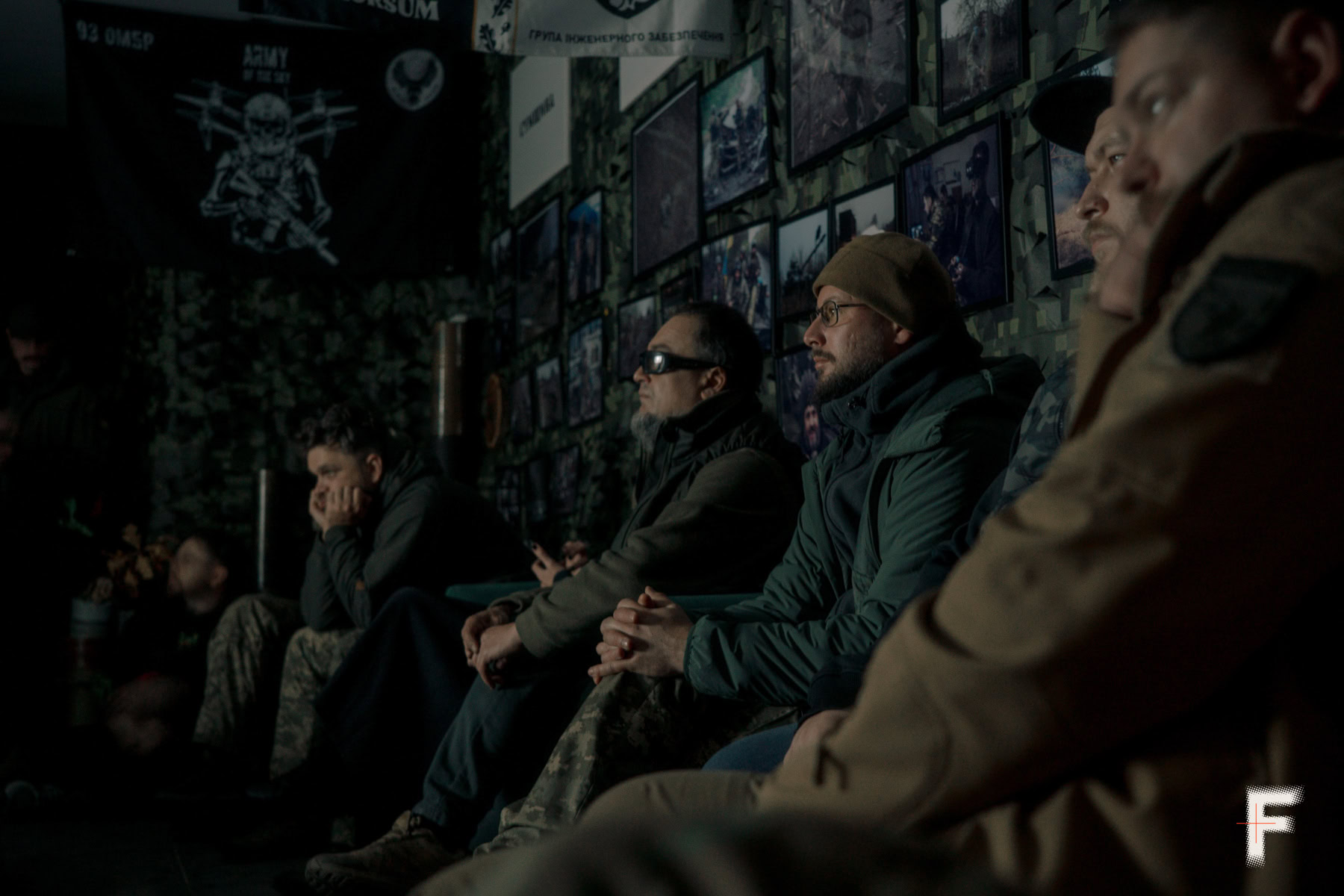
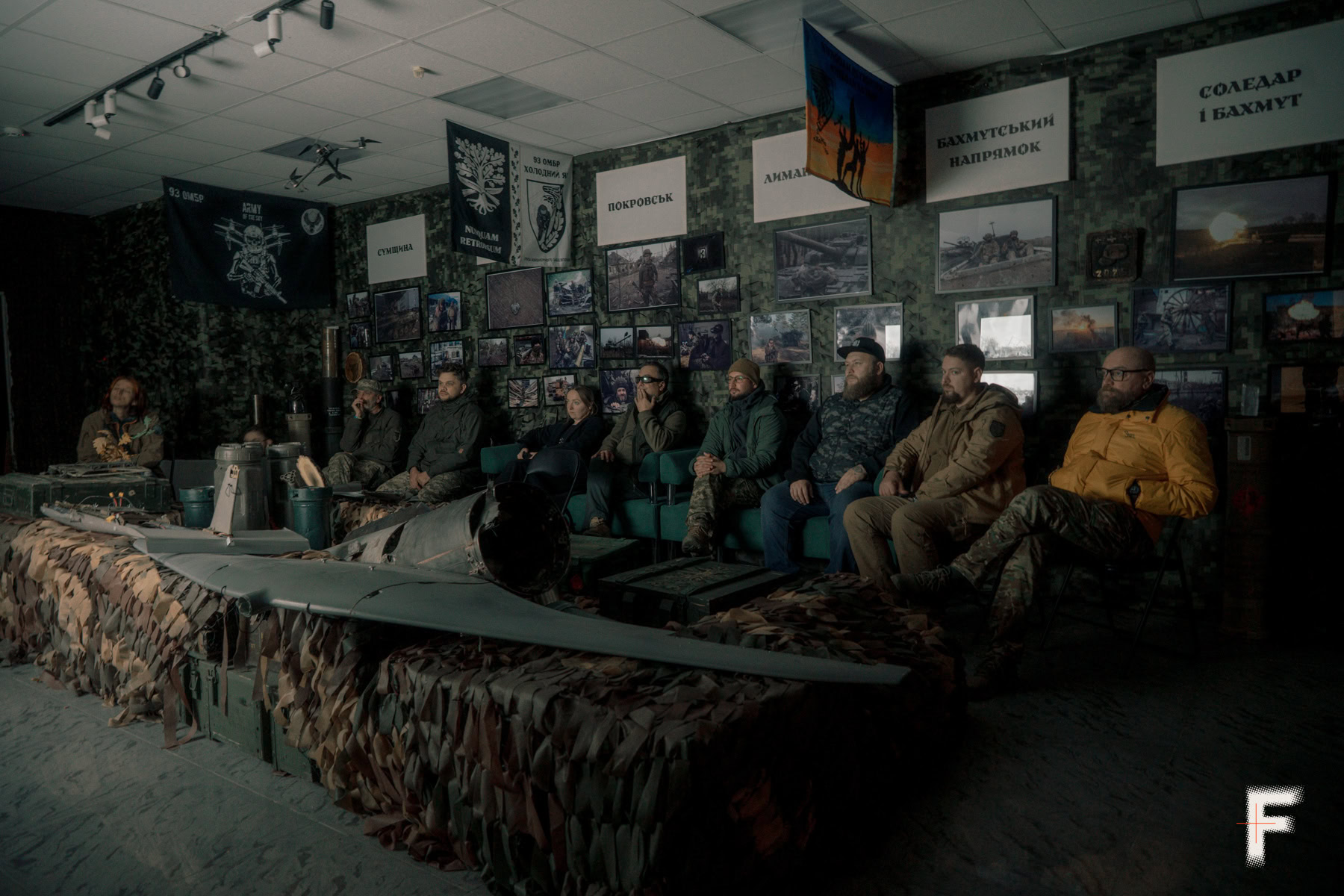
At the scheduled time, the servicemen arrive for the film screening. Since the announced documentary isn’t exactly light entertainment, only those genuinely interested attend: members of the press service, the patronage service, and chaplains. A few minutes are spent bustling around, setting up the projector and gathering chairs.Those without seats simply take wooden ammunition crates from the exhibition and settle on them. The film is gripping, holding attention from the first to the last frame. When it ends, there’s a short smoke break outside, a quick exchange of impressions, and farewells. From the reality of the recently liberated Kyiv region, the viewers return to the reality of front-line Donetsk – ready to resume their posts on their stretch of the war the next day.
Text: Olena Maksymenko
Photos: Marharyta Fal
Adapted: Irena Zaburanna
Read more — Uzhhorod: a war lived 1,000 Kilometers from the front