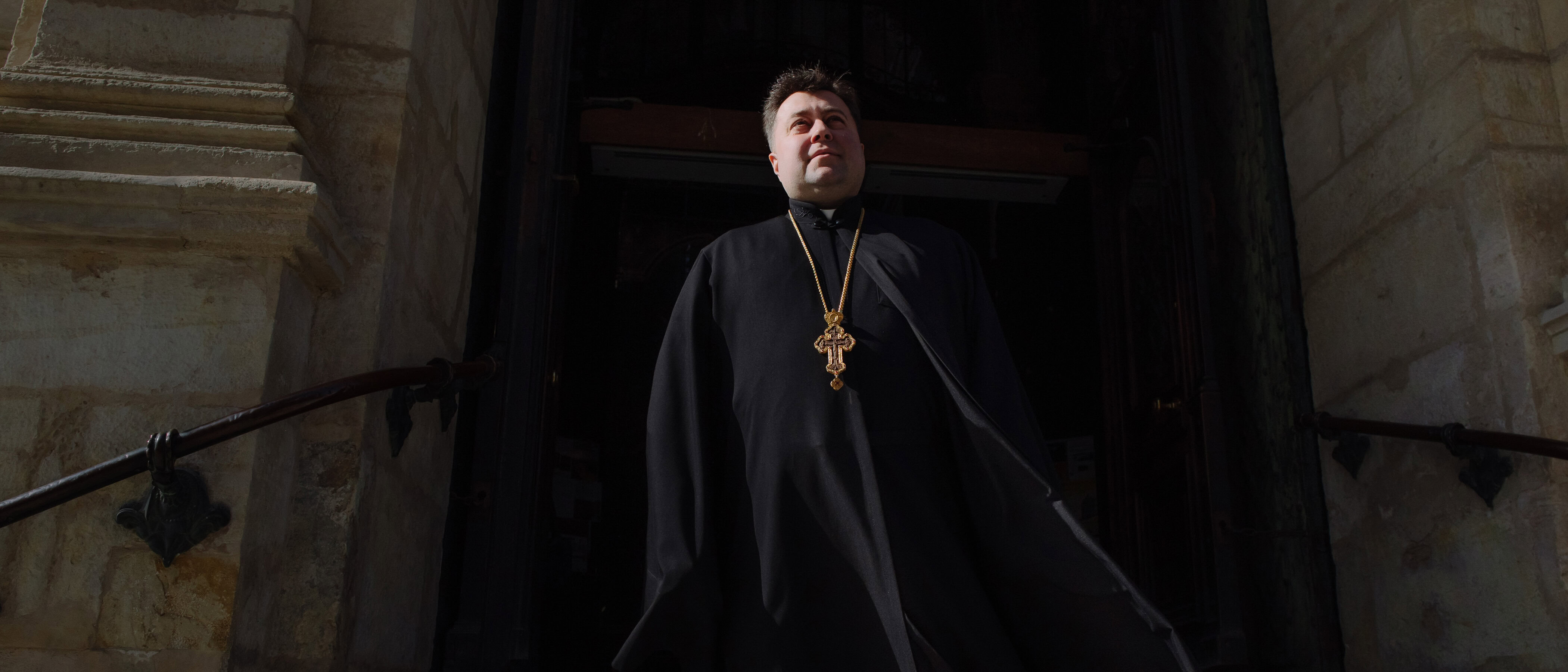
Each day at the threshold of grief, a priest bids Ukraine’s fallen their final farewell
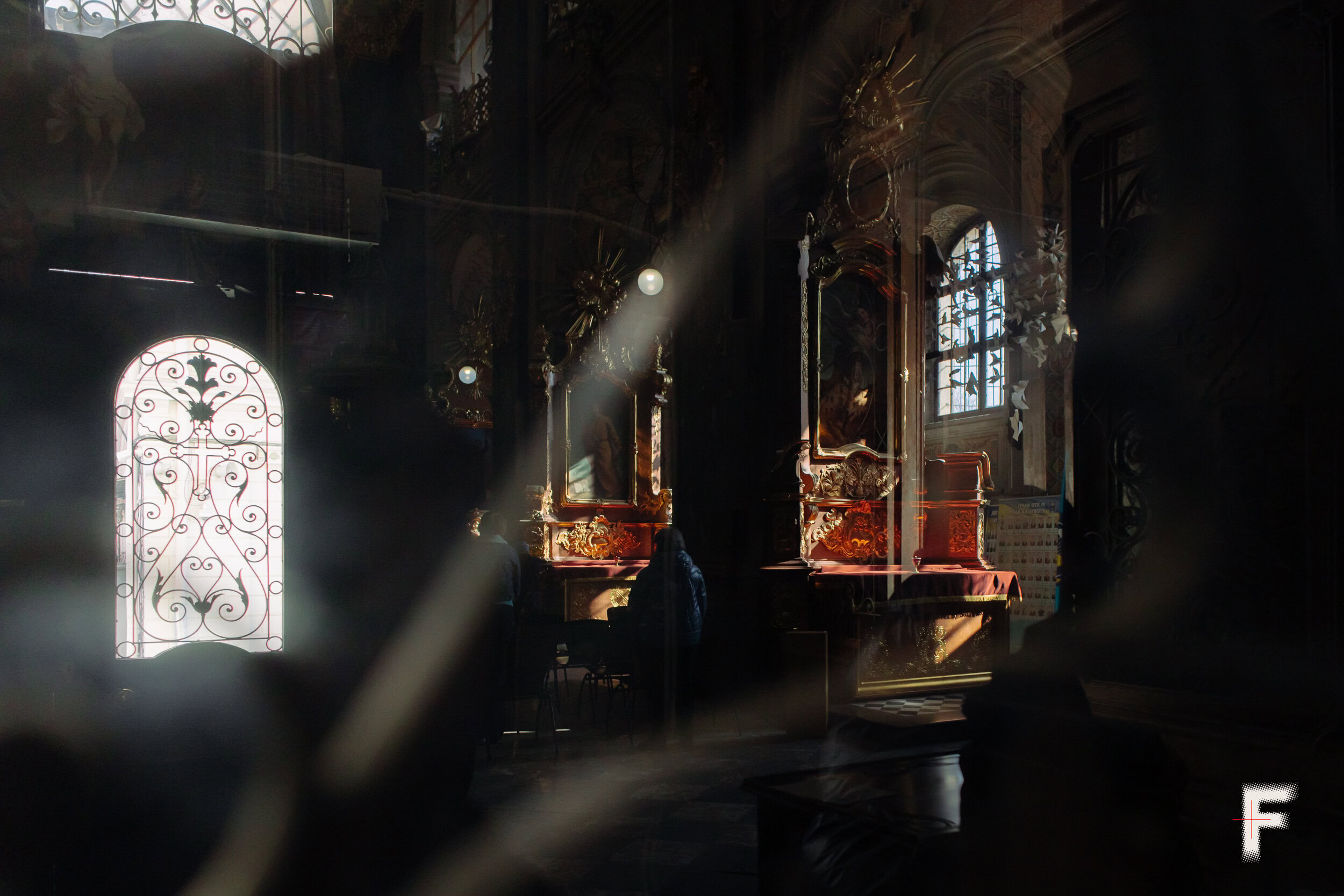
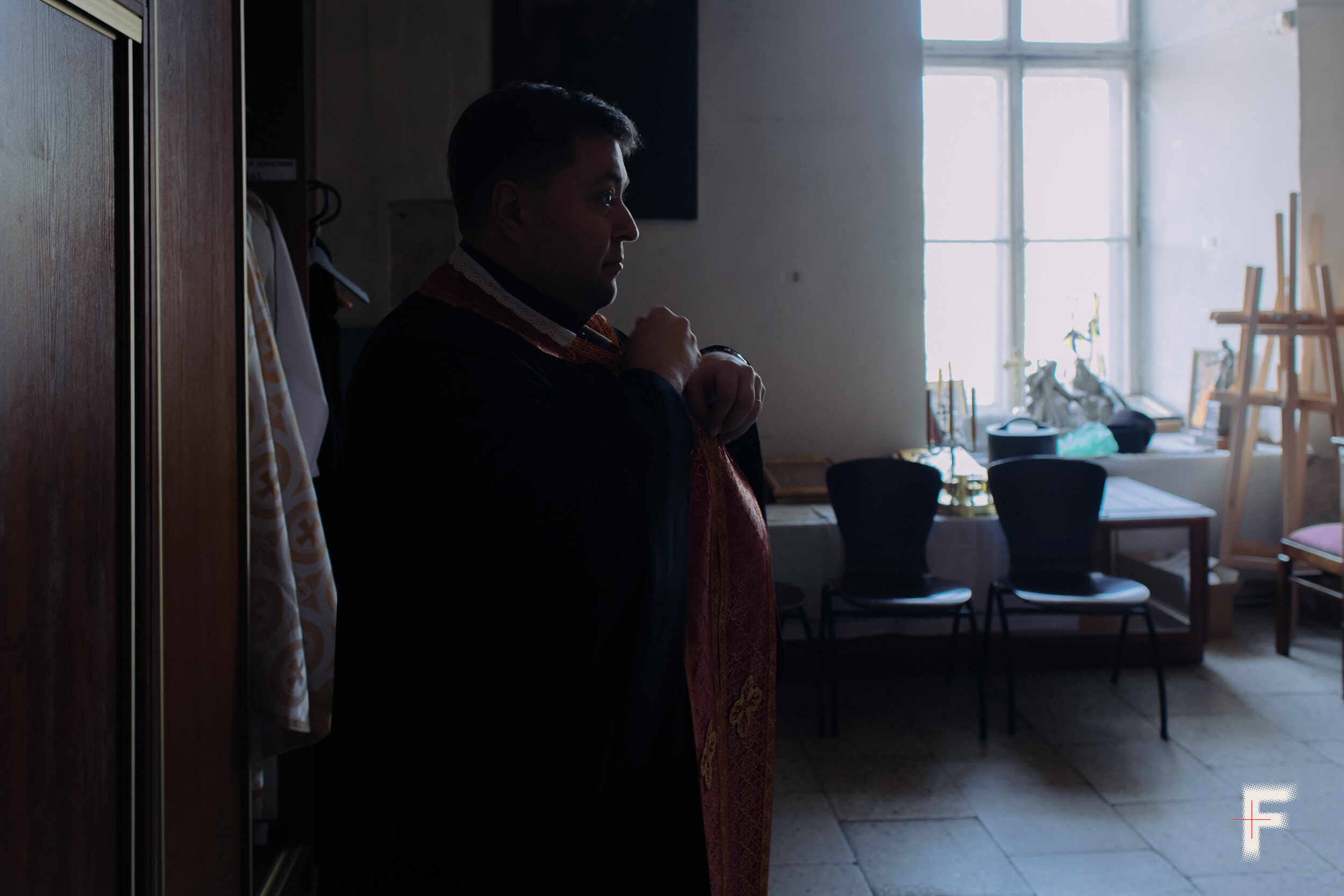
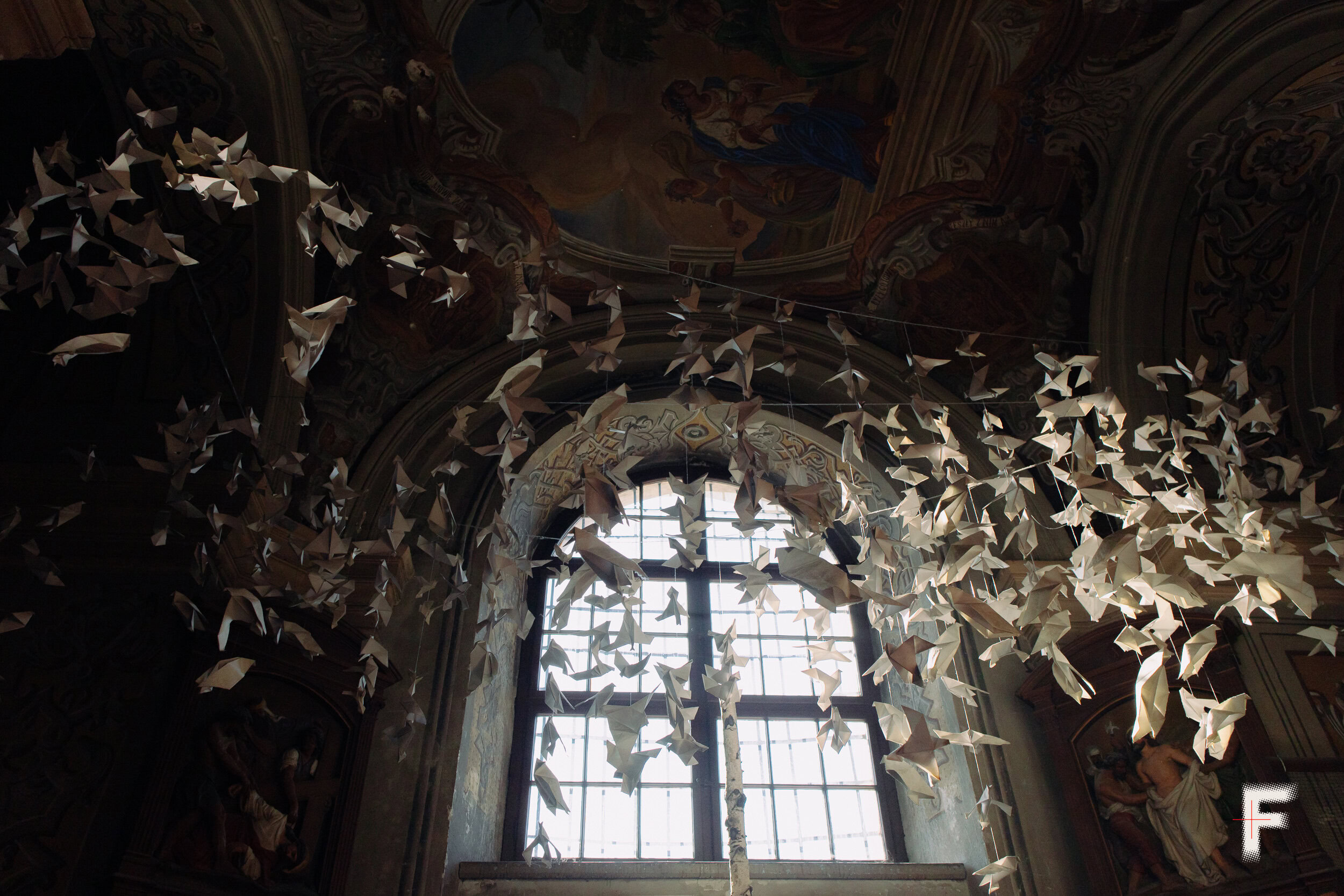
Sunlight pours through the windows of the Garrison Church of Saints Peter and Paul in Lviv, casting a warm glow on the white paper angels that sway gently in the corner. As they do every day, worshippers gather for the morning liturgy, praying, preparing for confession, wiping away tears or simply searching for hope. After the service, the parish priest, Taras Mykhalchuk, promptly changes from red vestments into black. In just fifteen minutes, the church will once again receive a soldier killed on the front line. This time, reporters from Frontliner are there to witness the funeral rite.
A funeral bier stands at the center of the church, flanked by two flags, vases of flowers, and a few chairs meant for the fallen soldier’s family, though no one will sit. Outside, a funeral car pulls up, and the priest steps forward to meet the soldier he will escort on his final journey.
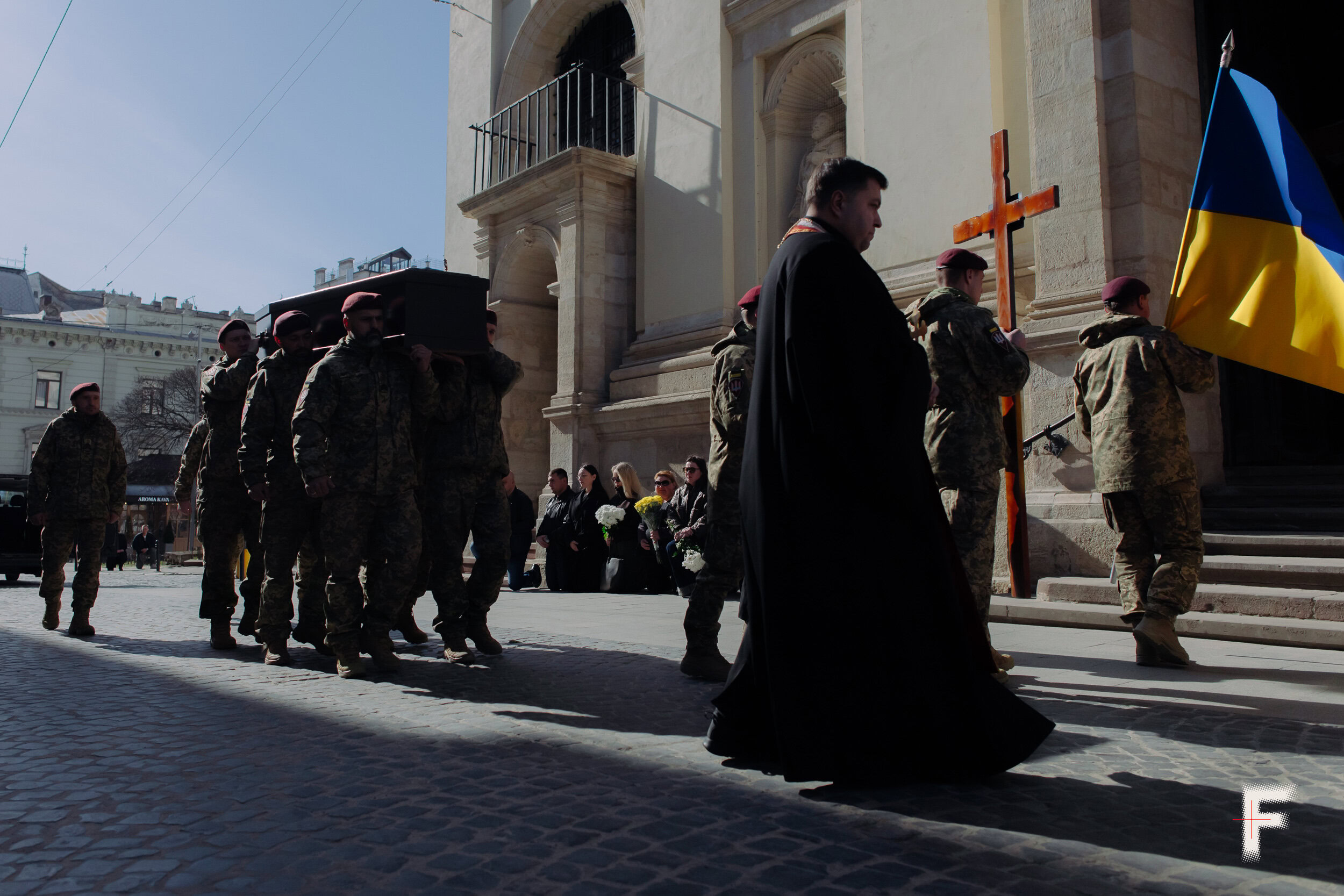
Father Taras remembers well his first military funeral at this church, back when he was serving as an assisting priest to the pastor. After Russian shelling on the night of July 11, 2014, near Zelenopillia in Luhansk region, the church held its first service for three fallen soldiers at once.
The calling to serve soldiers came before the war
While studying at seminary, Taras Mykhalchuk aspired to become a military chaplain. Each week, he visited army units, talking with soldiers about life and the challenges they faced. His path in the church took shape gradually: first ordination as a deacon, then priestly ordination in 2009, alongside service at the Military Chaplaincy Center.
Back then, he knew the armed forces were vital to the state, but he could never have imagined living through a war, traveling near the front as a military chaplain, and conducting funeral rites for fallen soldiers.
Since 2014, Father Taras has witnessed many stories that left a strong impression. He recalls the parents of a soldier who was killed near Zelenopillia. After their son’s death, they often came to the church to pray, even though the father was completely blind and the mother nearly so. Two years ago, they came to the pastor and asked when he could show them around the Garrison Church. They also mentioned that they had always wanted to visit Greece. The priests made that dream a reality by sponsoring a pilgrimage for them. The clergy strive to support the families of fallen soldiers not only on the day of the funeral.
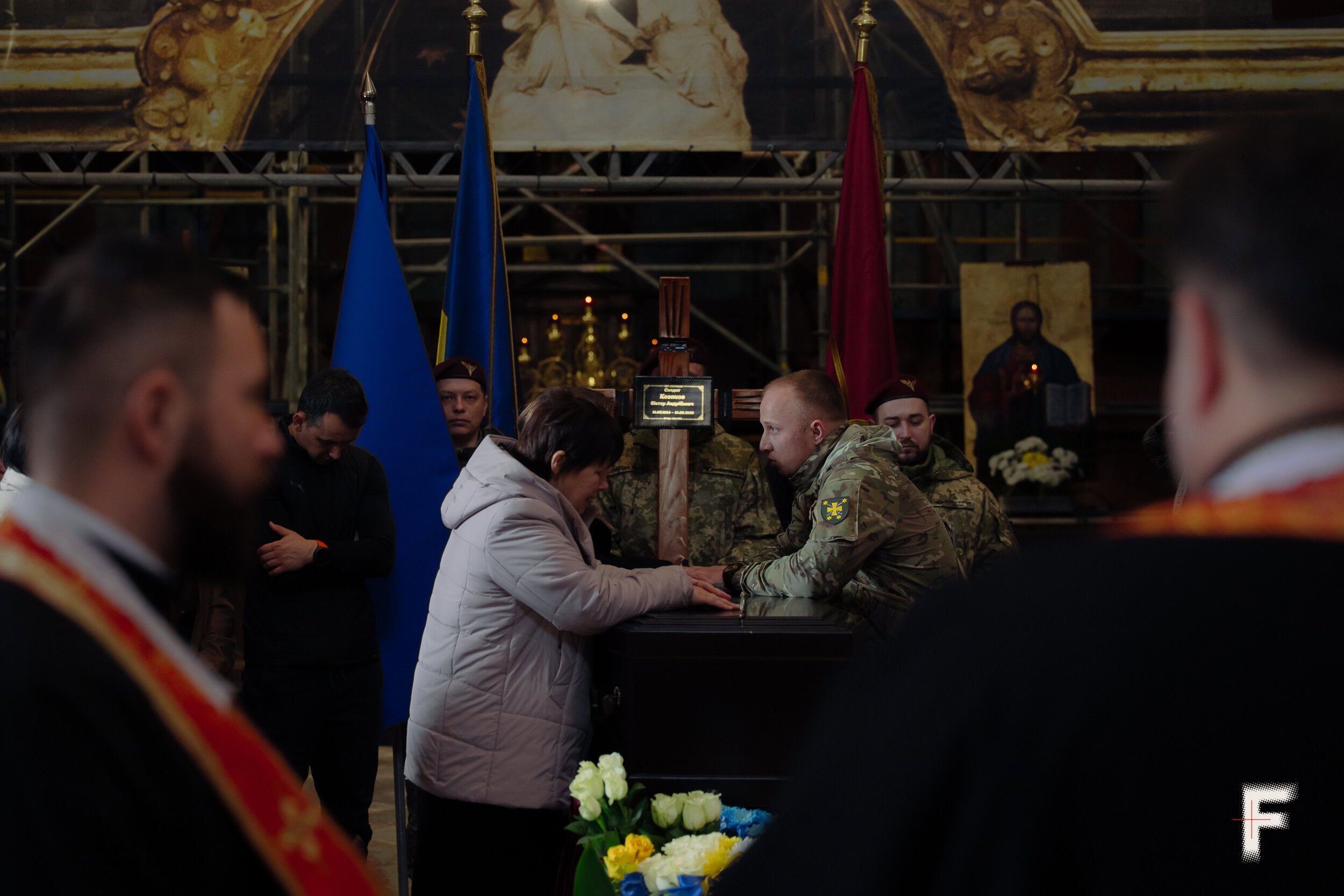
Only those who have experienced loss can truly understand the families of the fallen
In the first year of the full-scale invasion, Father Taras conducted funeral rites for two soldiers at the church. He recalls the mothers standing at each coffin, crying and holding their children. At one point, their eyes met, they moved toward each other and embraced, finding a brief moment of comfort before returning beside the coffins. The scene deeply moved the priest and reinforced his belief that only those who have experienced such loss can truly understand others in grief. For this reason, he avoids saying “I understand you” and advises others to do the same.
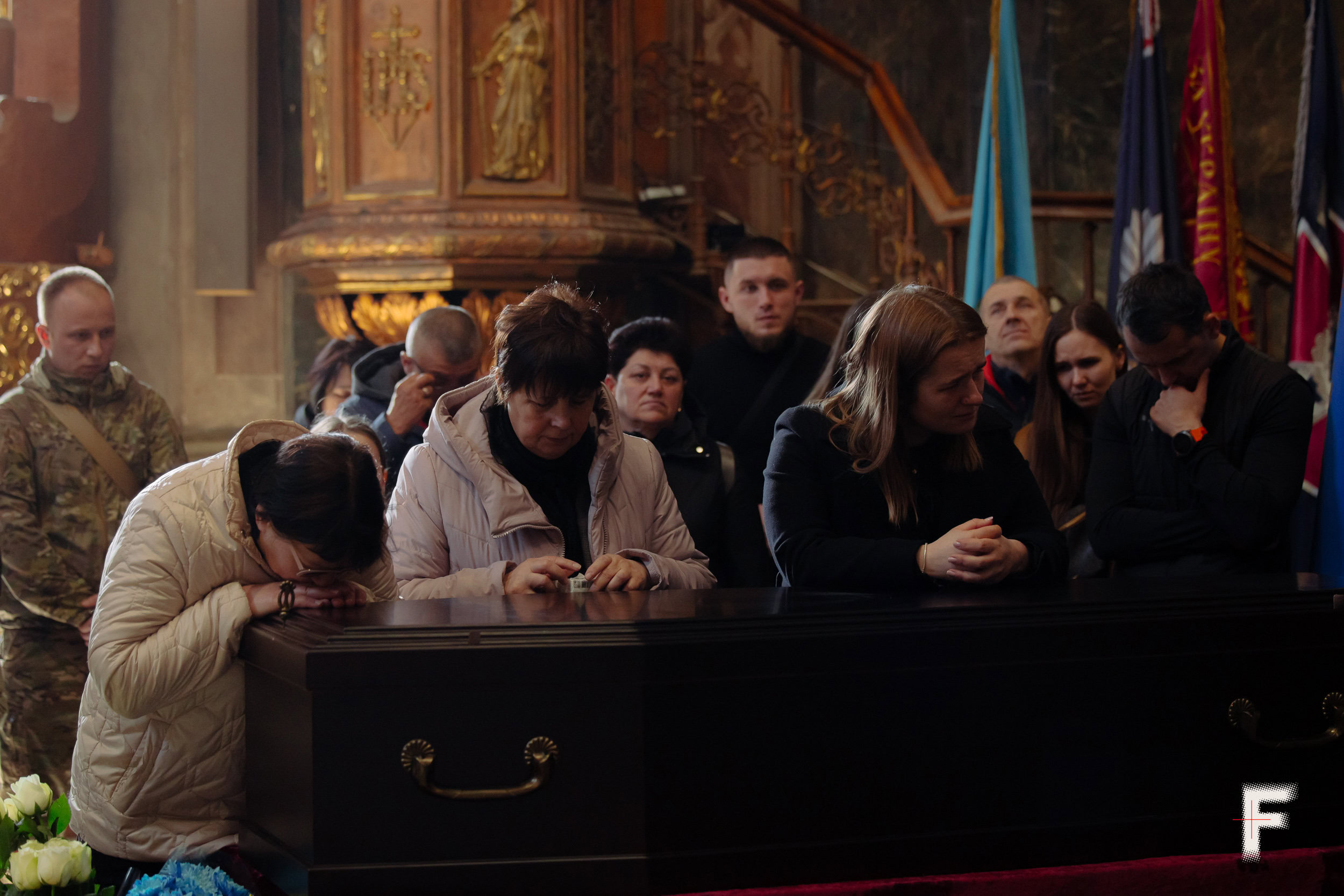
Words can easily wound the families of the fallen, so the priest carefully chooses what he says. More often, he simply stays close, a quiet presence reminding them that love never fades, even after death.
People step across
the threshold of pain,
Father Taras recalls a woman who, after her son’s funeral, felt the same way she did before he was born. As she was expecting him, she loved him deeply and longed for the day she could hold and kiss him. Now she waits for that meeting again, but now it must wait until the afterlife, Father Taras says.
“Through faith and hope, people step across the threshold of pain and realize they are still alive. For Christians, there is no death, only a passage into eternity. Belief in this allows us to see the world differently,” the priest says.
Duty to accompany the fallen on their last journey
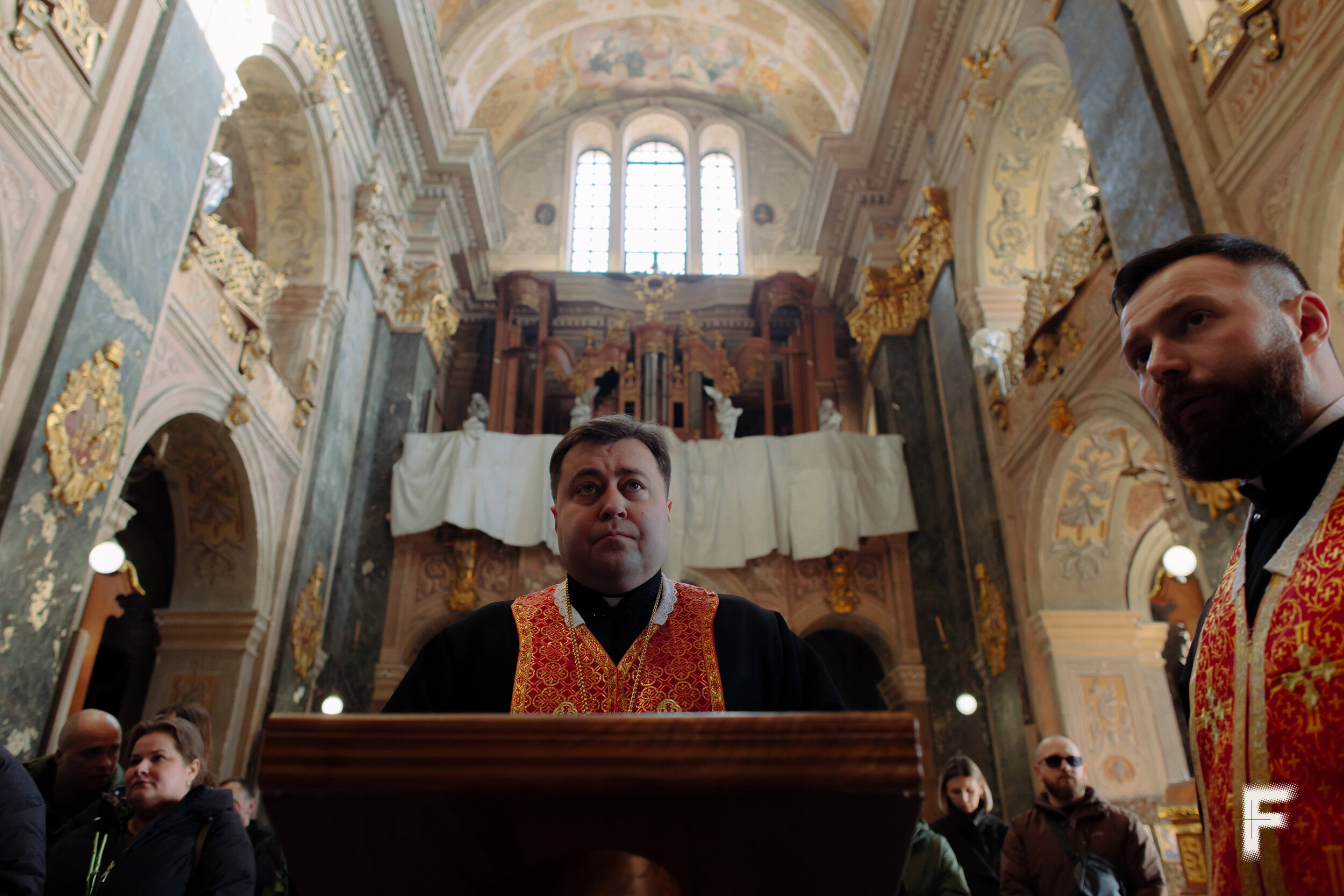
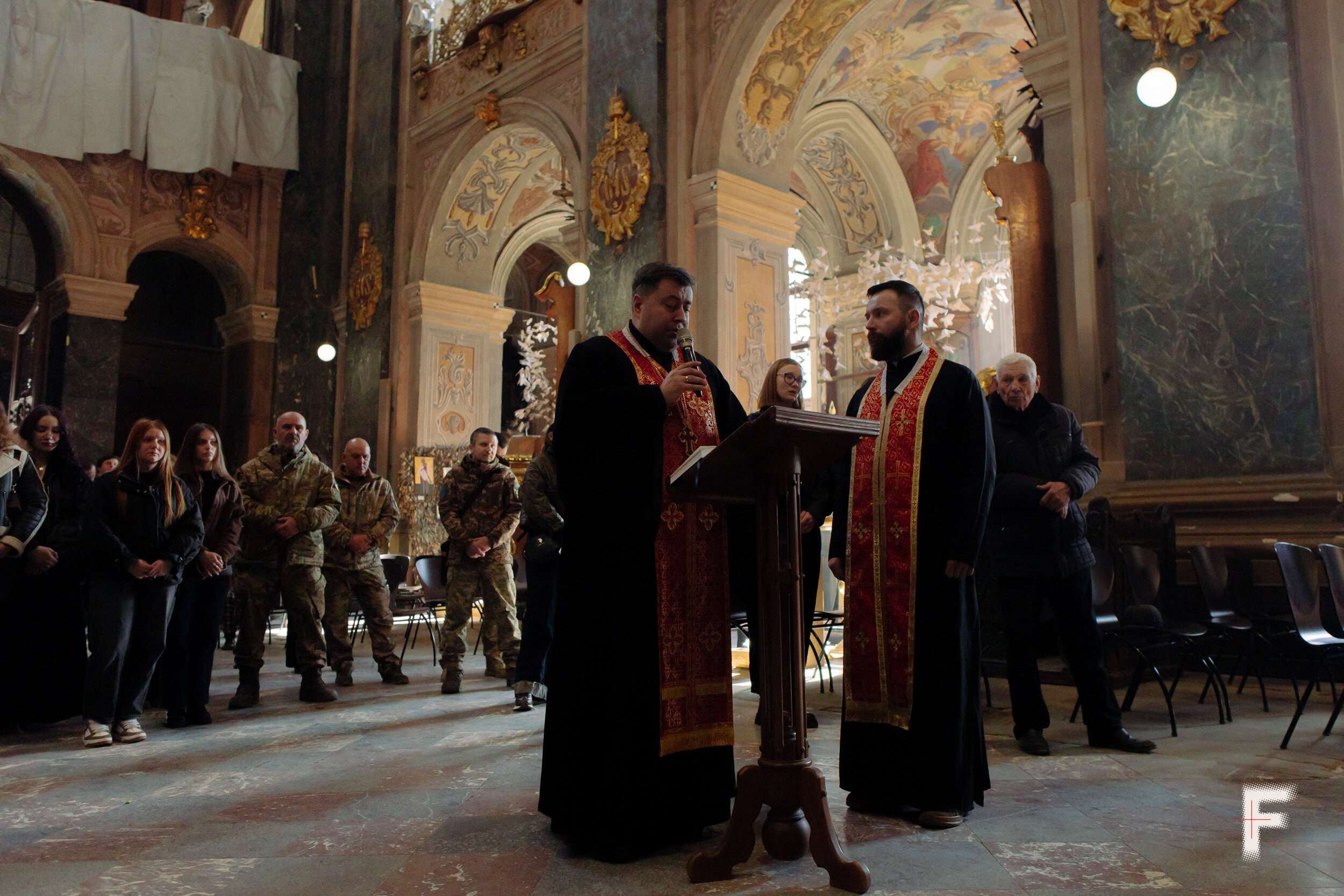
Today, on the doorstep of grief, stand the relatives of a soldier from Cherkasy who fought from the very first days of the full-scale invasion. Through the microphone, the cantor’s haunting voice fills the church with a sorrowful chant. Father Taras waits as Viktor Kozakov’s family says their final goodbyes. He rests his hands on a prayer book and watches them with quiet compassion, never averting his gaze.
Once again, we stand before the coffin of a remarkable Ukrainian.
Because of him, we can live, think, and breathe,
-
Chaplain Taras Mykhalchuk during a service, Lviv, Ukraine, March 10, 2026. (Anna Zubenko/Frontliner)

-
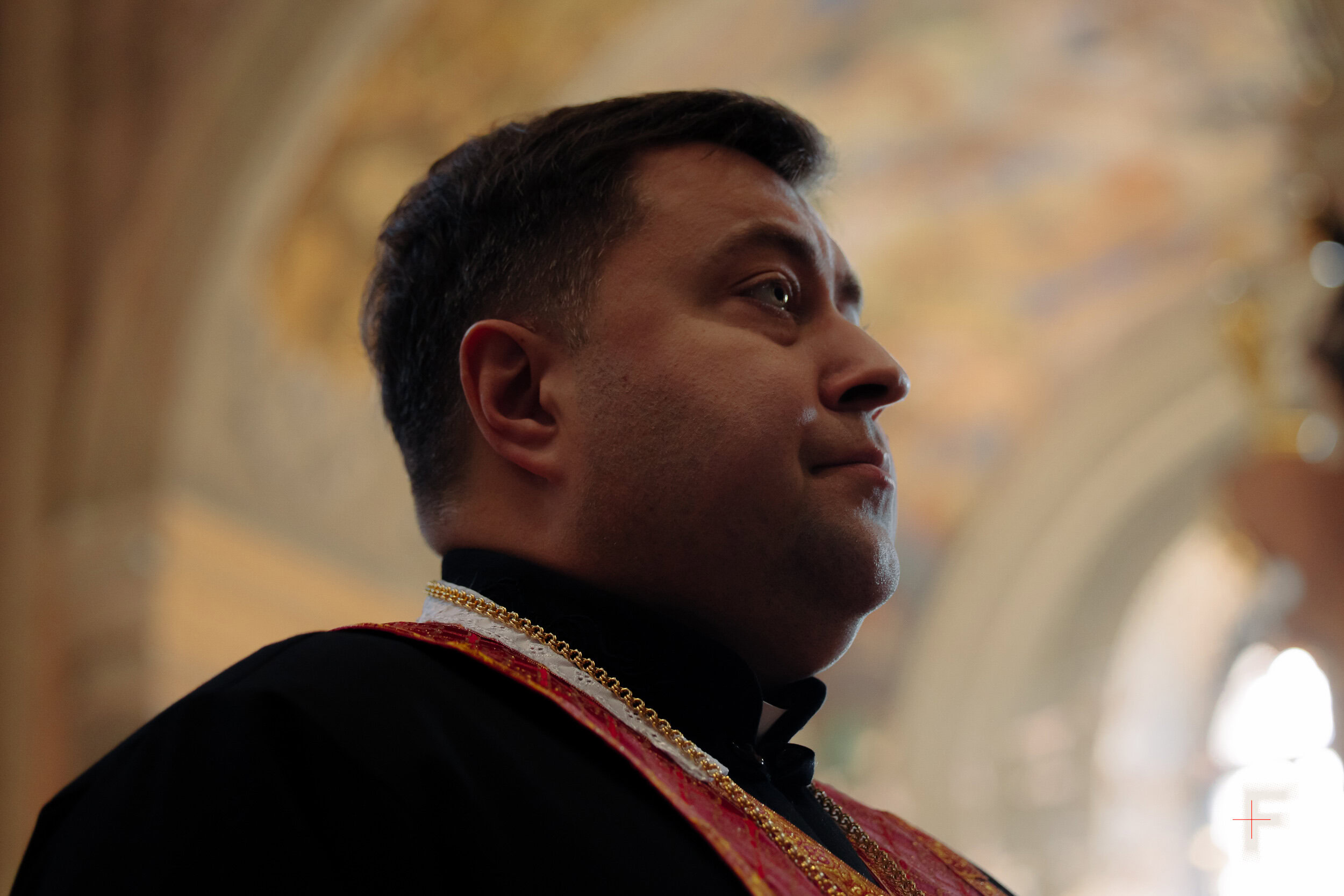
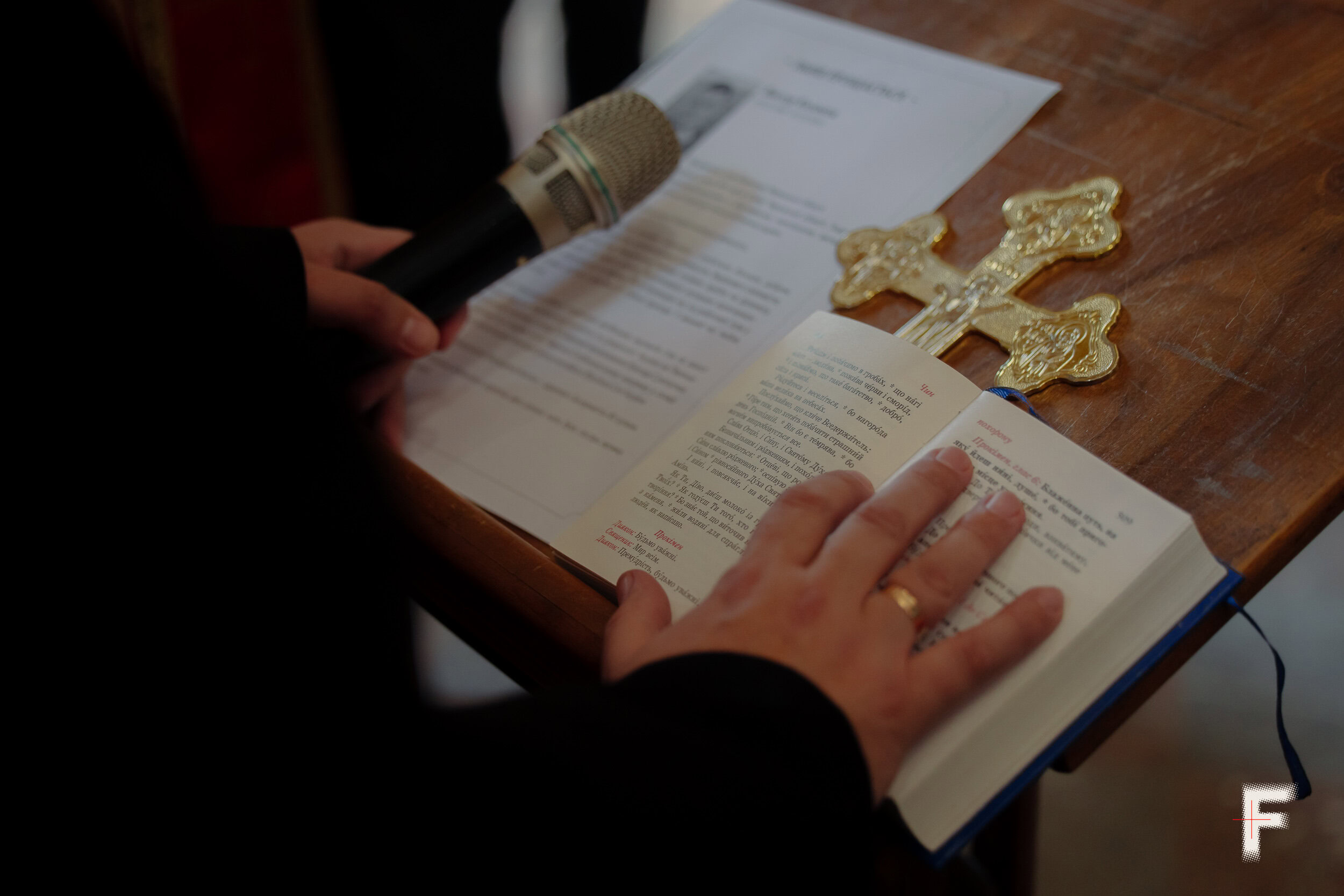
It might seem that funerals have become routine for the priest. But he says that each service is the greatest honor, and that his duty is to attend to the final rest of those who served faithfully to the very end.
“Once again, we stand before the coffin of a remarkable Ukrainian who gave his life for us. We are always faced with choices, and Viktor chose to love Ukraine. Because of him, we can live, think, and breathe,” Father Taras begins his speech.
Then he speaks words that are unique for each family. During this funeral, he mentions “enduro” and “off-road,” which might seem unusual for a priest to mention. These types of outdoor adventures, like riding motorcycles and driving through rough terrain, were the passions of the soldier being honored.
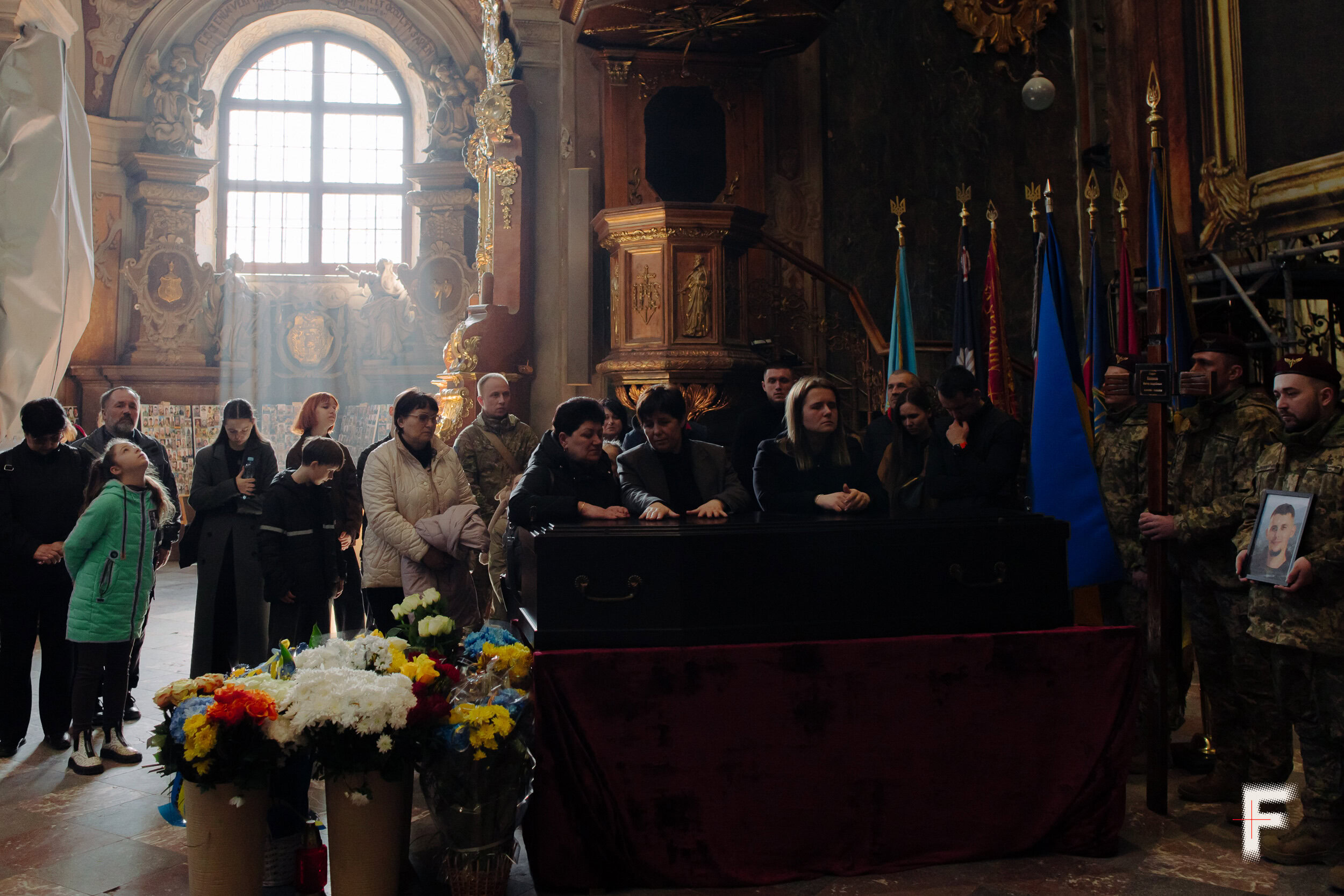
As with every funeral, the priest reflects on the families of the fallen soldiers. Today, two young girls have been left orphaned. Offering these children support, whether through church meetings, English lessons, workshops, or summer trips, is also part of the priests’ mission.
During funeral ceremonies, Father Taras always speaks the words of Scripture: that there is no greater love than to lay down one’s life for another. Now he also recalls the words of the church figure Heorhii Konyskyi: when hope outweighs fear, courage is born.
[Editor’s note: Heorhii Konyskyi (1717–1795) was a Ukrainian Orthodox bishop, writer, and educator, and a key figure in the Ukrainian academic tradition.]
The funeral rite lasts just over half an hour. After that, Father Taras guides the service to the mourning procession. Church helpers clean up, sweeping the floor of leaves and flower petals. Little by little, the church shifts from its moment of tragedy back to the rhythm of daily life.
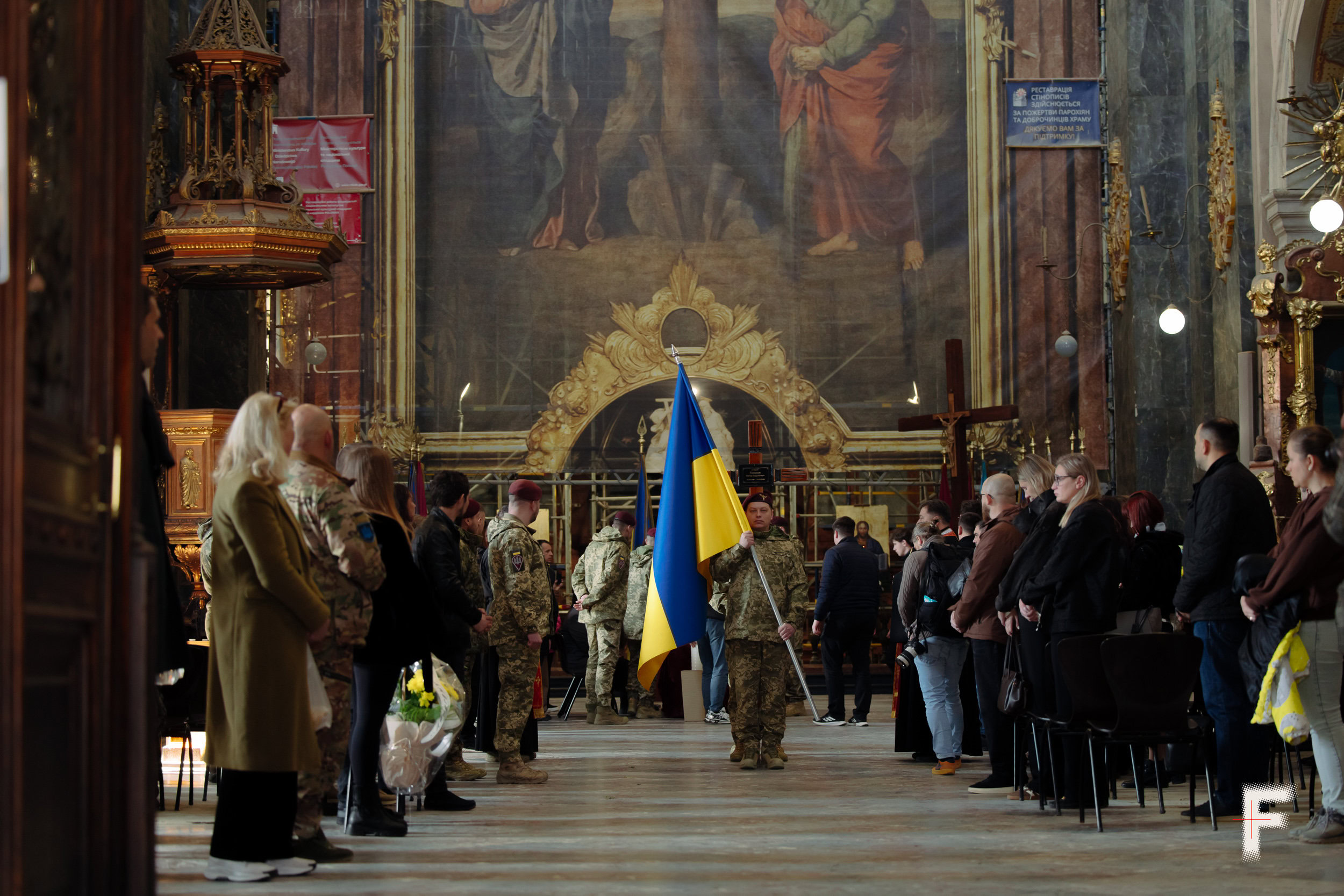
Today, a few dozen people attended the funeral. Sometimes the church is full, and at other times only a handful of people come. The priest says it is selfish when some avoid soldiers’ funerals just to spare themselves the pain:
Families of soldiers need our support, and we must remember
that the war touches us all.
Attending funerals should become a regular practice.
Father Taras says he now shares these duties with other chaplains, as the number of funerals is overwhelming. Still, it is his faith and the words of Scripture that help him bear the daily flood of grief –– both others’ and his own. Sometimes, in his prayers, he speaks to the soldiers he has buried, asking for their guidance during the most difficult moments.
Recently, Father Taras faced a deeply personal trial: the funeral of a former classmate. He hadn’t even known that his classmate had gone to war, though he remembered him fondly from school. He says it was difficult to find words of comfort for the mother of the fallen soldier, and equally hard to see so many familiar faces, no longer in a classroom as they once were.
Support through prayer and connection
Taras Mykhalchuk believes that God wipes away tears, and he looks for evidence of it. He recalls the funeral of a fellow officer, the only son of his parents. His mother could not come to terms with the loss, and ambulance staff cared for her for most of the night before the funeral, providing support. Two years later, the family adopted a boy from an orphanage. After that, priests shared their contact information with other families experiencing grief so they could talk and find hope.
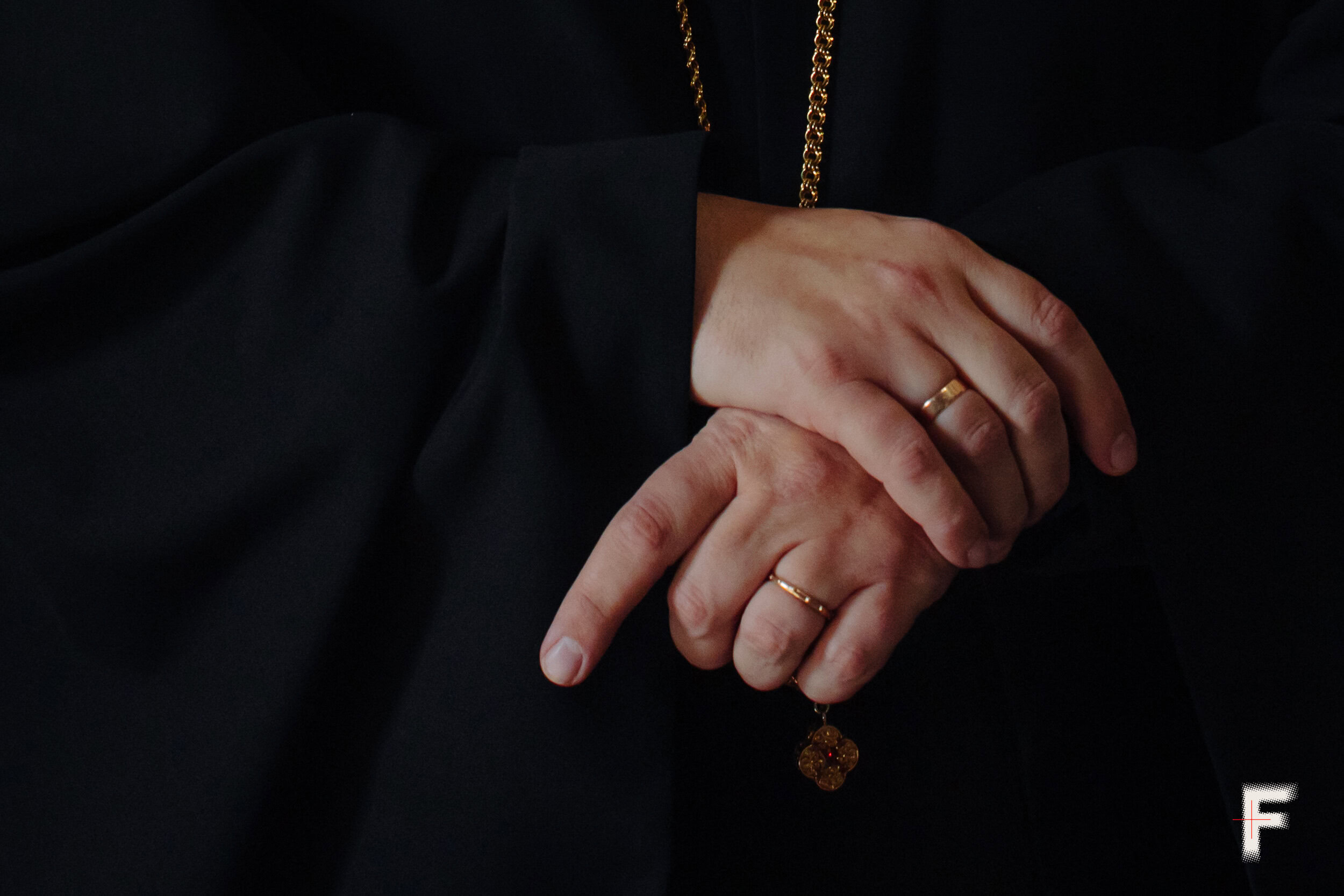
He recalls another example, the story of a fellow priest from Canada. His son was training to be a pilot and needed just a few more hours of flight time to earn his certification when he died in a crash. The parents were overwhelmed by sorrow, and only meeting with other families who had tragically lost children helped them begin to recover.
Twice a month, the priests of the Garrison Church hold gatherings with relatives for joint prayers at the cemetery. Even if the families of fallen soldiers do not come to pray, the chaplains still make time for them.
“Unfortunately, there are so many families of fallen soldiers that we cannot reach them all. But we pray for everyone and try to be there for them,” the priest says.
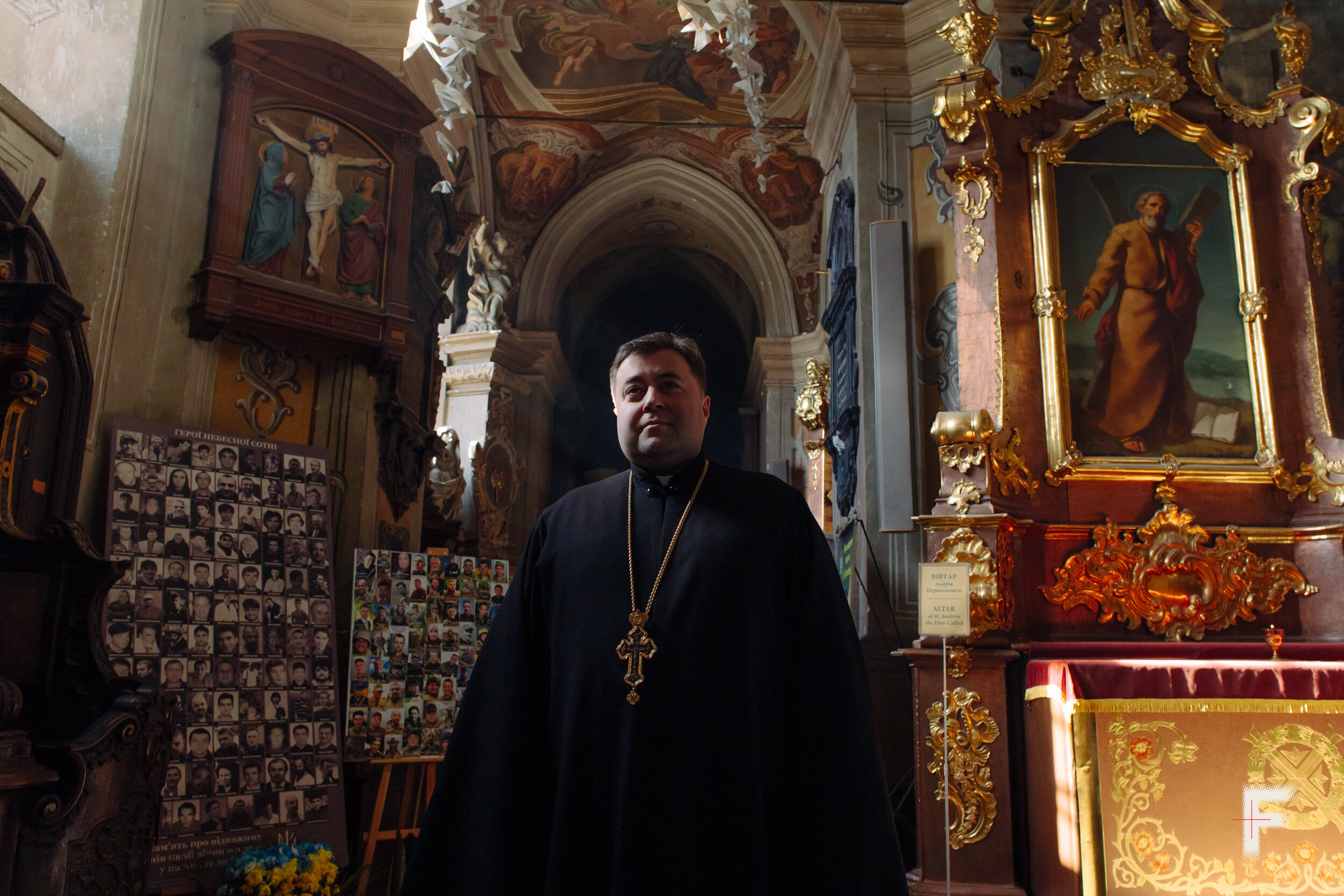
Family, art, and a beautiful sunset
After a funeral, Father Taras usually still has many tasks to attend to. Yet despite everything, he finds time to talk with soldiers, because those conversations also give him strength to continue his ministry. Listening to stories from the front reminds him that he must do even more in his own role.
When his work day is over, Father Taras removes his priestly vestments and returns home.
-
Chaplain Taras Mykhalchuk, Lviv, Ukraine, March 10, 2026. (Anna Zubenko/Frontliner)
-
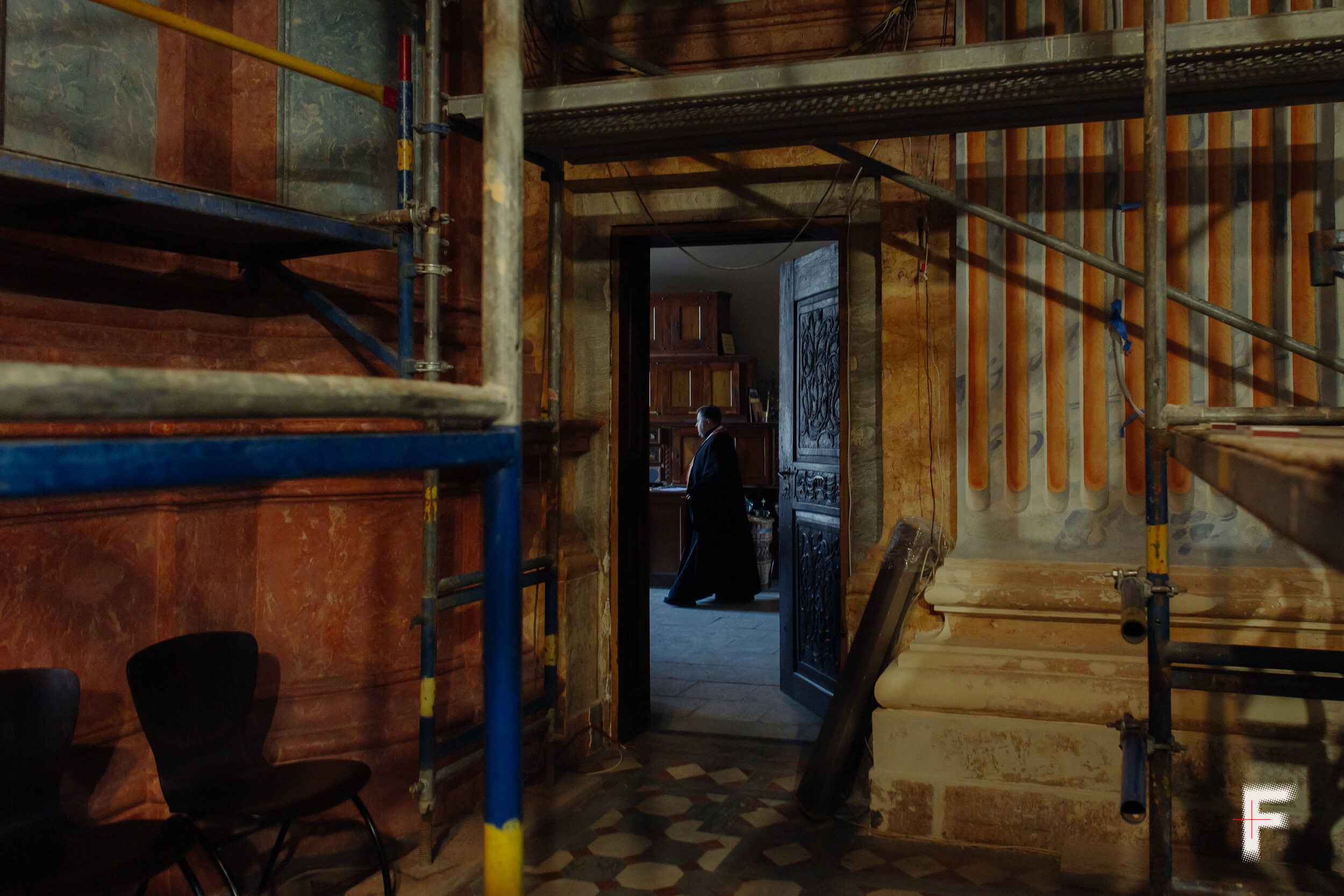
At home, his wife and four children are waiting for him, his greatest source of comfort. There is also Lucky, a gentle 50-kilogram dog brought from Zaporizhzhia three years ago, whose behavior was shaped by the war. Now he hides in his kennel at every loud noise.
Father Taras keeps a collection of gallery catalogs at home, a kind of guide to the world of art that allows him to touch something timeless. He also finds this beauty in nature. Whenever he can, he goes with his wife to watch the sunset or take a walk to a monastery outside Lviv.
Even after a long day, he pauses to appreciate simple things –– the sunlight, the morning dew on the grass, or the song of birds.
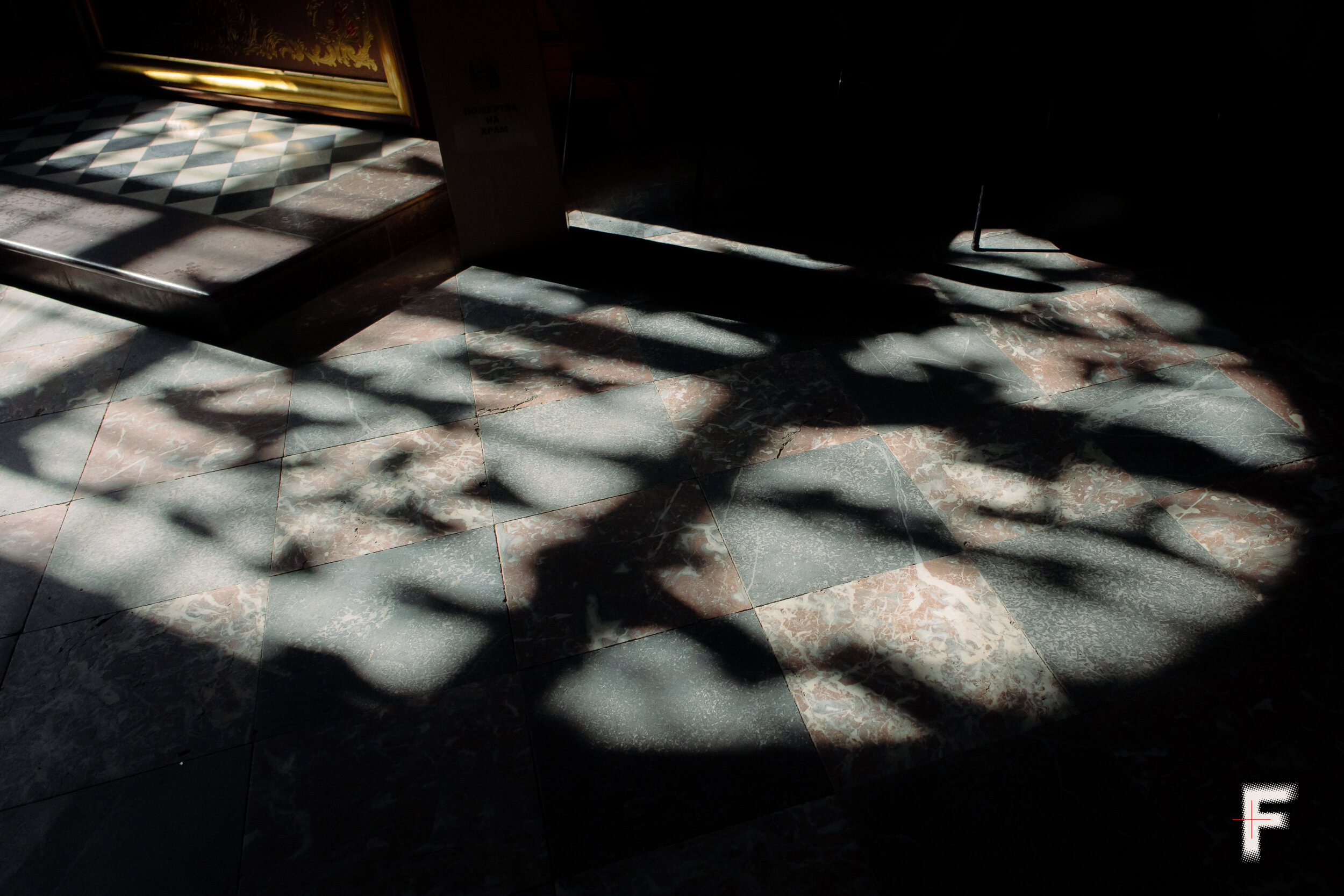
Yet for now, Father Taras changes again, this time from his black vestments into red, continuing his ministry in the church, which has been his second home for years.
By the afternoon, the church feels even brighter. People come and go constantly, causing the doors to swing open more often. The paper angels in the corner don’t just sway gently – they seem to lift toward the sky.
***
Hi, we are Mariia and Anna, the authors of this article. Thank you for reading to the end.
This report is about a priest from Lviv who holds funerals for fallen soldiers every day. It aims to show a person who regularly lets someone else’s grief pass through him and, at the same time, shares this grief. The goal is not only to document the funeral ceremony as a tragedy, but also to highlight the perspective of someone at the epicenter of this grief every day and to understand how it affects them.
Every day, our journalists work in life-threatening environments and report from the front lines and the surrounding areas to document the reality of the Russo-Ukrainian War. To protect the lives of our teammates, Frontliner, in partnership with UA First Aid, is raising funds for 30 first-aid kits for our team. Join the Frontliner community so we can keep telling important stories from the ground.
***